Flower library · Vase and office · Pooja
Tuberose
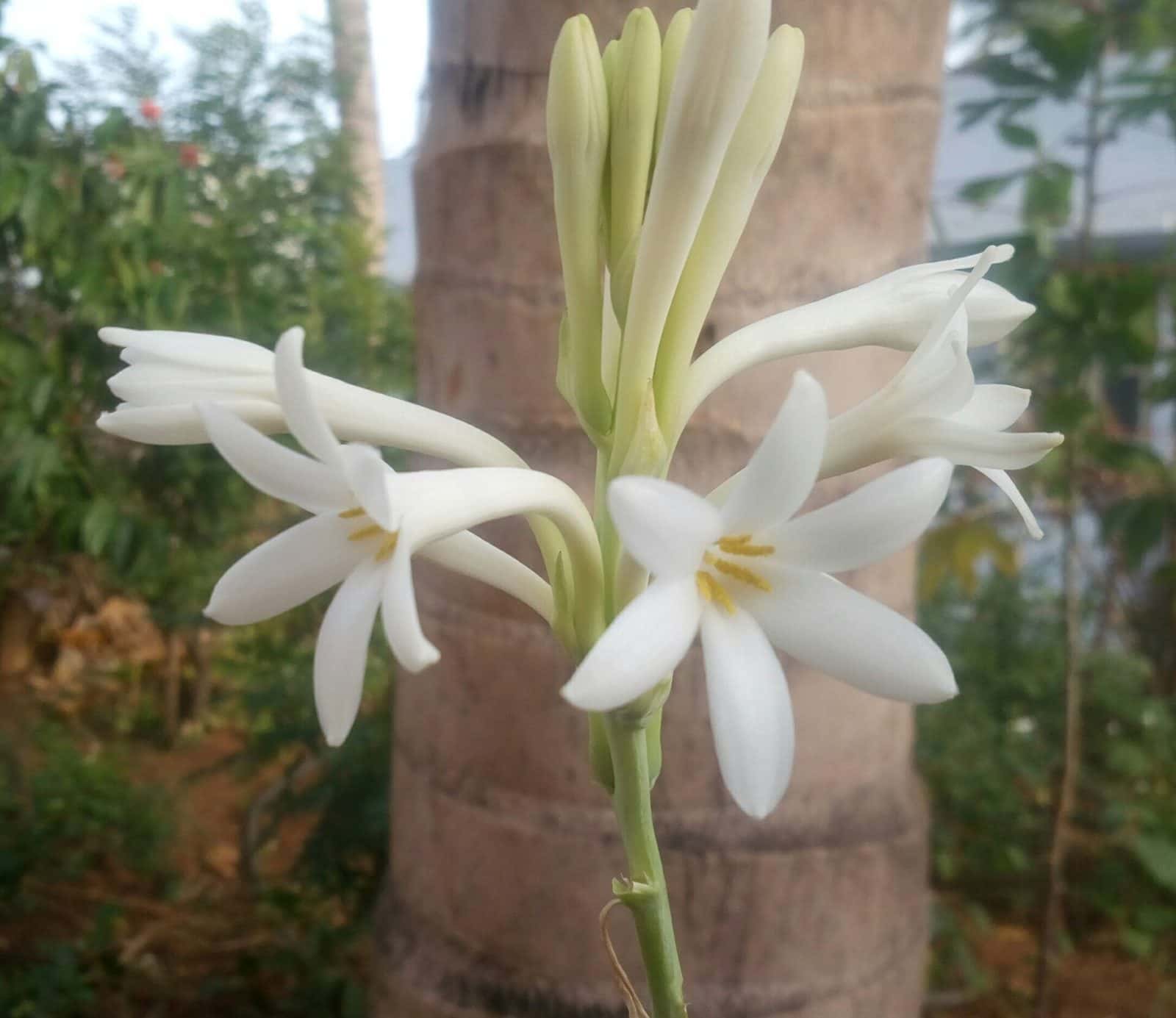
Tuberose, known across India as rajnigandha, is a tall spike of waxy white flowers with a strong sweet scent that is strongest in the evening. It is sold as long stems for vases and as loose flowers for garlands and venis. The flowers open from the bottom of the spike upward over several days.
Agave amica (syn. Polianthes tuberosa) · Rajnigandha · Nishigandha · Sugandharaja · Gulchadi
Season
Year round in most markets; most plentiful from roughly April to October, with lighter supply in the coolest winter months.
Vase life
7–10 days in a vase; 1–2 days as loose flowers
Colours
White, Cream
Grown in
Tuberose is grown mostly in open fields, with large areas in West Bengal, Karnataka, Tamil Nadu and Maharashtra, and smaller areas in Andhra Pradesh, Telangana, Gujarat and Haryana. Much of the loose flower goes to garland markets and the long spikes to city florists.
01
How to pick fresh
Family Asparagaceae
- aEach spike is 60–90 cm long with pairs of white, tube-shaped flowers along the upper part. Single types have one ring of petals; double types look fuller and are used more in arrangements.
- bA fresh spike has two or three lower flowers open and the rest in firm, cream or pale green buds. Spikes with many open flowers will fade sooner.
- cOpen flowers should be white and waxy with no brown edges. Browning or a yellow tinge on the lowest flowers shows age.
- dThe stem should be firm and green, and the cut end clean. A slimy or yellowing base means the spike has been standing in stale water.
- eScent is a good check: a fresh spike smells strongly sweet, especially toward evening.
02
Tuberose in pooja
Rajnigandha is widely used in garlands offered to deities, both on its own and mixed with rose and marigold. The long spikes are also placed in vases on home altars and at temple decorations during festivals, and the loose flowers are offered in pooja thalis.
Tuberose is a common flower for stage decoration, wedding mandaps and welcome garlands, and in many families rajnigandha garlands are also used at memorial and condolence gatherings. Because of this range of uses, the same flower may be familiar to one family from weddings and to another from prayer meetings.
Daily pooja flowers in Pune, by 7 am · from ₹1,600 a month →03
Keeping it fresh
- Recut 2–3 cm off each spike at an angle before putting it in water, and again every two days.
- Remove any leaves below the waterline and pinch off each lower flower as it turns brown, so the spike keeps looking clean.
- Change the water every one to two days. Tuberose stems release sap that clouds the water quickly.
- Expect the lower flowers to open first and the top few buds to stay closed. This is normal for tuberose; snipping off the top few centimetres helps the middle buds open.
- The scent is strong. Keep spikes in larger rooms or entrances rather than small closed bedrooms or meeting rooms if anyone finds it heavy.
04
Where it is used
- Tall rajnigandha spikes are a common choice for living rooms and entrances, often on their own in a tall vase.
- Weddings and stage events use tuberose in garlands, backdrops, car decoration and mandap strings.
- Loose tuberose flowers are strung into garlands and venis for the hair, often with rose or jasmine.
- It is used in welcome garlands and bouquets for guests at functions.
- The home Weekly Flower Subscription carries tuberose in rotation with gerbera and sunflower.
05
Tuberose in your city
Tuberose holds well in Pune's mild weather, and the spikes usually open most of their buds over a week.
Delhi's summer heat opens and fades tuberose quickly, so buy spikes with mostly closed buds and change the water daily.
In Indore's dry summer, keep spikes in the coolest room and top up water daily as the stems drink fast.
Chandigarh's cooler months slow opening and give a long vase life; in peak summer change the water daily.
Mumbai's humidity makes lower flowers brown faster, so pinch them off daily and keep the vase in an airy spot.
Bangalore's mild climate suits tuberose well, and the nearby Karnataka growing areas keep supply fresh.
Hyderabad's dry heat shortens vase life; keep spikes out of direct sun and recut stems every second day.
Ahmedabad's summer heat wilts loose tuberose within a day, so keep garlands cool and spikes in shade with daily fresh water.
West Bengal is a major growing region, so tuberose in Kolkata is fresh and plentiful, though humidity calls for daily water changes.
06
Get it delivered
07
Questions
How long does tuberose last in a vase?
About seven to ten days for a spike bought with most buds closed. Loose tuberose flowers used in garlands last one to two days.
Why are the top buds on my tuberose not opening?
Tuberose opens from the bottom up, and the top few buds on most spikes never open in a vase. Recutting the stem, changing the water and snipping off the tip of the spike helps more of the middle buds open.
Is tuberose fragrance too strong for a bedroom?
Some people find it heavy in a small closed room, especially at night when the scent is strongest. It is better placed in a living room, hall or entrance.
Are rajnigandha and tuberose the same flower?
Yes. Rajnigandha is the Hindi name and nishigandha the Marathi name for tuberose. It is also called sugandharaja in parts of South India.
Begin with a visit
Request a proposal
Tell us about the space, or send photos on WhatsApp. We send a written proposal with a fixed price.
hi@gardenandacre.com