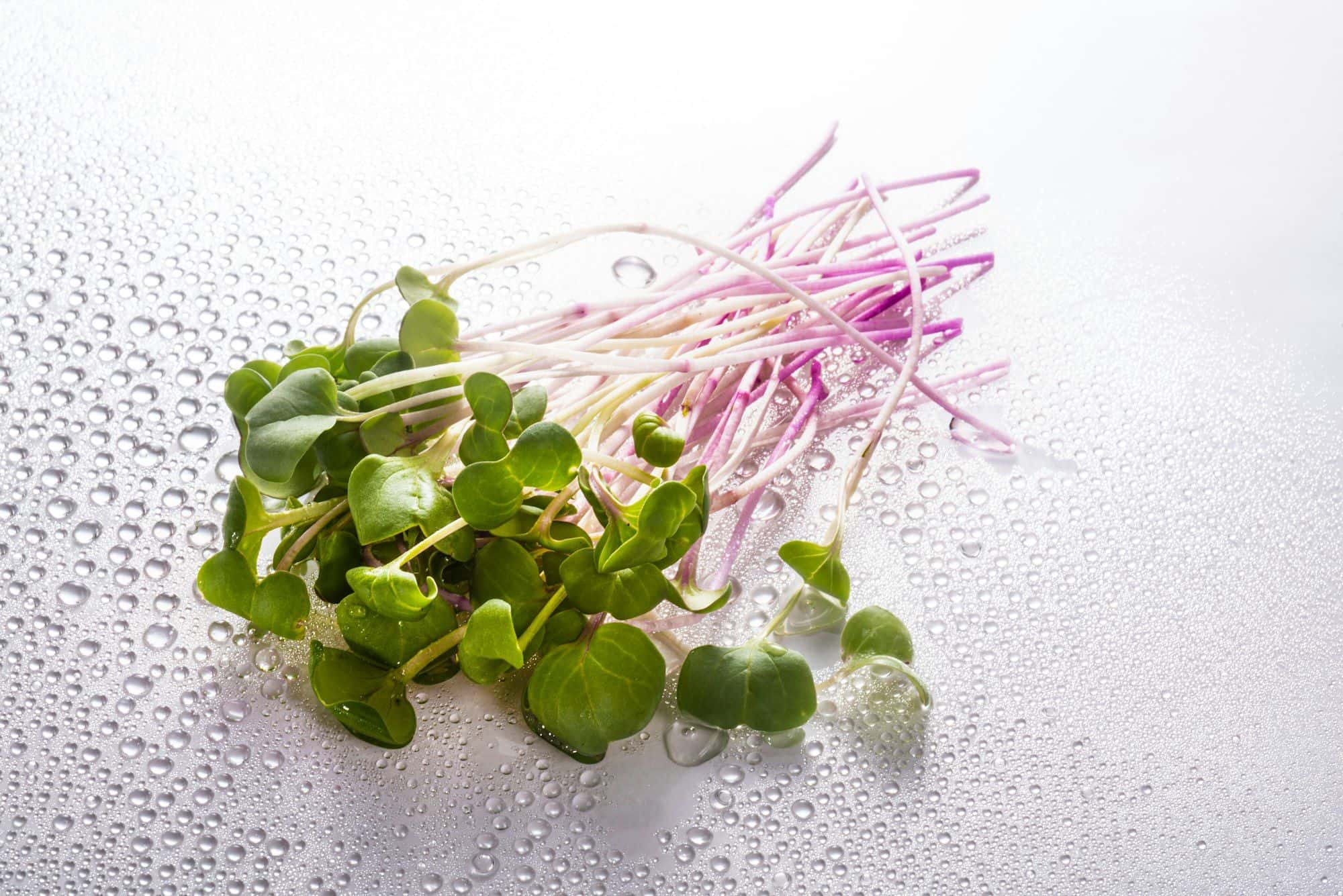
What the benefits of microgreens rest on
Almost every claim about the benefits of microgreens goes back to lab measurements of what is in them: vitamins, carotenoids, minerals and plant compounds such as polyphenols and glucosinolates. Those measurements are solid, and many have been repeated. What they show is concentration, meaning how much of a nutrient sits in 100 g of fresh microgreens. They do not by themselves show that eating microgreens changes anyone's health.
This page reports what each study measured, on which varieties and under what conditions, so the numbers can be used honestly. It makes no medical claims. Microgreens are a vegetable. A handful adds vitamins, minerals, colour and flavour to a meal, in the same way a handful of any fresh greens does, and the studies below help show which varieties are richer in which nutrients.
The USDA study of 25 microgreens (Xiao et al., 2012)
The study most often quoted was led by Gene Lester of the USDA Agricultural Research Service with Zhenlei Xiao and colleagues, and published in the Journal of Agricultural and Food Chemistry in 2012. It measured ascorbic acid (vitamin C), carotenoids, phylloquinone (vitamin K) and tocopherols (vitamin E) in 25 commercially available microgreens. At the time, the authors noted, no scientific data existed on the nutritional content of microgreens.
The results varied widely between varieties. Red cabbage had the most vitamin C, cilantro (coriander) the most carotenoids, garnet amaranth the most vitamin K and green daikon radish the most vitamin E. The authors compared their figures with the USDA National Nutrient Database values for mature leaves and concluded that the microgreen seed leaves had higher nutritional densities. The ranges they measured are shown in the table.
| Nutrient | Range measured | Highest variety |
|---|---|---|
| Vitamin C (total ascorbic acid) | 20.4–147.0 mg | Red cabbage |
| Beta-carotene | 0.6–12.1 mg | Cilantro led on carotenoids |
| Lutein and zeaxanthin | 1.3–10.1 mg | Cilantro led on carotenoids |
| Violaxanthin | 0.9–7.7 mg | Cilantro led on carotenoids |
| Vitamin K (phylloquinone) | 0.6–4.1 µg per g (60–410 µg per 100 g) | Garnet amaranth |
| Vitamin E (alpha-tocopherol) | 4.9–87.4 mg | Green daikon radish |
| Vitamin E (gamma-tocopherol) | 3.0–39.4 mg | Green daikon radish |
How much more than mature vegetables?
USDA's own 2014 summary of the study said that microgreens contained considerably higher levels of vitamins and carotenoids, about five times greater on average than their mature counterparts. The same summary stressed that growing, harvesting and handling conditions may have a considerable effect on nutrient content. The published abstract gives no single multiple; it says the seed leaves had higher nutritional densities than the mature leaves in the database.
Figures such as "30–40 times more nutrients" appear in some reviews and many websites. They come from the largest gaps for particular nutrients in particular varieties, not from an average across microgreens, and they should not be read as a general rule. A fair summary is this: for vitamins C, E and K and carotenoids, many microgreens measured higher per gram than the mature leaves of the same crop, by amounts that differ a great deal between varieties and between nutrients.
Minerals in microgreens
A second study by the same research group, Xiao and colleagues in 2016, measured minerals in 30 varieties of brassica microgreens from 10 species. Potassium was the most abundant, at 176–387 mg per 100 g fresh weight, followed by phosphorus (52–86 mg), calcium (28–66 mg), magnesium (28–66 mg) and sodium (19–68 mg). Among trace minerals, iron ranged from 0.47 to 0.84 mg, zinc 0.22–0.51 mg, manganese 0.17–0.48 mg and copper 0.041–0.13 mg per 100 g. The authors concluded that brassica microgreens are good sources of potassium and calcium and of iron and zinc.
Weber, in 2017, grew broccoli microgreens at home-scale in compost and in hydroponics and compared their minerals with published values for the mature vegetable. Both methods gave more magnesium, manganese, copper and zinc than the vegetable. Compost-grown microgreens were higher than the vegetable in phosphorus, potassium, magnesium, manganese, zinc, iron, calcium, sodium and copper, with an average microgreen-to-vegetable ratio of 1.73 across eight key minerals. The growing method made a real difference, which is a reminder that a microgreen's nutrients depend on how it is grown.
| Mineral | Range measured |
|---|---|
| Potassium | 176–387 mg |
| Phosphorus | 52–86 mg |
| Calcium | 28–66 mg |
| Magnesium | 28–66 mg |
| Sodium | 19–68 mg |
| Iron | 0.47–0.84 mg |
| Zinc | 0.22–0.51 mg |
| Manganese | 0.17–0.48 mg |
| Copper | 0.041–0.13 mg |
ICAR research on Indian microgreens
ICAR-IARI in New Delhi has studied the legumes and mustard that Indian households already use. In a 2021 study in Frontiers in Plant Science, Priti and colleagues grew 20 genotypes each of mungbean and lentil as microgreens in Delhi and in Leh, Ladakh. They measured vitamin C, tocopherol, carotenoids, flavonoids, phenolics, antioxidant capacity, protein, enzymes and minerals, and found large differences between genotypes. The most abundant minerals were potassium, phosphorus and calcium in mungbean, and potassium, calcium and phosphorus in lentil.
For most parameters, the microgreens grown in Leh scored higher than those grown in Delhi. The authors linked this to Leh's wide swing between day and night temperatures, its strong light and its higher UV-B. The same team's 2022 study, in PLoS One, found no Salmonella or Listeria on mungbean, lentil and Indian mustard microgreens, and concluded that microgreens grown and stored properly are generally safe to eat. A 2025 review by ICAR scientists (Seth and colleagues) collects similar work on ragi, horse gram, pearl millet, palak and other Indian crops.
Microgreens compared with sprouts and adult plants
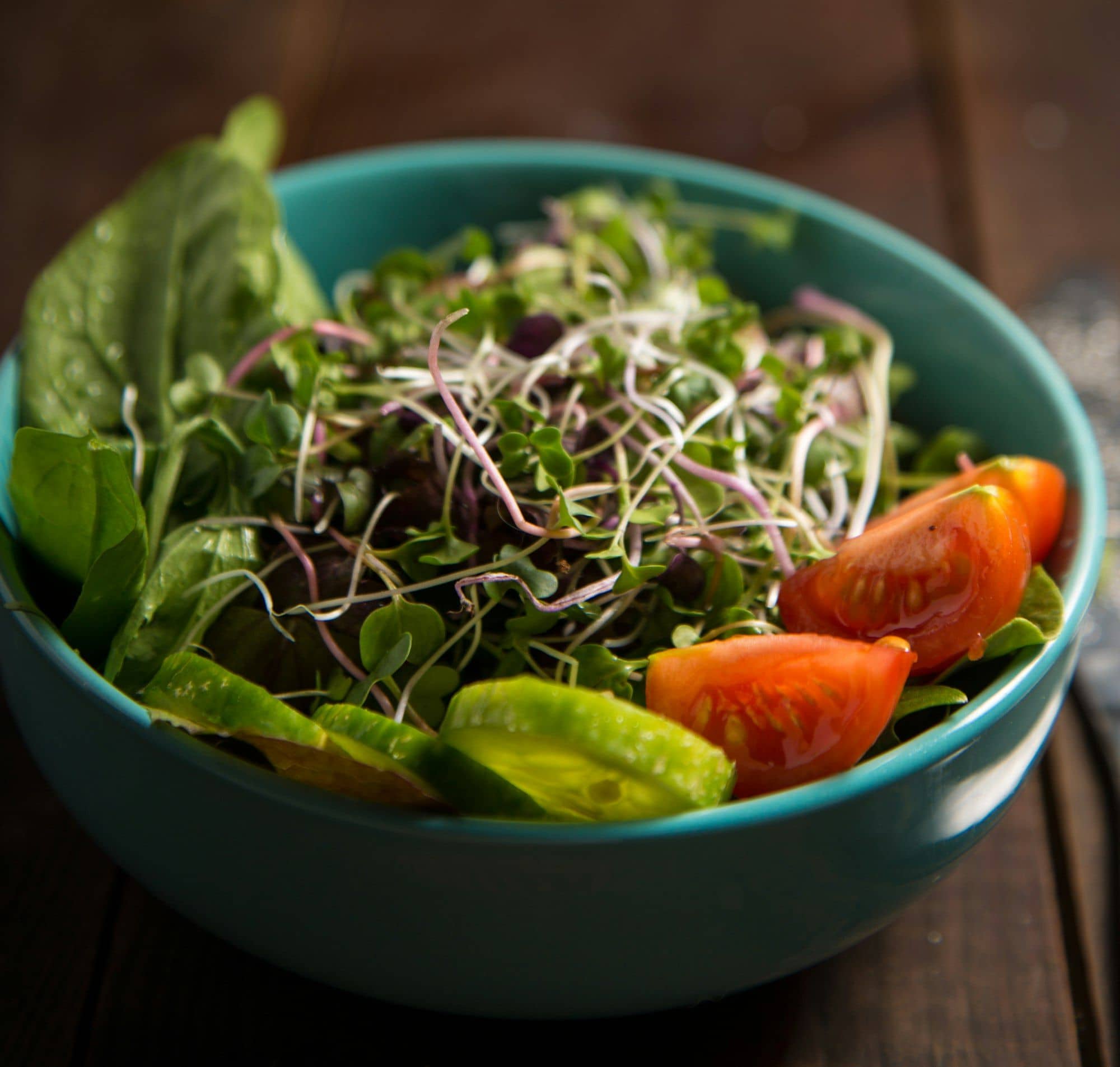
The growth stage matters. A 2022 study in Foods compared six lettuce landraces and five commercial varieties at the microgreen, baby-leaf and adult stages, and found vitamin C 42% higher and phenolic content 79% higher at the early stages than in adult lettuce. The ICAR review cites work showing flaxseed microgreens higher than flax sprouts in chlorophyll, carotenoids and phenols, and vitamin C potentially higher at the microgreen stage than at the sprout, baby or mature stage.
A 2026 study in Open Life Sciences compared mung bean microgreens with mung bean sprouts on a fresh-weight basis. The microgreens had less protein and fat, nearly double the dietary fibre, more calcium, magnesium, iron and zinc, slightly less potassium and significantly more vitamin C. Chlorophyll showed no notable difference. Our microgreens vs sprouts guide covers the growing and food-safety differences as well.
Other compounds: glucosinolates, polyphenols and omega-3
Brassica microgreens such as broccoli, radish and mustard contain glucosinolates, the sulphur compounds behind their sharp taste. A 2025 review by Michalczyk reports that brassica sprouts and microgreens contain significantly more glucosinolates than mature vegetables, and that the amount can be changed by growing temperature, light and the length of the growing period. Red and purple varieties, such as red cabbage and amaranth, also carry anthocyanin pigments, and polyphenols are found across most microgreens.
Two seed crops add a fat not common in greens. A 2024 study found alpha-linolenic acid (ALA), a plant omega-3, at 2.6 g per 100 g dry weight in chia microgreens and 2.9 g in flax microgreens. The authors estimated that 100 g of the fresh greens could provide about 15% of the ALA intake recommended by the European Food Safety Authority. That is a useful contribution, not a replacement for other sources.
What the health evidence does and does not show
A 2023 review of bioactive molecules and health benefits in microgreens, by Bhaswant and colleagues in Molecules, states plainly that the number of studies measuring the direct health effects of microgreens is minuscule, which it calls a major limitation. The health studies it describes were done in mice and rats: for example, broccoli microgreen powder and juice in mice on a high-fat diet, and red cabbage microgreen powder in rats on a high-fat diet.
Results from animals fed concentrated powders do not tell us what a portion of fresh microgreens does for a person. No human trial of microgreens was found in the reviews we read. So the honest statement is narrow: microgreens are nutrient-dense vegetables, measured to be rich in several vitamins, minerals and plant compounds. Claims that they prevent or treat a disease are not supported. Anyone managing a health condition should take dietary advice from a doctor or dietitian.
What changes the nutrient content
Every study above found wide differences, and the causes are known. Variety matters most: the highest vitamin C in the USDA study was about seven times the lowest (147.0 ÷ 20.4 = 7.2). Growing medium matters: Weber's compost-grown broccoli microgreens beat the hydroponic ones on minerals, and the ICAR review reports soil-grown fennel, mint, amaranth and fenugreek microgreens higher in calcium, iron, vitamin C and beta-carotene than those grown in cocopeat or water. Light and climate matter, as the Delhi and Leh comparison showed.
Storage matters too. Microgreens are delicate, and the ICAR review puts their fresh life at 3–10 days under refrigeration at 4 °C. In the ICAR-IARI 2022 trial, mungbean, lentil and mustard microgreens kept a saleable sensory score until the fourth day at 4 °C. Eating them soon after harvest, and keeping them cold until then, is the simplest way to get what was measured.
- Choose several varieties rather than one, since no single type led on every nutrient.
- Buy fresh and use within a few days; keep them in the fridge.
- Rinse just before eating, not before storing.
- Add them raw or at the end of cooking, as garnish, in salads, sandwiches, raita or on parathas.
Fresh microgreens delivered in Pune
Garden & Acre delivers fresh microgreens in Pune and Pimpri-Chinchwad from its own supply chain, as a weekly subscription for homes and as regular supply for restaurants, cafés and hotels. A weekly delivery means the greens reach you fresh, which matters because nutrient content depends on handling and storage. You can order on WhatsApp, where prices and the week's varieties are shared.
Questions
Are microgreens more nutritious than mature vegetables?
For several nutrients, often yes. The USDA study of 25 microgreens found higher concentrations of vitamins C, E and K and carotenoids in the seed leaves than published values for mature leaves, which USDA summarised as about five times higher on average. The gap varies widely by variety and nutrient, and a normal portion of microgreens is small.
Is it true that microgreens have 40 times more nutrients?
Not as a general rule. The 2012 USDA study gives no single multiple, and USDA's own summary said about five times greater on average for vitamins and carotenoids. Figures of 30–40 times reflect the largest gaps for particular nutrients in particular varieties. They should not be applied to microgreens as a whole.
Which microgreen has the most vitamin C?
In the 2012 USDA study of 25 varieties, red cabbage microgreens had the highest vitamin C. Across all 25, total vitamin C ranged from 20.4 to 147.0 mg per 100 g fresh weight. In a 2026 study, mung bean microgreens had significantly more vitamin C than mung bean sprouts.
Do microgreens contain iron and protein?
They contain iron, but in modest amounts: 0.47–0.84 mg per 100 g fresh weight in the USDA study of 30 brassica microgreens. Legume microgreens such as moong and lentil also carry protein and minerals, and ICAR-IARI found potassium, phosphorus and calcium to be their most abundant minerals. Microgreens add to a diet; they are not a main source of protein.
What are the proven health benefits of microgreens?
No health benefit has been proven in human trials. A 2023 review called the number of studies measuring direct health effects minuscule. The studies described are mostly in mice and rats fed concentrated microgreen powders or juice. What is established is their nutrient content, which makes them a nutrient-dense vegetable to include in a varied diet.
How many microgreens should I eat in a day?
There is no official serving size for microgreens. They are eaten like other fresh greens, often a small handful added to a meal. Treat them as part of your daily vegetables rather than a supplement. If you have a medical condition or take medicines affected by vitamin K, ask your doctor about leafy greens in general.
Do microgreens lose nutrients after harvest?
They are delicate and have a short fresh life, about 3–10 days refrigerated at 4 °C according to the ICAR review. The USDA noted that harvesting and handling conditions may have a considerable effect on nutrient content. Buying fresh, keeping them cold and eating them within a few days is the practical answer.
Sources
- Assessment of vitamin and carotenoid concentrations of emerging food products: edible microgreens — Xiao, Lester, Luo & Wang, J. Agric. Food Chem., 2012
- Specialty Greens Pack a Nutritional Punch — USDA Agricultural Research Service, 23 January 2014
- Microgreens of Brassicaceae: Mineral composition and content of 30 varieties — Xiao et al., J. Food Compos. Anal., 2016
- Broccoli Microgreens: A Mineral-Rich Crop That Can Diversify Food Systems — Weber, Frontiers in Nutrition, 2017
- Diversity in phytochemical composition, antioxidant capacities, and nutrient contents among mungbean and lentil microgreens (Delhi and Leh-Ladakh) — Priti et al., Frontiers in Plant Science, 2021
- Yield optimization, microbial load analysis, and sensory evaluation of mungbean, lentil, and Indian mustard microgreens — Priti et al., PLoS One, 2022
- Microgreens: Functional Food for Nutrition and Dietary Diversification — Seth et al., Plants, 2025
- Microgreens — A Comprehensive Review of Bioactive Molecules and Health Benefits — Bhaswant et al., Molecules, 2023
- The Nutritional Quality Potential of Microgreens, Baby Leaves, and Adult Lettuce — Martínez-Ispizua et al., Foods, 2022
- Enhanced nutritional value of mung bean microgreens compared to sprouts — Marottickal et al., Open Life Sciences, 2026
- Exploration of the Lipid Profile of Edible Oleaginous Microgreens — Castellaneta et al., J. Agric. Food Chem., 2024
- Methods of Modifying the Content of Glucosinolates in Sprouts and Microgreens — Michalczyk, International Journal of Food Science, 2025