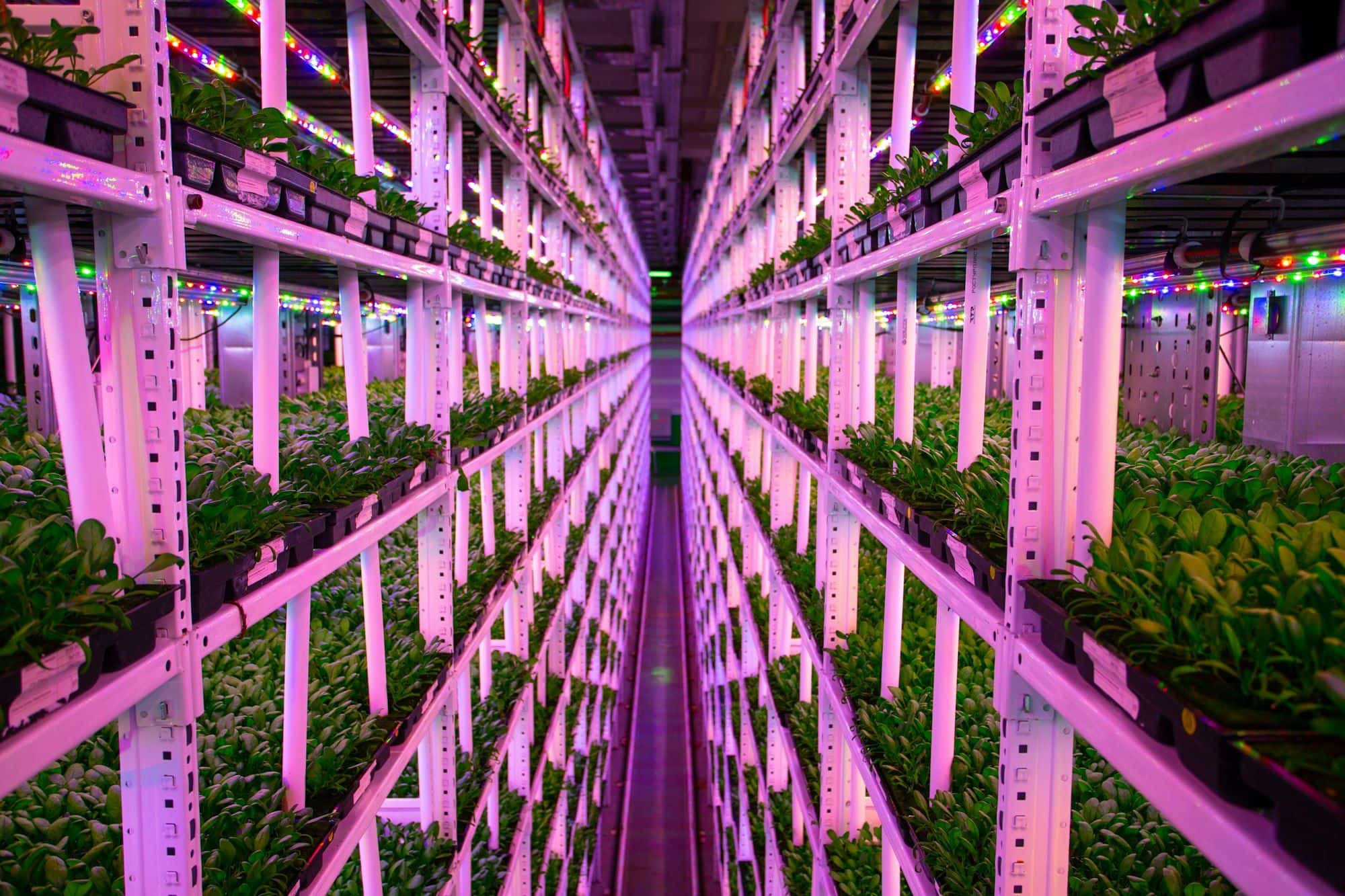
Vertical farming · The complete guide
Vertical farming: the complete guide
Vertical farming grows crops in stacked layers indoors or under a roof, with the roots in water or mist instead of soil and the light, heat and humidity controlled. This guide covers every part of it, from the systems and crops to the costs, the energy bill and the farms that failed, with sources for every figure.
- Home
- Vertical farming
What vertical farming is
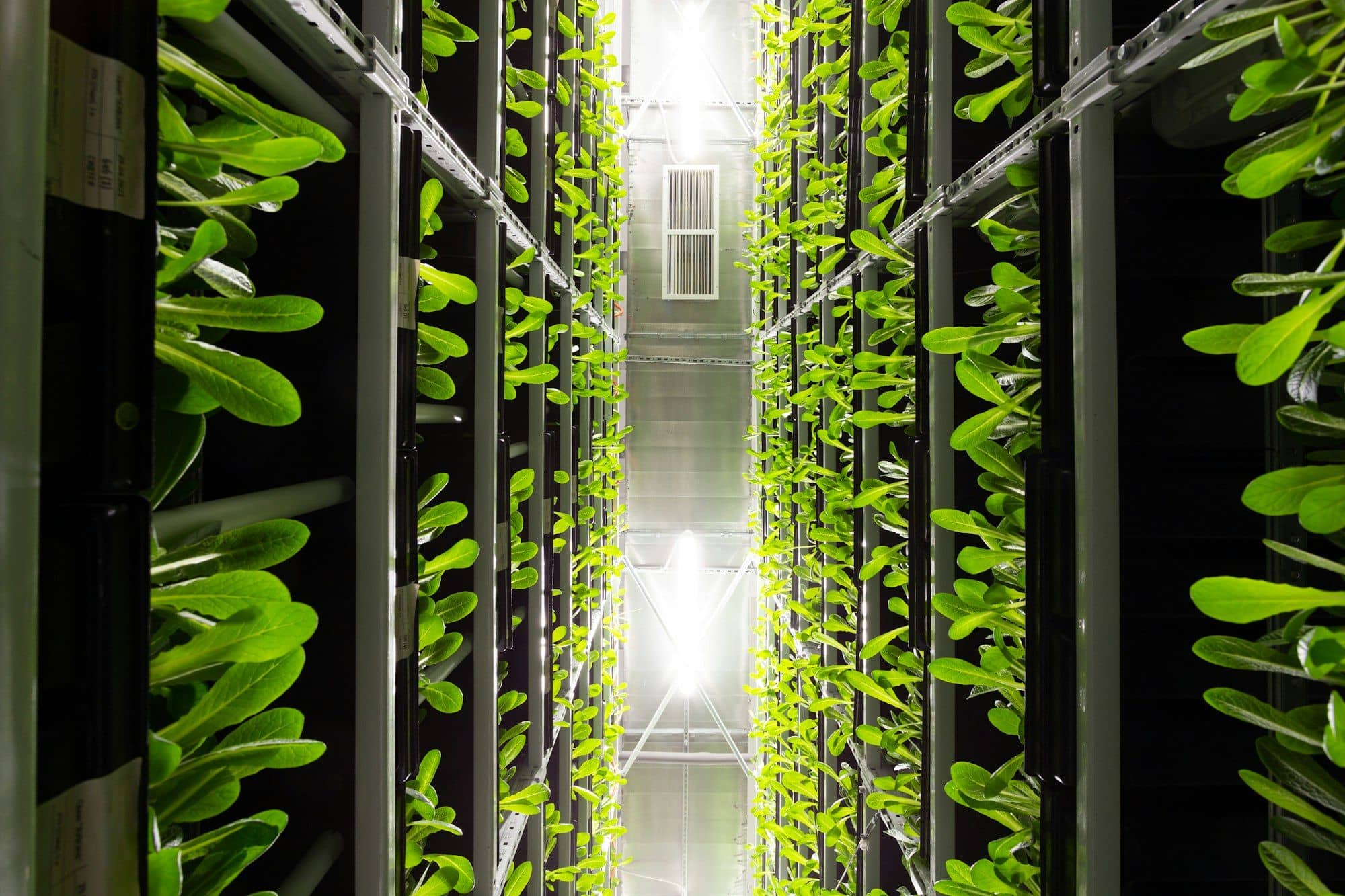
Vertical farming is a way of growing plants in layers stacked one above the other, usually inside a building, a shipping container or a greenhouse. The plants grow without soil: their roots sit in a nutrient solution (hydroponics), are sprayed with a nutrient mist (aeroponics), or are fed by water from fish tanks (aquaponics). Light comes from LED fixtures, from the sun, or from both, and the temperature, humidity and carbon dioxide are held at levels that suit the crop.
Because every layer adds growing area without adding land, a vertical farm produces far more per square metre of floor than a field, and it does so all year. The price of that control is electricity. Lighting and climate control make vertical farming one of the most energy-intensive ways to grow food, which is why it suits fast, high-value crops such as salad greens, herbs, microgreens and strawberries, and not staples such as wheat or rice.
The term goes back to 1915, when the geologist Gilbert Ellis Bailey used it as the title of a book. The modern idea of multi-storey indoor farms comes from Dickson Despommier's class at Columbia University in 1999.
- Term first used
- 1915
- Gilbert Ellis Bailey's book Vertical Farming
- Electricity per kg of lettuce
- 10–18 kWh
- Current vertical farm benchmarks; lighting uses 65–85% of it
- Power cost per kg in Maharashtra
- ₹72–182
- 10–18 kWh × ₹7.21 (agriculture, others) or ₹10.11 (small commercial), MERC 2026-27
- Water per kg of lettuce
- ≈20 L vs ≈250 L
- Hydroponic against field-grown, Barbosa et al. 2015
How it works
Five parts of every vertical farm
01
The growing system
Racks, towers or A-frames that hold the plants and deliver water and nutrients to the roots: NFT channels, deep water culture, ebb and flow, aeroponic misting or aquaponics.
Read more →02
Light
LED fixtures sized to the crop's daily light need, measured as PPFD and DLI. Lighting is the largest single use of electricity in an indoor farm.
Read more →03
Climate
Air conditioning, dehumidifiers, fans and carbon dioxide dosing that remove the heat from the lights and hold temperature and humidity steady.
Read more →04
Water and nutrients
Treated water and a balanced nutrient solution, kept at the right EC and pH for each crop and stage, and recirculated to save water.
Read more →05
Automation and data
Sensors, controllers and, in large farms, moving racks, robots and cameras that cut labour and keep conditions consistent.
Read more →
Part 1 of 7
Basics
What vertical farming is, where it came from, and how it compares with other ways of growing.

History of Vertical Farming
The history of vertical farming, from Gilbert Ellis Bailey's 1915 book and Despommier's 1999 class to Japan's plant factories, the 2010s boom and India today.
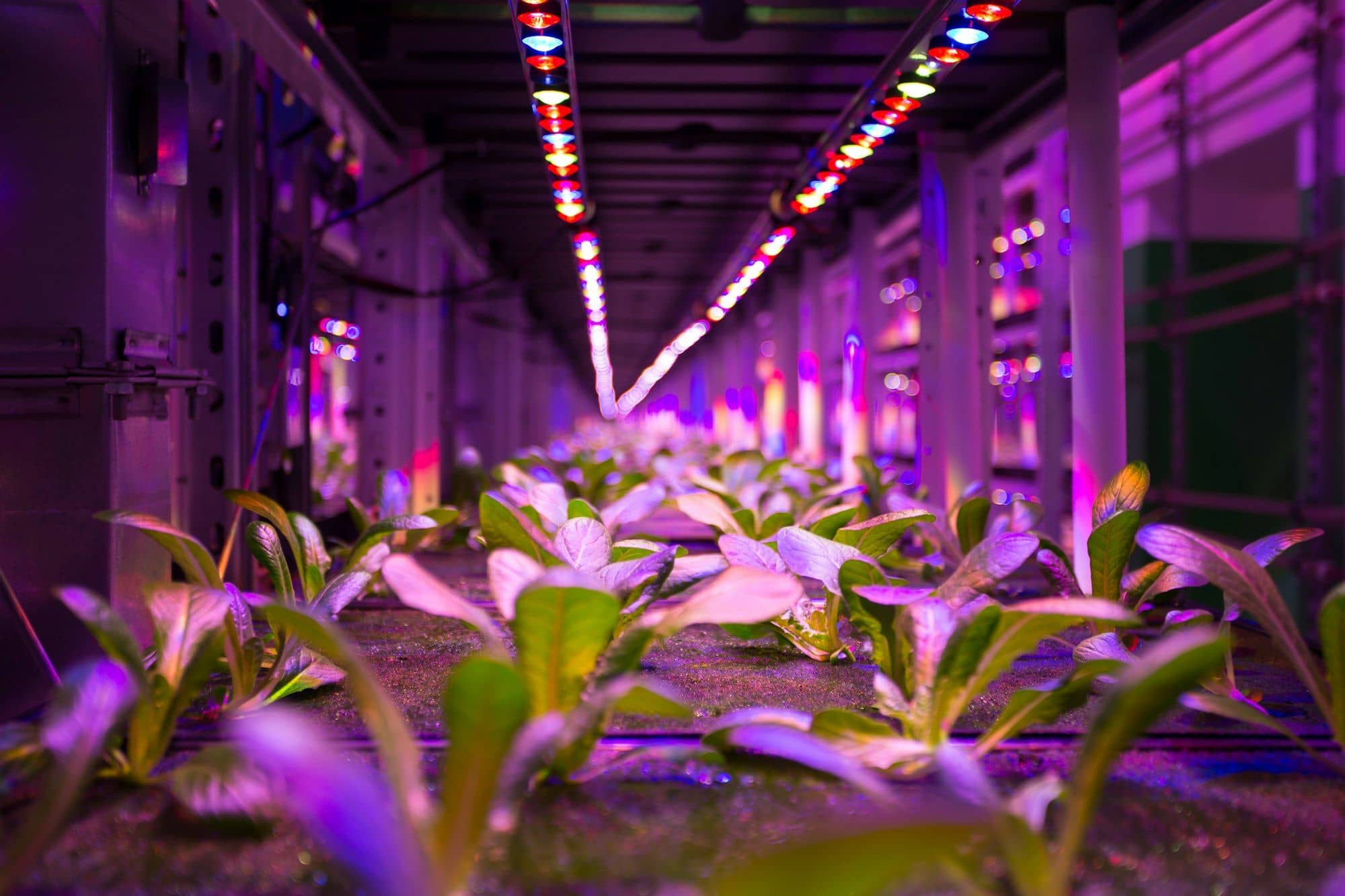
Vertical Farming Advantages and Disadvantages
The pros and cons of vertical farming compared honestly: water, land, pesticides, year-round output, energy, capital cost, crop range and labour skills.
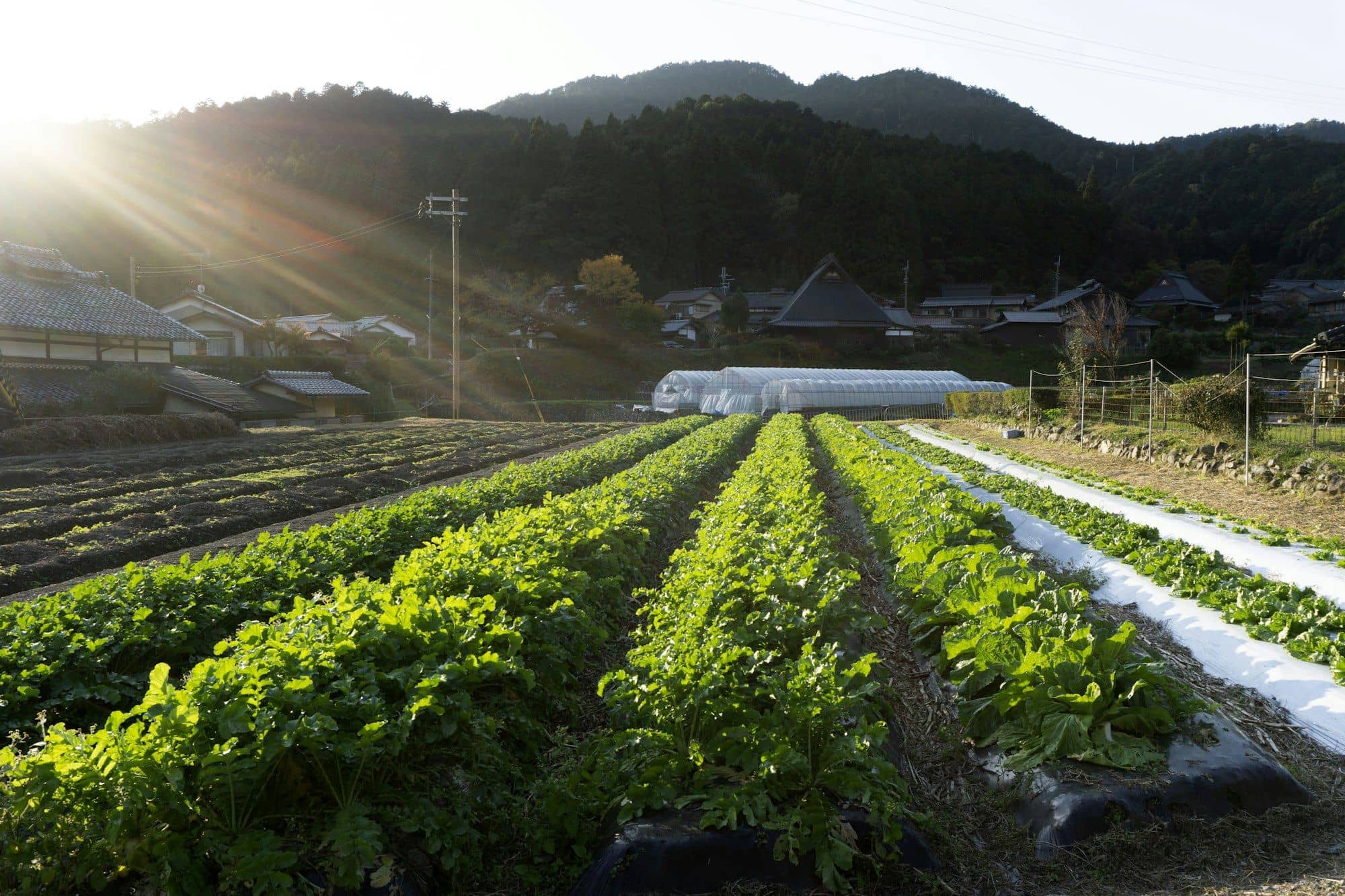
Vertical Farming vs Traditional Farming
Vertical farming vs traditional farming compared: open field, polyhouse or greenhouse and vertical farm, by yield per m², water, energy, cost and crops.

Vertical Garden vs Vertical Farm
Vertical garden vs vertical farm explained: a living wall is decorative greenery for cooling and looks, a vertical farm grows food. How to choose the right one.
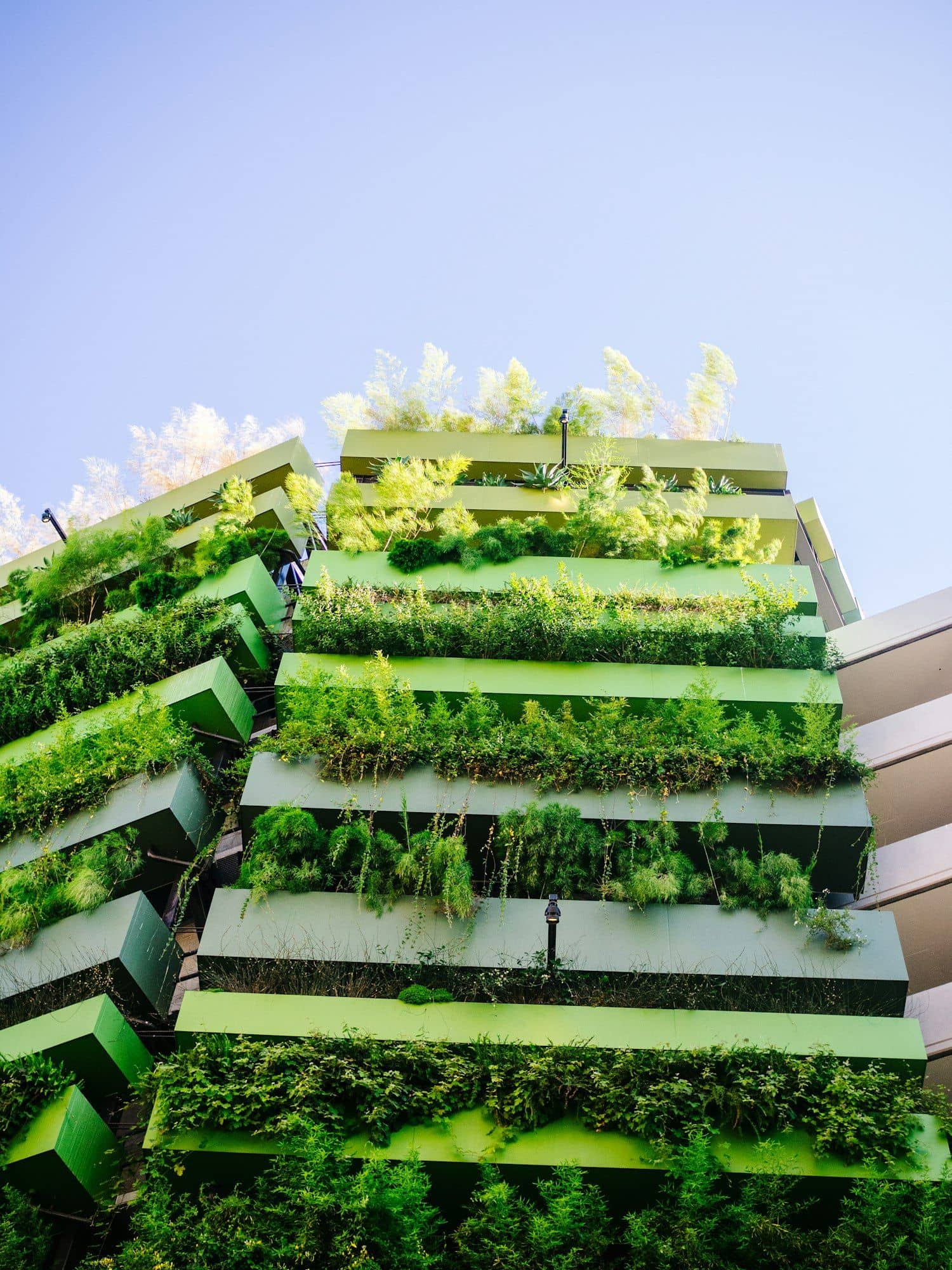
Sky Farming
Sky farming explained: Sky Greens' rotating A-frame towers in Singapore, rooftop and high-rise sky farms, and how sky farming fits within vertical farming.
Part 2 of 7
Systems and technology
Hydroponics, aeroponics, aquaponics, containers, lights, climate, nutrients and automation.
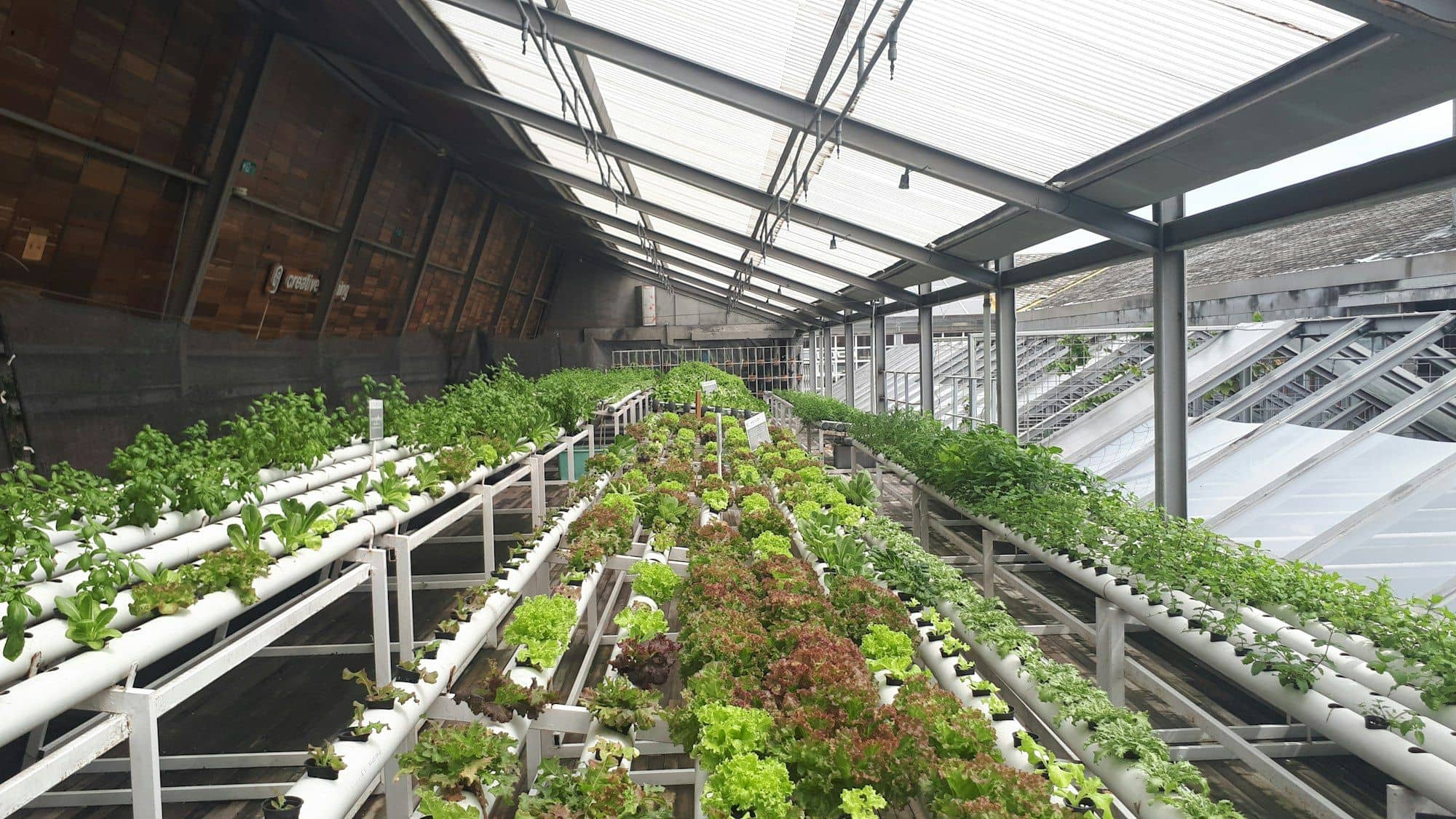
Hydroponic Vertical Farming
How hydroponic vertical farming works: NFT, deep water culture, ebb and flow, drip and wick systems, rack vs tower vs A-frame layouts, and a component list.
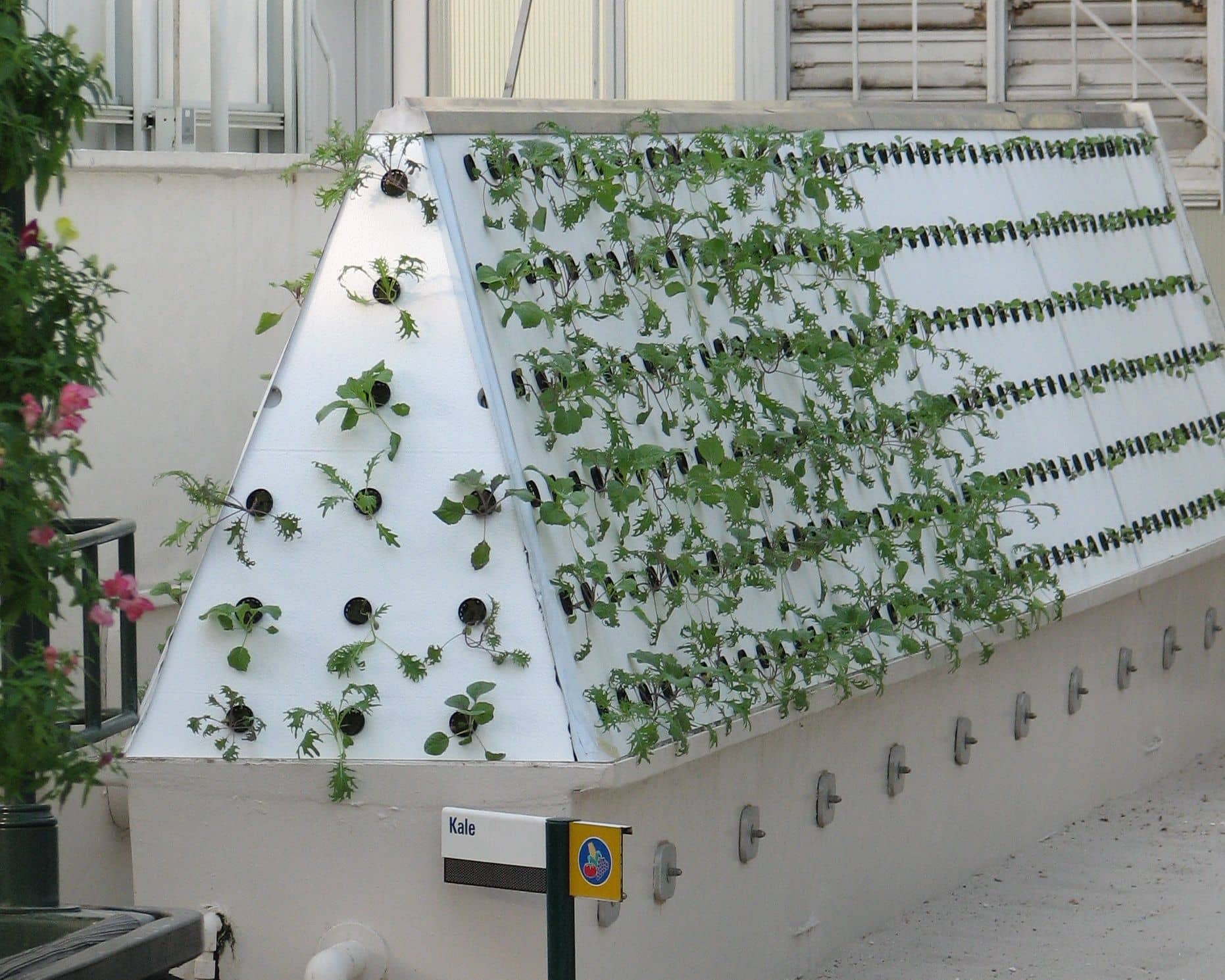
Aeroponic Farming
Aeroponic farming explained: how misting roots in air works, high- vs low-pressure systems, towers, root disease risk, crops, cost drivers and NASA's role.
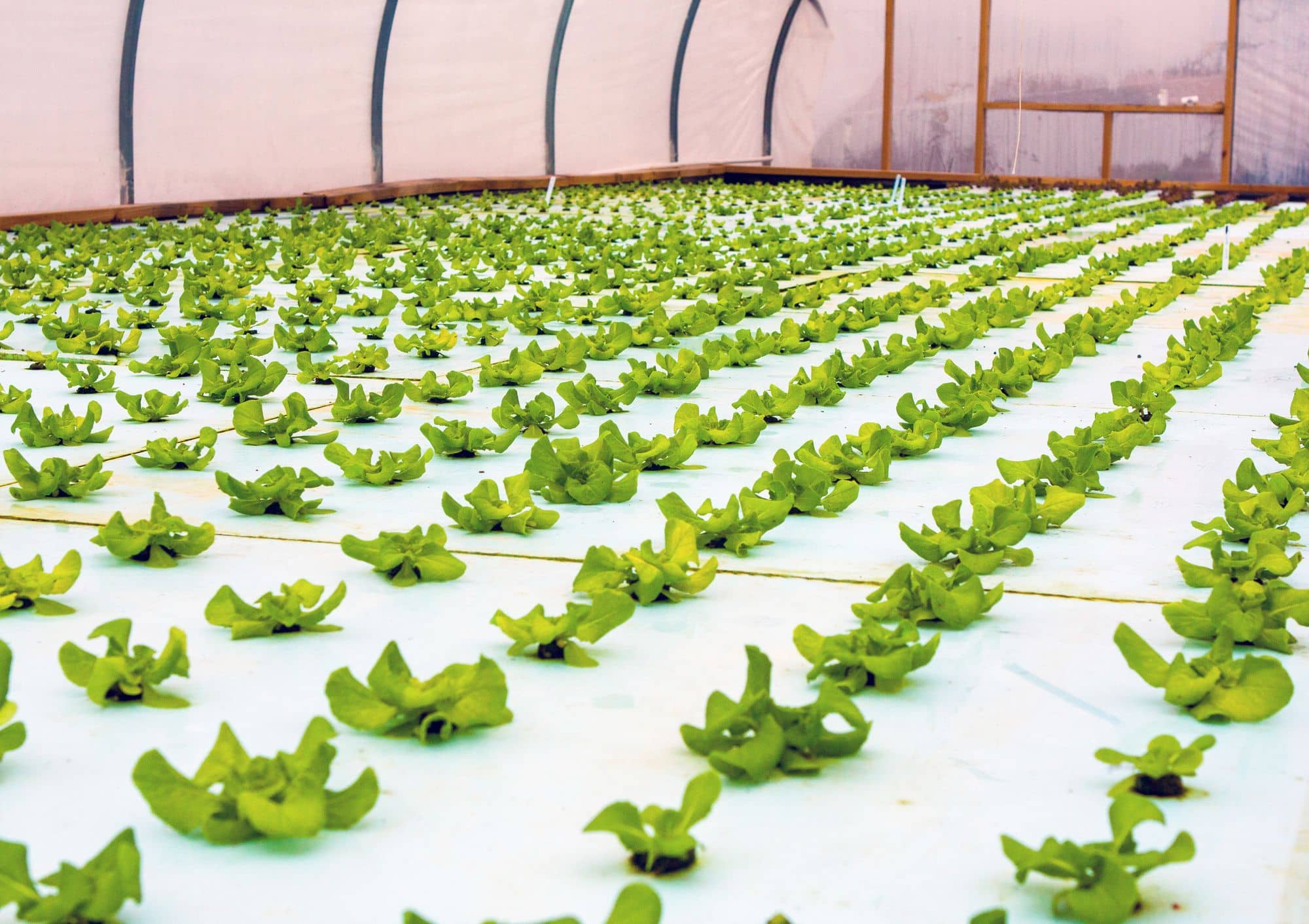
Aquaponics Vertical Farming
How aquaponics works in vertical farms: the nitrogen cycle, fish allowed in India (tilapia rules, pangasius), the feed rate ratio for sizing, and pros and cons.
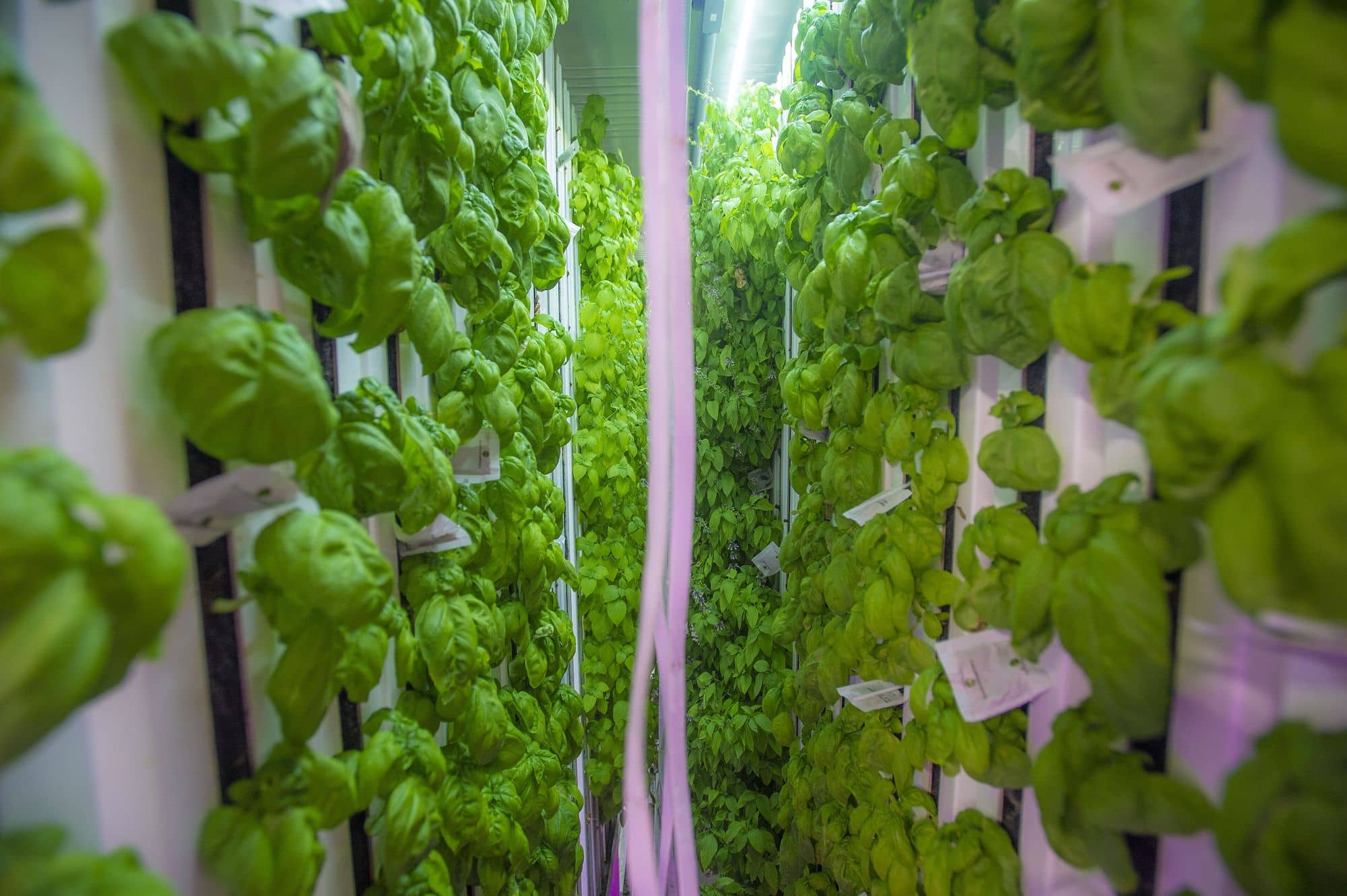
Container Farms
Shipping container farms explained: typical specs, power and water use, costs with worked ₹ arithmetic, uses, and how Indian heat and power cuts affect them.
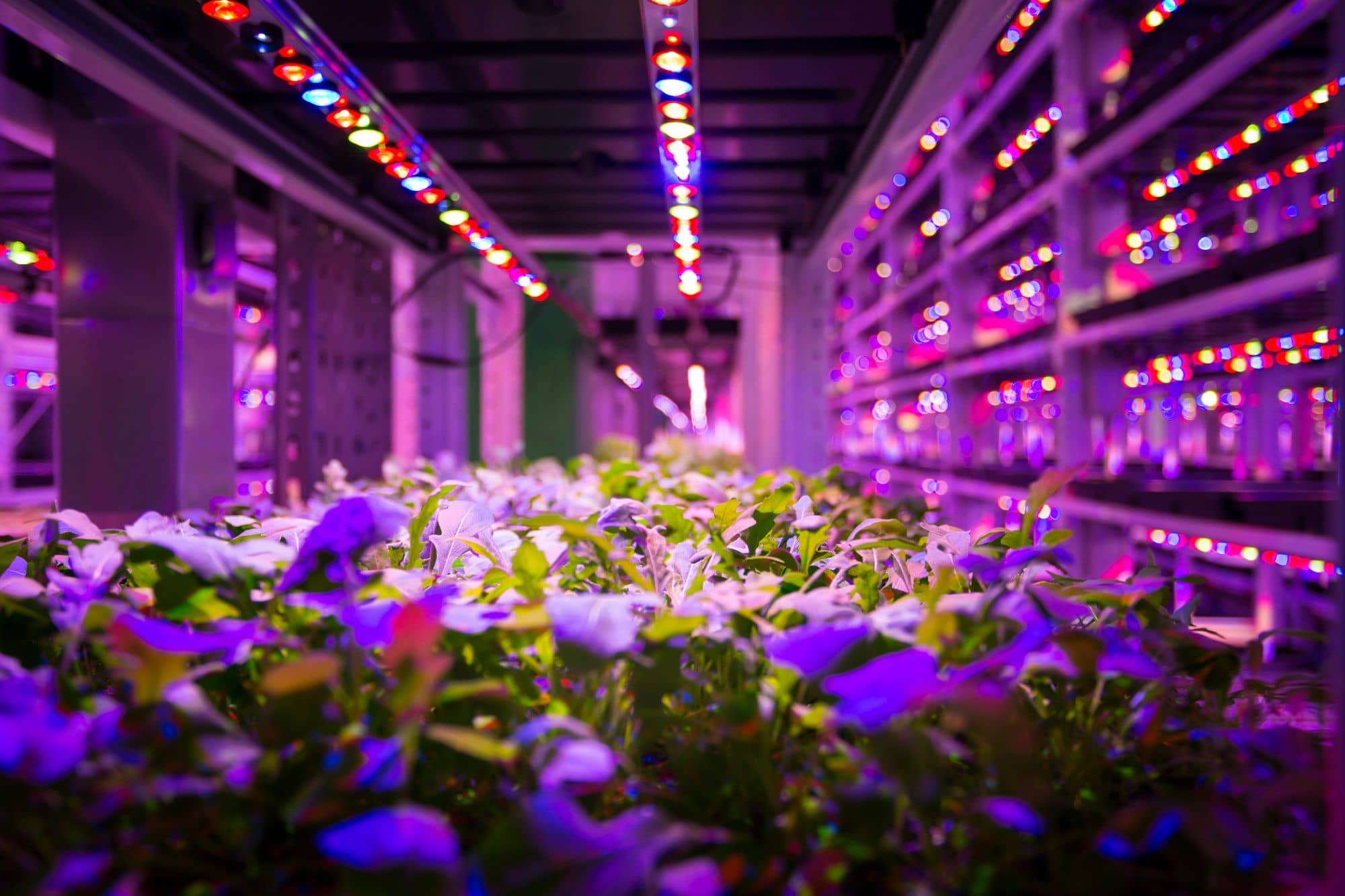
LED Grow Lights for Vertical Farming
How to choose LED grow lights for a vertical farm: PAR, PPFD, DLI, µmol/J efficacy, spectrum, lettuce light targets, and a worked ₹ cost per shelf per day.
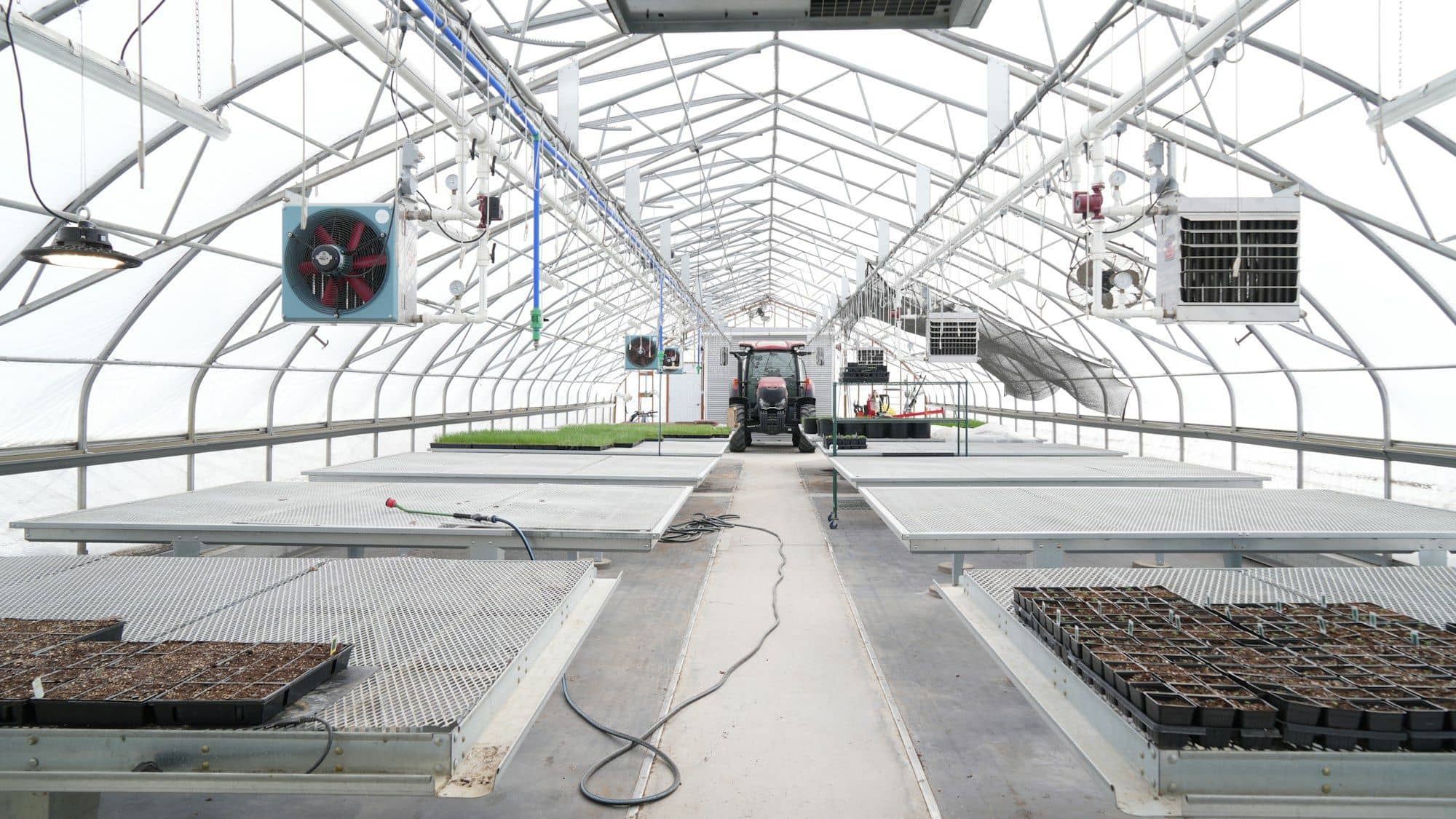
Climate Control in Vertical Farms
Temperature, humidity, VPD, airflow and CO2 targets for vertical farms, how LED heat drives HVAC load, and how to handle Indian summers and the monsoon.
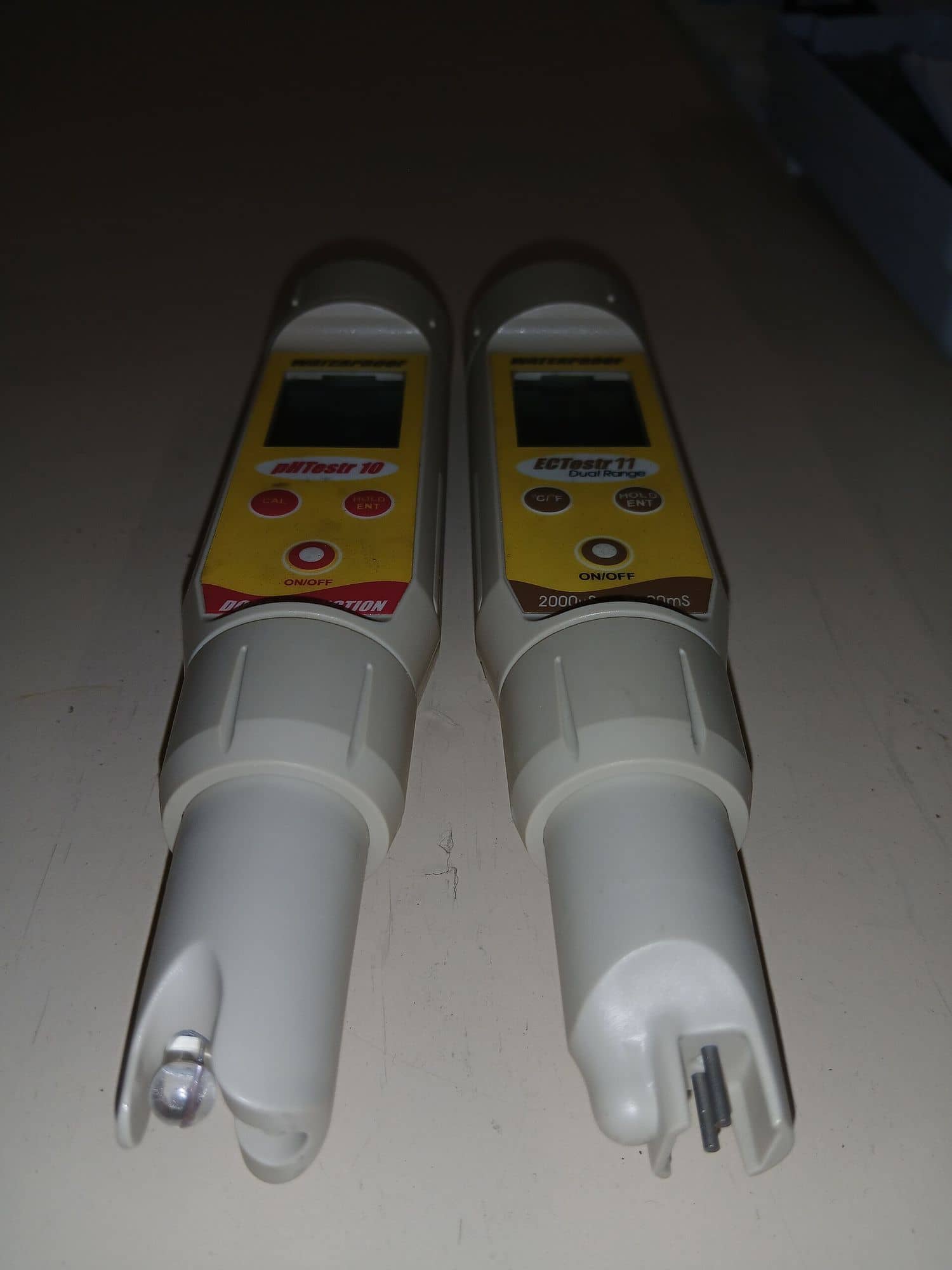
Hydroponic Nutrients, pH and EC for Vertical Farms
Macro and micro nutrients, EC and pH targets by crop, TDS meters, RO and hard water in Indian cities, A/B dosing and how to read deficiency symptoms.

Automation and Robotics in Vertical Farming
Sensors, controllers, dosing, moving racks, robots and computer vision in vertical farms, and what is worth automating at small and large scale in India.
Part 3 of 7
Crops
What grows well in a vertical farm, and how to grow it.
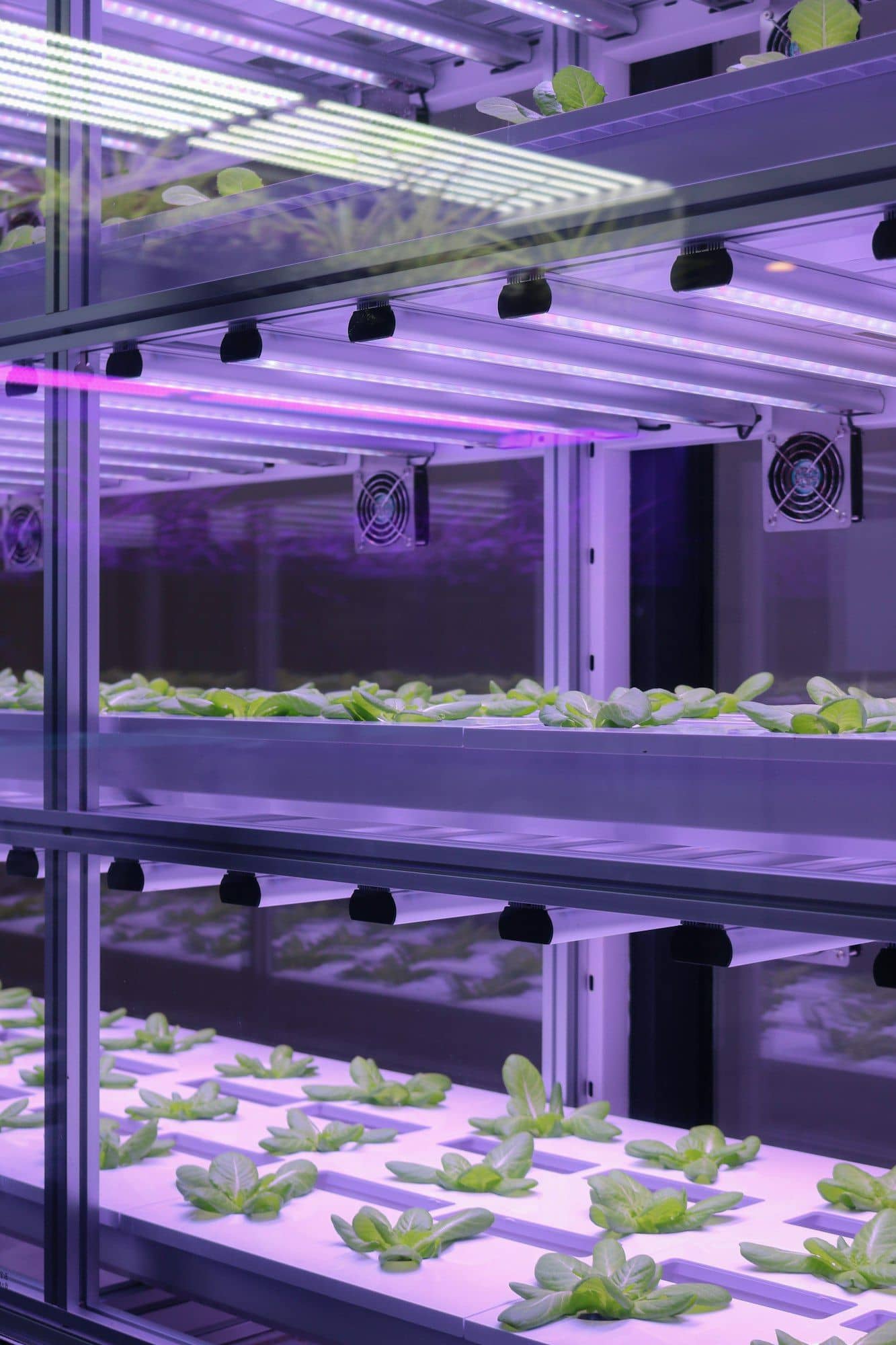
Best Crops for Vertical Farming
Which crops suit vertical farms, with cycle days, yield notes and difficulty, why wheat, potatoes and fruit trees do not pay, and what sells in India.

Leafy Greens and Herbs in Vertical Farming
Growing lettuce, spinach, kale, basil, mint and coriander in vertical farms: lettuce types, days to harvest, harvest methods, storage and shelf life.
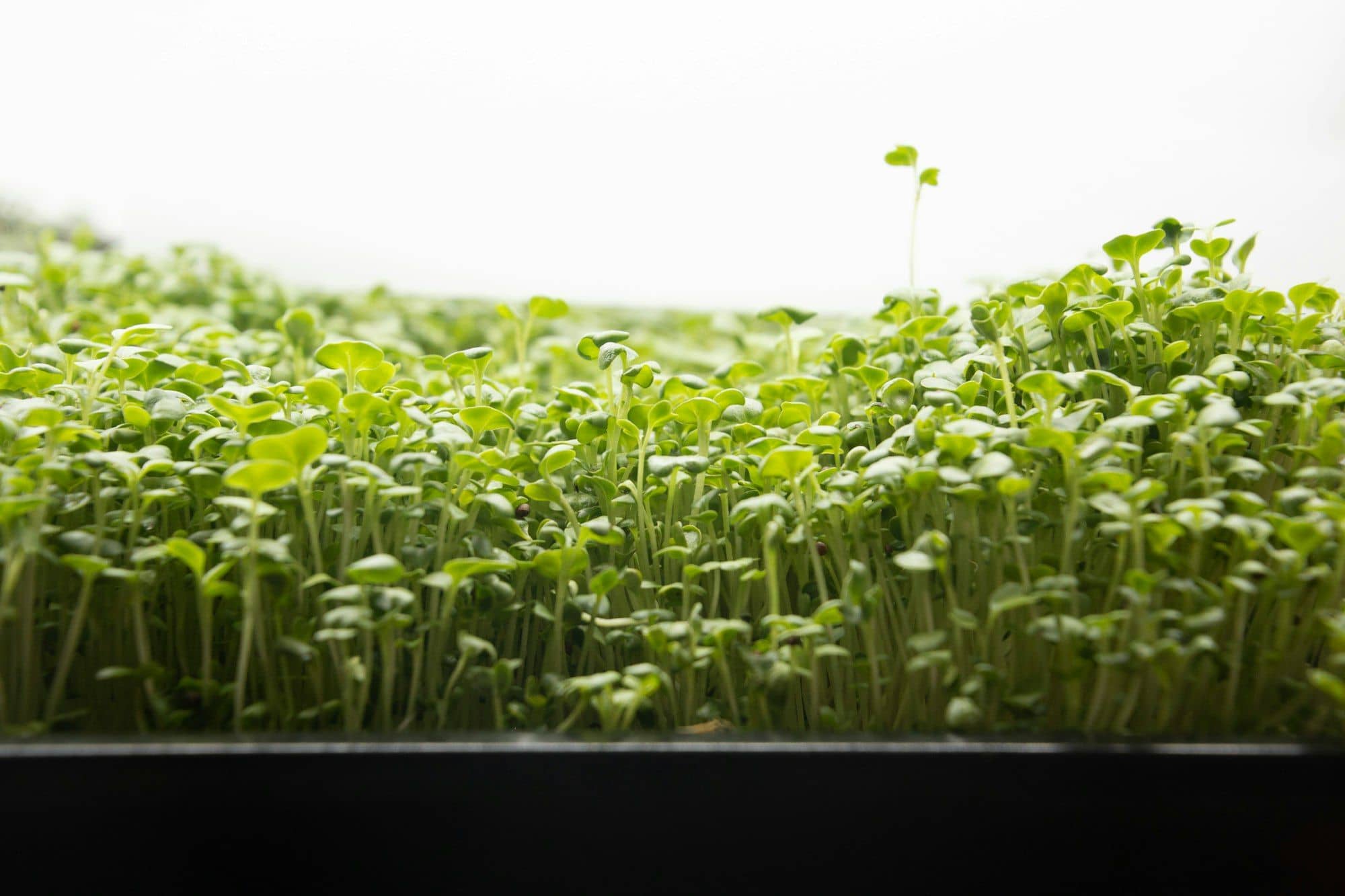
Microgreens Vertical Farming
How to grow microgreens on vertical racks: varieties, trays, media, light, days to harvest, food safety, FSSAI rules and selling to restaurants in India.
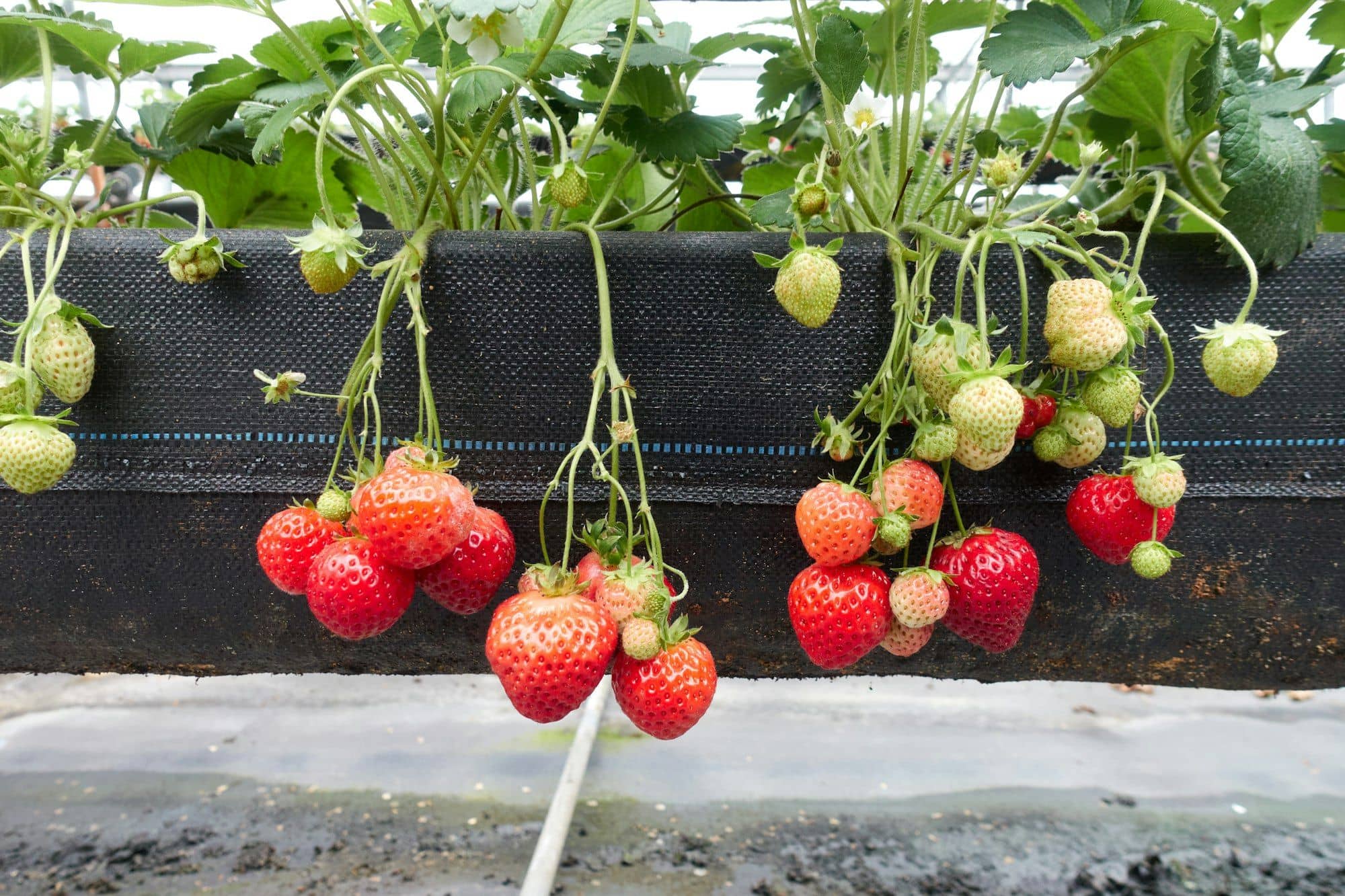
Strawberry Vertical Farming
How strawberries are grown in vertical farms: day-neutral varieties, indoor pollination, temperature and light, towers vs gutters, and what it means in India.
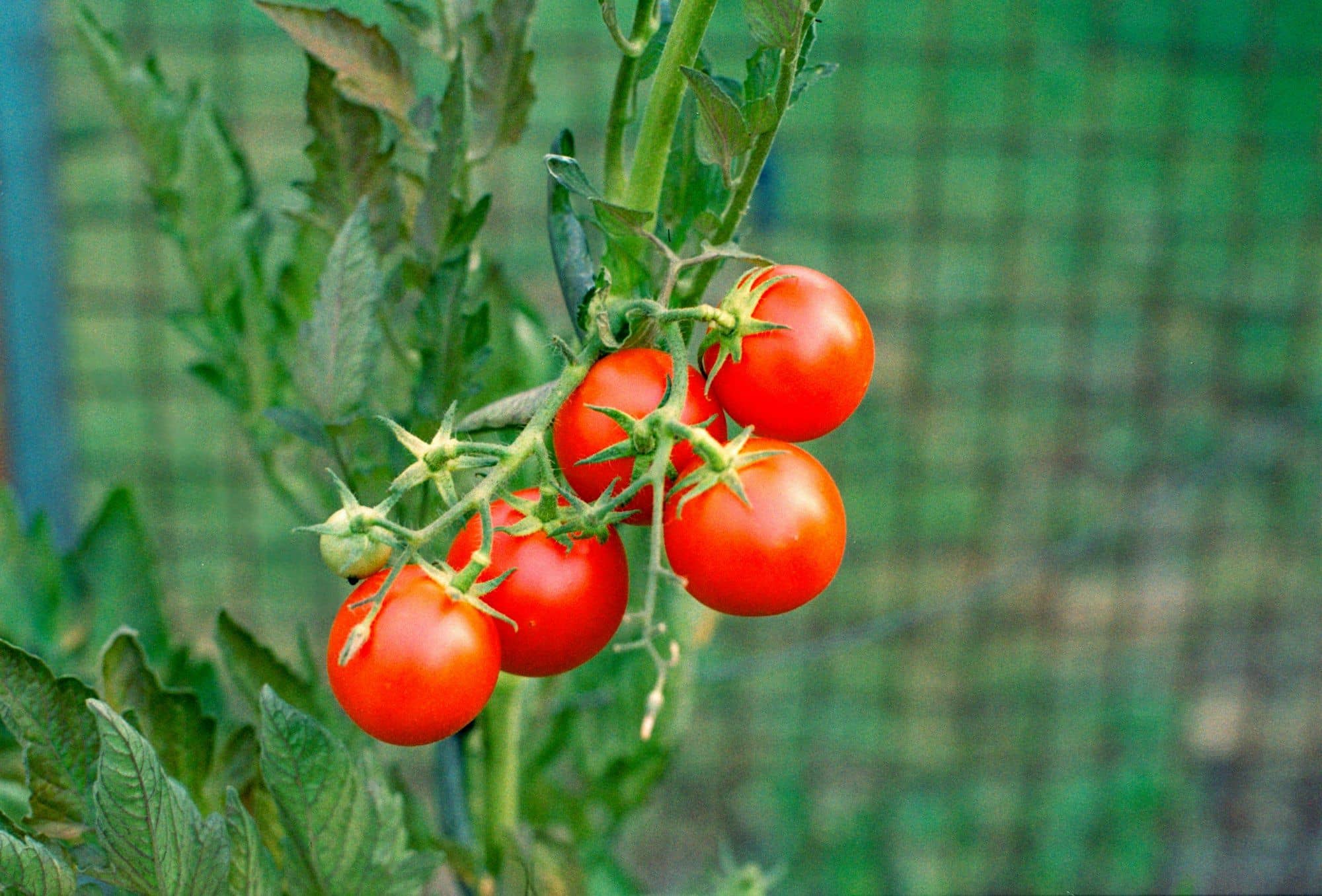
Cherry Tomato Farming in Hydroponics and Vertical Farms
Hydroponic cherry tomatoes: Indian varieties, light (DLI) needs, dutch buckets and NFT, pruning, pollination, EC, Brix, pests, yields and revenue arithmetic.

Indoor Saffron Farming in India
How indoor and aeroponic saffron works: the corm cycle, a temperature and humidity table, what Indian growers have reported, realistic yields and scam warnings.
Part 4 of 7
Costs and business
Setup and running costs, energy, business plans, subsidies, and why some farms fail.
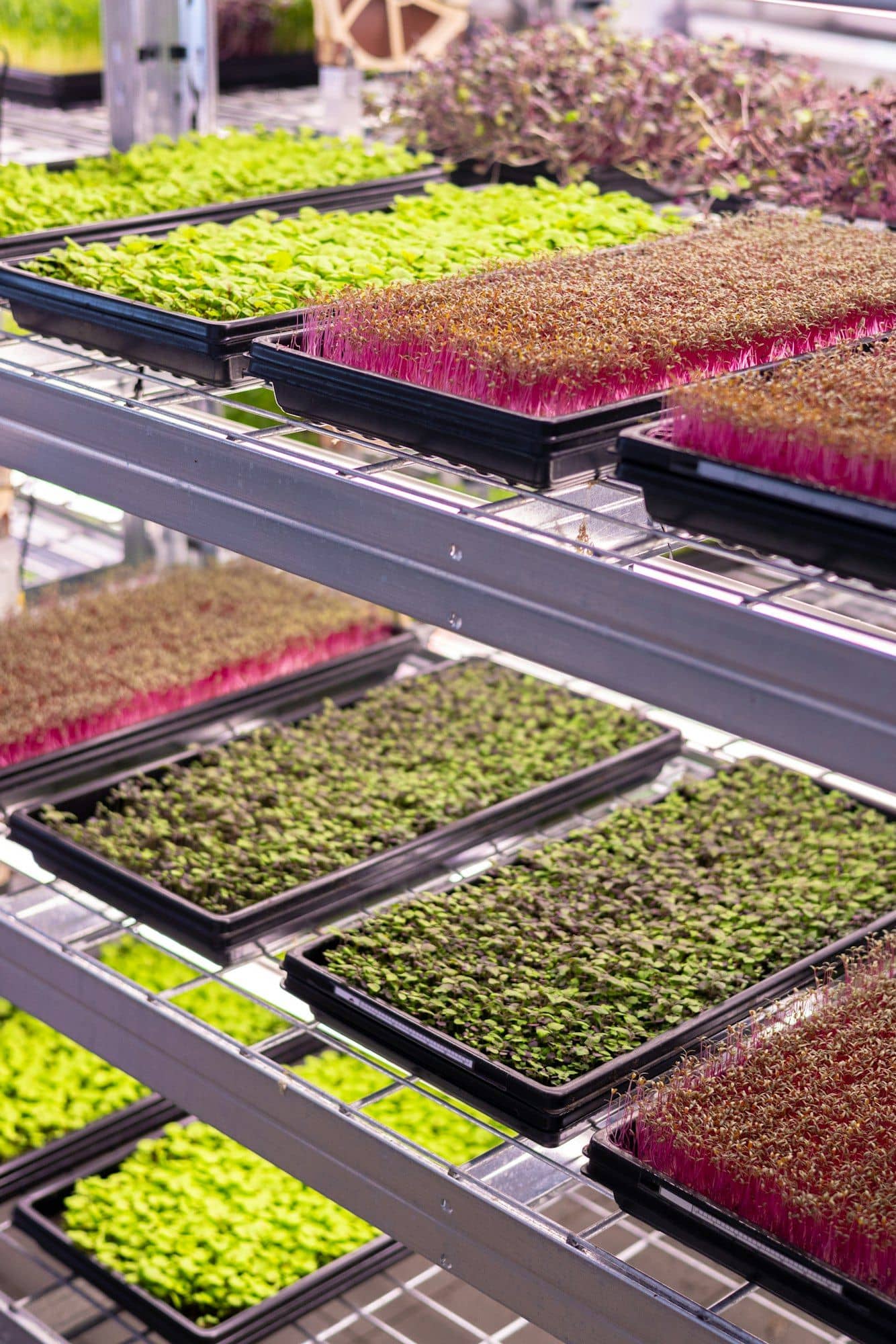
Vertical Farming Cost in India
What a vertical farm costs in India: capex for racks, LEDs, HVAC and water, opex for power, labour and inputs, and a worked 1,000 sq ft example with the maths.
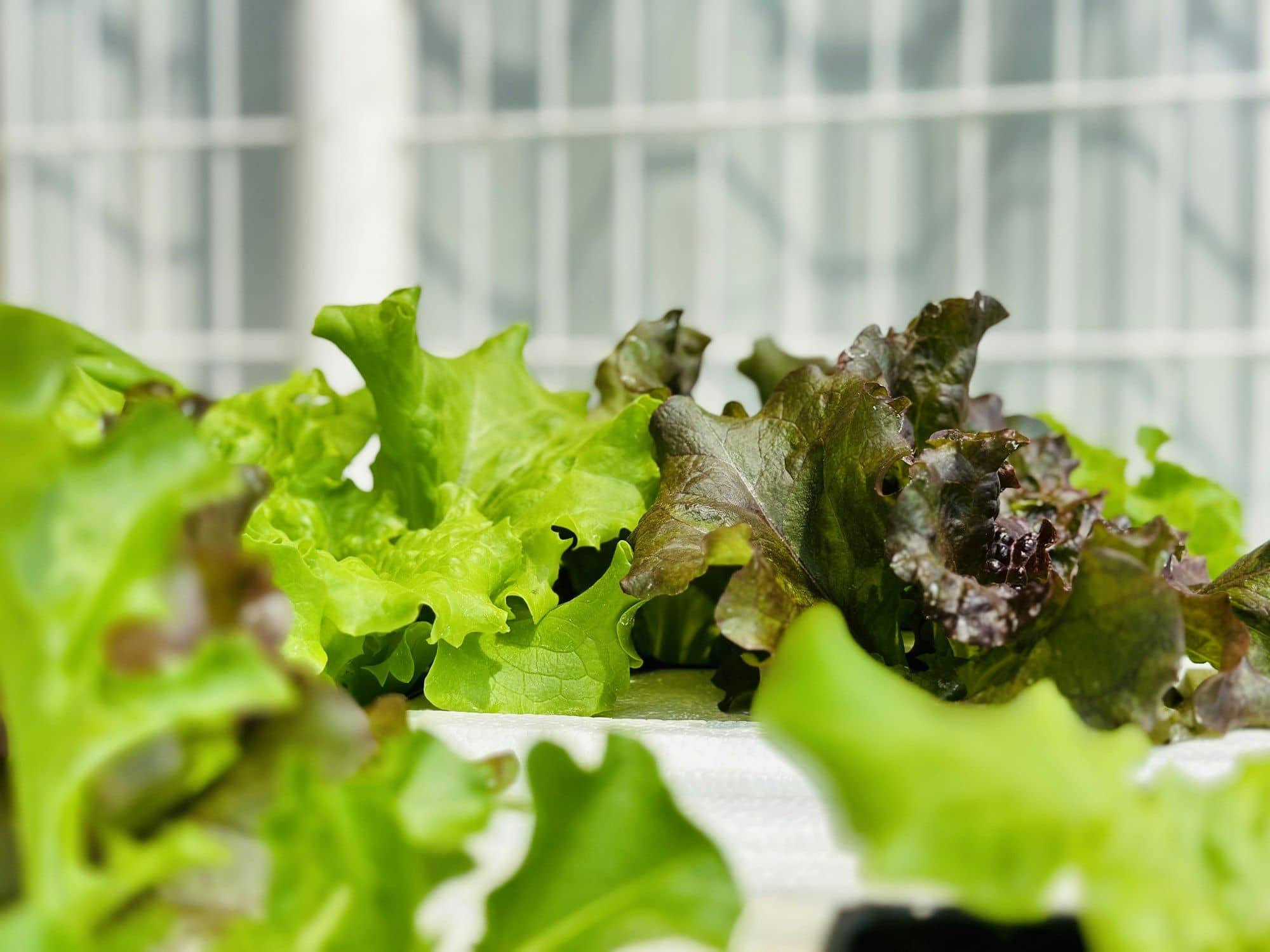
Vertical Farming Business Plan
How to write a vertical farming business plan: the sections, a revenue model of kg per month × ₹ per kg, buyers, breakeven arithmetic and the risks to test.
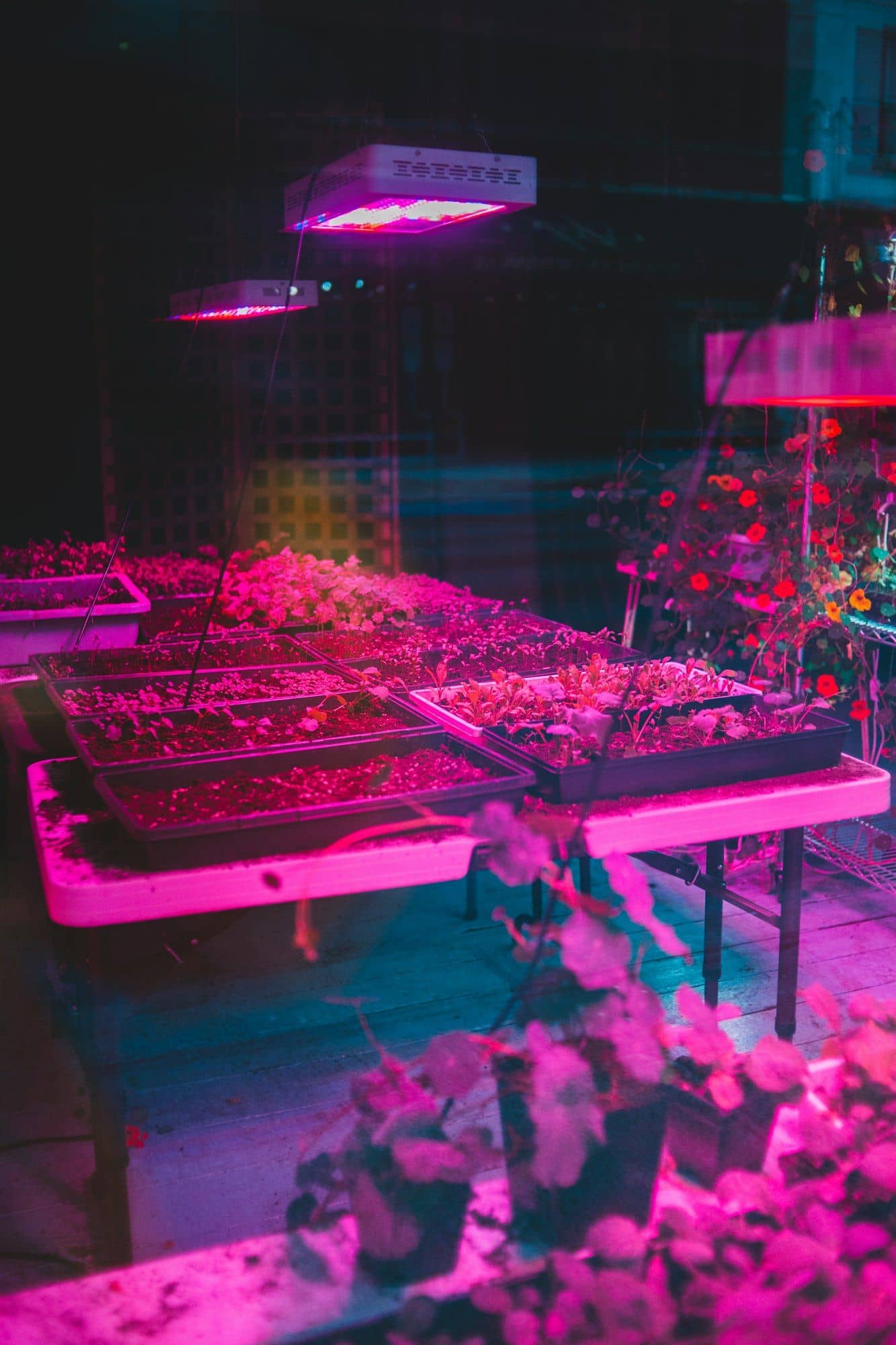
Vertical Farming Energy Use
How much electricity vertical farms use: 10–18 kWh per kg of lettuce, where it goes, Indian tariffs by state, solar offset maths and sunlight-plus-LED hybrids.
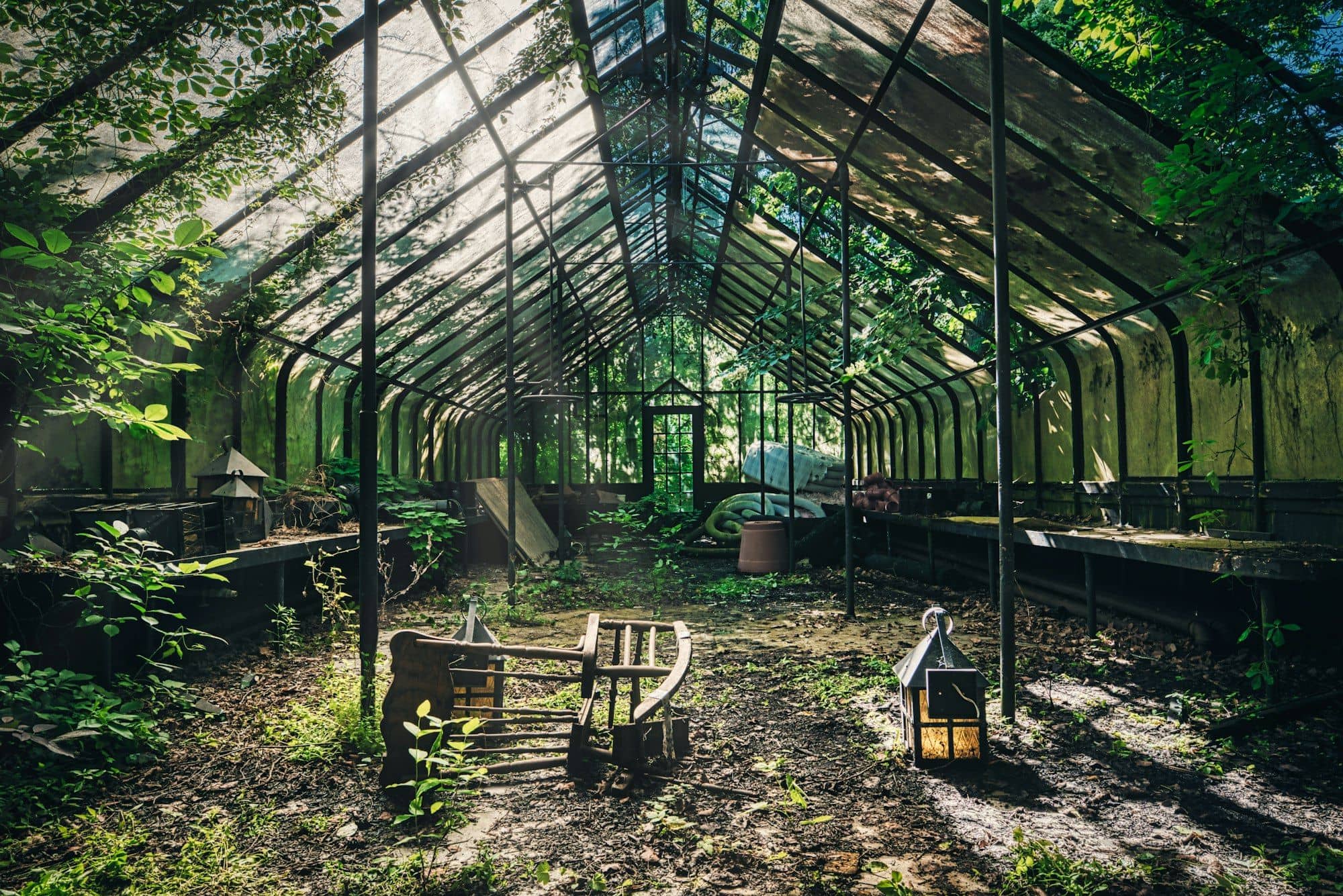
Why Vertical Farms Fail
Why vertical farms fail: AeroFarms, Kalera, AppHarvest, Infarm, Fifth Season, Bowery and Plenty as reported, the common causes, and lessons for Indian farms.
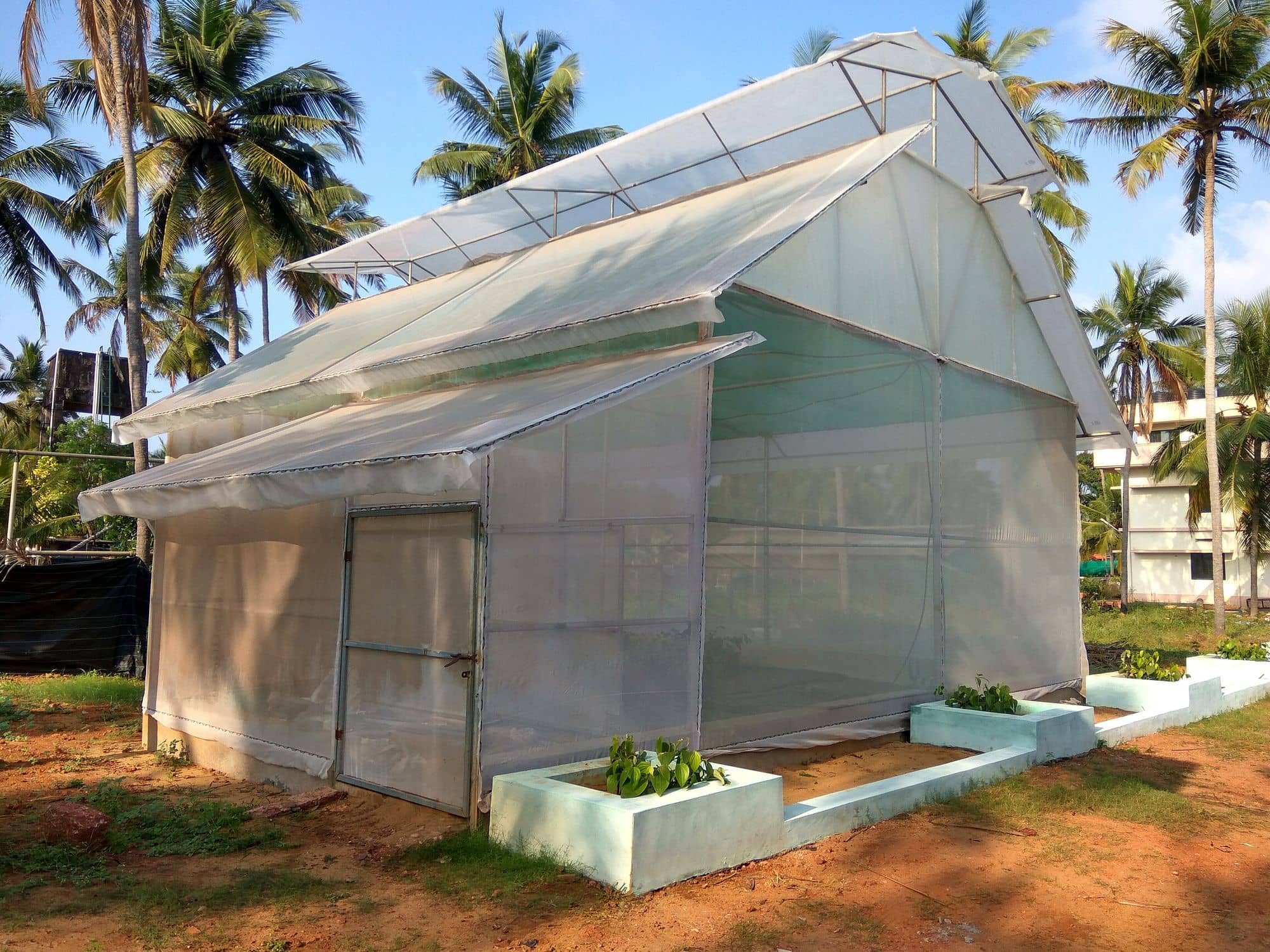
Vertical Farming Subsidy in India
Subsidies and loans for vertical and hydroponic farms in India: NHB, MIDH, state horticulture, AIF, FPO and startup schemes, what to verify and how to apply.
Part 5 of 7
India and the world
Vertical farming in India and in the countries that lead it.
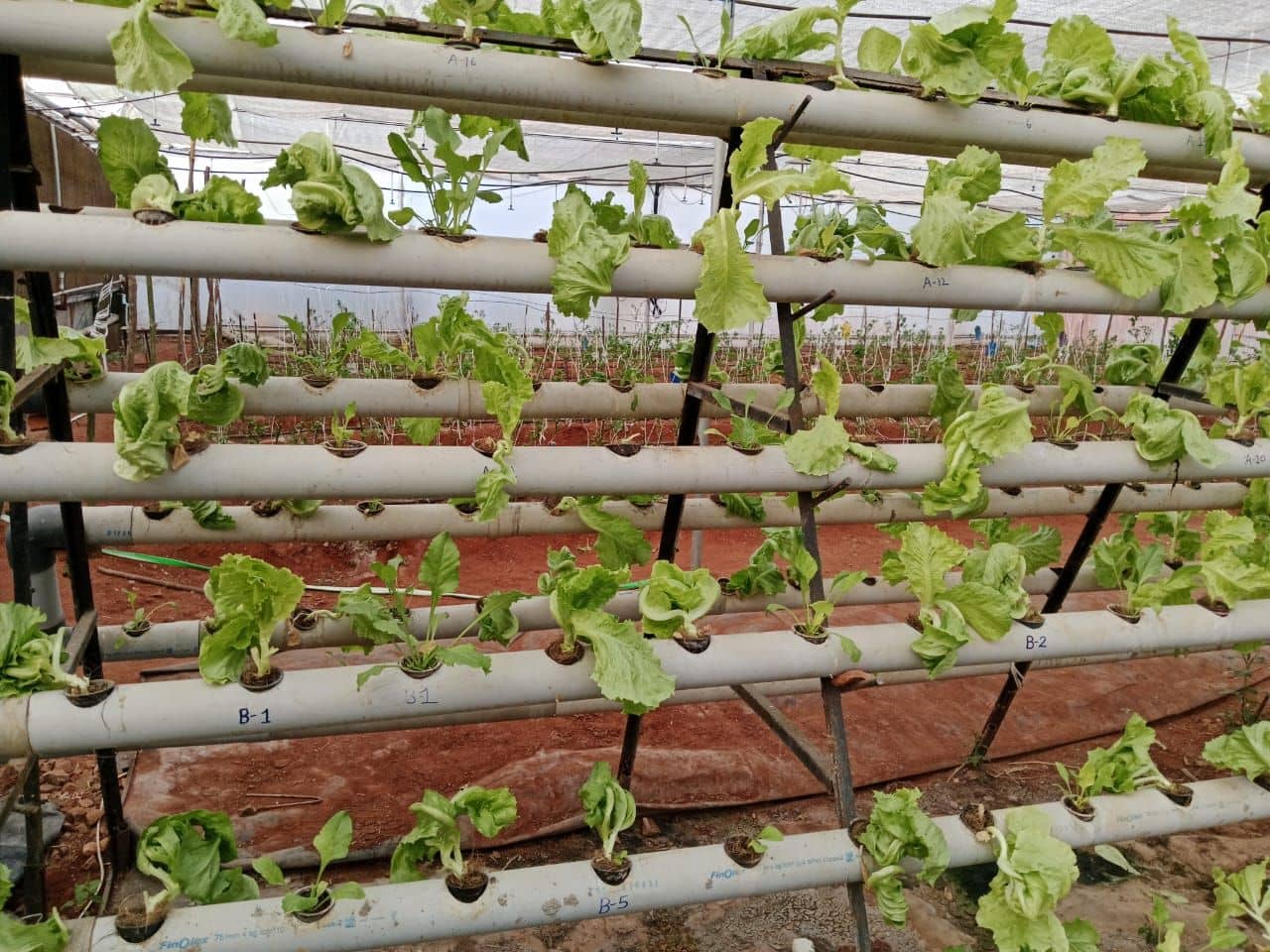
Vertical Farming in India
Vertical farming in India: reported players, cities, climate, power tariffs, buyers such as HoReCa and quick commerce, NHB subsidy pointers and how to start.
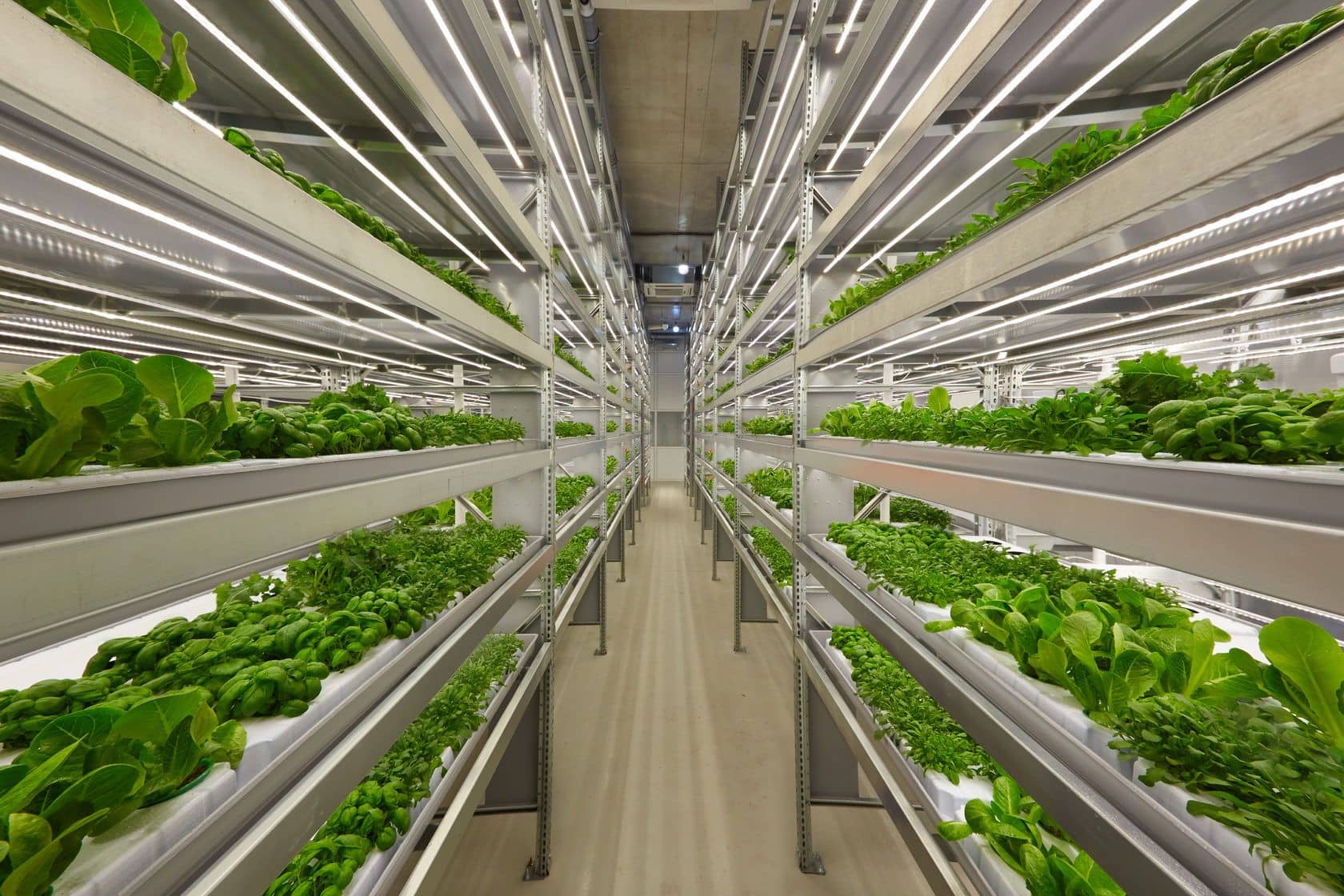
Vertical Farming Around the World
Vertical farming by country: Japan's plant factories, Singapore, UAE's Bustanica, the Netherlands, AeroFarms, Plenty and Bowery in the US, China and Europe.
Part 6 of 7
Homes, schools and campuses
Small farms for homes, schools, offices, hotels and cafés.
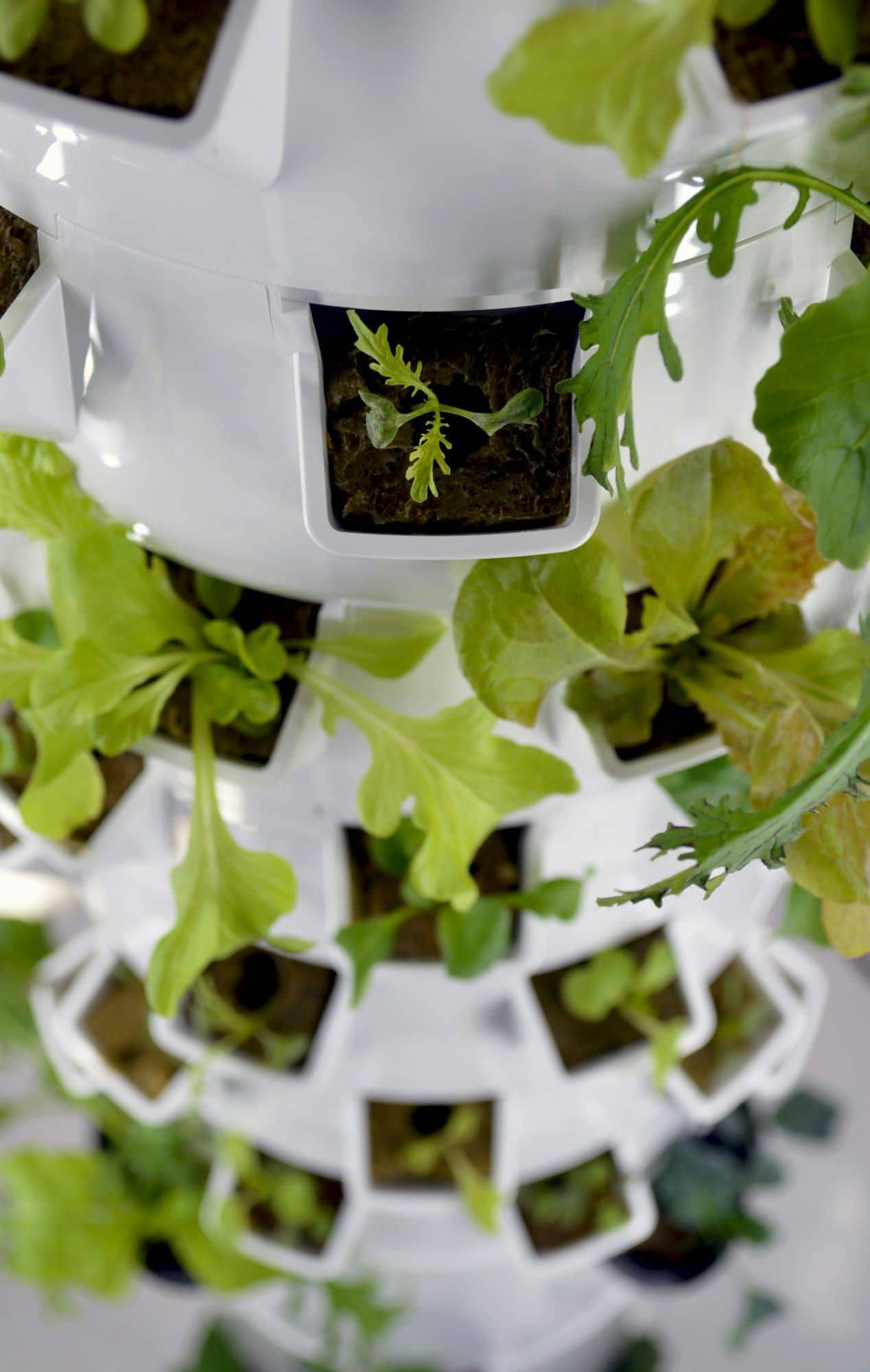
Vertical Farming at Home
How to farm vertically at home: towers, shelf racks and window farms, what grows well, grow lights, and a worked monthly running cost in ₹ for Indian flats.

Vertical Farming for Schools, Campuses, Hotels and CSR
How schools, campuses and hotels use vertical farms: classroom learning, cafeteria supply, CSR under Schedule VII, and how a vertical farm project is planned.
Part 7 of 7
Reference
The terms used in vertical farming, explained.

Calculator
Yield and electricity for your space
Enter the floor area and number of layers. The figures come from published benchmarks, listed under the calculator, and are a starting point for a proper feasibility study.
- Growing area
- 232 m²
- 50% of the floor × 5 layers
- Output a year
- 16,490 kg
- Range 10,916–26,710 kg
- LED load
- 23.2 kW
- 100 W per m² of growing area
- Electricity a year
- 1,80,851 kWh
- About 11.0 kWh per kg
- Power bill a year
- ₹13.0 lakh
- At ₹7.21 a unit, before fixed charges and duty
- Power cost per kg
- ₹79
- Electricity only, at the typical output
How this is worked out
- Growing area = floor area × 0.0929 (sq ft to m²) × 0.5 (share of floor under racks) × layers = 232 m².
- Output = growing area × 47–115 kg per m² a year (typical 71), from published vertical farm benchmarks.
- LED load = growing area × 100 W per m² = 23.2 kW; lighting = 23.2 kW × 16 hours × 365 days = 1,35,638 kWh.
- Lighting is 65–85% of a farm's electricity; at 75%, the total is 1,35,638 ÷ 0.75 = 1,80,851 kWh.
- Power bill = 1,80,851 kWh × ₹7.21 = ₹13,03,937. Variable charge only. Fixed charges, electricity duty and fuel adjustment are extra. Tariffs change every year; check your DISCOM's current schedule.
These are estimates from averages. A real farm's figures depend on the crop, the light level, the building, the climate and how well it is run. Maharashtra lists indoor vertical farming under its agriculture (others) tariff; confirm your category with the DISCOM in writing.
Sources:
- Miserocchi & Franco (2025), Benchmarking energy efficiency in vertical farming: Status and prospects, Thermal Science and Engineering Progress 58
- Meeuws et al. (2026), Vertical farming economics: crop performance targets for cost-competitive vertical farming, Frontiers in Sustainable Food Systems
- Priti et al. (2022), Yield optimization, microbial load analysis, and sensory evaluation of mungbean, lentil, and Indian mustard microgreens, PLoS One
- Gavhane et al. (2023), Determination of optimal daily light integral for indoor cultivation of iceberg lettuce in an indigenous vertical hydroponic system, Scientific Reports
- Kusuma, Pattison & Bugbee (2020), From physics to fixtures to food: current and potential LED efficacy, Horticulture Research
- DesignLights Consortium, Horticultural Technical Requirements V4.0
- MERC order, Case No. 75 of 2025 (25 March 2026), MSEDCL tariffs FY 2026-27
- MERC MYT order, Case No. 217 of 2024 (28 March 2025), MSEDCL tariff schedule
- KERC Combined Tariff Order 2025 (27 March 2025), all Karnataka ESCOMs
Benefits and limits
Why grow vertically, and what it costs you
A vertical farm uses a fraction of the water of a field, because the nutrient solution is recirculated and the moisture the plants breathe out is recovered by the air conditioning. It needs little or no pesticide in a closed room, it is not exposed to rain, heat waves or hail, and it can sit next to the buyers in a city, so produce reaches them within a day.
The limits are the capital cost and the running cost. Racks, LEDs, air conditioning and controls cost several times as much per square metre as a polyhouse, and the electricity bill is the largest running cost. The crop range is narrow: leafy greens, herbs, microgreens and a few fruiting crops pay their way; staples do not.
The numbers
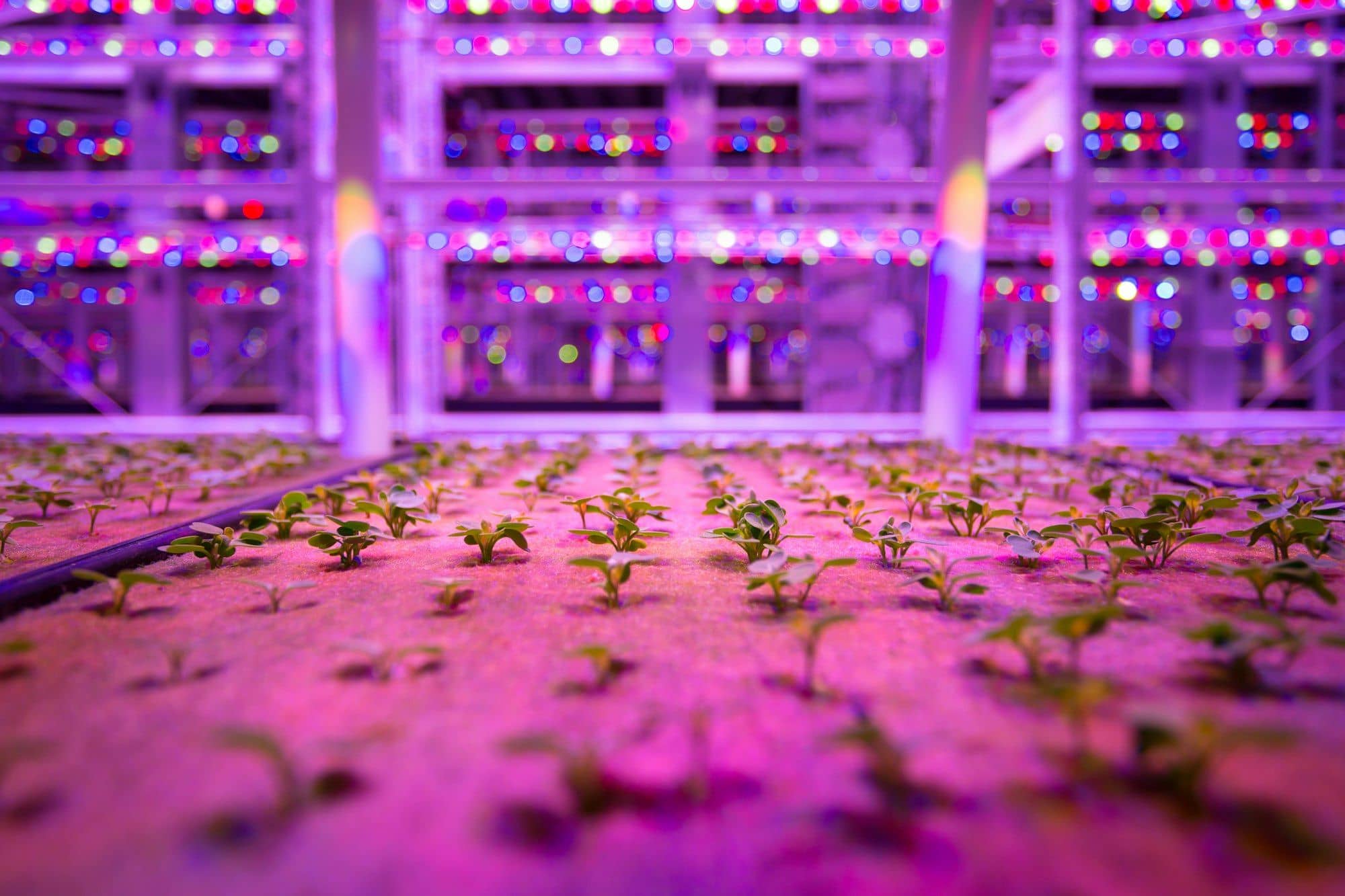
Energy decides whether a vertical farm pays
Current benchmarks put lettuce from a fully indoor vertical farm at about 10 to 18 kWh of electricity per kilogram, most of it for lighting. At the Maharashtra rate for a small commercial connection in 2026-27, ₹10.11 per unit (₹8.51 energy charge plus ₹1.60 wheeling, before fixed charges and duty), that is 10 × ₹10.11 = ₹101.10 to 18 × ₹10.11 = ₹181.98 per kilogram in electricity alone. Maharashtra lists indoor vertical farming under its agriculture (others) tariff, ₹7.21 a unit in 2026-27, which brings the range down to 10 × ₹7.21 = ₹72.10 to 18 × ₹7.21 = ₹129.78, still before labour, seeds, nutrients, packaging and the cost of the building.
That is why the farms that work pick crops that sell for well above that figure, sell to buyers who pay for freshness and consistency, and cut the power bill with efficient LEDs, sunlight where possible and rooftop solar. The calculator on this page runs the same arithmetic for your space.
Crops
What grows well in a vertical farm
Lettuce and other salad greens, basil, mint and coriander, and microgreens are the core crops: they are short, fast and sold fresh at a good price. Strawberries and cherry tomatoes can work with more light and more care, and are grown in taller single-layer rooms or greenhouses more often than in stacked racks. Saffron is grown indoors on a small scale in India, but yields and claims vary widely, and it is not the easy income it is often sold as.
India
Vertical farming in India
India's vertical farms are mostly hydroponic farms growing greens and herbs near the large cities, selling to hotels, restaurants, quick-commerce apps and households. Heat in summer, humidity in the monsoon and the cost and reliability of power are the main problems to design for, and many Indian growers use polyhouses with hydroponics, or sunlight with LED top-up, rather than fully indoor rooms.
Government support exists for protected cultivation and for hydroponic and aeroponic projects above a minimum size, through the National Horticulture Board and state horticulture departments. The terms change, so confirm them with the scheme's current guidelines before you plan around a subsidy.
Which one do you need
Vertical farm, vertical garden or home tower
A vertical farm grows food to eat or sell. A vertical garden, also called a green wall or living wall, is planted for looks, cooling and a better lobby or facade, and grows ornamental plants rather than crops. A home tower is a small vertical hydroponic unit for a balcony, terrace or kitchen that grows greens and herbs for one household. Schools, offices, hotels and cafés often use a few towers or a small room farm as a teaching or showcase space.
Work with us
Build a vertical farm with us
—
Vertical Farm Setup
Commercial vertical farms for rooftops, warehouses, campuses, hotels and schools.
Priced in your proposal
—
Vertical Farm Consulting
Feasibility studies, design, audits, troubleshooting and training for vertical and hydroponic farms.
Priced in your proposal
—
Aeroponic and Hydroponic Towers
Aeroponic tower gardens for balconies and terraces, installed with seedlings and a refill plan.
Price on WhatsApp
Questions
Vertical farming questions, answered
What is vertical farming?
Vertical farming is growing crops in stacked layers, usually indoors, without soil. Roots are fed by a nutrient solution (hydroponics), a nutrient mist (aeroponics) or water from fish tanks (aquaponics), and light, temperature and humidity are controlled so crops grow all year.
Is vertical farming profitable in India?
It can be, for the right crops and buyers. Electricity alone costs roughly ₹72 to ₹182 per kilogram of lettuce at Maharashtra's 2026-27 rates, depending on whether the farm is billed at the agriculture or the commercial tariff, so profitable farms grow high-value, fast crops, sell to buyers who pay for freshness, and cut power use with efficient LEDs, sunlight and solar. Many projects have failed on energy and sales, not on growing.
How much does a vertical farm cost to set up?
The cost depends on the floor area, the number of layers, LED or sunlight, the climate control and how much is automated. A fully indoor farm costs several times as much per square metre as a polyhouse. A feasibility study with a costed design is the only reliable way to price a specific project.
How much electricity does a vertical farm use?
Current benchmarks put indoor vertical farm lettuce at about 10 to 18 kWh per kilogram, with 65 to 85 per cent of that used by the lights and most of the rest by air conditioning. Newer LEDs and better control can bring it down.
What is the difference between hydroponics and vertical farming?
Hydroponics is a way of feeding plants: roots in a nutrient solution instead of soil. Vertical farming is a way of arranging them: in stacked layers. Most vertical farms use hydroponics or aeroponics, but a hydroponic farm can also be a single layer in a greenhouse.
Which crops grow best in a vertical farm?
Lettuce and other salad greens, herbs such as basil and mint, and microgreens grow best because they are short, fast and valuable. Strawberries and cherry tomatoes are possible with more light. Staples such as wheat, rice and potatoes are not viable indoors because of the electricity they would need.
Is a vertical garden the same as a vertical farm?
No. A vertical garden or green wall grows ornamental plants on a wall for looks and cooling. A vertical farm grows food crops in stacked layers under controlled conditions. The words sound alike, but the systems, costs and purpose differ.
Does Garden & Acre build vertical farms?
Yes. Garden & Acre plans and builds vertical farms for rooftops, warehouses, campuses, hotels and schools, offers consulting from feasibility to training, and installs hydroponic towers for homes and cafés. Projects are priced in a written proposal after a call.
Sources
Where these figures come from
- Benchmarking energy efficiency in vertical farming: status and prospects — ScienceDirect (2024)
- Comparison of land, water, and energy requirements of lettuce grown using hydroponic vs. conventional agricultural methods — Barbosa et al., IJERPH (2015)
- Plant factories versus greenhouses: comparison of resource use efficiency — Graamans et al., Agricultural Systems (2018)
- MERC tariff order, Case No. 75 of 2025 (25 March 2026), MSEDCL FY 2026-27
- Govt. is providing subsidy for hydroponics & aeroponics farming — Krishi Jagran (2022)
Every article in this guide lists its own sources at the end.
Begin with a visit
Request a proposal
Tell us about the space, or send photos on WhatsApp. We send a written proposal with a fixed price.
hi@gardenandacre.com