
Microgreens · The complete guide
Microgreens: the complete guide
Microgreens are the young seedlings of vegetables and herbs, cut just above the soil when the first leaves open, usually 7 to 21 days after sowing. They are small, strongly flavoured and dense in some vitamins. This guide covers every part of them, from varieties and nutrition to growing, prices and food safety, with sources for every figure.
- Home
- Microgreens
What microgreens are
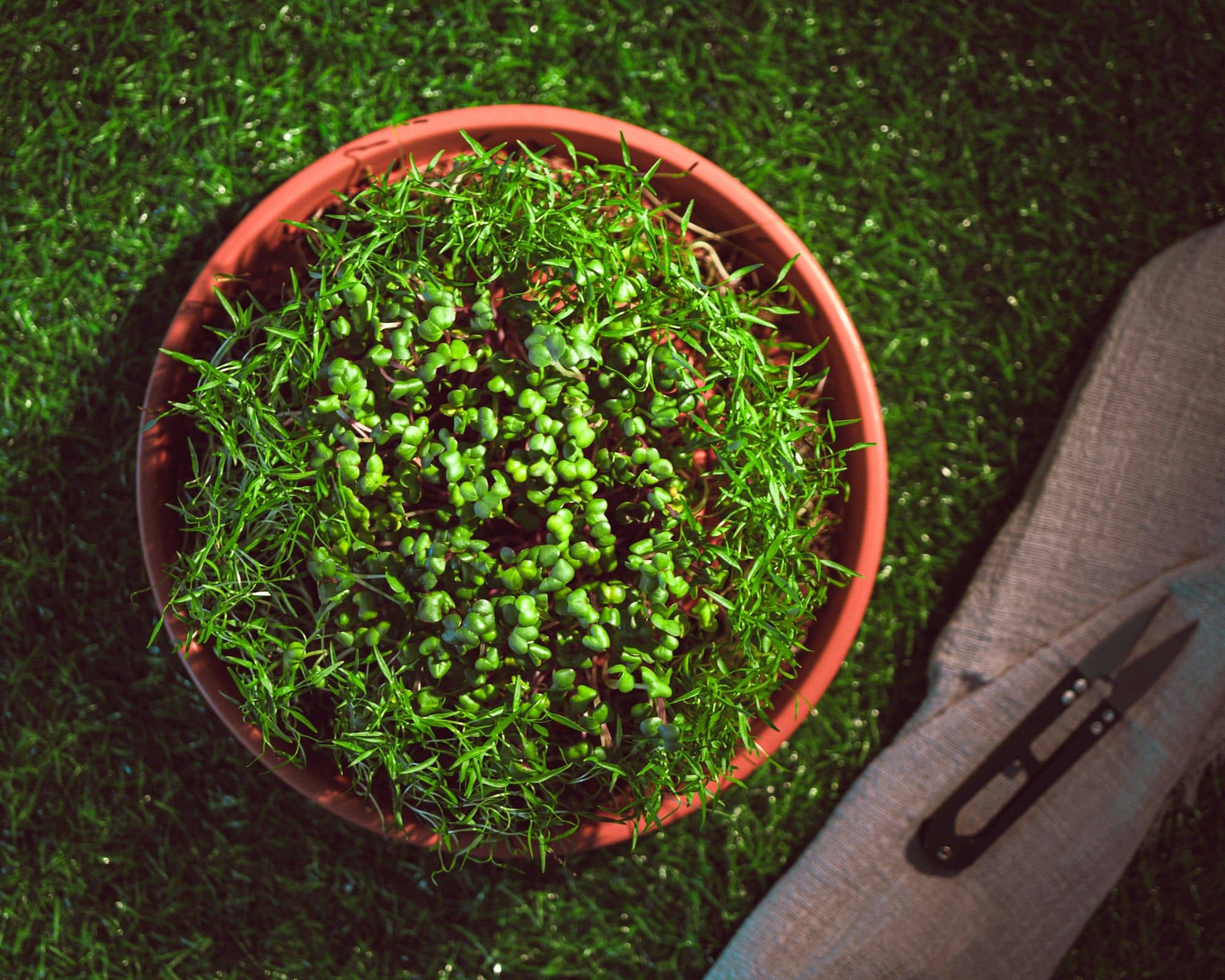
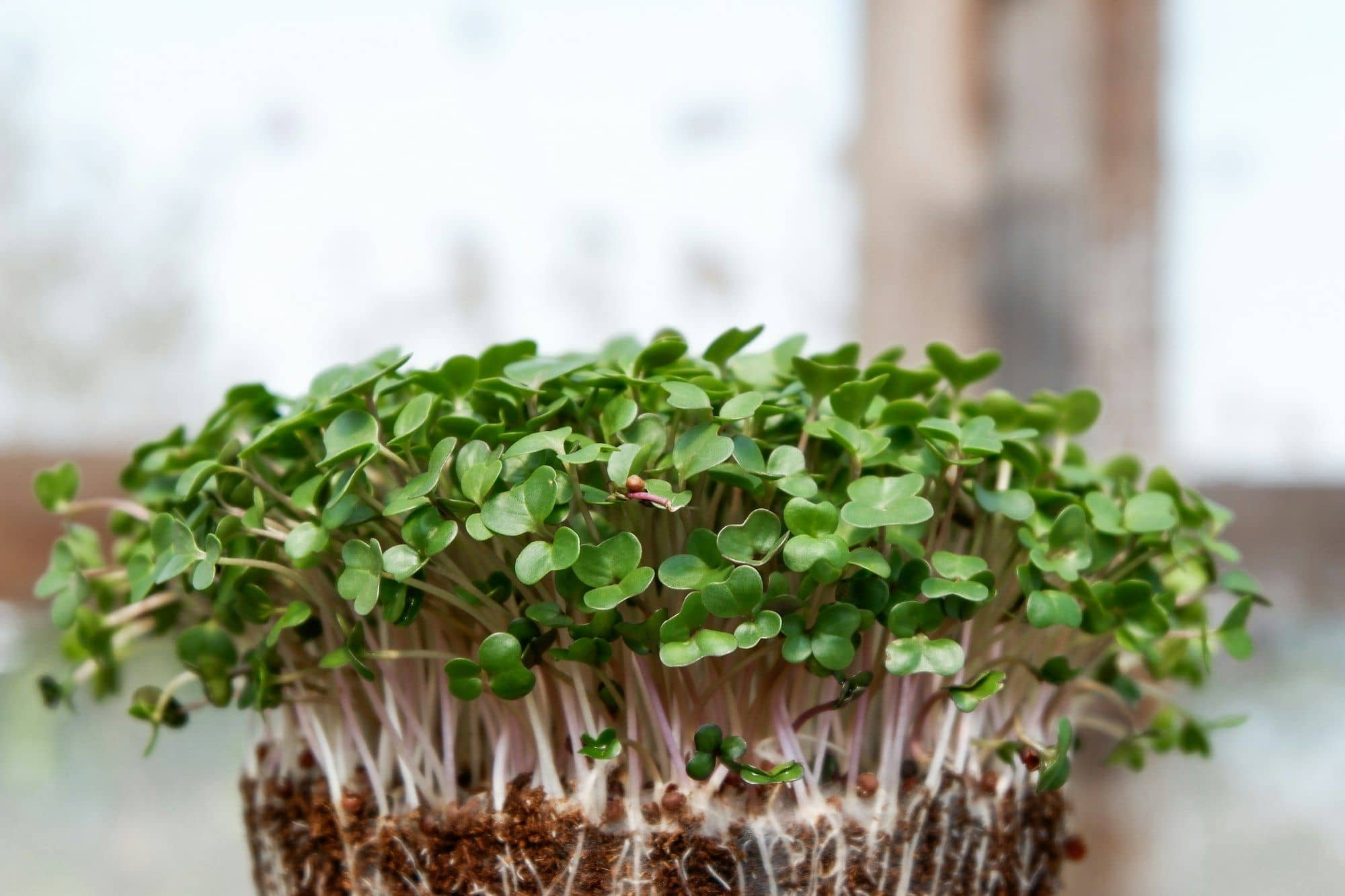
Microgreens are seedlings of edible plants such as radish, mustard, broccoli, sunflower, pea, beet, basil and amaranth, grown densely in a tray of soil, coir or a growing mat under light and harvested with scissors once the seed leaves (cotyledons) have opened, sometimes with the first true leaves. Most are ready in one to three weeks. They are eaten raw or lightly cooked for their colour, texture and concentrated flavour.
They are not sprouts. Sprouts are germinated seeds grown in water for a few days, usually in the dark, and eaten whole with the seed and root. Microgreens grow in light in a medium and are cut above the root, and that difference matters for food safety: the FDA advises vulnerable people not to eat raw sprouts, while microgreens cut without their roots fall outside the US sprout rules.
They are also not baby greens. Baby spinach and baby lettuce are grown for several weeks longer and harvested as small true leaves. Microgreens are the stage before that.
- Days from sowing to harvest
- 7–21
- Most brassicas 8–14 days; herbs and beet 16–25 days
- Vitamins and carotenoids
- ≈5×
- USDA's summary of 25 microgreens against mature leaves (Xiao et al. 2012)
- Yield per cycle
- 0.84–2.65 kg/m²
- Lentil to mungbean, ICAR-IARI trials (Priti et al. 2022)
- Price in India
- ₹740–2,980/kg
- Hyperpure and BigBasket listings, 24 Sep 2026
How to grow
How to grow microgreens in seven steps
- 01
Choose seed sold for microgreens or sprouting
Use untreated, food-grade seed with a high germination rate. Seed treated with fungicide for field sowing is not safe to eat as a seedling.
- 02
Soak large seeds
Pea, sunflower and moong grow more evenly after a soak of several hours. Small seeds such as radish, mustard and broccoli go in dry.
- 03
Sow densely on a level medium
Spread seed evenly over moist soil mix, coir or a growing mat in a tray with drainage, so the seeds touch but do not pile up.
- 04
Keep them dark for the first days
Cover or stack the trays for two to four days while the seeds germinate. The dark makes the stems stretch evenly.
- 05
Give light and air
Uncover them and put them in bright indirect light or under an LED for 12 to 16 hours a day, with a fan or open window to keep air moving and mould away.
- 06
Water from below
Pour water into a tray underneath instead of over the leaves. Wet leaves and still air are the main causes of mould and damping off.
- 07
Cut when the first leaves open
Cut just above the medium with clean scissors, usually at 7 to 21 days. Refrigerate in a closed box and rinse just before eating.

Microgreens library
Microgreen varieties
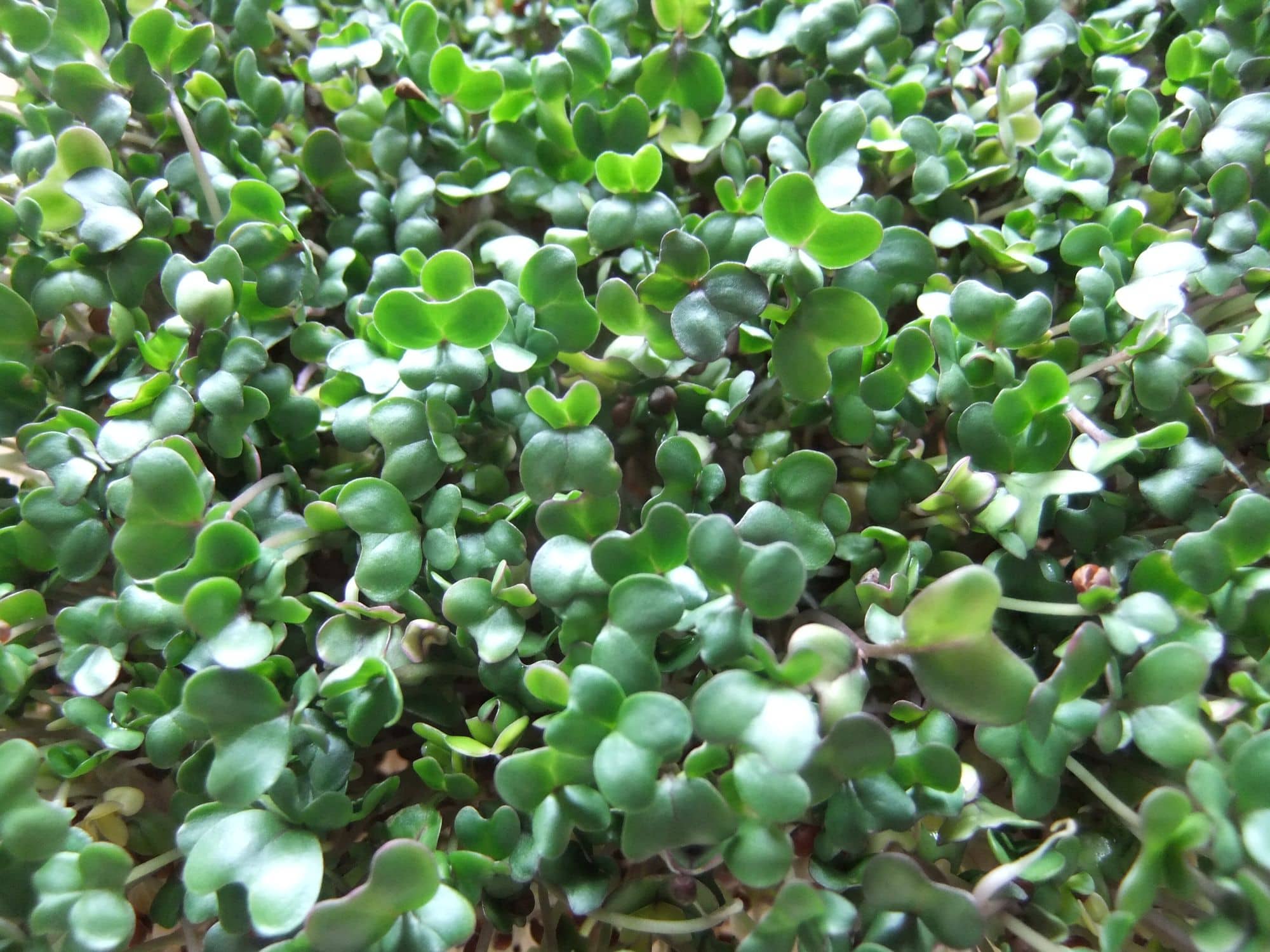
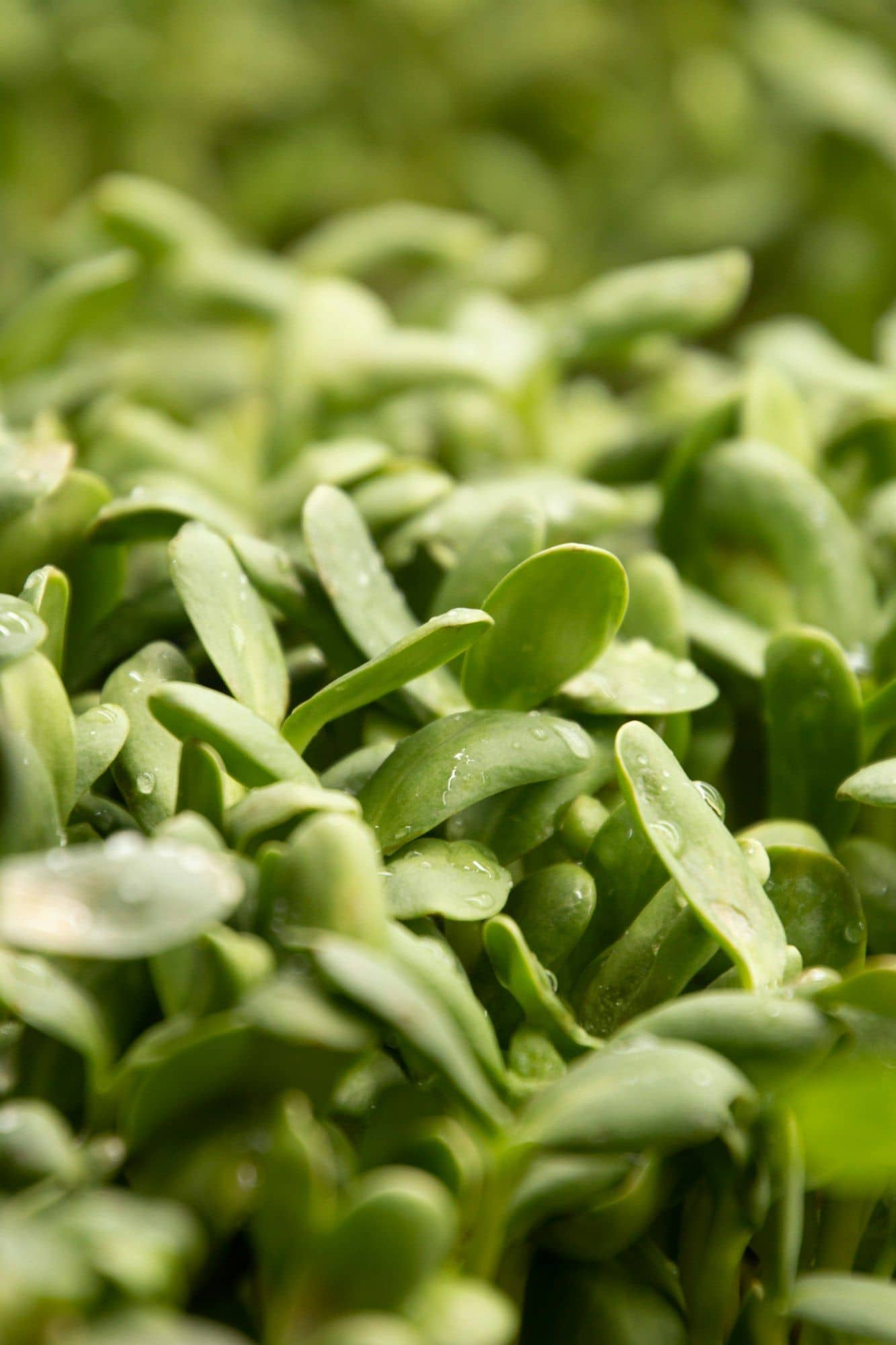
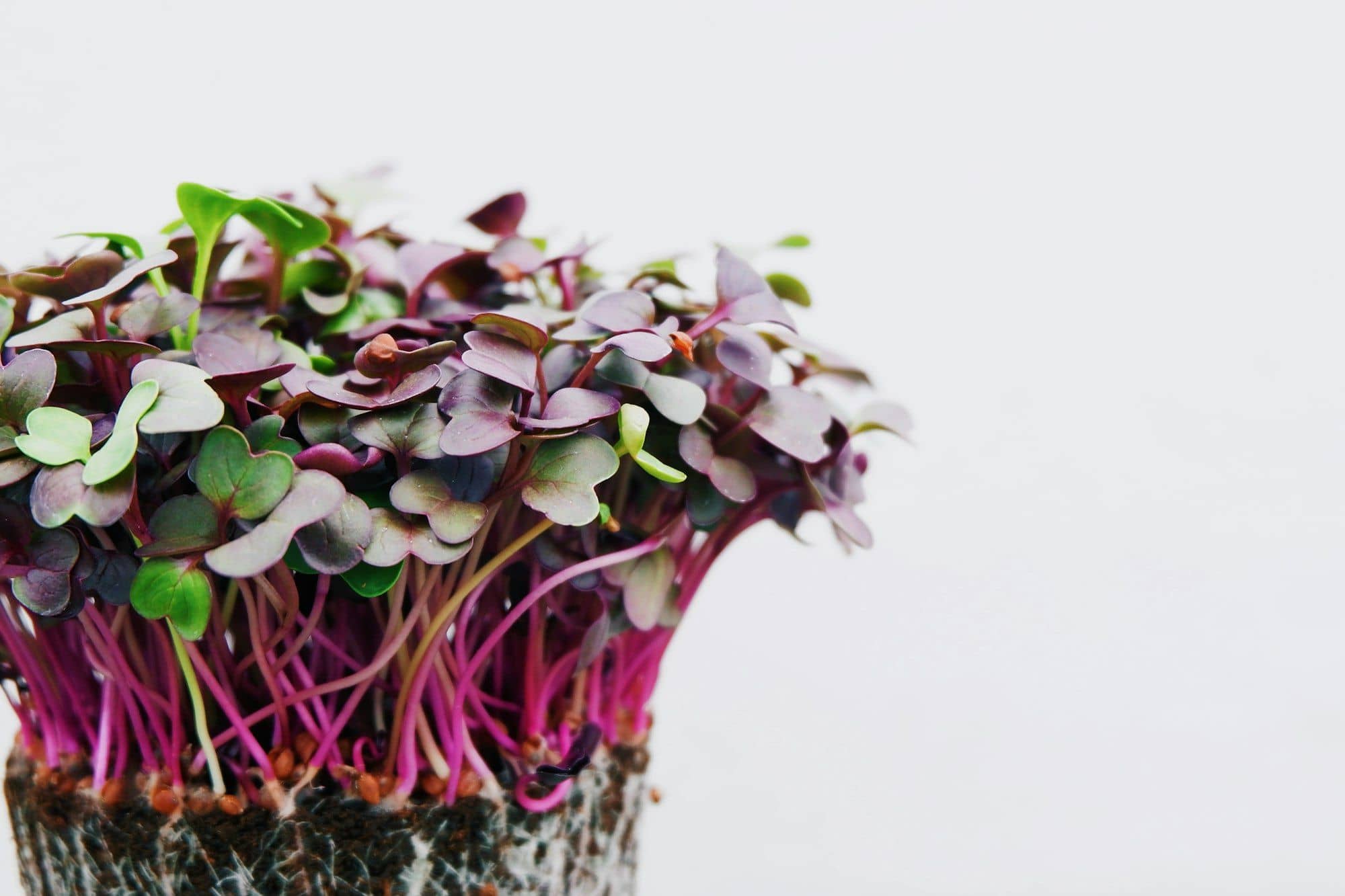
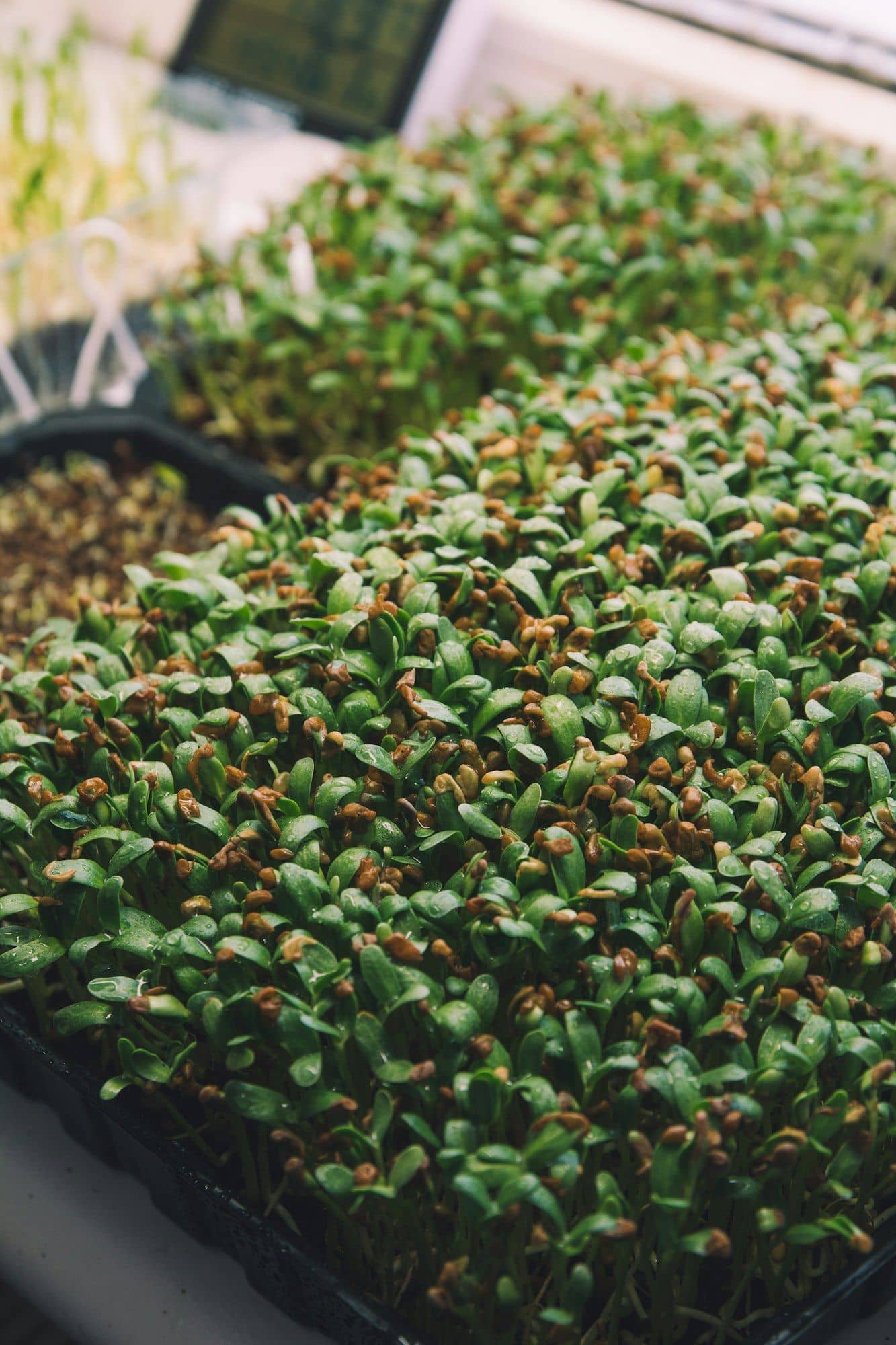
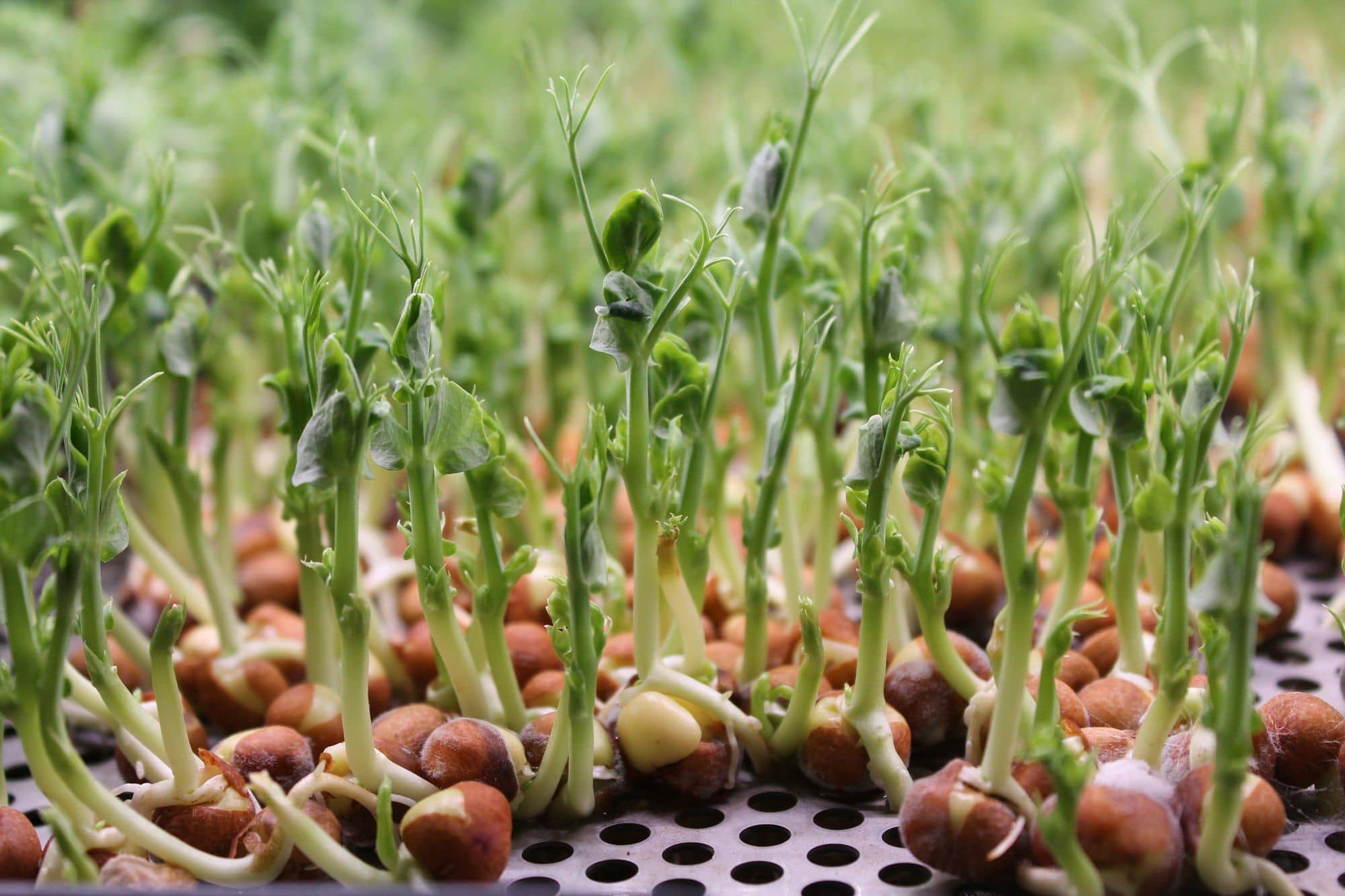
A page for each microgreen: taste, nutrition, how to grow it and how to eat it.








Guides
Basics
What microgreens are, the types, their nutrition, and how they differ from sprouts.

Types of Microgreens
Types of microgreens compared: 35 varieties grouped by family, with taste, sourced days to harvest and difficulty, from radish and mustard to methi and ragi.

Microgreens Benefits and Nutrition
Microgreens nutrition from the studies: vitamins C, E and K, carotenoids and minerals measured by USDA and ICAR, how they compare, and what is still unproven.

Microgreens vs Sprouts
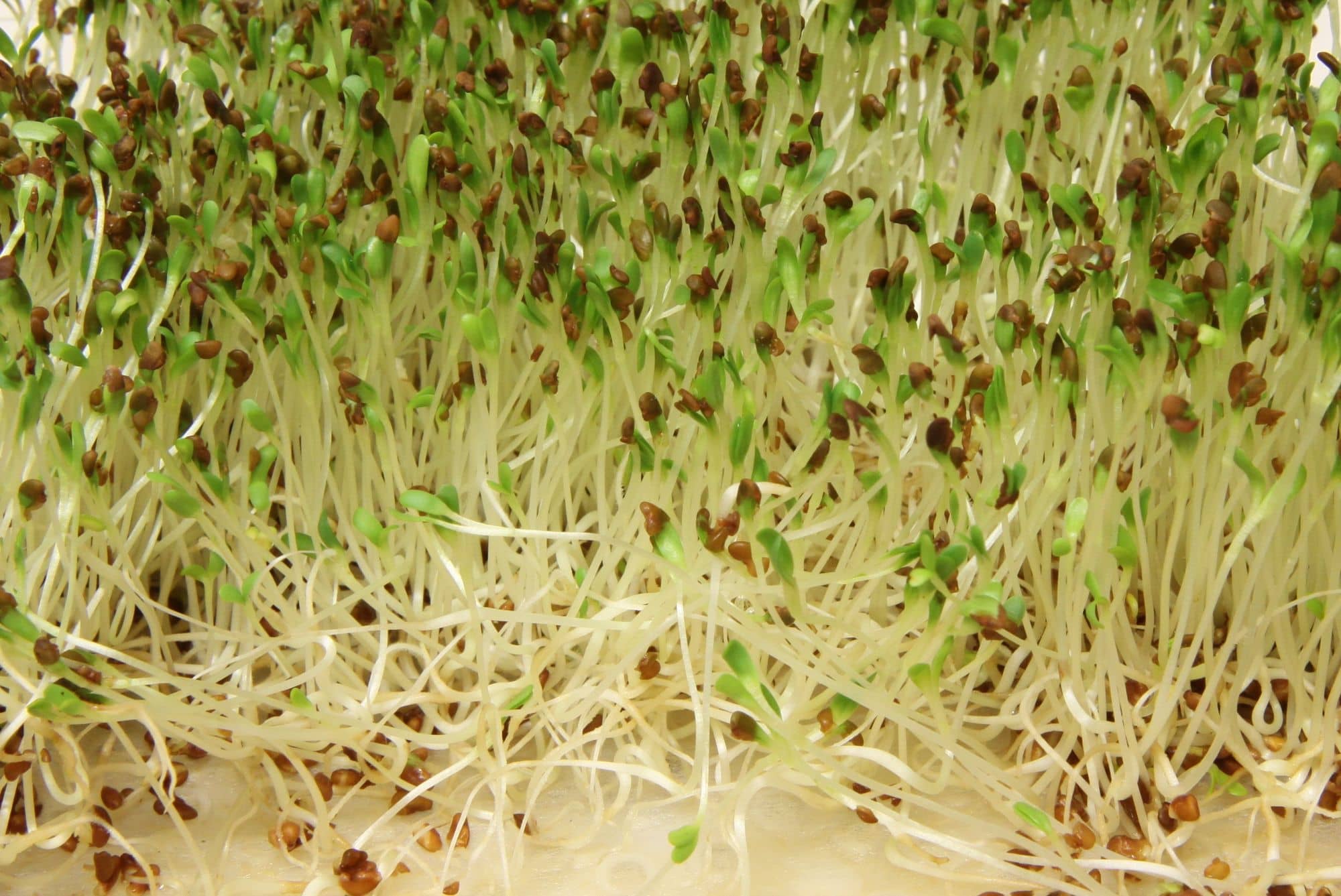
Microgreens vs sprouts explained: how each is grown, why the FDA treats raw sprouts as higher risk, what studies found on nutrition, and how each is eaten.
Microgreens in Hindi
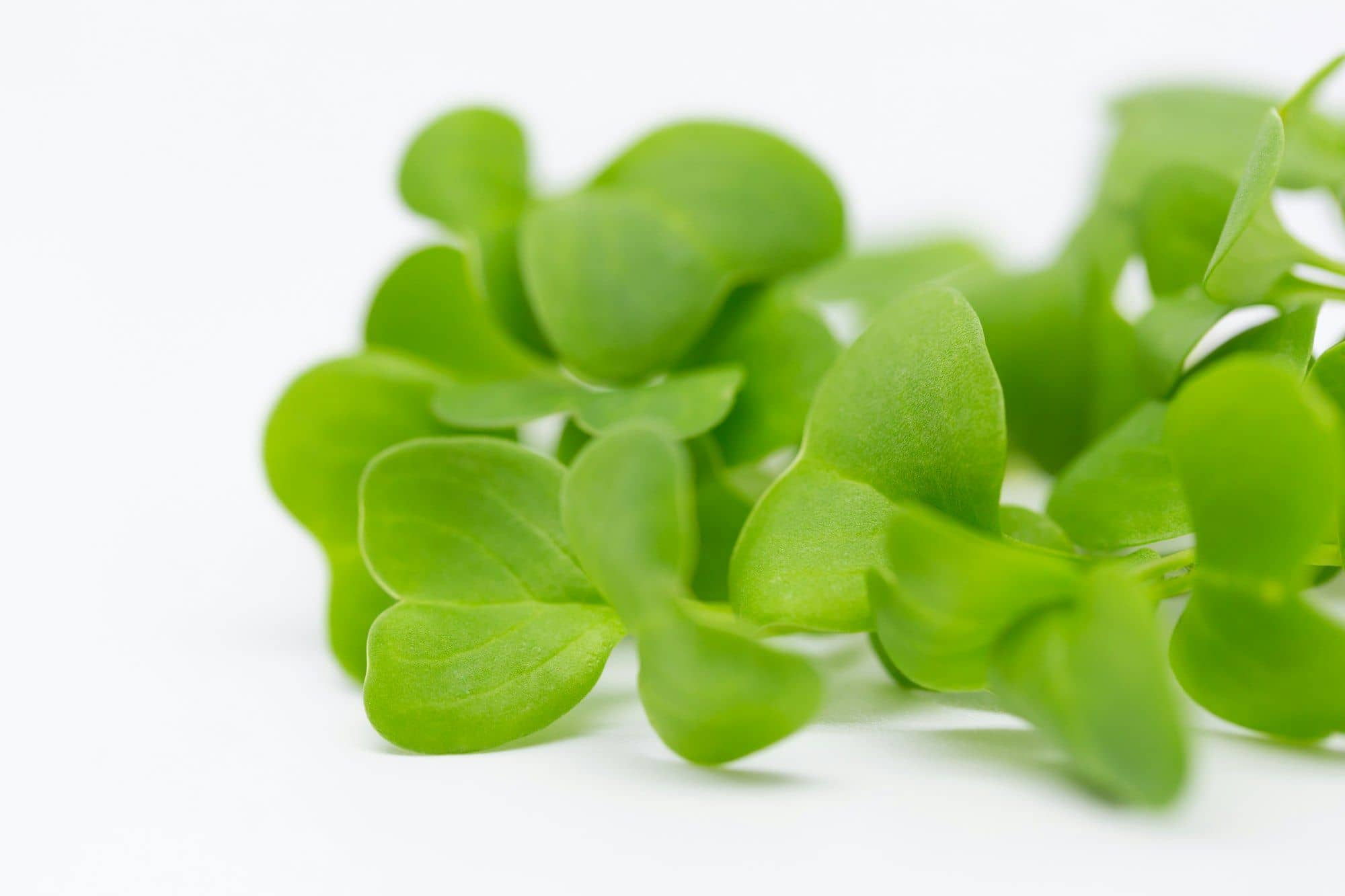
Microgreens meaning in Hindi, with a table of 30 common microgreens and their Hindi and Marathi names in Devanagari, from mooli and methi to sarson and ragi.
Guides
How to grow
Growing microgreens at home or without soil: seeds, trays, light, water and food safety.

How to Grow Microgreens at Home
How to grow microgreens at home, step by step: seed rates, soaking, blackout, window or LED light, watering, harvest, and fixes for mould and leggy growth.

Hydroponic Microgreens
Hydroponic microgreens explained: hemp, jute and coco coir mats, when to use nutrient solution, research yields, food safety, and pros and cons against soil.

Microgreen Seeds
A neutral guide to microgreen seeds: why they must be untreated, seed rates per tray by variety, the germination test, storage, hygiene and buying in India.
Microgreens Trays and Kits
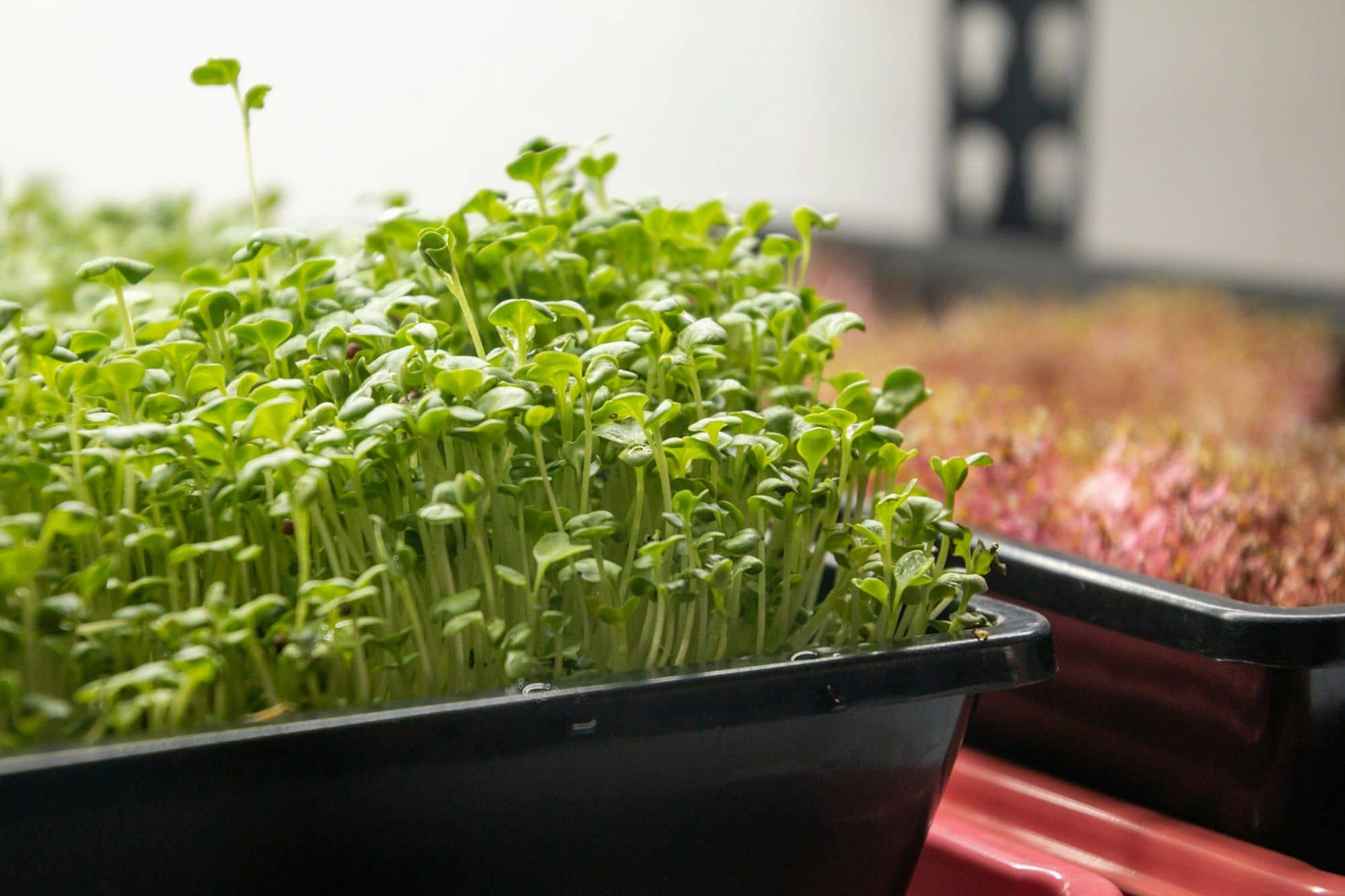
A neutral guide to microgreens trays and kits: the 10 × 20-inch 1020 standard, trays with and without holes, tray sizes, growing media, kit types and DIY trays.

Microgreens Storage, Shelf Life and Food Safety Guide
How to store microgreens and how long they last, from research: storage at 1–5°C, packaging, washing, pathogen risks, seed hygiene, and FSSAI and FDA guidance.
Guides
Business and prices
Prices in India and how a microgreens business works, with the numbers shown.

Microgreens Business in India
How a microgreens business works in India: buyers, space, capex, running costs, a worked monthly example with yields and prices, breakeven, risks and FSSAI.

Microgreens Price in India
Microgreens prices in India from dated listings: Hyperpure wholesale at ₹740–₹2,360 per kg, retail packs at ₹2,000–₹2,980 per kg, and why prices vary by variety
Guides
Eating microgreens
How to eat microgreens, with Indian dishes.
Nutrition
Why people eat microgreens
In the best-known study, USDA scientists measured vitamins C, E and K and carotenoids in 25 commercially grown microgreens and found higher concentrations in the seed leaves than published values for the mature leaves. USDA's own summary put the difference at about five times on average, with wide variation: red cabbage was highest in vitamin C, green daikon radish in vitamin E. Later studies, including ICAR-IARI work on Indian crops, found them good sources of potassium, calcium, iron and zinc.
The often-repeated claim that microgreens have 30 to 40 times the nutrients of mature vegetables is not what the study found. And most research on health effects has been done in animals. Microgreens are a concentrated, flavourful way to add vegetables to a meal, not a medicine.
Prices and business
What microgreens cost in India, and why
On 24 September 2026, restaurant supply platform Hyperpure listed microgreens at ₹740 to ₹2,360 per kg depending on the variety, and BigBasket's retail packs of 20 to 50 g worked out to ₹2,000 to ₹2,980 per kg. Compare lettuce at about ₹99 to ₹140 per kg. Prices depend on the seed cost, the yield per tray, how fast the variety grows and how quickly it wilts after cutting.
That price is why microgreens are the most common first crop for small indoor farms. The numbers still need care: a small room with LED lights, air conditioning and paid labour can cost more per kg than the lowest wholesale prices, and only makes money on the better-priced varieties and direct sales.
At the table
How to eat microgreens
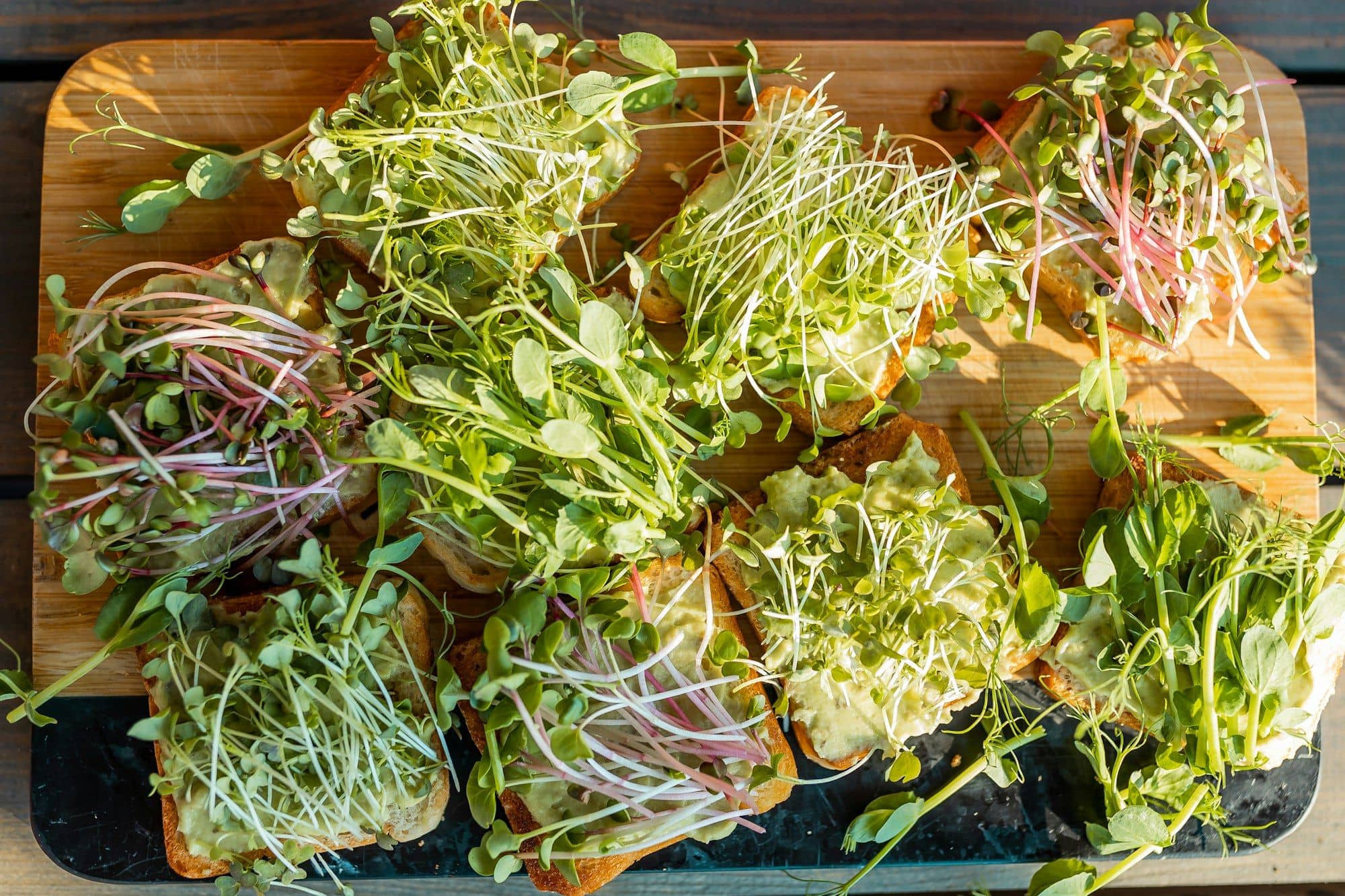
Microgreens are eaten mostly raw: on salads, sandwiches and wraps, over dal, poha, upma, dosa and chaat, stirred into raita, or folded into paratha dough and omelettes at the end of cooking. Match the flavour to the dish: radish and mustard are peppery, pea shoots and sunflower are sweet and crunchy, and basil and coriander taste like the herb. Heat reduces some vitamins, so add them at the end.
Order or build
Microgreens from Garden & Acre
—
Fresh Microgreens Delivery
Fresh microgreens delivered in Pune: weekly home boxes and regular supply for restaurants.
Price on WhatsApp
—
Vertical Farm Consulting
Feasibility studies, design, audits, troubleshooting and training for vertical and hydroponic farms.
Priced in your proposal
—
Vertical Farm Setup
Commercial vertical farms for rooftops, warehouses, campuses, hotels and schools.
Priced in your proposal
Questions
Microgreens questions, answered
What are microgreens?
Microgreens are the young seedlings of vegetables and herbs, such as radish, mustard, broccoli, sunflower and pea, cut just above the soil when their first leaves open, usually 7 to 21 days after sowing. They are eaten raw or lightly cooked for their flavour, colour and nutrients.
Are microgreens healthy?
Yes, as vegetables. A USDA study of 25 microgreens found higher concentrations of vitamins C, E and K and carotenoids than published values for mature leaves, about five times on average in USDA's summary, with wide variation between varieties. Health effects have mostly been studied in animals, so they are best seen as a nutritious food, not a medicine.
What is the difference between microgreens and sprouts?
Sprouts are seeds germinated in water for a few days and eaten whole with the root. Microgreens grow in soil, coir or a mat under light for one to three weeks and are cut above the root. Raw sprouts carry a higher food-safety risk, and the FDA advises vulnerable people to avoid them.
How long do microgreens take to grow?
Most take 7 to 21 days from sowing. Fast brassicas such as radish, mustard and broccoli are ready in about 8 to 14 days; herbs such as basil and coriander and the beet family take about 16 to 25 days.
Which microgreens are easiest to grow at home?
Radish, mustard, broccoli, sunflower and pea shoots are the easiest: fast, forgiving and hard to overwater if you water from below. Basil, coriander and beet are slower and need more patience.
What is the price of microgreens in India?
On 24 September 2026, Hyperpure listed microgreens at ₹740 to ₹2,360 per kg by variety, and BigBasket retail packs worked out to ₹2,000 to ₹2,980 per kg. Most retail packs of 20 to 50 g sold for ₹37 to ₹149.
Can you buy fresh microgreens in Pune?
Yes. Garden & Acre delivers fresh microgreens across Pune and Pimpri-Chinchwad as weekly home boxes, single-variety packs and supply for restaurants, from its own supply chain. Order on WhatsApp for the week's varieties and prices.
Sources
Where these figures come from
- Xiao et al. (2012), Assessment of vitamin and carotenoid concentrations of emerging food products: edible microgreens, J. Agric. Food Chem. — Europe PMC
- Specialty greens pack a nutritional punch — USDA Agricultural Research Service (2014)
- Priti et al. (2022), Yield optimization, microbial load analysis, and sensory evaluation of mungbean, lentil, and Indian mustard microgreens, PLoS One (ICAR-IARI)
- Microgreens yield trial results — Johnny's Selected Seeds (2017)
- Selecting and serving produce safely (raw sprouts) — US FDA
- Hyperpure, Microgreen Mix 50 gm listing (read 24 September 2026)
Every page in this guide lists its own sources at the end.
Begin with a visit
Request a proposal
Tell us about the space, or send photos on WhatsApp. We send a written proposal with a fixed price.
hi@gardenandacre.com