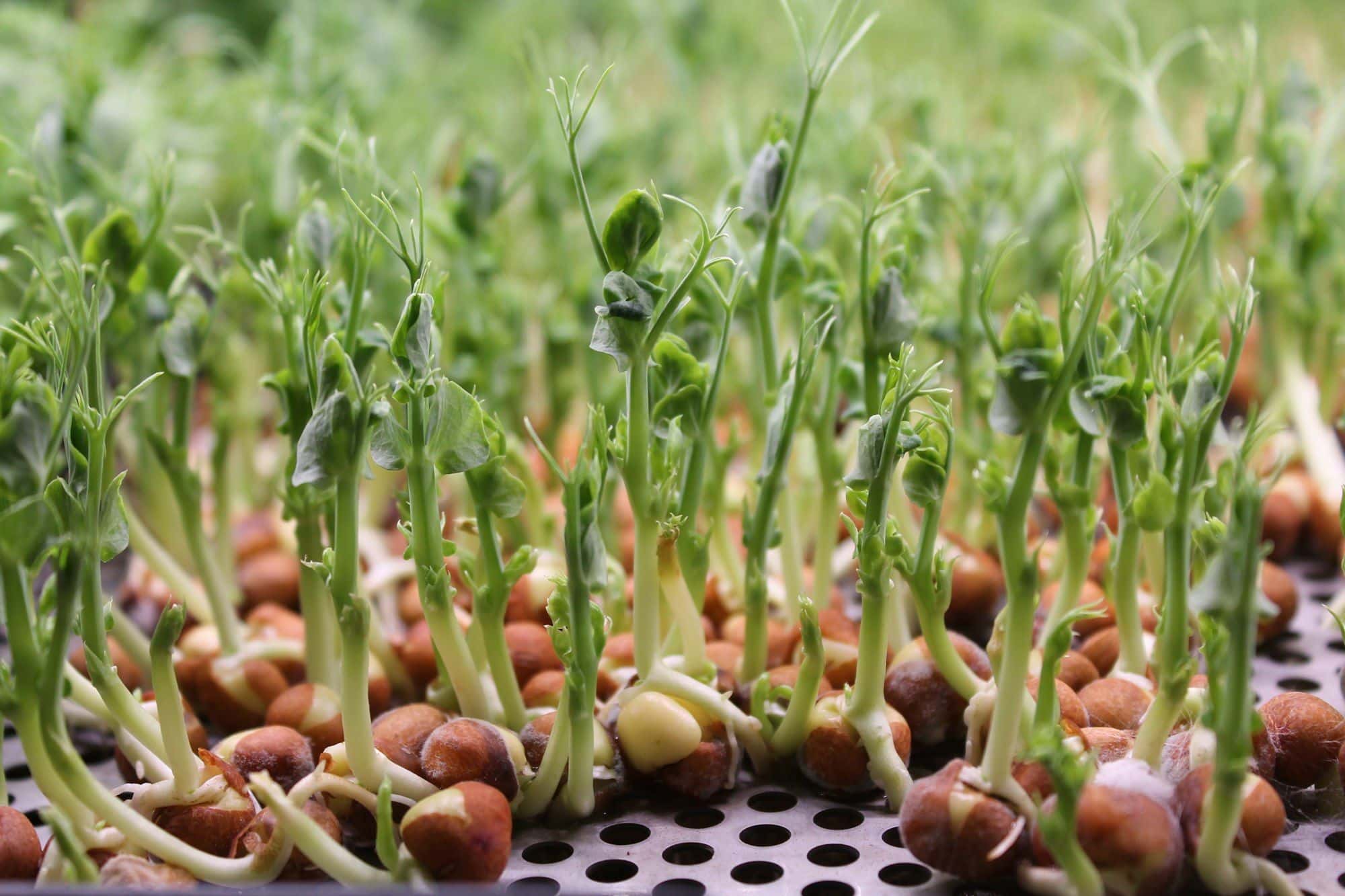
What pea shoots are
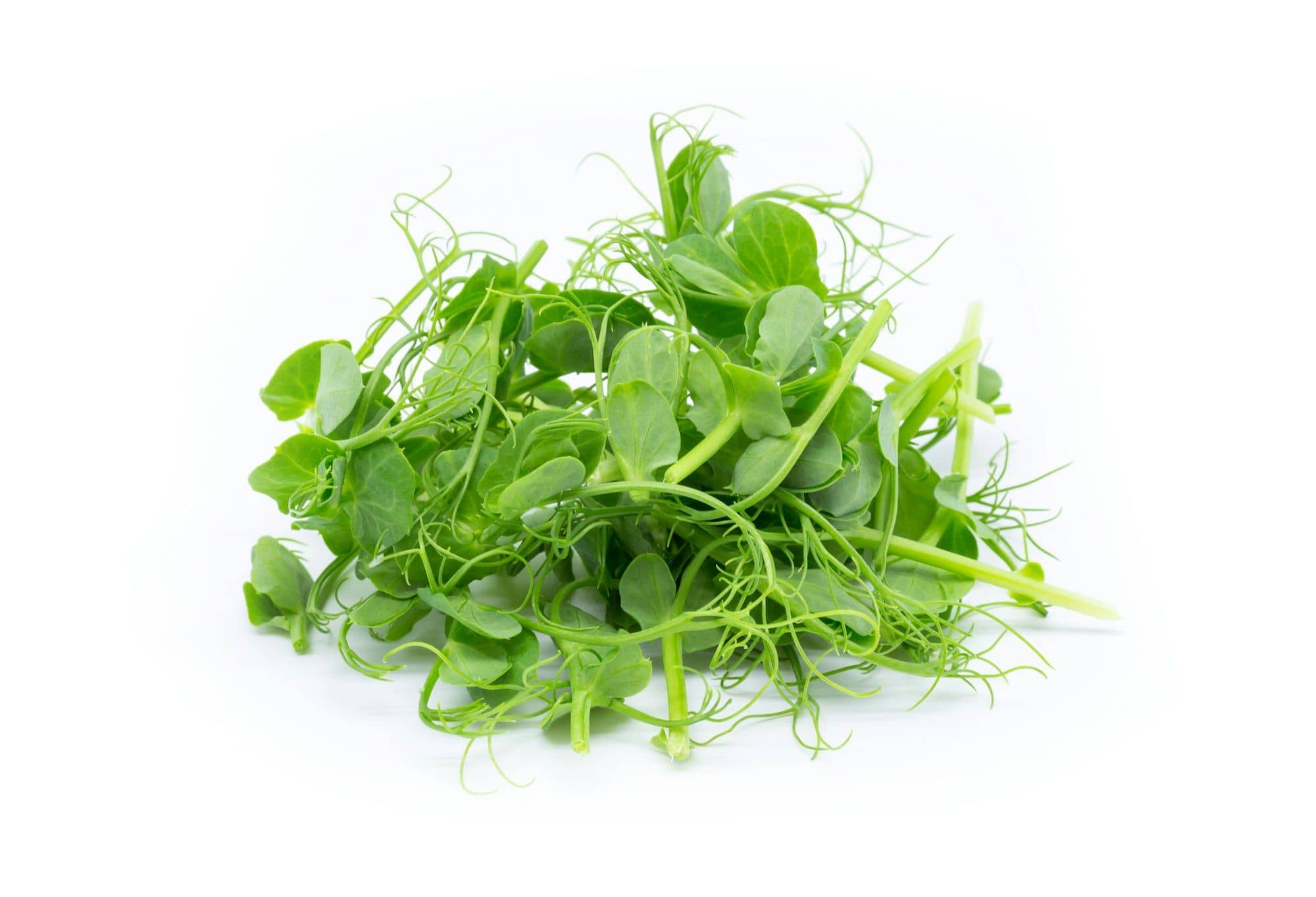
Pea shoots are the stems, first leaves and sometimes the curling tendrils of young pea plants, the same species as the matar in a pulao. They are cut young, at about 10 days, while the stem is still tender. The taste is sweet and green, recognisably pea, and the texture is crisp and juicy. Pea tendrils, the curling climbing parts, are also sold as a microgreen in their own right. Researchers at Penn State used 'Dwarf Grey Sugar' pea in their 2023 microgreen trials. In Hindi pea is matar and in Marathi vatana.
Nutrition: what studies measured
Pea tendrils and golden pea tendrils were among the 25 commercial microgreens in the 2012 University of Maryland and USDA study by Xiao and colleagues, which found microgreens as a group denser in vitamins and carotenoids than mature leaves in the USDA database. In a 2025 study that grew six microgreens under the same conditions, pea microgreens had the highest phosphorus and copper of the six. Penn State researchers (Poudel and colleagues, 2023) found that soaking pea seed overnight in plain water reduced its phytic acid, which the authors class as an antinutrient, by 13.7%. These studies describe what the greens contain. They do not show that eating pea shoots treats or prevents any condition.
How to grow pea shoots
Pea is one of the seeds that needs soaking. Penn State Extension shows pea seed soaked for about 10 hours, and the University of Maryland lists pea among seeds to soak for 6 to 12 hours. In the 2023 Penn State trial, seed was soaked for 12 hours, sown at one seed per square centimetre in a peat and perlite mix, pressed down with a weight and covered with black plastic until it germinated. Trays were misted daily until the seed leaves formed, then watered from below, and harvested 10 days after sowing at about 25 °C.
- Rinse the seed, then soak it for 8–12 hours in drinking water, rinsing once or twice during the soak.
- Fill a drained tray with 2.5–4 cm of moist soil mix or a peat and perlite mix.
- Spread the soaked seed in a single layer, seeds touching but not stacked: about 1,290 seeds for a 10×20-inch tray.
- Mist, cover, and put a second tray or a light weight on top. Keep it dark.
- When the shoots push against the weight, after 2–3 days, remove it and give full light.
- Mist daily until the first leaves open, then water from below. Harvest around day 10.
| Source | Soak | Seed rate | Harvest |
|---|---|---|---|
| Penn State research trial, 2023 | 12 hours | 1 seed per cm² | 10 days after sowing |
| Penn State Extension guide | About 10 hours | Not given | Not given |
| UMD Extension | 6–12 hours | Not given | 7–21 days (all microgreens) |
| ICAR review, 2025 | Not given | About 1,300 g or 10,000 seeds per m² | 6–12 days in cited studies |
The tray arithmetic
A 10×20-inch tray is 25.4 × 50.8 cm = 1,290 cm², or 0.129 m². At one seed per cm², as in the Penn State trial and the density a 2024 Heliyon review gives for pea, that is about 1,290 seeds per tray. The ICAR review gives about 10,000 seeds or 1,300 g per m² for pea, so the tray needs about 1,300 × 0.129 = 168 g of seed. Pea seed is heavy, so this is a much larger seed quantity per tray than for small-seeded microgreens: compare about 13 g for broccoli in Johnny's trial. Weigh a count of 100 of your own seeds and scale from there, because seed size varies by variety.
Common problems
A tray of soaked pea seed is a lot of wet organic matter, so mould is the usual problem. Rinse the seed during the soak, use clean trays, drain well and keep air moving, as Penn State and UMD advise. Discard any tray with grey, musty growth. Seeds that sit on top of the medium without rooting in may need more pressure: Penn State recommends a weight during germination for pea and sunflower to keep seeds in contact with the medium. Shoots that lean or flop are short of light. Harvest around day 10, as in the Penn State trial; a tray left much longer is past the microgreen stage.
How to eat pea shoots, including Indian dishes
Pea shoots are sturdy enough for salads and quick cooking. Eat them raw in a salad with cucumber, lemon and a little chaat masala, or tuck them into a paneer or aloo tikki sandwich. Scatter them over matar pulao, upma or poha after cooking, or over a bowl of matar paneer. They take a few seconds in a hot pan with garlic and a pinch of salt as a side, stirred just until they wilt. Add them at the end of a noodle or vegetable stir-fry, or blend a handful into a green chutney. Rinse just before eating and keep them refrigerated.
Fresh pea shoots in Pune
Garden & Acre delivers fresh microgreens in Pune and Pimpri-Chinchwad from its own supply chain, as weekly home boxes, single-variety packs, and regular supply by weight for restaurants, cafés and hotels. Pea shoots are one of the usual core varieties, alongside sunflower, radish, broccoli and mustard, subject to what is available that week. Order on WhatsApp: tell us the varieties, quantity and delivery day, and we reply with availability, prices and the first delivery date.
Questions
Are pea shoots the same as pea microgreens?
Yes, the terms are used for the same thing: young pea plants cut at the stem and first-leaf stage, about 10 days after sowing. Pea tendrils are the curling climbing parts of the young plant, sold on their own. Pea sprouts are different: they are germinated seeds eaten whole, root included, after a few days.
How long do pea shoots take to grow?
About 10 days. In the 2023 Penn State trial, pea microgreens were harvested 10 days after sowing at about 25 °C. The ICAR review lists pea among microgreens harvested at 6 to 12 days in various studies. Cooler rooms take longer.
How long should I soak pea seeds?
Eight to twelve hours. Penn State Extension shows pea seed soaked for about 10 hours, UMD gives 6 to 12 hours, and the Penn State research trial used 12 hours. Rinse the seed during the soak so it gets some oxygen, and sow it the same day.
Can I grow pea shoots from dried matar from the kitchen?
Whole dried peas may germinate, but split or processed peas will not, and kitchen seed has no stated germination rate. Microgreens are eaten raw, so seed sold for sprouting or microgreens is the safer choice. The Penn State trial used seed with 96% germination.
Can pea shoots be cooked?
Yes. Unlike most delicate microgreens, pea shoots are sturdy enough to toss in a hot pan for a few seconds with garlic, or to add at the end of a stir-fry, pulao or upma. They are also good raw in salads and sandwiches.
Sources
- Zinc biofortification through seed nutri-priming using alternative zinc sources and concentration levels in pea and sunflower microgreens — Poudel et al., Frontiers in Plant Science, 2023
- Nutritional quality profiles of six microgreens — Balik et al., Scientific Reports, 2025
- Assessment of vitamin and carotenoid concentrations of emerging food products: edible microgreens — Xiao et al., Journal of Agricultural and Food Chemistry, 2012
- Microgreens: Functional Food for Nutrition and Dietary Diversification — Seth et al., Plants, 2025 (ICAR)
- Microgreens on the rise: Expanding our horizons from farm to fork — Lone, Pandey & Gayacharan, Heliyon, 2024
- A Step-By-Step Guide for Growing Microgreens at Home — Penn State Extension
- Growing Microgreens and Baby Greens Indoors — University of Maryland Extension
- Micro Greens Yield Trial 2017 — Johnny's Selected Seeds