What a microgreens business sells, and who buys
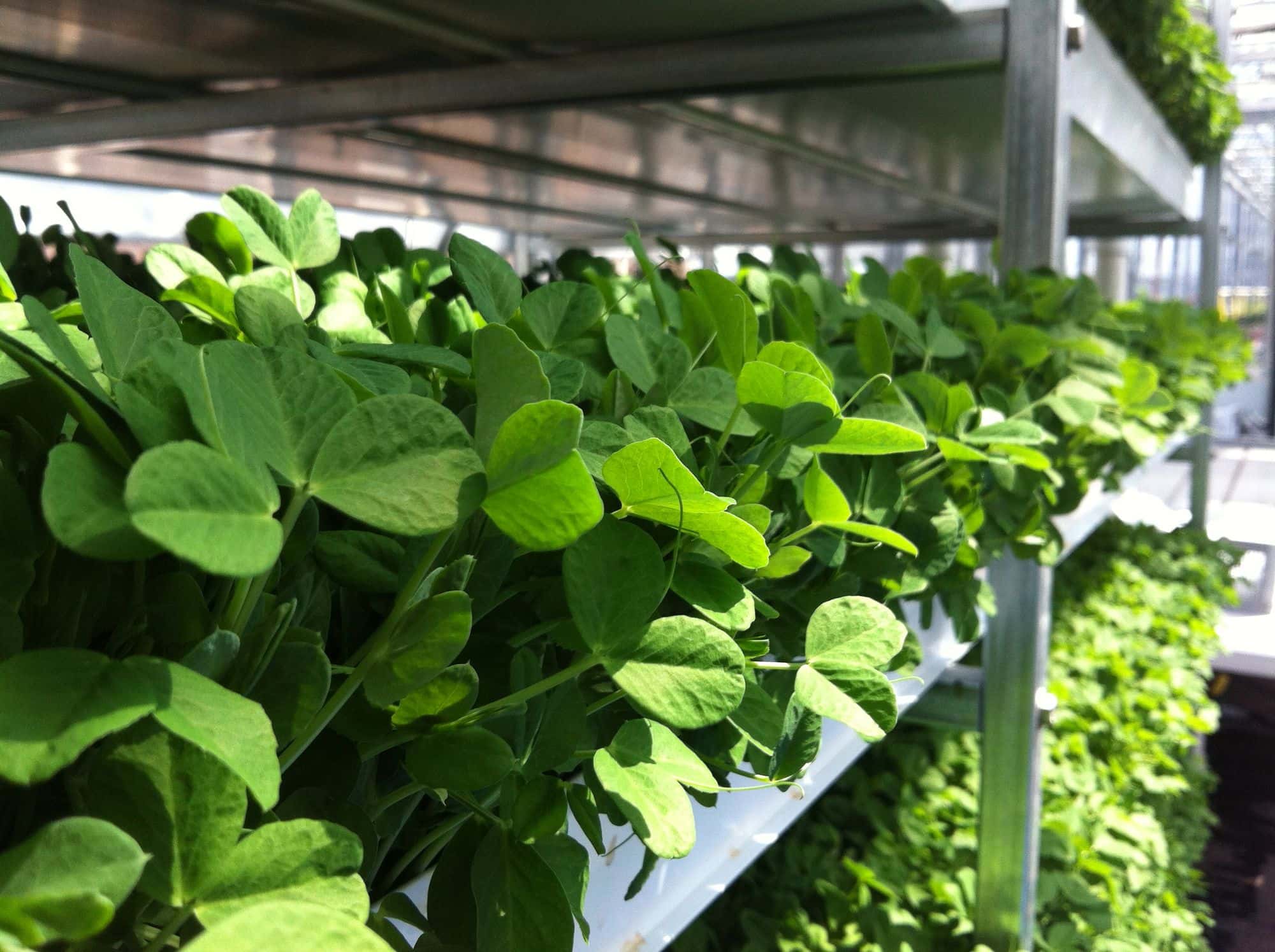
Microgreens are seedlings of vegetables and herbs cut when the first leaves open, about 7 to 9 days after sowing for mungbean, Indian mustard and lentil in the ICAR-IARI trials by Priti and colleagues (2022). The product is sold fresh, by weight, in packs of 20 to 100 g. It is perishable: the same study found a shelf life of about 4 days at 4 °C for mungbean and mustard microgreens and about 6 days for lentil. A grower is therefore selling freshness and regular supply as much as the greens.
IMARC puts the Indian microgreens market at USD 78.7 million in 2025 and USD 87.7 million in 2026, and projects USD 158.6 million by 2034. That is small in national terms and concentrated in large cities. A 2024 review in Food Chemistry: X by Singh and colleagues describes the market as aimed mainly at upscale grocery stores and restaurant chefs. In India the same pattern shows up in three channels, listed below.
- HoReCa (hotels, restaurants, cafés and caterers): chefs buy for garnish, salads and plating, usually a fixed weekly order. Hyperpure, Zomato's supply arm for restaurants, lists microgreens alongside its vegetables.
- Quick commerce and online grocery: BigBasket showed 10-minute delivery on its microgreen packs of 20 g and 50 g on 24 September 2026.
- Retail and direct to homes: premium grocers, organic stores, gyms, and weekly home subscriptions ordered on WhatsApp or Instagram.
Prices a grower can plan around
No government body publishes a microgreens price series, so the only firm figures are listings. On 24 September 2026 Hyperpure listed Microgreen Leaf (Hydroponic) at ₹37 for 50 g in Pune, which is ₹37 ÷ 0.05 = ₹740 per kg. Its national listings the same day were higher: radish ₹95 for 50 g (₹1,900 per kg), a mix ₹118 for 50 g (₹2,360 per kg) and mustard ₹121 for 100 g (₹1,210 per kg, or ₹1,180 per kg for 0.5 kg or more). These are the prices restaurants pay a supplier, so a grower selling to that supplier gets less.
Retail packs cost more per kg. BigBasket listed white radish microgreens at ₹40 for 20 g (₹2,000 per kg) and sunflower at ₹50 for 20 g (₹2,500 per kg) on the same day. The worked example below uses the lowest figure, ₹740 per kg, because a plan should survive the worst price you can find. The full price comparison is on our microgreens price page.
Space and layout
The unit of planning is the tray position: one space on a lit shelf that holds one tray from sowing to harvest. The common commercial tray is the 10 × 20 inch flat, which is 25.4 × 50.8 cm = 0.129 m². A shelf 120 cm wide holds four trays side by side, so a five-shelf rack holds 5 × 4 = 20 trays. Ten such racks give 10 × 20 = 200 tray positions, which is the size used in the worked example (assumption A1).
Each rack is about 120 × 60 cm, so ten racks cover 10 × 0.72 = 7.2 m² of floor. With aisles, a sink, a packing table and a refrigerator, a room of about 200 sq ft is a reasonable starting size (assumption A2). The room needs a washable floor, drainage, clean water, insect screens, and cooling in summer. Priti and colleagues grew their mustard and lentil microgreens at 21 °C by day and 18 °C by night, and mungbean at 28/26 °C, which shows why most Indian growing rooms need an air conditioner for at least part of the year.
Capex: what you buy once
The list below covers a 200-position room. Every rate is an assumption to replace with written quotes. As a reference point, a 7-tier metal grow rack was listed on Amazon.in at ₹5,692 on 24 September 2026. LED power follows the method used in our vertical farming cost guide: watts per m² equal light level divided by fixture efficacy. Studies reviewed by Seth and colleagues (2025) grew microgreens at 120 to 300 µmol per m² per second. At an assumed 200 µmol and the DesignLights Consortium minimum efficacy of 2.5 µmol per joule, that is 200 ÷ 2.5 = 80 W per m². The tray area is 200 × 0.129 = 25.8 m², so the room needs 25.8 × 80 = 2,064 W of LEDs.
| Item | Quantity × rate | Amount |
|---|---|---|
| Racks, 5 shelves each | 10 × ₹6,000 (assumed) | ₹60,000 |
| Trays (growing and base trays, with spares) | 500 × ₹60 (assumed) | ₹30,000 |
| LED fixtures | 2,064 W × ₹60/W (assumed) | ₹1,23,840 |
| Air conditioner, 1.5 TR | Lump sum (assumed) | ₹45,000 |
| Fans, timers, thermometer and hygrometer | Lump sum (assumed) | ₹15,000 |
| Fit-out: washable floor, sink, screens | Lump sum (assumed) | ₹50,000 |
| Refrigerator, scale, packing table, knives | Lump sum (assumed) | ₹40,000 |
| Electrical works | Lump sum (assumed) | ₹25,000 |
| Total | ₹3,88,840 |
Worked example: monthly output and sales
Output is tray positions × turns per month × kg per tray. Assume each position is turned every 14 days, covering blackout, growth, harvest and cleaning, which is 26 turns a year (assumption A3, the same one used in our vertical farming calculator). That gives 200 × 26 ÷ 12 = 433 trays a month. For yield, Priti and colleagues measured 1,333.88 to 1,355.78 g per m² for Indian mustard at 10 seeds per cm², so the example uses 1.35 kg per m². Per tray, that is 1.35 × 0.129 = 0.174 kg.
Monthly output is 433 × 0.174 = 75.3 kg. At Hyperpure's ₹740 per kg, sales are 75.3 × ₹740 = ₹55,722 a month, assuming every gram sells (assumption A4). Yield depends on the crop. The same study recorded 2,123 to 2,572 g per m² for mungbean at 4 seeds per cm², and 1,129 to 1,418 g per m² for lentil. For comparison, Johnny's Selected Seeds' 2017 trial in the United States recorded about 269 g of Garnet Giant mustard per 10 × 20 inch tray, higher than the 0.174 kg used here.
| Input | Value | Status |
|---|---|---|
| Tray area | 25.4 × 50.8 cm = 0.129 m² | Defined (10 × 20 inch tray) |
| Tray positions | 10 racks × 5 shelves × 4 trays = 200 | Assumption A1 |
| Turns per position | 26 a year (one every 14 days) | Assumption A3 |
| Trays harvested | 200 × 26 ÷ 12 = 433 a month | Derived |
| Yield | 1.35 kg/m² per cycle (Indian mustard) | Priti et al. 2022 |
| Yield per tray | 1.35 × 0.129 = 0.174 kg | Derived |
| Output | 433 × 0.174 = 75.3 kg a month | Derived |
| Price | ₹740 per kg | Hyperpure Pune listing, 24 Sep 2026 |
| Sales | 75.3 × ₹740 = ₹55,722 a month | Derived, all output sold (A4) |
Electricity at Maharashtra tariffs
Lighting energy is 2.064 kW × 16 hours × 30 days = 991 kWh a month, assuming a 16-hour day for every lit position (assumption A5). Assume lighting is 75 percent of the room's electricity and the air conditioner, fans and refrigerator take the rest (assumption A6, the same lighting share used in our vertical farming cost guide). The room then uses 991 ÷ 0.75 = 1,321 kWh a month.
The MERC order of 25 March 2026 (Case 75 of 2025) sets MSEDCL's 2026-27 LT-II(A) non-residential rate for 0 to 20 kW at ₹8.51 energy plus ₹1.60 wheeling, or ₹10.11 per kWh, with a fixed charge of ₹540 per connection a month. MERC's multi-year order of 28 March 2025 added "Indoor Vertical Farming" to LT IV(C) Agriculture – Others, which the 2026-27 order prices at ₹5.61 plus ₹1.60, or ₹7.21 per kWh, with ₹157 per HP a month. On 1,321 kWh that is 1,321 × ₹10.11 = ₹13,355 or 1,321 × ₹7.21 = ₹9,524 a month. At an assumed 5 kW load (6.7 HP), the LT IV(C) fixed charge is 6.7 × ₹157 = ₹1,052. Ask MSEDCL in writing which category applies. Duty and fuel adjustment are extra.
Labour and other running costs
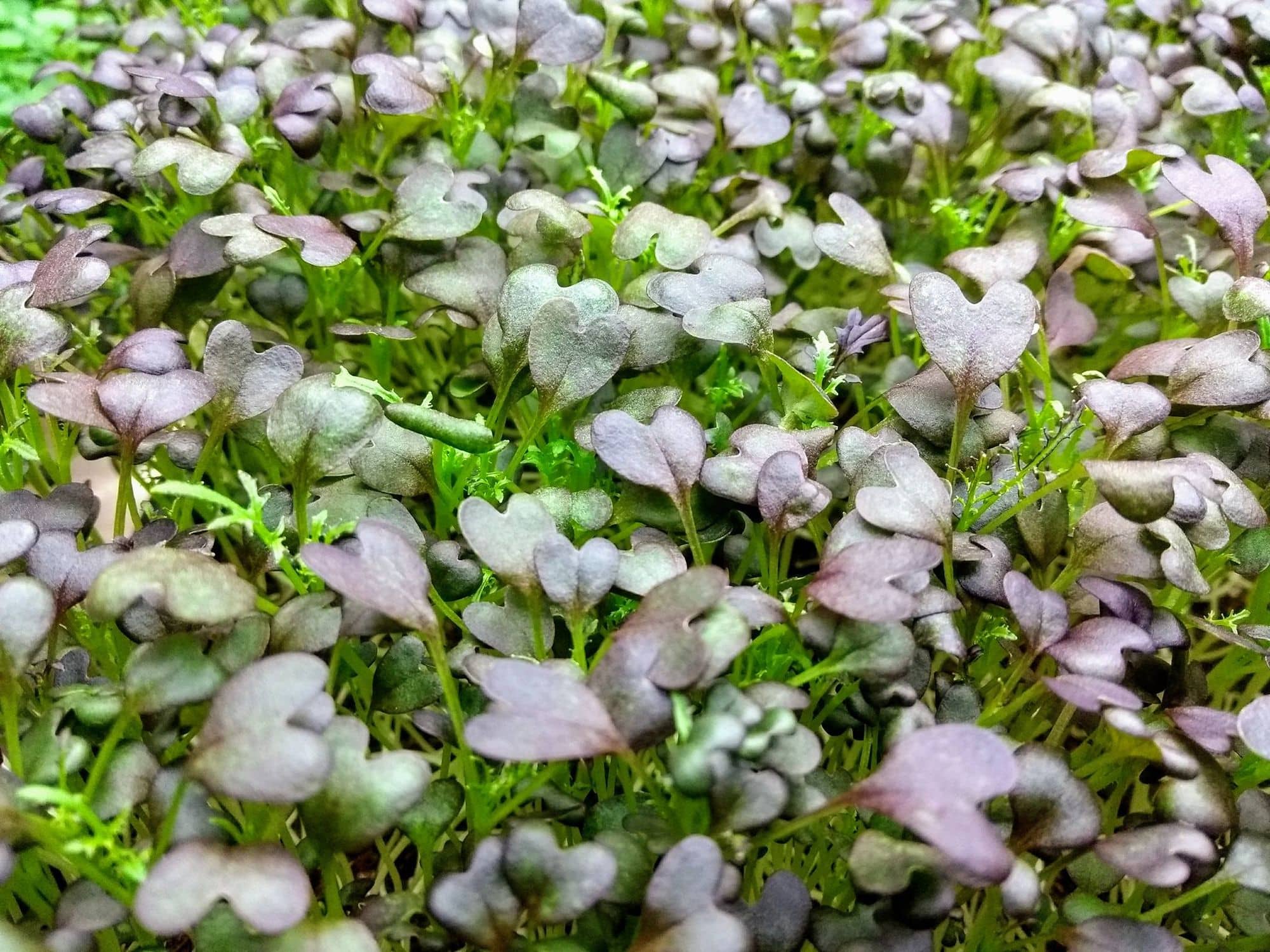
Sowing, watering, harvesting, washing trays and packing are manual. At 433 trays a month, that is about 14 trays sown and 14 cut every day, plus packing and deliveries. The example assumes one full-time worker at ₹20,000 a month, the same wage assumption as our vertical farming cost guide, with the owner doing sales and deliveries unpaid. Seed is taken at 8 g per tray, the rate in Johnny's trial for mustard, and priced at an assumed ₹1,000 per kg: 433 × 8 g = 3.46 kg × ₹1,000 = ₹3,464.
Coco peat or mats are assumed at ₹10 per tray (433 × ₹10 = ₹4,330). Packing in 50 g boxes means 75.3 ÷ 0.05 = 1,506 packs at an assumed ₹5 each = ₹7,530. Rent is assumed at ₹8,000 for the room and delivery at ₹6,000 a month. Maintenance is taken at 3 percent of capex a year (₹3,88,840 × 0.03 ÷ 12 = ₹972) and depreciation over 5 years (₹3,88,840 ÷ 60 = ₹6,481).
| Line | Non-residential LT-II(A) | Agriculture – Others LT IV(C) |
|---|---|---|
| Electricity, variable | ₹13,355 | ₹9,524 |
| Electricity, fixed | ₹540 | ₹1,052 |
| Labour, 1 worker (assumed) | ₹20,000 | ₹20,000 |
| Rent (assumed) | ₹8,000 | ₹8,000 |
| Seed (assumed price) | ₹3,464 | ₹3,464 |
| Growing media (assumed) | ₹4,330 | ₹4,330 |
| Packaging (assumed) | ₹7,530 | ₹7,530 |
| Delivery (assumed) | ₹6,000 | ₹6,000 |
| Maintenance, 3% of capex a year | ₹972 | ₹972 |
| Cash cost | ₹64,191 | ₹60,872 |
| Depreciation, 5 years | ₹6,481 | ₹6,481 |
| Total monthly cost | ₹70,672 | ₹67,353 |
| Cost per kg (÷ 75.3 kg) | ₹939 | ₹894 |
Breakeven: price and volume
At ₹740 per kg the example loses money: ₹55,722 − ₹70,672 = −₹14,950 a month on the non-residential tariff, and ₹55,722 − ₹67,353 = −₹11,631 on the agricultural tariff. The breakeven price is the cost per kg, ₹894 to ₹939. At Hyperpure's national mustard price of ₹1,210 per kg, the same 75.3 kg earns 75.3 × ₹1,210 = ₹91,113, a margin of ₹20,441 to ₹23,760 a month before tax and before paying the owner.
Three levers move the result. Price: selling part of the output in retail packs, where BigBasket listings on 24 September 2026 worked out at ₹2,000 to ₹2,980 per kg, raises the average, though retail brings more packing and wastage. Yield: mungbean at up to 2.57 kg per m² would nearly double the kilograms from the same racks, but Seth and colleagues note that mung and lentil microgreens are less accepted because of their beany flavour. Volume: most costs are fixed, so filling unused positions with sold orders lowers the cost per kg. Only the seed, media and packing, about ₹15,324 ÷ 75.3 = ₹204 per kg, rise with output.
Risks to plan for
The main risk is unsold stock. With a shelf life of about 4 days for mustard and mungbean at 4 °C in the ICAR-IARI study, a cancelled order becomes waste within the week. Grow to confirmed orders, and sow in small daily batches rather than filling every position on one day. The other risks are operational and are listed below. Each one changes an input in the worked example, so re-run the arithmetic when you change it.
- Buyer concentration: one hotel that stops ordering can remove a large share of sales. Aim for several accounts before adding racks.
- Summer heat and humidity: warm, still air encourages mould. Budget for cooling and airflow from the first month.
- Food safety: Priti and colleagues did not detect Salmonella or Listeria in their microgreens and found other microbes within limits, and noted that washing reduced counts only slightly. Clean seed, clean water and sanitised trays are what keep counts low.
- Seed quality: germination and seed-borne microbes vary by lot. Test each new lot on a few trays before sowing at scale.
- Price pressure: marketplace listings can change weekly. Recheck prices before signing a fixed-rate supply agreement.
FSSAI registration or licence
Selling packed microgreens is a food business, and hotels and restaurant groups normally ask for the FSSAI number before placing an order. FSSAI's FoSCoS portal publishes a "Kind of Business" eligibility and fee document, updated on 1 April 2026. For retailers, wholesalers, distributors and general manufacturers, including the fruits and vegetables category, it sets registration for an annual turnover up to ₹1.5 crore at ₹100 a year, a State licence from ₹1.5 crore to ₹50 crore at ₹5,000 a year, and a Central licence above ₹50 crore at ₹7,500 a year.
The same document lists E-Commerce as a kind of business that needs a Central licence whatever the turnover, so check which category fits before you sell through your own online store. Choose the kind of business on FoSCoS that matches what you do, such as growing and packing, or buying and reselling. Keep the certificate current, print the number on labels and invoices, and keep a simple cleaning and temperature log, which is what buyers usually ask to see during a hygiene visit.
Selling microgreens
Most small growers start with restaurants because one account takes a fixed weekly quantity. Chefs judge on flavour, colour, uniformity and delivery on the agreed day. A review of consumer studies by Seth and colleagues found amaranth, beet, coriander and Swiss chard microgreens were more readily accepted, and red cabbage and peppercress less so, because of astringency, sourness and bitterness. That is a useful guide to which varieties to offer first. The steps below are a common order of work.
- Choose four to six varieties that local chefs already use, and grow them for a month before selling to learn your own yields.
- Visit kitchens with a sample box, and quote per 100 g or per pack as chefs buy, not per kg.
- Agree a fixed weekly order and delivery day, and harvest the evening before or the morning of delivery.
- Add a home subscription or a retail shelf once restaurant orders are steady, so surplus trays have a buyer.
- Track yield per tray and waste per week, and drop varieties that do not earn their shelf space.
Planning a microgreens farm with Garden & Acre
Garden & Acre offers Vertical Farm Consulting for feasibility studies, business models, room and rack design, crop plans, training and SOPs, including for farms that others build or already run. Vertical Farm Setup covers commercial and institutional growing rooms, from design and build to commissioning and first-crop support. Both are priced in a written proposal after an initial call, and the budget is built line by line in the same way as the worked example on this page, using your quotes, tariff and buyers.
Questions
Is a microgreens business profitable in India?
It can be, but only above a certain price. In our worked example, 200 tray positions give about 75 kg a month at a full cost of ₹894 to ₹939 per kg. At ₹740 per kg the room loses money; at ₹1,210 per kg it earns about ₹20,000 to ₹24,000 a month before tax. Confirm buyers and prices before building.
How much does it cost to start a microgreens farm?
Our example room with 10 racks and 200 tray positions comes to about ₹3.9 lakh in assumed rates, with LEDs the largest item at about ₹1.24 lakh. A home or trial setup can be much smaller. Replace every rate with written supplier quotes, because rack, LED and air-conditioner prices vary widely.
How much do microgreens yield per tray?
ICAR-IARI trials measured about 1.35 kg per m² for Indian mustard, up to 2.57 kg per m² for mungbean and up to 1.42 kg per m² for lentil. A 10 × 20 inch tray is 0.129 m², so mustard gives about 0.174 kg per tray. Yields depend on variety, seed rate, light and temperature.
What price do microgreens sell for per kg in India?
On 24 September 2026, Hyperpure listed microgreens at ₹740 to ₹2,360 per kg depending on the product, and BigBasket's retail packs worked out at ₹2,000 to ₹2,980 per kg. These are listing prices paid by buyers, so a grower selling through a supplier receives less.
Do I need an FSSAI licence to sell microgreens?
You need FSSAI registration or a licence. FSSAI's eligibility document updated on 1 April 2026 sets registration at ₹100 a year for turnover up to ₹1.5 crore in most trade and manufacturing categories, and a State licence above that up to ₹50 crore. E-commerce sellers need a Central licence regardless of turnover.
Can a microgreens farm get an agricultural electricity tariff?
In Maharashtra, MERC added indoor vertical farming to LT IV(C) Agriculture – Others in March 2025. For 2026-27 that category costs ₹7.21 per kWh plus ₹157 per HP a month, against ₹10.11 per kWh for small non-residential connections. Ask MSEDCL in writing whether your room qualifies.
Which microgreens are best to start a business with?
Start with varieties chefs already know and that grow fast, such as radish, mustard and sunflower, then add colour with beet and amaranth. Consumer studies found amaranth, beet and coriander microgreens widely accepted, while mung and lentil microgreens were less popular because of their beany taste.
Sources
- Priti et al. (2022), Yield optimization, microbial load analysis, and sensory evaluation of mungbean, lentil, and Indian mustard microgreens, PLoS One (ICAR-IARI)
- Hyperpure Pune, Microgreen Leaf (Hydroponic) 50 gm listing (read 24 September 2026)
- Hyperpure, Microgreen Mustard 100 gm listing (read 24 September 2026)
- Hyperpure, Microgreen Radish 50 gm listing (read 24 September 2026)
- Hyperpure, Microgreen Mix 50 gm listing (read 24 September 2026)
- BigBasket, search results for microgreens (read 24 September 2026)
- IMARC Group, India Microgreens Market report page
- FSSAI FoSCoS, Kind of Business eligibility criteria and fee structure (updated 01.04.2026)
- MERC order, Case No. 75 of 2025 (25 March 2026), MSEDCL tariffs FY 2026-27
- MERC MYT order, Case No. 217 of 2024 (28 March 2025), MSEDCL tariff schedule
- DesignLights Consortium, Horticultural Technical Requirements V4.0
- Johnny's Selected Seeds, Micro Greens Yield Trial 2017
- Seth et al. (2025), Microgreens: Functional Food for Nutrition and Dietary Diversification, Plants (ICAR authors)
- Singh et al. (2024), Emergence of microgreens as a valuable food, current understanding of their market and consumer perception: A review, Food Chemistry: X
- Amazon.in, 7-tier hydroponic grow rack listing in search results (read 24 September 2026)