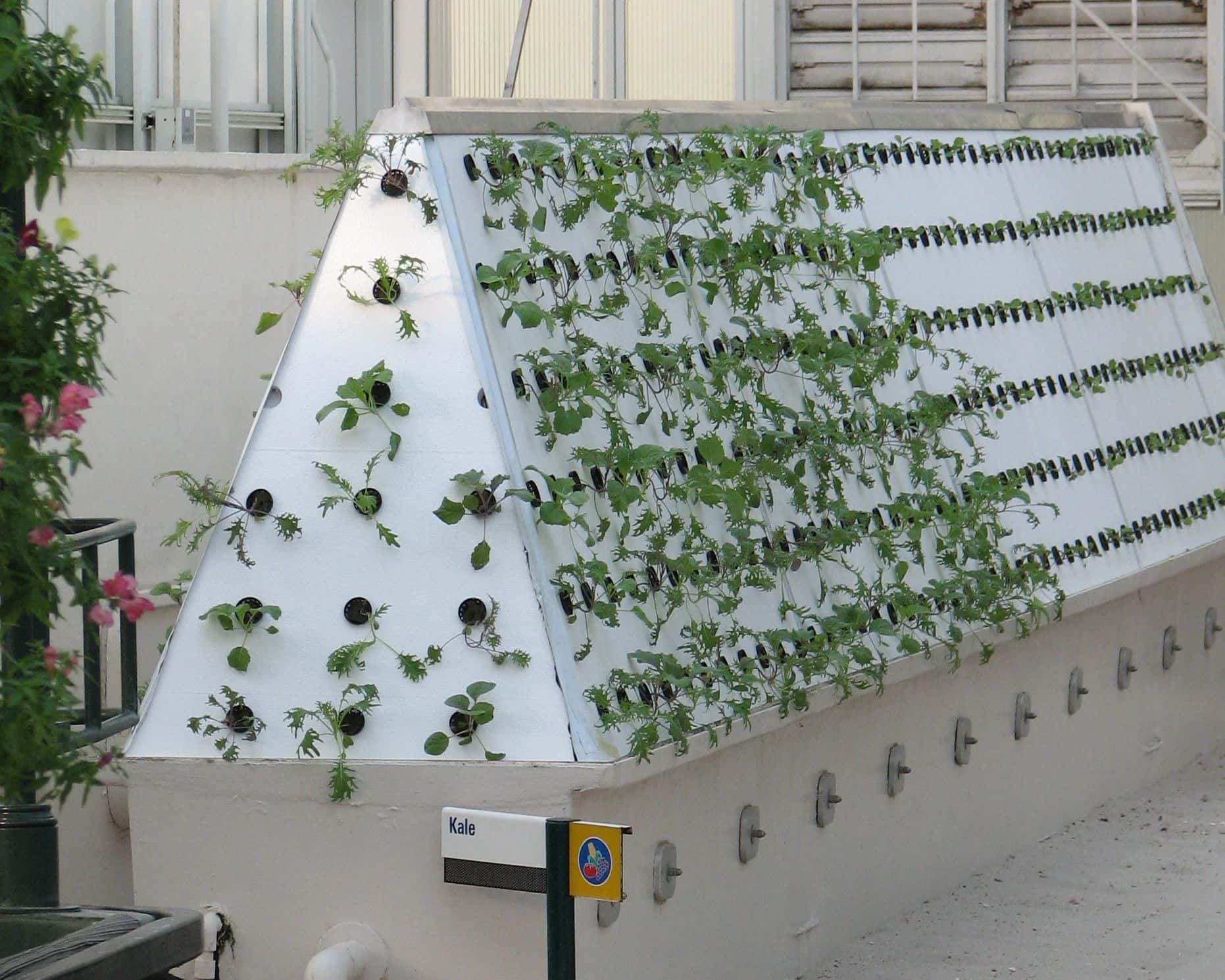
What aeroponic farming is
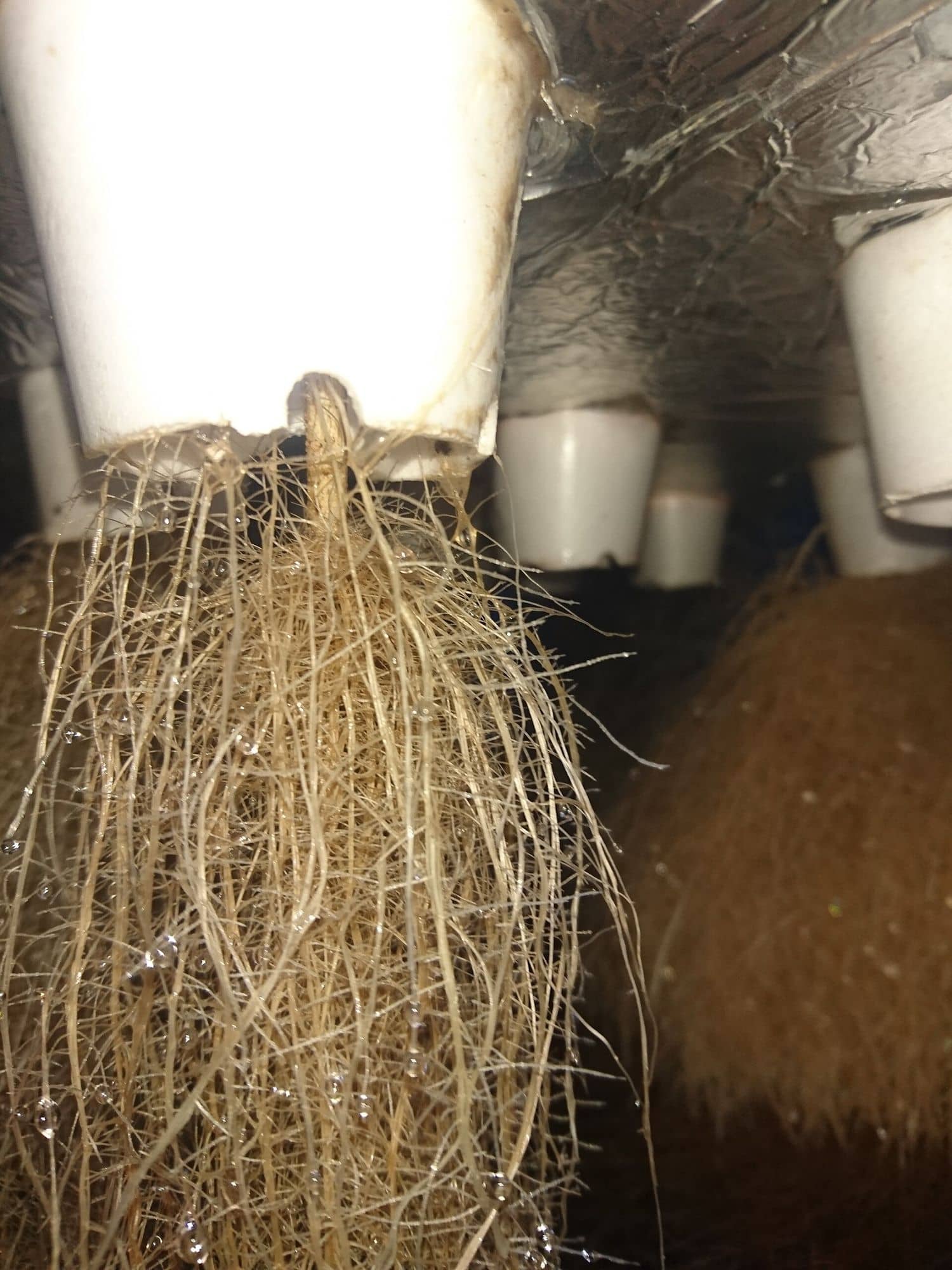
Aeroponics is a form of soilless growing. Plants are held at the stem, usually in a collar, net pot or foam plug, with the roots suspended in an enclosed, light-proof chamber. Nozzles inside the chamber spray the roots with a nutrient solution on a timer. The surplus drips to the bottom and returns to a tank, so most systems are closed and recirculating. University of Nevada, Reno Extension classes aeroponics with NFT and raft culture as water-culture systems, because no growing medium supports the roots.
The main difference from hydroponics is where the roots live. In deep water culture the roots sit in solution, and in NFT they sit in a thin film of it. In aeroponics they sit in air and only get a coating of droplets. That gives the roots plenty of oxygen, which is why aeroponics is linked with fast root growth. UF/IFAS Extension lists efficient nutrient uptake, rapid growth and minimal water use as the benefits, and complex, costly setup, quick root drying if misting fails and a high maintenance load as the drawbacks.
How an aeroponic system works
A working system has five parts. A nutrient tank holds the solution. A pump, filter and pipework deliver it under pressure. Nozzles or foggers turn it into droplets inside the root chamber. A timer or controller switches the spray on and off in short cycles. A drain returns the run-off to the tank. Larger systems add pH and EC sensors with dosing pumps, and a way to sterilise the returning solution.
The spray cycle matters more than in any other soilless method. Roots in air have almost no water reserve, so the gap between sprays has to be short enough that they never dry, and long enough that they get air between wettings. Droplet size matters for the same reason: fine droplets coat the roots and are taken up, while coarse drops run off. Researchers such as Lakhiar and colleagues, in a 2020 review of aeroponic agriculture, describe work on droplet size, spray interval, EC and pH as the main levers for tuning a system.
- Nutrient tank, covered and light-proof
- Pump and fine filter (nozzles clog easily)
- Misting nozzles, sprayers or ultrasonic foggers
- Cycle timer or controller
- Light-proof root chamber or tower
- Return drain to the tank
- pH and EC meters or sensors
- Backup power for the pump and timer
High-pressure vs low-pressure aeroponics
Aeroponic systems split into two families. High-pressure aeroponics (HPA) uses a pump and accumulator to push solution through fine misting heads, producing droplets in roughly the 20 to 50 micrometre range at around 80 psi (550 kPa). The fine mist coats the roots evenly and is absorbed well. HPA is the method used in research, seed potato production and high-end commercial farms, and it needs good filtration, since fine nozzles block easily.
Low-pressure aeroponics uses an ordinary pump to spray solution through larger jets or sprayers, or ultrasonic foggers in the variant called fogponics. The drops are larger and some of the solution runs straight off the roots. Low-pressure systems are cheaper and simpler, and most home and café aeroponic towers are low-pressure. The reported weakness is that parts of a large root mass can stay dry as plants mature, and ultrasonic foggers need regular cleaning because mineral scale builds up on them.
| Feature | High-pressure aeroponics | Low-pressure aeroponics |
|---|---|---|
| Pressure | About 80 psi (550 kPa) | Ordinary pump pressure |
| Droplets | Fine mist, about 20–50 µm | Larger spray or fog |
| Equipment | Pressure pump, accumulator, solenoids, fine nozzles, fine filtration | Submersible or inline pump, sprayers or foggers |
| Typical use | Research, seed potato minitubers, commercial farms | Home and café towers, schools, hobby units |
| Main risk | Nozzle clogging; pump or solenoid failure | Uneven wetting of large roots; fogger scale |
| Cost | Higher | Lower |
Aeroponic towers
An aeroponic tower is a vertical column with planting pockets on the outside and a hollow core. A pump in the base tank lifts solution to the top, where it sprays or cascades down the inside, wetting the roots that hang into the core, and drains back into the tank. Most towers sold for homes, cafés, schools and rooftops are low-pressure aeroponic or a mix of spray and drip. In India, aeroponic tower is the largest search in this topic, at about 6,400 searches a month.
Towers suit small spaces because they grow a lot of plants on a small footprint and use sunlight on balconies, terraces and rooftops. The limits are the same as for any tower: plants on the shaded side grow slower, the top feed can clog, and in Indian summers the tank warms quickly in direct sun. Shading the tank, topping up with cool water and cleaning the pump filter regularly deal with most of these problems.
Root disease risk and power failure
Aeroponics has a reputation for clean roots, because roots in air are less exposed to waterlogging. The risk sits elsewhere. All plants share one recirculating solution, so a pathogen that enters the tank reaches every root. UNR Extension notes that in closed systems the solution should be sterilised before reuse, commonly by heat, ultraviolet light or ozone. UF/IFAS Extension notes that in water-culture systems the solution temperature has to be managed and that roots become prone to disease when oxygen falls, which is a real concern for tanks in Indian summers.
The bigger operational risk is a stopped spray. UF/IFAS lists quick root dehydration when misting fails as a core drawback of aeroponics, and low-pressure units have the added problem of mineral scale on foggers and uneven wetting. Roots in air have no water reserve to fall back on, so even a short pump stop matters more than in deep water culture. Any commercial aeroponic system in India needs an inverter or generator, a spare pump, spare nozzles, and an alarm on pump failure.
Crops grown with aeroponics
Leafy greens and herbs are the main aeroponic crops in vertical farms, as they are for hydroponics. Lakhiar and colleagues' 2020 review lists lettuce, tomato, potato (for seed), cucumber, peppers and medicinal plants among crops grown successfully in aeroponic research. AeroFarms, one of the best-known aeroponic vertical farms, now grows microgreens such as broccoli and kale at its farm in Virginia, according to Cardinal News (June 2026).
In India the best-established aeroponic use is seed potato. ICAR-Central Potato Research Institute in Shimla developed an aeroponic system for producing minitubers, the first generation of disease-free seed. Krishi Jagran reported in 2019 that it gives 35 to 60 minitubers per plant, several times more than conventional methods, and that CPRI had licensed the technology to 10 public and private organisations, earning about ₹65 lakh. A 2020 review by ICAR-CPRI scientists (Buckseth and colleagues) notes that seed is about 40 percent of the cost of growing potatoes, which is why multiplying clean seed fast is worth the expensive equipment.
- Lettuce, basil, mint, coriander, spinach, kale, pak choi
- Microgreens
- Seed potato minitubers
- Strawberries in towers
- Tomato, cucumber and peppers in research settings
- Medicinal and aromatic herbs
What drives the cost of an aeroponic farm
The cost of an aeroponic farm is driven by the same items as a hydroponic one, plus the spray system. The largest capital items in an indoor farm are LED lights, air conditioning and the growing structure. Aeroponics adds a pressure pump, accumulator, solenoid valves, nozzles and finer filtration for high-pressure systems, and it adds redundancy: spare pumps, backup power and alarms, because a failure hurts faster than in deep water culture.
Running costs are dominated by electricity for lights and cooling in indoor farms. A 2024 benchmarking study put indoor vertical-farm lettuce at about 10 to 18 kWh per kg, with lighting at 65 to 85 percent. At a small commercial tariff of ₹10.11 per kWh (MSEDCL, 2026-27), 10 × ₹10.11 = ₹101 to 18 × ₹10.11 = ₹182 of electricity per kg. Aeroponic pumps add a small share to that. Nozzle cleaning and replacement, filters, sensors and labour for hygiene make up the rest. A sunlit tower on a terrace avoids most of the lighting and cooling cost.
Aeroponic vs hydroponic farming
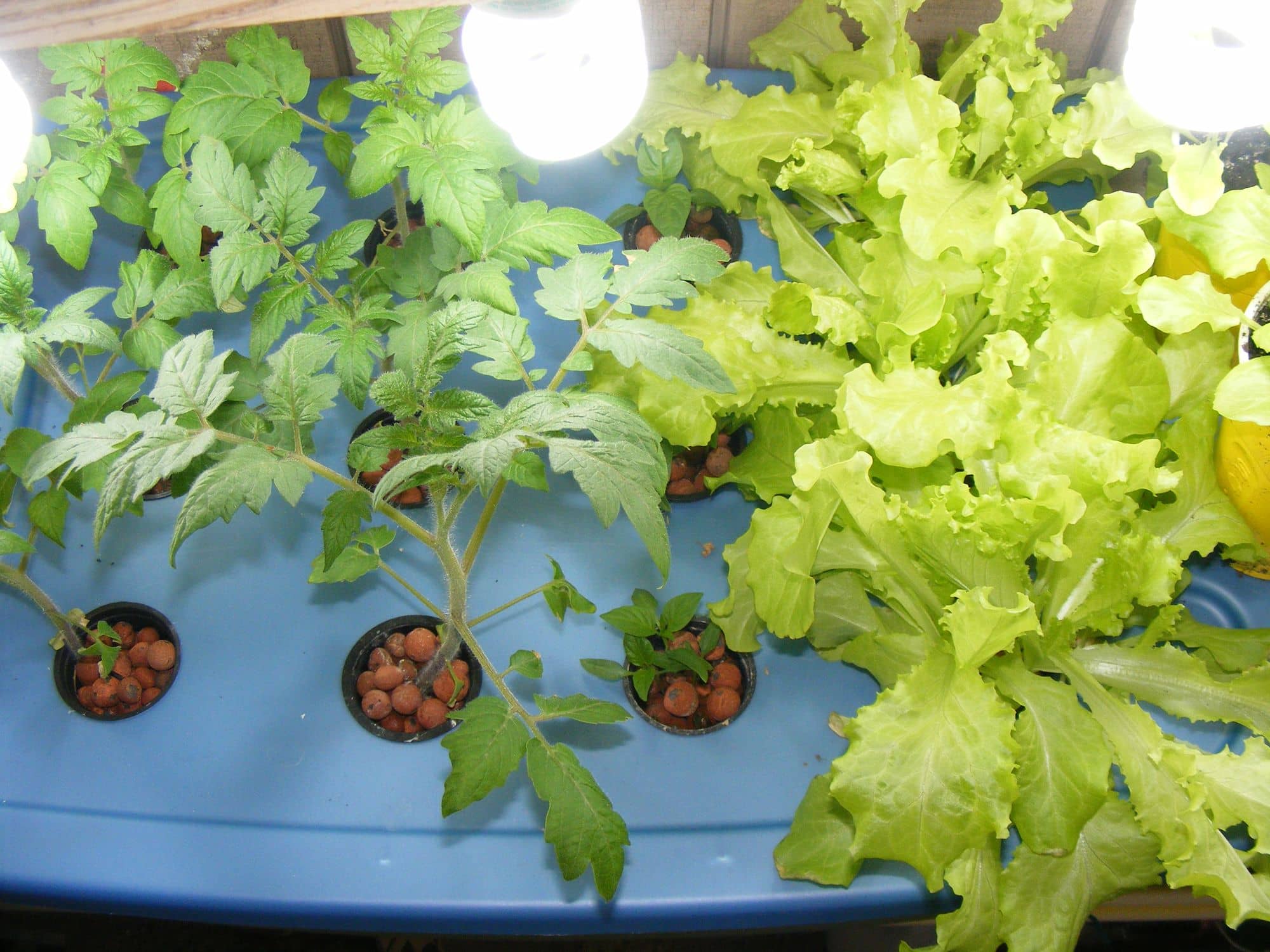
Aeroponics is a branch of hydroponics in the wide sense: both grow plants without soil on a nutrient solution, and both recirculate it. The practical differences are in root oxygen, water volume, and how forgiving the system is when something fails. In India the searches aeroponics and hydroponics and aeroponic hydroponic draw about 640 a month each, mostly from people deciding between the two. The table sets out the main points for that choice.
| Point | Aeroponics | Hydroponics (NFT / DWC) |
|---|---|---|
| Where roots sit | In air, misted at intervals | In a film (NFT) or tank (DWC) of solution |
| Root oxygen | Very high | Good in NFT; needs air pumps in DWC |
| Water in the system | Lowest | Low (NFT) to high (DWC) |
| Effect of a pump or power failure | Roots dry fastest | NFT dries quickly; DWC declines slowly |
| Equipment | Nozzles, fine filters, timers; pressure pump for HPA | Channels or tanks, pump, air pump |
| Skill and maintenance | High | Moderate |
| Best fit | Seed potato, research, premium greens, towers | Most leafy-green farms, beginners |
NASA and the history of aeroponics
Growing plants with roots in air began as a research method. W. Carter described growing plants in water vapour in 1942 to study roots, and F. W. Went coined the word aeroponics in 1957. The first commercial aeroponic unit, GTi's Genesis Machine, came out in 1983. NASA funded aeroponic research through the 1990s because a system that uses little water and weight is attractive for spaceflight.
NASA Spinoff records that in 1997 NASA teamed with AgriHouse Inc. of Berthoud, Colorado, founded by Richard Stoner II, and BioServe Space Technologies on an aeroponic experiment aboard the Mir space station, growing adzuki bean seedlings in microgravity. In August 2007 a BioServe experiment with tomato seeds flew to the International Space Station on Space Shuttle Endeavour. AgriHouse claims that aeroponic growers can cut water use by 98 percent, fertiliser by 60 percent and pesticides by 100 percent while raising yields by 45 to 75 percent. These are the company's claims as reported by NASA, not measured averages for commercial farms, and results depend on crop, design and management.
Aeroponic farming in India
India has two groups of aeroponic users. The first is seed potato, led by ICAR-CPRI's licensed aeroponic system and private seed companies using it for minitubers. The second is urban growers, from homes and cafés with aeroponic towers to indoor farms growing lettuce, herbs and microgreens for city markets. Searches in India reflect the second group: aeroponic tower, aeroponics and aeroponic farming each draw about 5,700 to 6,400 searches a month, and aeroponic tower price about 1,000.
For commercial projects, the National Horticulture Board has been reported (Krishi Jagran, 2022) to give a credit-linked, back-ended subsidy of 20 percent of project cost, capped at ₹25 lakh (₹30 lakh in the North East and hilly areas), for hydroponic and aeroponic projects over 1,000 m² under protected cultivation. Check the current NHB and MIDH guidelines before relying on it.
Aeroponic towers and farms from Garden & Acre
Garden & Acre installs hydroponic and aeroponic towers for homes, cafés and schools from ₹14,000 per tower. The price includes the tower, pump, timer, first seedlings, nutrients, training and a refill plan. For commercial and institutional aeroponic or hydroponic farms on rooftops, in warehouses, on campuses or in hotels, Garden & Acre handles feasibility, design, build, commissioning and first-crop support. These projects are priced in a written proposal after an initial call.
Questions
What is aeroponic farming?
Aeroponic farming is a soilless method where plant roots hang in air inside a dark chamber and are sprayed or misted with nutrient solution at short, timed intervals. The run-off is collected and reused. It gives roots a lot of oxygen and uses very little water, but it depends on pumps, nozzles and a steady power supply.
Is aeroponics better than hydroponics?
Aeroponics gives roots more oxygen and uses less water, and it is the preferred method for seed potato minitubers. Hydroponics, especially deep water culture, is more forgiving: a pump failure does not dry the roots at once, and there are no fine nozzles to clog. For most beginners and most leafy-green farms, hydroponics is simpler; aeroponics suits skilled operators and specific crops.
What is the difference between high-pressure and low-pressure aeroponics?
High-pressure aeroponics pushes solution at about 80 psi (550 kPa) through fine misting heads, producing droplets of about 20 to 50 micrometres that coat roots evenly. Low-pressure aeroponics uses an ordinary pump and larger sprayers or foggers. High-pressure systems perform better but cost more and need fine filtration. Most home towers are low-pressure.
What was NASA's role in aeroponics?
NASA funded aeroponic research in the 1990s because it saves water and weight for spaceflight. In 1997 NASA worked with AgriHouse and BioServe on an aeroponic experiment on the Mir space station, and in 2007 a BioServe plant experiment flew to the International Space Station. NASA Spinoff reports AgriHouse's claims of large water and fertiliser savings.
Which crops grow well in aeroponics?
Lettuce, herbs, leafy greens and microgreens are the most common aeroponic crops. Seed potato minitubers are the leading aeroponic crop in India, through ICAR-CPRI's system. Strawberries grow well in aeroponic towers. Tomatoes, cucumbers and peppers have been grown aeroponically in research, but large fruiting crops are more often grown in drip or substrate systems.
What are the main risks of an aeroponic system?
The main risks are a pump or power failure, which lets roots dry out quickly, and clogged nozzles, which leave some plants unfed. A shared recirculating solution also spreads any root disease to all plants. Backup power, a spare pump, good filtration, regular nozzle cleaning and sterilising the solution reduce these risks.
How much does an aeroponic tower cost in India?
Prices vary by size and what is included. Garden & Acre installs hydroponic and aeroponic towers from ₹14,000 per tower, including the tower, pump, timer, first seedlings, nutrients, training and a refill plan. Commercial aeroponic farms are priced individually because lights, cooling and backup power change the cost a lot.
Sources
- NASA Spinoff 2006: Progressive Plant Growing Has Business Blooming
- NASA Spinoff 2008: Experiments Advance Gardening at Home and in Space
- Lakhiar et al. (2020), Overview of the aeroponic agriculture, International Journal of Agricultural and Biological Engineering
- Buckseth et al. (2020), A novel sustainable aeroponic system for healthy seed potato production in India, Indian Journal of Agricultural Sciences
- Krishi Jagran (2019): Aeroponics for potato seed (mini-tuber) production
- UF/IFAS Extension: Hydroponic Production Methods, Part 1 (2025)
- University of Nevada, Reno Extension: Hydroponics, A Brief Guide to Growing Food Without Soil
- Wikipedia: Aeroponics (history and system types)
- Cardinal News (June 2026): Microgreens grower AeroFarms acquired by investment firm
- Benchmarking energy efficiency in vertical farming: status and prospects (2024)
- MERC tariff order, Case No. 75 of 2025 (25 March 2026), MSEDCL