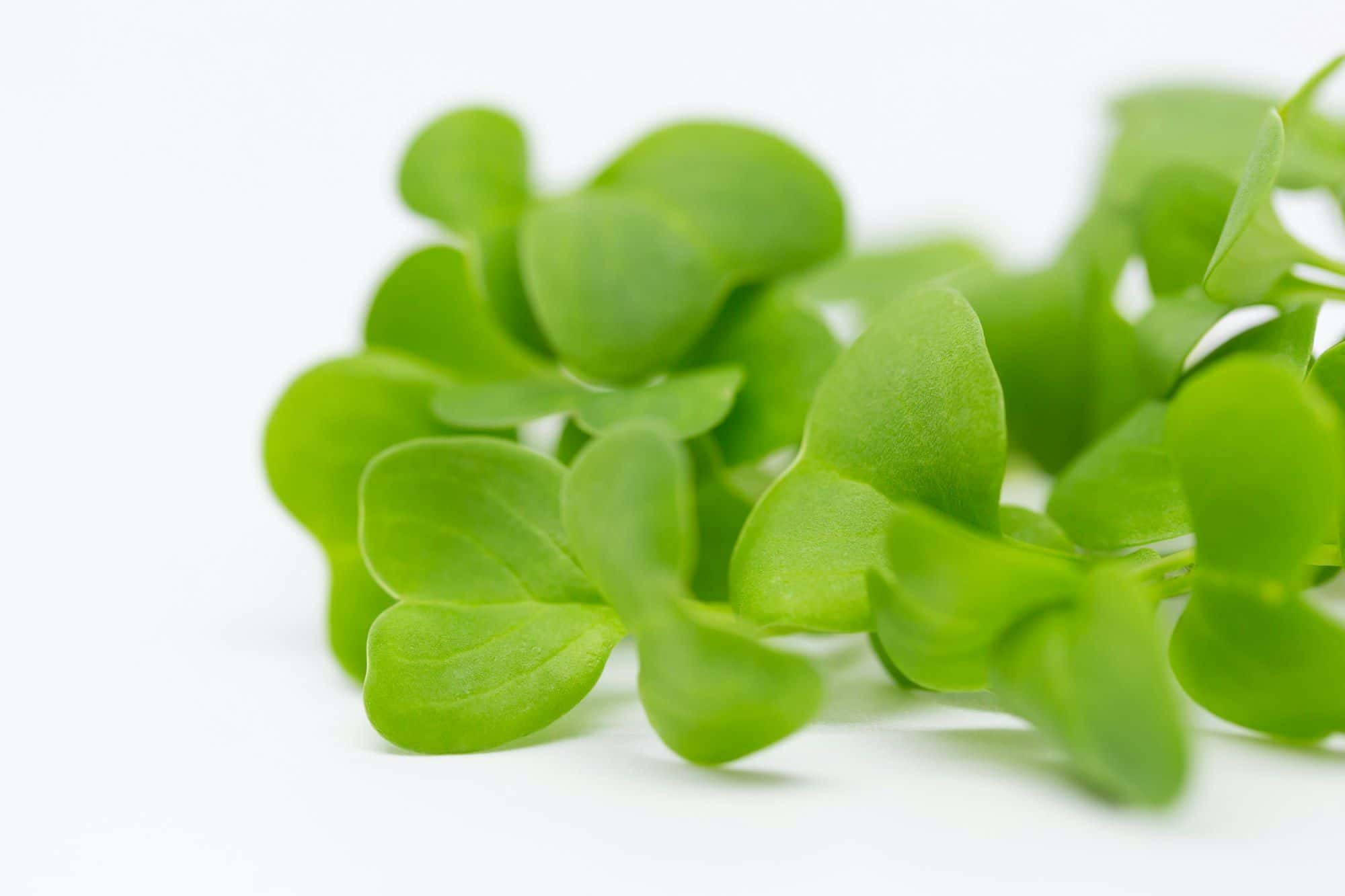
What microgreens means in Hindi
The word microgreens joins "micro", meaning very small (सूक्ष्म or छोटा in Hindi), and "greens", meaning leafy vegetables (साग or हरी पत्तेदार सब्ज़ियाँ). Put together, it means small leafy greens: seedlings of vegetables, herbs and grains that are cut when they are only a few centimetres tall. We found no article for it on Hindi or Marathi Wikipedia and no established Hindi term, so the English word, written in Devanagari as माइक्रोग्रीन्स, is the form in use.
A plain description in Hindi would be "बीज से उगे नन्हे पौधों की पहली पत्तियाँ, जिन्हें 7 से 21 दिन में काटा जाता है": the first leaves of tiny plants grown from seed, cut in 7 to 21 days. USDA's Agricultural Research Service describes microgreens as edible greens grown from vegetable and herb seeds and harvested without roots at the seedling stage, when the two seed leaves have fully opened. That is the meaning the Hindi word carries.
Microgreens, sprouts and saag: three different things
Microgreens are often confused with sprouts. In Hindi, sprouts are अंकुरित अनाज or अंकुरित दालें, from अंकुरण, germination. Sprouted moong or chana is soaked and kept moist for a day or two, then eaten whole with the seed and the small root. Microgreens grow on for one to three weeks in soil, coir or a mat, under light, until they have green leaves, and are cut above the root. The seed and root are not eaten.
Saag, on the other hand, is the grown-up leaf: palak, methi or sarson leaves picked from plants that are weeks or months old. Methi microgreens and methi saag come from the same plant, at very different ages. The difference between sprouts and microgreens matters for food safety: the US Food and Drug Administration advises children, older adults, pregnant women and people with weak immunity to avoid raw or lightly cooked sprouts. Our microgreens vs sprouts guide explains why.
Hindi and Marathi names of common microgreens
The table gives the Hindi and Marathi names of 30 crops grown as microgreens, in Devanagari with a Roman spelling. A microgreen is named after its crop, so methi microgreens are मेथी माइक्रोग्रीन्स and sarson microgreens are सरसों माइक्रोग्रीन्स. The names come from the titles of the Hindi and Marathi Wikipedia articles for each crop. Where Wikipedia had no article, or where a crop has more than one name in use, the note column says so.
Some crops have no Indian name because they are new to Indian kitchens. Kale, chia and broccoli are simply written in Devanagari as केल, चिया and ब्रोकली. Two names need care. Basil sold as microgreens is usually sweet basil (Ocimum basilicum), not the tulsi grown for worship (Ocimum tenuiflorum), although both are often called tulsi. Amaranth in Marathi is राजगिरा for the grain type, while the leafy type is commonly called माठ in everyday use; we could not confirm this in a reference source.
| English | Hindi | Hindi (Roman) | Marathi | Marathi (Roman) | Note |
|---|---|---|---|---|---|
| Microgreens | माइक्रोग्रीन्स | Microgreens | माइक्रोग्रीन्स | Microgreens | No standard native word; English word used |
| Radish | मूली | Mooli | मुळा | Mula | |
| Mustard | सरसों / राई | Sarson / Rai | मोहरी | Mohari | Rai is Brassica juncea, the Indian mustard |
| Fenugreek | मेथी | Methi | मेथी | Methi | |
| Coriander | धनिया | Dhaniya | कोथिंबीर | Kothimbir | |
| Beetroot | चुकंदर | Chukandar | बीट | Beet | |
| Sunflower | सूरजमुखी | Surajmukhi | सूर्यफूल | Suryaphool | |
| Pea | मटर | Matar | वाटाणा | Vatana | |
| Mung bean | मूँग | Moong | मूग | Moog | |
| Lentil | मसूर | Masoor | मसूर | Masoor | |
| Chickpea | चना | Chana | हरभरा | Harbhara | |
| Horse gram | कुलथी | Kulthi | कुळीथ | Kulith | |
| Wheat (wheatgrass) | गेहूँ (गेहूँ के जवारे) | Gehun (gehun ke jaware) | गहू | Gahu | Jaware is the Hindi term for wheatgrass |
| Finger millet | रागी / मंडुआ | Ragi / Mandua | नाचणी | Nachni | मंडुआ: common usage, not verified |
| Pearl millet | बाजरा | Bajra | बाजरी | Bajri | Hindi Wikipedia uses बजड़ी; बाजरा is the common form |
| Flax | अलसी | Alsi | जवस | Javas | |
| Sesame | तिल | Til | तीळ | Teel | |
| Maize (corn shoots) | मक्का | Makka | मका | Maka | |
| Amaranth | चौलाई | Chaulai | राजगिरा / माठ | Rajgira / Math | माठ for leafy amaranth: common usage, not verified |
| Spinach | पालक | Palak | पालक | Palak | |
| Carrot | गाजर | Gajar | गाजर | Gajar | |
| Onion | प्याज | Pyaz | कांदा | Kanda | |
| Dill | सोआ | Soa | शेपू | Shepu | |
| Fennel | सौंफ | Saunf | बडीशेप | Badishep | |
| Garden cress | हालिम / चंसूर | Halim / Chansur | अहाळीव | Ahaliv (aliv) | Hindi names: common usage, not verified |
| Cabbage (red cabbage) | बंद गोभी / पत्ता गोभी | Band gobhi / Patta gobhi | कोबी | Kobi | Red cabbage: लाल पत्ता गोभी, लाल कोबी |
| Broccoli | ब्रोकली | Broccoli | ब्रॉकली | Broccoli | Transliteration |
| Buckwheat | कुट्टू | Kuttu | कुट्टू | Kuttu | Hindi Wikipedia spells it कूटू; Marathi: no separate name found |
| Basil | तुलसी / सब्जा | Tulsi / Sabja | तुळस / सब्जा | Tulas / Sabja | Sweet basil; names uncertain, see text |
| Kale | केल | Kale | केल | Kale | Transliteration; no Indian name |
| Chia | चिया | Chia | चिया | Chia | Transliteration; no Indian name |
Popular microgreens in India and their days to harvest
Most microgreens grown in Indian homes come from seeds already in the kitchen. They are cheap, easy to find and familiar in taste. ICAR-IARI in New Delhi has studied three of them in detail: its 2022 study found the best harvest day to be the 7th day for moong, the 8th day for Indian mustard (rai) and the 9th day for masoor. The other figures below come from Johnny's Selected Seeds' 2017 trial and from a 2025 review by ICAR scientists.
Brassicas such as mooli and sarson are the fastest and the easiest to start with. Dhaniya and tulsi are slow and need patience. Seed bought for cooking may not be clean enough to eat raw as a seedling, so seed sold for sprouting or microgreens is the safer choice. Our types of microgreens guide lists 35 varieties, including radish microgreens, mustard microgreens, fenugreek microgreens and moong microgreens, with taste and difficulty.
| Microgreen | Hindi | Days to harvest | Source |
|---|---|---|---|
| Moong | मूँग | 7 | Priti et al. 2022 (ICAR-IARI) |
| Indian mustard | राई / सरसों | 8 | Priti et al. 2022 (ICAR-IARI) |
| Radish | मूली | 8–9.5 | Johnny's 2017 trial |
| Masoor (lentil) | मसूर | 9 | Priti et al. 2022 (ICAR-IARI) |
| Methi (fenugreek) | मेथी | 6–15 across studies | Seth et al. 2025 (ICAR) |
| Ragi (finger millet) | रागी | 13–15 | Seth et al. 2025 (ICAR) |
| Beetroot | चुकंदर | 17 | Johnny's 2017 trial |
| Sweet basil | तुलसी / सब्जा | 19 | Johnny's 2017 trial |
| Dhaniya (coriander) | धनिया | 20 | Johnny's 2017 trial |
What Indian research has found
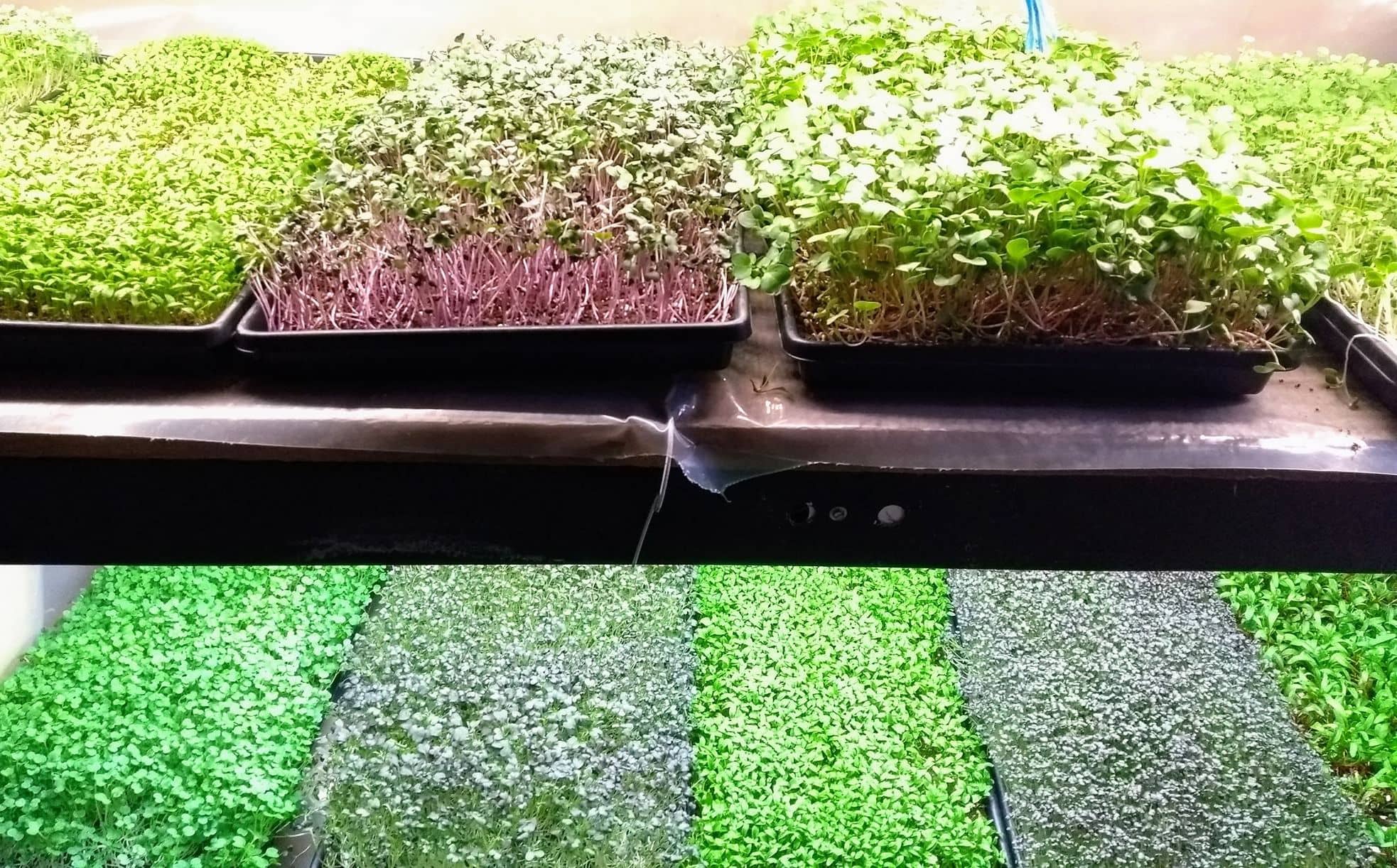
ICAR scientists have published a steady body of work on microgreens from Indian crops. In 2021, Priti and colleagues at ICAR-IARI grew 20 varieties each of moong and masoor as microgreens in Delhi and in Leh, Ladakh, and measured vitamin C, carotenoids, phenolics, antioxidant capacity, protein and minerals. Potassium, phosphorus and calcium were the most abundant minerals, and for most measures the Leh-grown microgreens scored higher than the Delhi-grown ones.
The 2022 ICAR-IARI study measured yields per growing cycle of 0.84 kg per square metre for moong, 1.35 kg for masoor and 2.65 kg for Indian mustard, and found no Salmonella or Listeria on the microgreens tested. A 2025 review by ICAR scientists, Seth and colleagues, lists palak, horse gram (कुलथी), pearl millet (बाजरा), ragi, sesame (तिल), bottle gourd and pumpkin among the crops that have been grown as microgreens.
Nutrition in brief
The best-known nutrition study of microgreens was led by the US Department of Agriculture and published in 2012. It measured vitamins C, E and K and carotenoids in 25 microgreens and found that the seed leaves held higher concentrations than published values for the mature leaves, with red cabbage highest in vitamin C and coriander (dhaniya) highest in carotenoids. The amounts varied widely between varieties.
Health effects are a separate question. A 2023 review found very few studies measuring the direct health effects of eating microgreens, and those it describes were in mice and rats fed concentrated powders or juice. Microgreens are best treated as a nutrient-dense vegetable that adds vitamins, minerals, colour and flavour to a meal, not as a medicine. Our benefits and nutrition guide sets out what each study measured, variety by variety.
How microgreens are used in Indian food
Microgreens are eaten raw, because heat wilts them within seconds. In Indian meals they work best added at the end: on top of dal, khichdi or pulao, folded into raita, scattered on parathas, chilla, dosa or uttapam, in chaat and bhel, in sandwiches and in salads. Spicy types such as mooli and sarson suit chaat and sandwiches, mild types such as moong and sunflower suit salads, and dhaniya and tulsi microgreens replace the chopped herb on a finished dish.
Keep them in the fridge and use them within a few days; the ICAR review gives a fresh life of 3–10 days at 4 °C, and in the ICAR-IARI 2022 trial, moong, masoor and mustard microgreens kept a saleable taste and appearance until the fourth day of cold storage. Rinse them just before eating, not before storing, because moisture shortens their life. A small handful per plate is enough, since the flavour is concentrated.
Buying microgreens in Pune
Garden & Acre delivers fresh microgreens in Pune and Pimpri-Chinchwad from its own supply chain, as a weekly subscription for homes and as regular supply for restaurants, cafés and hotels. You can ask which varieties are available in a given week, including whether familiar Indian types such as mooli, sarson or moong are in the harvest. Orders are taken on WhatsApp, where prices and the week's varieties are shared.
Questions
What is microgreens called in Hindi?
There is no standard Hindi word. The English word is used, written माइक्रोग्रीन्स. It means the tiny first leaves of vegetables, herbs and grains, cut 7–21 days after sowing. Each microgreen takes its crop's name, for example methi microgreens (मेथी माइक्रोग्रीन्स) or mooli microgreens (मूली माइक्रोग्रीन्स).
What is microgreens called in Marathi?
Marathi also uses the English word, माइक्रोग्रीन्स. Individual microgreens take the Marathi crop name, such as मुळा (radish), मोहरी (mustard), मेथी (fenugreek), कोथिंबीर (coriander), मूग (moong) and नाचणी (ragi). The table on this page gives 30 crops with their Marathi names.
Are microgreens and अंकुरित अनाज (sprouts) the same?
No. Sprouts are seeds kept moist for a day or two and eaten whole, with the seed and small root. Microgreens grow for one to three weeks in soil or coir under light, develop green leaves, and are cut above the root. The FDA advises vulnerable groups to avoid raw sprouts; that advice is about sprouts, which are eaten with the seed and root.
Which microgreens are easiest to grow in India?
Moong, sarson (mustard), mooli (radish) and masoor are the easiest and fastest. ICAR-IARI found the best harvest days to be day 7 for moong, day 8 for Indian mustard and day 9 for masoor, and Johnny's trial recorded about 8–9.5 days for radish. Dhaniya and tulsi take about 19–20 days and are harder.
Is methi microgreen the same as methi saag?
They come from the same plant, fenugreek, but at different ages. Methi microgreens are seedlings cut within about one to two weeks, with small, tender leaves and a milder taste. Methi saag is the leaf of an older plant, usually cooked. Microgreens are mostly eaten raw, as a topping.
What is the Hindi name of wheatgrass?
Wheatgrass is गेहूँ के जवारे (gehun ke jaware) in Hindi, from गेहूँ, wheat. In Marathi, wheat is गहू. Wheatgrass is grown like a microgreen but cut taller, and is mostly juiced. Johnny's Selected Seeds gives 7–12 days to harvest for wheat grown as shoots.
Sources
- Yield optimization, microbial load analysis, and sensory evaluation of mungbean, lentil, and Indian mustard microgreens — Priti et al., PLoS One, 2022 (ICAR-IARI)
- Diversity in phytochemical composition, antioxidant capacities, and nutrient contents among mungbean and lentil microgreens (Delhi and Leh-Ladakh) — Priti et al., Frontiers in Plant Science, 2021
- Microgreens: Functional Food for Nutrition and Dietary Diversification — Seth et al., Plants, 2025 (ICAR)
- Specialty Greens Pack a Nutritional Punch — USDA Agricultural Research Service, 2014
- Micro Greens Yield Trial 2017 — Johnny's Selected Seeds
- Selecting and Serving Produce Safely (raw sprouts advice) — U.S. Food and Drug Administration
- मेथी (Fenugreek) — Hindi Wikipedia
- नाचणी (Finger millet) — Marathi Wikipedia
- Microgreens — A Comprehensive Review of Bioactive Molecules and Health Benefits — Bhaswant et al., Molecules, 2023