Why schools, campuses and hotels build vertical farms
An institution builds a vertical farm for different reasons than a commercial grower. A school wants a place where biology, chemistry, maths and business become something students can touch and measure. A company wants fresh greens for its cafeteria, a visible sustainability project and something employees can take part in. A hotel wants herbs, microgreens and lettuce picked minutes before service. None of these depends on the farm beating wholesale vegetable prices, which is why institutional farms can succeed where many commercial vertical farms have struggled.
The other common thread is space. Schools, offices and hotels in Indian cities rarely have open land, but they do have terraces, unused rooms, corridors and car-park corners. Vertical systems turn a few square metres into a growing area, and indoor LED systems work in rooms with no daylight at all. A farm in a visible place, such as a school corridor, a cafeteria wall or a hotel lobby, also does more for the people who see it every day than one hidden on a roof.
Educational vertical farms in schools
The best-documented school programmes are in the United States. Teens for Food Justice, a New York nonprofit, builds hydroponic farms inside public schools. Civil Eats reported in 2022 that it ran five school farms, with students tending crops in STEM classes and after-school programmes and distributing produce to their communities. Green Street Academy in Baltimore built a 4,000 sq ft greenhouse. Morgan Hill Unified School District in California installed a Freight Farms container costing about $150,000, which grows 1,000 heads of lettuce a week and meets 60–70% of the district's salad-bar needs, with an expected payback of 7.5 years.
In India, school farms are newer and smaller. In February 2025, Delhi Public School, Nacharam, in Hyderabad, opened a Nature Lab with OMG Greens for hydroponic microgreens, described as the first Cambridge school in India with such a facility. A practical start for most schools is one or two towers or a microgreens rack in a science lab, expanded once teachers have built a routine.
Curriculum links: what students learn from a vertical farm
A vertical farm connects to several subjects at once. Students measure pH and nutrient strength, log temperature and growth, calculate yield per tray and cost per gram, and design experiments that compare light levels or varieties. In India, the National Education Policy 2020 supports this kind of work: it calls for vocational exposure from Grade 6, including crafts such as gardening, and a 10-day bagless period in Grades 6–8 for hands-on activities. A farm gives that period real content.
| Subject | Activity on the farm | Suggested level |
|---|---|---|
| Biology | Germination, photosynthesis, plant structure, comparing crops | Grades 6–10 |
| Chemistry | pH, electrical conductivity, nutrient solutions | Grades 8–12 |
| Physics | Light intensity and photoperiod, pump flow, energy use | Grades 9–12 |
| Mathematics | Yield per tray, growth graphs, cost per gram, averages | Grades 6–12 |
| Computer science | Sensors, timers and data logging with microcontrollers | Grades 8–12 |
| Business studies | Pricing, selling to the canteen or parents, record-keeping | Grades 9–12 |
| Environmental studies | Water use, food miles, urban food supply | All grades |
A classroom experiment that works
A simple, repeatable experiment makes the farm part of the timetable rather than a display. Indian research offers a ready model. A 2023 study by ICAR-Indian Agricultural Research Institute scientists compared light schedules for lettuce in a vertical hydroponic system and found that 16 hours a day gave the best fresh weight, while 20 hours gave less. Students can repeat a scaled-down version with microgreens, which finish in 8–14 days and fit inside a school term.
- Set up three trays of radish microgreens under the same light.
- Put each tray on a different photoperiod, for example 12, 16 and 20 hours, using timers.
- Record height and fresh weight at harvest, and electricity use for each tray.
- Calculate grams per kWh for each tray and discuss why more light is not always better.
Corporate campus and cafeteria farms
On corporate campuses, the farm usually belongs to the dining team. At Microsoft's campus in the United States, GreenBiz reported that the Dining at Microsoft team ran aeroponic and hydroponic towers and automated microgreen cabinets, each holding 16 trays of microgreens and producing a crop in as little as eight days. The microgreens and lettuce were used to top dishes and in the café salad bars. That model suits Indian IT parks and corporate campuses, which already run large in-house or contracted cafeterias.
A campus farm works best when it supplies a small number of items the kitchen uses daily, such as microgreens, lettuce and herbs, rather than trying to replace the vegetable order. It also gives employees something to see and join. The cafeteria farm must follow the same FSSAI rules as any food served, so the dining contractor should be involved in the design, harvesting procedures and hygiene records from the start.
Hotels and restaurants
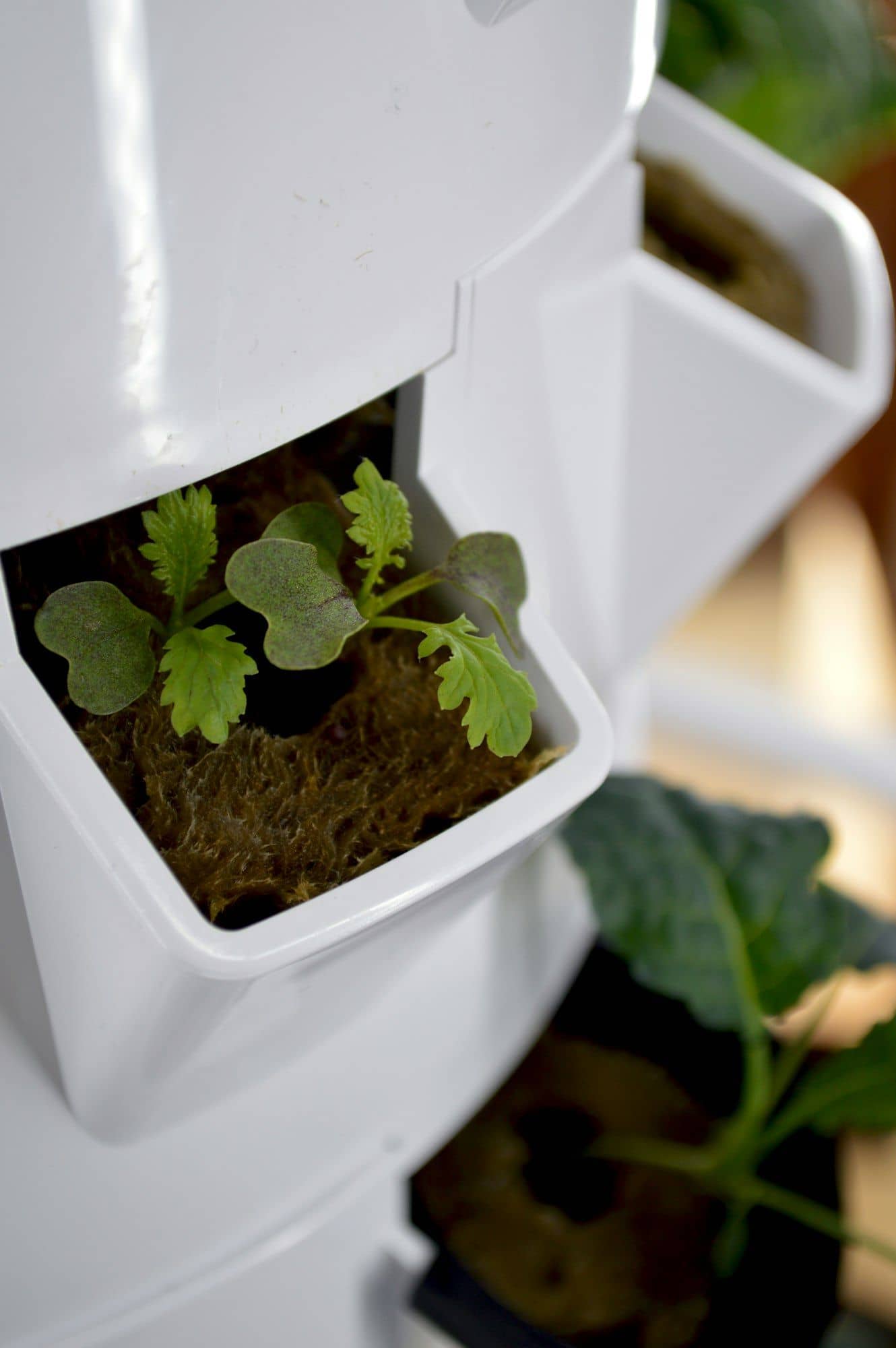
Indian hotels have moved in two directions. Some grow on site. VerticalFarmDaily reported in October 2025 that The Leela in Gurgaon runs a hydroponic farm from which chefs pick lettuce, basil, herbs and microgreens daily, installed by the Indian firm Aquahyd. Others contract supply. In August 2026, Roseate Hotels & Resorts signed a five-year agreement with Goenka Fresh for hydroponic tomatoes, peppers, herbs, leafy greens and other vegetables, delivered two to three times a week to its Delhi properties.
For a hotel, an on-site farm is worth most for items that lose quality within hours of harvest and appear on many plates: microgreens, edible flowers, herbs and specialty lettuces. It also becomes part of the guest experience, as a garden tour or a chef's table story. Bulk vegetables are better bought from farms, whether hydroponic or conventional, because a hotel's floor space is worth more as rooms and restaurants than as a large growing area.
CSR angles for vertical farming projects in India
Companies covered by Section 135 of the Companies Act, 2013 must spend 2% of their average net profit from the previous three years on CSR. A vertical farm can fit several items in Schedule VII: item (i) on eradicating hunger and malnutrition, item (ii) on promoting education and employment-enhancing vocational skills, and item (iv) on environmental sustainability, agroforestry and conservation of natural resources. A farm in a government school, a skills programme for young farmers or a nutrition project for a community fits these descriptions.
Two limits matter. The CSR Rules, as amended in 2021, exclude activities that benefit only the company's employees, so a farm that feeds only the company's own cafeteria is not CSR spending. They also exclude activities in the normal course of the company's business. Each company's CSR committee decides eligibility, and the finance and legal teams should confirm it before a proposal is approved.
Choosing a system for a school, campus or hotel
The choice depends on who will look after the farm, where it will sit and what it must produce. A tower needs a few minutes a day and a sunny spot or an LED. A rack room needs a dedicated space, cooling in summer and a trained person. A container or rooftop farm is a small business in itself and needs a full-time grower. Most institutions should start one step smaller than their ambition and expand once the routine holds.
| Option | Space | Care needed | Good for |
|---|---|---|---|
| Hydroponic towers (1–10) | Balcony, terrace, classroom, lobby | Short daily checks; weekly pH and topping up | Classrooms, cafés, hotel herb supply |
| LED rack room for microgreens and lettuce | Unused room or lab | Daily; trained staff or student team with a supervisor | School labs, campus cafeterias, hotel kitchens |
| Rooftop protected farm | Terrace with load check | Daily; dedicated grower | Larger campuses and hotel groups |
| Container farm | Car park or yard | Daily; dedicated grower | District or campus-scale supply |
Running an institutional farm: holidays, staff and budget
The Civil Eats report on US school farms lists the problems that recur: crops abandoned over summer holidays, teachers who do not take up the farm, competing school priorities and the upfront cost. In India the long summer break falls in the hottest months, when an unattended system can fail within days. Plan the crop calendar around the school year, name a caretaker for each holiday, and keep a written weekly routine so the farm does not depend on one enthusiastic teacher.
Budget for running costs as well as the build. Lighting is the largest electricity load in an indoor farm, at 65–85% of energy use in a 2024 benchmarking study of commercial vertical farms, and nutrients, seed, replacement parts and cleaning supplies recur every month. If produce goes to a canteen or kitchen, add FSSAI registration, hygiene training and harvest records. A farm that has a named owner, a budget line and a clear use for its produce will outlast one built as a showpiece.
How a Garden & Acre vertical farm setup project works
Garden & Acre designs and builds vertical farms for schools, colleges, corporate campuses, hotels and cafés. A project starts with a call about the site, the users and what the farm should produce. Garden & Acre then sends a written proposal with the design, the scope of work and the price for that site; there is no published price because every site differs. Once the proposal is agreed, the site visit and build follow as part of the agreement, then commissioning, training for staff or students, and support through the first crop. For a single classroom or café, hydroponic towers start from ₹14,000 per tower installed, including the tower, pump, timer, first seedlings, nutrients, training and a refill plan.
Questions
What does a school learn from a vertical farm?
Students practise biology, chemistry, physics and maths on a working system: germination and photosynthesis, pH and nutrient strength, light and energy, yield and cost calculations. Older students can add sensors and data logging, or run the farm as a small business selling to the canteen. NEP 2020's vocational exposure from Grade 6 fits this well.
Can a vertical farm be funded through CSR in India?
It can, if it fits Schedule VII, such as education and vocational skills, hunger and nutrition, or environmental sustainability, and benefits people beyond the company. The 2021 CSR rules exclude activities that benefit only the company's employees, so a farm feeding only the staff cafeteria does not count. The company's CSR committee decides eligibility.
What happens to a school vertical farm during holidays?
It needs a named caretaker. US school programmes report crops abandoned over summer as a common problem. In India, the long summer break falls in the hottest months. Plan short crops such as microgreens to finish before the break, reduce the system to a few plants, or arrange a staff or parent rota.
Can a hotel grow its own microgreens and herbs?
Yes. The Leela in Gurgaon runs a hydroponic farm from which chefs pick lettuce, basil, herbs and microgreens daily. On-site farms suit items that lose quality within hours and appear on many dishes. Bulk vegetables are usually better contracted from farms, as Roseate Hotels did with a five-year hydroponic supply agreement.
How much space does a school vertical farm need?
A single hydroponic tower needs about a square metre on a sunny terrace or balcony, or indoors with a grow light. A microgreens rack fits in a corner of a science lab. A room-sized LED farm for a cafeteria usually needs a dedicated room with cooling. Start small and expand once the routine is working.
How does a Garden & Acre vertical farm project start?
With a call about the site, who will run the farm and what it should produce. Garden & Acre then sends a written proposal with the design, scope and price for that site. The site visit and build follow once the proposal is agreed, then commissioning, training and first-crop support. Single towers start from ₹14,000 installed.
Sources
- Hydroponics help urban schools grow food year-round — Civil Eats, 13 September 2022
- India Microgreens Market Report (DPS Nacharam Nature Lab, February 2025) — IMARC Group
- Mainstreaming vocational education in schools under NEP 2020 — Observer Research Foundation
- Companies Act 2013, Schedule VII — CSR activities
- CSR Amendment Rules 2021 — ClearTax
- See Microsoft's in-office urban farming experiment — GreenBiz (Trellis)
- Hydroponics is bringing secret ingredients to India's luxury hotel kitchens — VerticalFarmDaily, October 2025
- India: Hotel reaches five-year hydroponic supply agreement — VerticalFarmDaily, August 2026
- Benchmarking energy efficiency in vertical farming — ScienceDirect, 2024
- Determination of optimal daily light integral for indoor cultivation of iceberg lettuce in an indigenous vertical hydroponic system — Gavhane et al., Scientific Reports, 2023