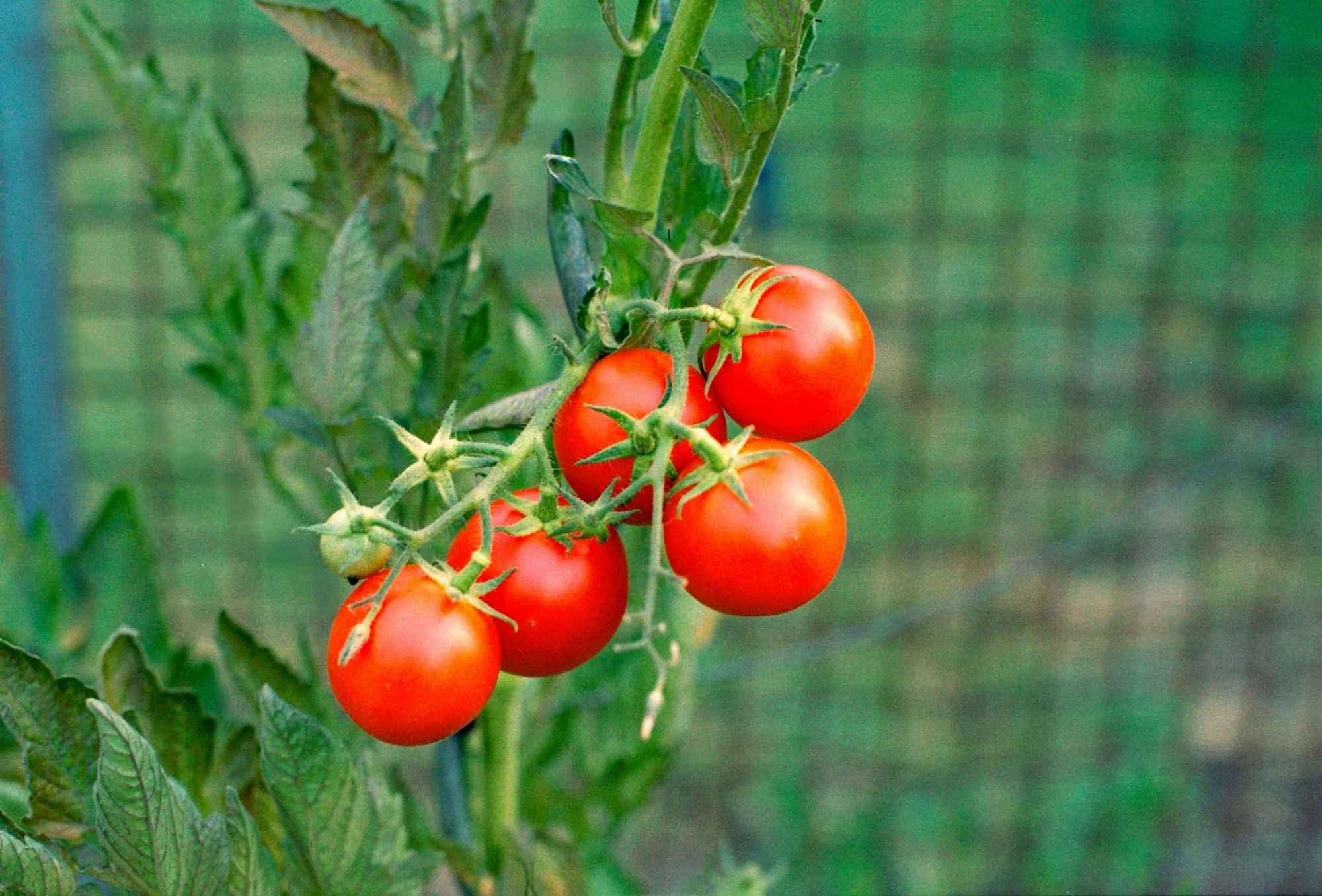
Why cherry tomatoes suit controlled growing
Cherry tomatoes are sold on taste as much as on weight. In the Wageningen University Autonomous Greenhouse Challenge, a cherry tomato trial run in high-tech Dutch greenhouse compartments, the price per kilogram was set to rise with the fruit's Brix (sugar) reading, reflecting market practice. Controlled growing lets a grower manage the things that drive Brix, such as light, root-zone salinity and potassium supply, and keep them steady through the season.
The fruit is also perishable. Punjab Agricultural University (PAU) gives a shelf life of five to six days for its yellow and orange cherry varieties. A short shelf life favours farms close to the buyer. In India, a polyhouse supplier's guide names hotels and salad brands as the main buyers, and quotes premium rates of ₹80–150 per kg in the right market. Treat that as a trade figure and confirm prices with your own buyers before planning.
Determinate, indeterminate and dwarf cherry tomato plants
A cherry tomato plant is either determinate or indeterminate. Virginia Tech Extension explains the difference: a determinate plant slows its leaf and stem growth once flowers form, while an indeterminate plant keeps growing its stem and leaves after the first flowers appear. Indeterminate plants therefore fruit for months, truss after truss, on a vine that keeps getting longer. PAU recommends only indeterminate varieties for net-house growing because of their long fruiting span.
Standard indeterminate vines do not fit stacked racks. ICAR-IARI gives a vine length of 9–12 metres for Pusa Cherry Tomato 1 over a 9–10 month crop. A 2026 paper in Molecular Horticulture (Lim et al.) calls indeterminate cultivars large, slow to mature and poorly suited to stacked cultivation. The group used genome editing to stack four mutations into a compact, early-fruiting cherry tomato and grew it in a four-layer NFT vertical farm. Its vertical-farm yield held steady, while an earlier compact line lost roughly 80% of its yield under the same conditions. Such lines are research material, not commercial seed in India.
| Type | Growth habit | Best fit |
|---|---|---|
| Indeterminate | Keeps growing and flowering; long vine trained on a string | Polyhouse or high-tech greenhouse, high-wire trellis, dutch buckets or substrate bags |
| Determinate | Stops extending once flowers form; shorter harvest window | Lower structures and short crops |
| Compact / dwarf (research lines) | Very short internodes, early fruiting | Multi-layer NFT racks in trials (Lim et al. 2026) |
Cherry tomato varieties in India, including yellow cherry tomatoes
PAU's Package of Practices for Vegetables (2021) recommends three cherry tomato varieties for net-house and polyhouse cultivation, all indeterminate. Punjab Red Cherry (2015) is round and deep red. Punjab Sona Cherry (2017) is the yellow cherry tomato, oval in shape. Punjab Kesar Cherry (2017) is orange. ICAR-IARI's Pusa Cherry Tomato 1 is a deep red type released for protected growing in the North Indian plains, with a stated TSS of 10.4 °Brix.
The yields below are the breeders' stated figures for Punjab and North Indian conditions. We have converted PAU's quintals per acre into kilograms per square metre (1 quintal = 100 kg; 1 acre = 4,047 m²). For example, 437 q/acre × 100 = 43,700 kg; 43,700 ÷ 4,047 = 10.8 kg/m². Private seed companies also sell cherry tomato hybrids, but their yield claims come from the seller, so check trial data before choosing.
| Variety | Colour and shape | Fruit weight | TSS | First picking | Stated yield |
|---|---|---|---|---|---|
| Punjab Red Cherry (PAU, 2015) | Deep red, round | 12 g | 6.3% | 120 days after transplanting | 437 q/acre (about 10.8 kg/m²); tolerant to leaf curl virus |
| Punjab Sona Cherry (PAU, 2017) | Yellow, oval | 11 g | 7.5% | 112 days after transplanting | 425 q/acre (about 10.5 kg/m²); shelf life 5 days |
| Punjab Kesar Cherry (PAU, 2017) | Orange, oval | 11 g | 7.6% | 115 days after transplanting | 405 q/acre (about 10.0 kg/m²); shelf life 6 days |
| Pusa Cherry Tomato 1 (ICAR-IARI) | Deep red | About 13 g | 10.4 °Brix | 70–75 days to maturity | 22 kg per plant; 4–5 tonnes per 1,000 m² over 9–10 months |
Light needs: the DLI target for tomatoes
Daily light integral (DLI) is the total light a crop receives in a day, in moles per square metre. Virginia Tech Extension states that tomato plants generally need a DLI of 15–30 mol/m²/day for good growth and fruiting. A 2022 study in PLoS One (Yang et al.) cites 20–30 mol/m²/day as the range for good-tasting fruit and high yields. Purdue Extension classes any crop needing more than 18 mol/m²/day as a very high light crop, so tomatoes sit at the top of the scale.
The arithmetic shows why short LED racks struggle. To deliver 25 mol/m²/day over a 16-hour photoperiod, the lights must supply 25,000,000 µmol ÷ 57,600 seconds = about 434 µmol/m²/s at the canopy, all day, and a tall vine shades its own lower leaves. Even the Wageningen cherry tomato trial, in a glass greenhouse, used lamps only to top up sunlight: 100 µmol/m²/s from sodium lamps plus LEDs. In most of India, sunlight is the cheap source of that light, which makes the polyhouse the practical home for cherry tomatoes.
| Figure | Value | Source |
|---|---|---|
| DLI for growth and fruiting | 15–30 mol/m²/day | Virginia Tech Extension (SPES-508) |
| DLI for good taste and high yield | 20–30 mol/m²/day | Yang et al., PLoS One, 2022 |
| Very high light crop threshold | More than 18 mol/m²/day | Purdue Extension (HO-238) |
| Typical greenhouse ceiling | Seldom above 25 mol/m²/day inside glazing | Purdue Extension (HO-238) |
Where cherry tomatoes fit: polyhouse, greenhouse or indoor room
The workable layouts follow from the light and height needs. A naturally ventilated polyhouse or a high-tech greenhouse gives sunlight and head room for a high-wire trellis, where each vine runs up a string to an overhead wire and is lowered as it grows. A tall single-tier indoor room can work if the lighting and cooling budget covers the full DLI over the whole canopy. Multi-layer racks built for lettuce give too little height and too little light per layer for standard vines.
For most Indian projects the sensible order is: grow indeterminate cherry tomatoes in a polyhouse with substrate and drip, keep leafy greens and herbs in the vertical racks, and treat compact cherry tomato lines in racks as a trial. This matches what the research shows. The only published multi-layer results we found use genome-edited compact plants that are not yet sold as seed.
Growing cherry tomatoes hydroponically: dutch buckets, NFT and grow bags
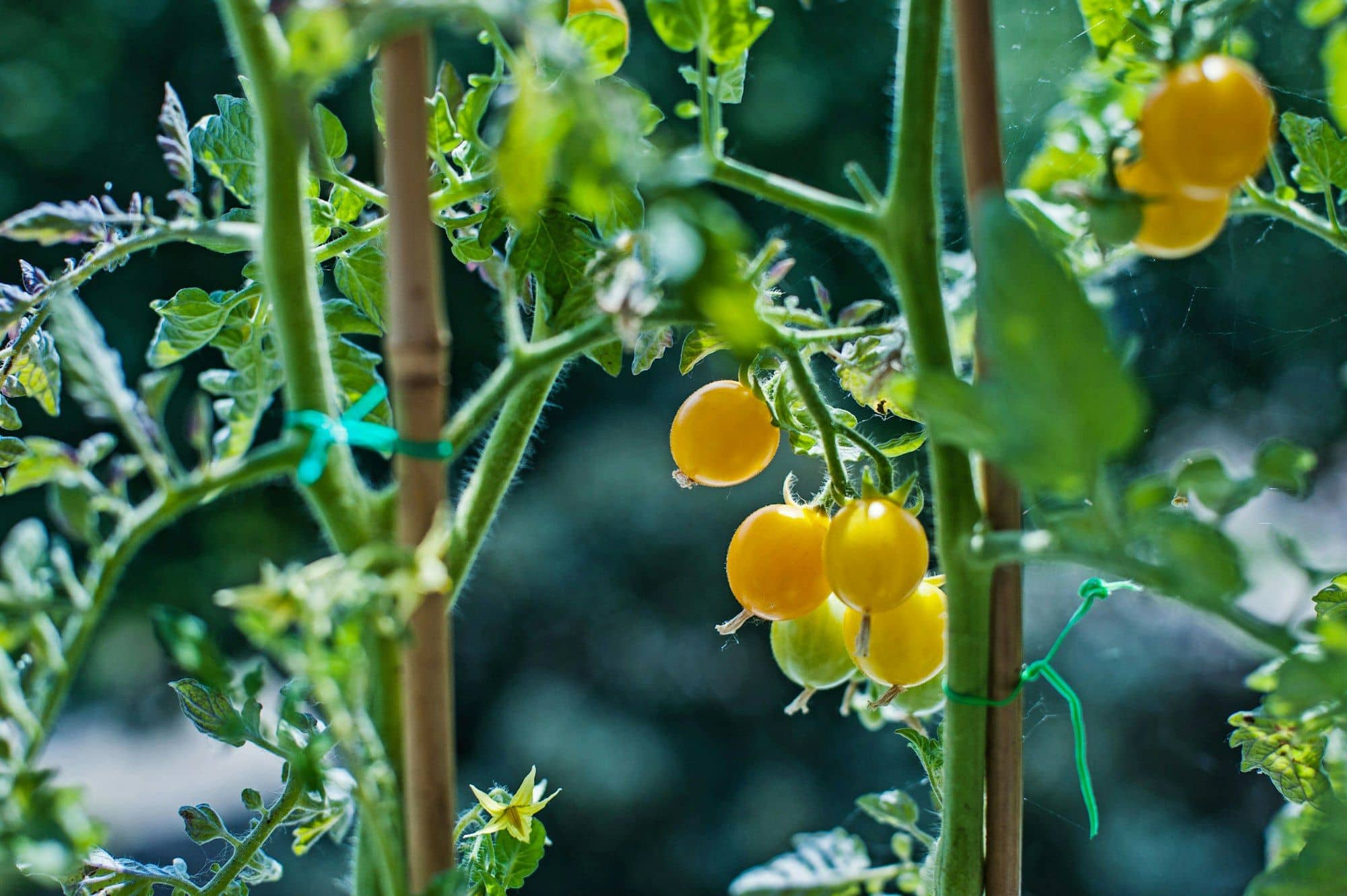
Virginia Tech Extension notes that tall crops such as tomatoes need a substantial root zone as well as a trellis, and that growers typically use hard plastic buckets, known as Bato or dutch buckets, for them. The same publication describes NFT as one of the most common systems for leafy greens, herbs and head lettuce. The University of Florida describes bag culture: perlite bags, rockwool slabs or loose peat-type media fed by a drip emitter in each bag, at 1–4 quarts (about 1–4 litres) per hour.
Coco-peat grow bags on drip work on the same principle as the Florida bag systems: one or two plants per bag, an emitter per plant and a trellis string overhead. The bags are replaced or refilled between crops. Whichever system you choose, the drain water from open substrate systems needs somewhere to go. The Florida handbook warns that leachate can cause problems over time unless it is collected, so plan a catchment or a recirculation line from the start.
| System | How it works | Suits | Watch for |
|---|---|---|---|
| Dutch (Bato) bucket | Bucket of substrate per one or two plants, drip-fed, drains to a return line | Indeterminate vines on a high-wire trellis | Emitter clogging; drain management |
| Substrate bag or slab with drip (coco-peat, rockwool, perlite) | Emitter in each bag, run-to-waste or recirculated | Polyhouse cherry tomatoes at scale | Leachate disposal; salt build-up in the bag |
| NFT channel | Thin film of solution runs past bare roots | Leafy greens; compact cherry tomato lines in trials | Root mats in long crops; little buffer if a pump stops |
Plant density, pruning and training a cherry tomato plant
The University of Florida handbook allows about 3–3.5 square feet of production area per plant, which works out to about 3.1–3.6 plants per m² (10.76 sq ft ÷ 3.5 = 3.1; 10.76 ÷ 3 = 3.6). PAU's polyhouse layout uses paired rows: 30 cm between plants, 60 cm between the two rows of a pair and 90 cm between pairs. That is 2 plants per 1.5 m × 0.3 m = about 4.4 plants per m² of bed. In the Wageningen cherry tomato trial, teams started at 2.6–4.0 stems per m² from two-stem young plants and ranged from 2.6 to 8.0 stems per m² over the season.
Training is single stem. PAU says to prune polyhouse tomatoes to one stem and remove every side shoot (sucker) while it is 1–3 inches long, checking at least weekly. Florida recommends pruning every 3–4 days so only small shoots are removed. Each vine climbs a string hung from an overhead wire. As it reaches the wire, the grower lowers and leans it: the string is let down, often by about 45–60 cm (18–24 inches) at a time according to the Florida handbook, and the bare lower stem is laid along the row.
Pollination indoors: bumblebees, vibration and airflow
Tomato flowers release pollen when shaken. Outdoors, wind and bees do this; under cover, the grower must. A 2021 meta-analysis of 71 experiments (Cooley and Vallejo-Marín) found that buzz-pollinating bees such as bumblebees raised tomato fruit weight by about 65% on average, while mechanical vibration showed no significant improvement across the studies. The review notes that Europe standardised on the bumblebee Bombus terrestris, while North America and parts of Asia have turned to native species over concerns about imported colonies.
In India, researchers at Dr Y S Parmar University, Nauni, reared the native bumblebee Bombus haemorrhoidalis and used it in a polyhouse tomato crop; yield reached 12.7 kg/m² with gains of roughly 38–65% over unpollinated plants. Check with the plant quarantine authorities before importing any live pollinator. Where bees are not used, Florida advises vibrating the flower trusses at least every second day between 10 am and 3 pm, and warns that high humidity on cloudy days stops pollen from shedding. Good air movement helps both pollination and calcium uptake.
Nutrition: EC, pH and potassium by growth stage
Ohio State University's greenhouse tomato recipe (Kroggel and Kubota) splits the crop into stages by open flower trusses and raises feed strength as fruit load builds. Potassium goes from 144 mg/L in stage 1 to 350 mg/L later, which the authors say promotes fruit sugar loading and general fruit quality. They keep pH at 5.5–6.5 and note that EC can run higher when the source water already contains salts, which is common with Indian borewell water. Test your water before mixing. The source gives EC figures for the first and last stages only, so the table leaves stage 2 blank rather than guessing.
| Stage | Definition | EC | pH | Potassium (K) |
|---|---|---|---|---|
| Stage 1 | Emergence to second truss with open flowers | About 2.0 dS/m | 5.5–6.5 | 144 mg/L |
| Stage 2 | Third to fifth truss with open flowers | Not stated | 5.5–6.5 | 350 mg/L |
| Stage 3 | Beyond fifth truss with open flowers | About 2.4 dS/m | 5.5–6.5 | 350 mg/L |
Brix in cherry tomatoes: what it measures and what raises it
Brix, reported as total soluble solids (TSS), is the percentage of dissolved solids in the juice, mostly sugars. A refractometer reads it from a drop of juice. It is the number buyers use for sweetness: the Indian varieties above range from 6.3% TSS for Punjab Red Cherry to 10.4 °Brix for Pusa Cherry Tomato 1, and the Wageningen trial averaged 8.7 °Brix on the variety Axiany.
Raising EC is the usual lever, with a yield cost. In an Italian NFT trial on the cherry tomato Naomi (Conversa et al. 2003), a high-salinity solution gave 7.4 °Brix against 6.7, but 2.2 kg per plant against 2.9. A Japanese study (Itoh et al. 2020) raised Brix from about 4.8–5.1% to 5.7–7.5% with supply EC of about 4–5 dS/m, mainly because the fruit held less water, and some salinized fruit showed blossom-end rot. The effect is not universal: the Wageningen trial found no link between drain EC and Brix for its variety. Light (see the DLI range above) and variety choice matter as much as salinity.
Staggered planting for continuous harvest
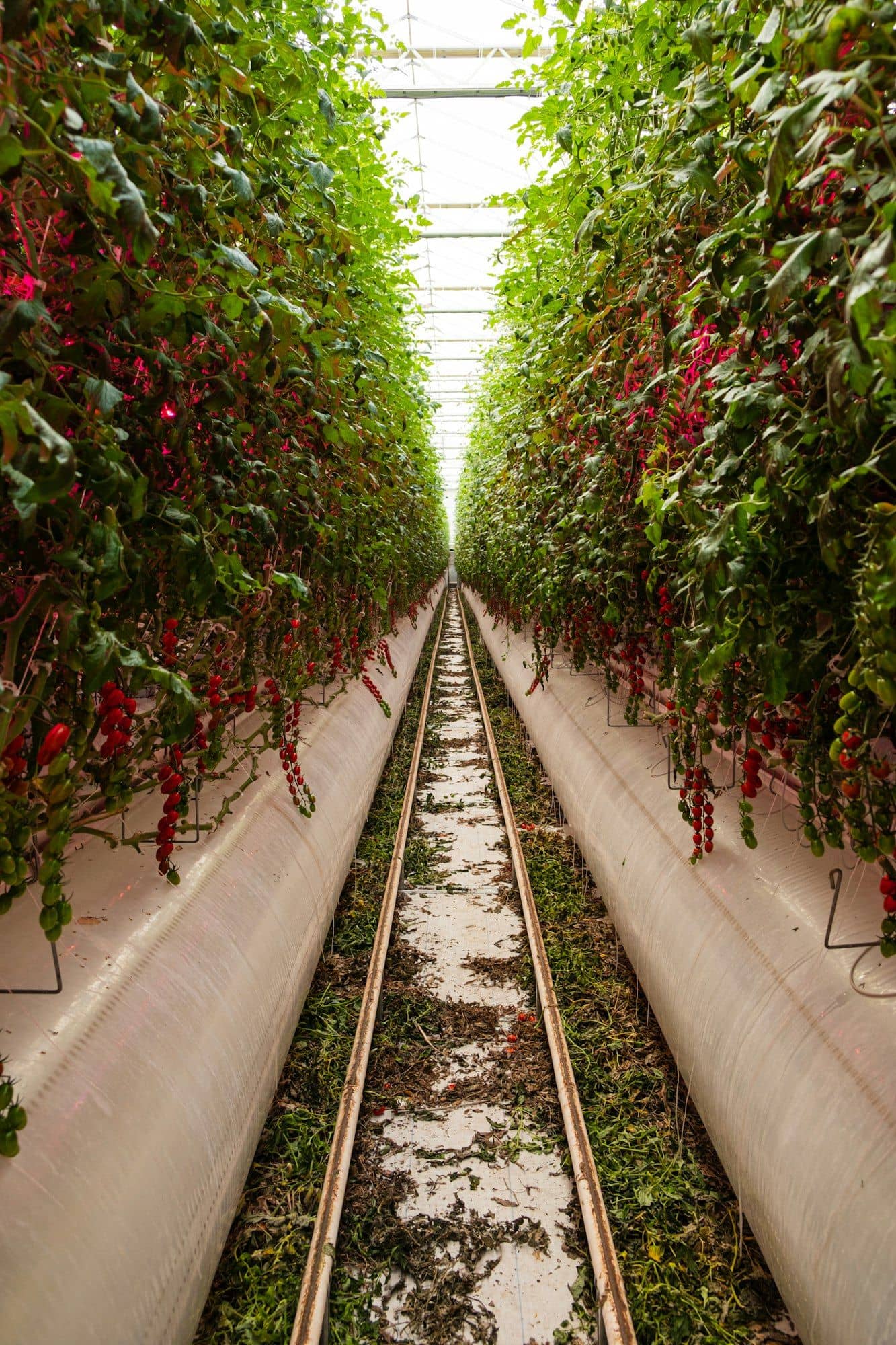
One planting gives a long but uneven harvest. In the Wageningen trial, plants set out on 16 December gave a first harvest on 13 February, about eight and a half weeks later, and the crop was topped in mid-April for a last harvest on 29 May. In a Punjab polyhouse, PAU gives first pickings 112–120 days after transplanting for its varieties, with the crop running to mid-May. Between crops there is a gap of weeks while the house is cleared and replanted.
Buyers such as hotels want the same quantity every week. The practical fix is to split the growing area into two or more blocks and plant them several weeks apart, so one block is always in full harvest while another is being cleared or establishing. The right offset depends on your local days to first picking, so record it for your first crop and plan the second planting from that.
Pests and disorders: whitefly, Tuta absoluta and blossom-end rot
Whitefly (Bemisia tabaci) sucks sap and carries viruses; PAU lists leaf curl virus tolerance as a selection trait for its tomatoes. PAU advises raising the nursery inside the same polyhouse where the crop will grow to keep seedlings away from whitefly. Tuta absoluta, the South American tomato leaf miner, was first found in India in October 2014 in Pune, on tomatoes in polyhouses and fields, according to the EPPO Reporting Service and an ICAR alert. It spread to Ahmednagar, Dhule, Jalgaon, Nashik and Satara in Maharashtra and to Kolar and Bengaluru by January 2015. ICAR says it can cause up to 90% loss of yield and fruit quality. Fine insect netting, clean seedlings and early monitoring are the first defences.
Blossom-end rot is a dark, sunken patch at the flower end of the fruit. Purdue Extension describes it as a disorder caused by low calcium in the fruit, made worse by uneven water supply, high salinity, root damage and excess nitrogen. Virginia Tech notes that good air circulation drives transpiration, which moves calcium through the plant. In hydroponics, keep irrigation steady and take care when running high EC for Brix.
Cherry tomato yield: figures and context
Published yields vary with the structure, the season and the length of the harvest, so compare them on the same basis. A figure for a 15-week harvest in a lit Dutch greenhouse cannot be set beside a 10-month Indian crop without adjusting for time. The table lists figures from sources we opened, with their context. None of them is a vertical-farm rack yield for a commercial variety; the only multi-layer data we found are for genome-edited research lines.
| Setting | Yield | Context | Source |
|---|---|---|---|
| High-tech glass greenhouse, Netherlands, cv. Axiany | 12.9–14.4 kg/m² class A | Harvest 13 Feb–29 May 2020 only, about 15 weeks | Hemming et al. 2020 |
| Naturally ventilated polyhouse, Punjab | About 10.0–10.8 kg/m² (405–437 q/acre) | One winter-to-May season | PAU 2021 |
| Protected cultivation, North Indian plains, Pusa Cherry Tomato 1 | 4–5 t per 1,000 m² (4–5 kg/m²); 22 kg per plant | 9–10 month crop | ICAR-IARI |
| NFT, Italy, cv. Naomi | 2.2–2.9 kg per plant | High versus low EC | Conversa et al. 2003 |
Revenue arithmetic for a 1,000 m² cherry tomato polyhouse
This is an illustration of the method, not a forecast. Each input is marked as sourced or assumed. Replace the assumptions with your own buyer prices and trial results. The result is gross revenue before costs such as seedlings, nutrients, labour, power, packing, transport and the structure itself. It also ignores the gap between crops and any fruit lost to pests, so a real first year is likely to come in lower than the figure worked out here.
Yield (sourced, low end of ICAR-IARI's stated range): 4 kg/m² × 1,000 m² = 4,000 kg. Marketable share (assumption): 85%, so 4,000 × 0.85 = 3,400 kg. Price (assumption, inside the trade range quoted above): ₹100 per kg. Gross revenue: 3,400 kg × ₹100 = ₹3,40,000. At ₹80 per kg it is 3,400 × ₹80 = ₹2,72,000; at ₹150 it is 3,400 × ₹150 = ₹5,10,000. If you use PAU's Punjab figure of about 10.5 kg/m² instead, 10.5 × 1,000 × 0.85 = 8,925 kg, and at ₹100 that is ₹8,92,500.
Planning a cherry tomato polyhouse or vertical farm
Garden & Acre plans and builds commercial and institutional growing projects, from rooftop and campus farms to vertical farms, through its Vertical Farm Setup service: a call, then a written proposal, then the site visit and build. For cherry tomatoes on open farmland or in a polyhouse, the Farm Development service covers land and layout. If you are deciding between tomatoes in a polyhouse and greens in racks, we can work through the light, space and buyer numbers with you before you commit.
Questions
Can cherry tomatoes be grown in a vertical farm?
Standard indeterminate cherry tomato vines are hard to grow in stacked LED racks because they grow several metres long and need a DLI of roughly 15–30 mol/m²/day. They suit polyhouses, high-tech greenhouses and tall single-tier rooms. Researchers have grown genome-edited compact cherry tomatoes in a four-layer NFT vertical farm, but these are not commercial seed yet.
What EC and pH do hydroponic cherry tomatoes need?
Ohio State University's tomato recipe uses an EC of about 2.0 dS/m in the early stage and about 2.4 dS/m once more than five trusses are flowering, with pH kept at 5.5–6.5. Growers who want higher Brix sometimes run higher EC, but trials show this can cut fruit size and yield and increase blossom-end rot.
Which cherry tomato varieties are grown in India?
Public-sector varieties for protected cultivation include PAU's Punjab Red Cherry, Punjab Sona Cherry (yellow) and Punjab Kesar Cherry (orange), and ICAR-IARI's Pusa Cherry Tomato 1. All the PAU varieties are indeterminate. Private seed companies also sell cherry tomato hybrids; ask for local trial data before choosing one.
What is a yellow cherry tomato variety for polyhouses in India?
PAU's Punjab Sona Cherry, released in 2017, is a yellow, oval, indeterminate cherry tomato recommended for protected cultivation. PAU gives an average fruit weight of 11 g, TSS of 7.5%, first picking about 112 days after transplanting and a total yield of 425 quintals per acre, with a shelf life of about five days.
How many cherry tomato plants per square metre?
The University of Florida greenhouse handbook allows 3–3.5 square feet per plant, about 3.1–3.6 plants per m². PAU's paired-row polyhouse layout works out to about 4.4 plants per m² of bed. In a Wageningen cherry tomato trial, stem density started at 2.6–4.0 stems per m² from two-stem plants.
How are cherry tomatoes pollinated in a polyhouse?
By bumblebees or by shaking the flowers. A 2021 meta-analysis found buzz-pollinating bees raised tomato fruit weight by about 65% on average. Indian research has used the native bumblebee Bombus haemorrhoidalis. Without bees, the University of Florida advises vibrating trusses at least every second day between 10 am and 3 pm.
What yield does a cherry tomato plant give?
It depends on variety and season length. ICAR-IARI gives an average of 22 kg per plant for Pusa Cherry Tomato 1 over a 9–10 month crop. An Italian NFT trial on the variety Naomi recorded 2.2–2.9 kg per plant. PAU's Punjab varieties yield about 10–10.8 kg/m² in one polyhouse season.
Sources
- Basic Tomato Physiology and Morphology (SPES-508) — Virginia Cooperative Extension, Virginia Tech
- Effects of supplemental light on tomato growth and the mechanism of the photosystem II apparatus — Yang et al., PLoS One, 2022
- Commercial Greenhouse Production: Measuring Daily Light Integral in a Greenhouse (HO-238-W) — Torres & Lopez, Purdue Extension
- Hydroponic Nutrient Solution for Optimized Greenhouse Tomato Production — Kroggel & Kubota, The Ohio State University
- Production of Greenhouse Tomatoes (CV266), Florida Greenhouse Vegetable Production Handbook — Hochmuth, UF/IFAS
- Production Systems (CV255), Florida Greenhouse Vegetable Production Handbook — UF/IFAS
- Hydroponic Production of Edible Crops: Management Basics (SPES-462) — Virginia Cooperative Extension
- Cherry Tomato Production in Intelligent Greenhouses — Hemming et al., Sensors, 2020 (Wageningen University & Research)
- Designing rapid-cycling, compact architecture in tomato for vertical farming — Lim et al., Molecular Horticulture, 2026
- Response of cherry tomato to the electrical conductivity of the nutrient solution — Conversa et al., Acta Horticulturae 609, 2003
- Production of high soluble solids fruits without reducing dry matter production in tomato plants grown in salinized nutrient solution — Itoh et al., The Horticulture Journal, 2020
- Buzz-Pollinated Crops: A Global Review and Meta-analysis of the Effects of Supplemental Bee Pollination in Tomato — Cooley & Vallejo-Marín, Journal of Economic Entomology, 2021
- Effect of Bumble Bee Pollination on Quality and Yield of Tomato Grown Under Protected Conditions — Yankit et al., IJCMAS, 2018
- Package of Practices for Cultivation of Vegetables 2021 — Punjab Agricultural University
- Pusa Cherry Tomato 1 — ICAR-Indian Agricultural Research Institute, Technology Transfer Unit
- First report of Tuta absoluta in India — EPPO Reporting Service
- Tuta absoluta: A New Invasive Pest Alert — ICAR
- Blossom End Rot of Tomato Fruit (BP-13-W) — Latin, Purdue Extension
- Polyhouse Crops: Complete Guide to Every Crop You Can Grow in India — Agriplast (trade blog, price range only)