What makes a crop suit a vertical farm
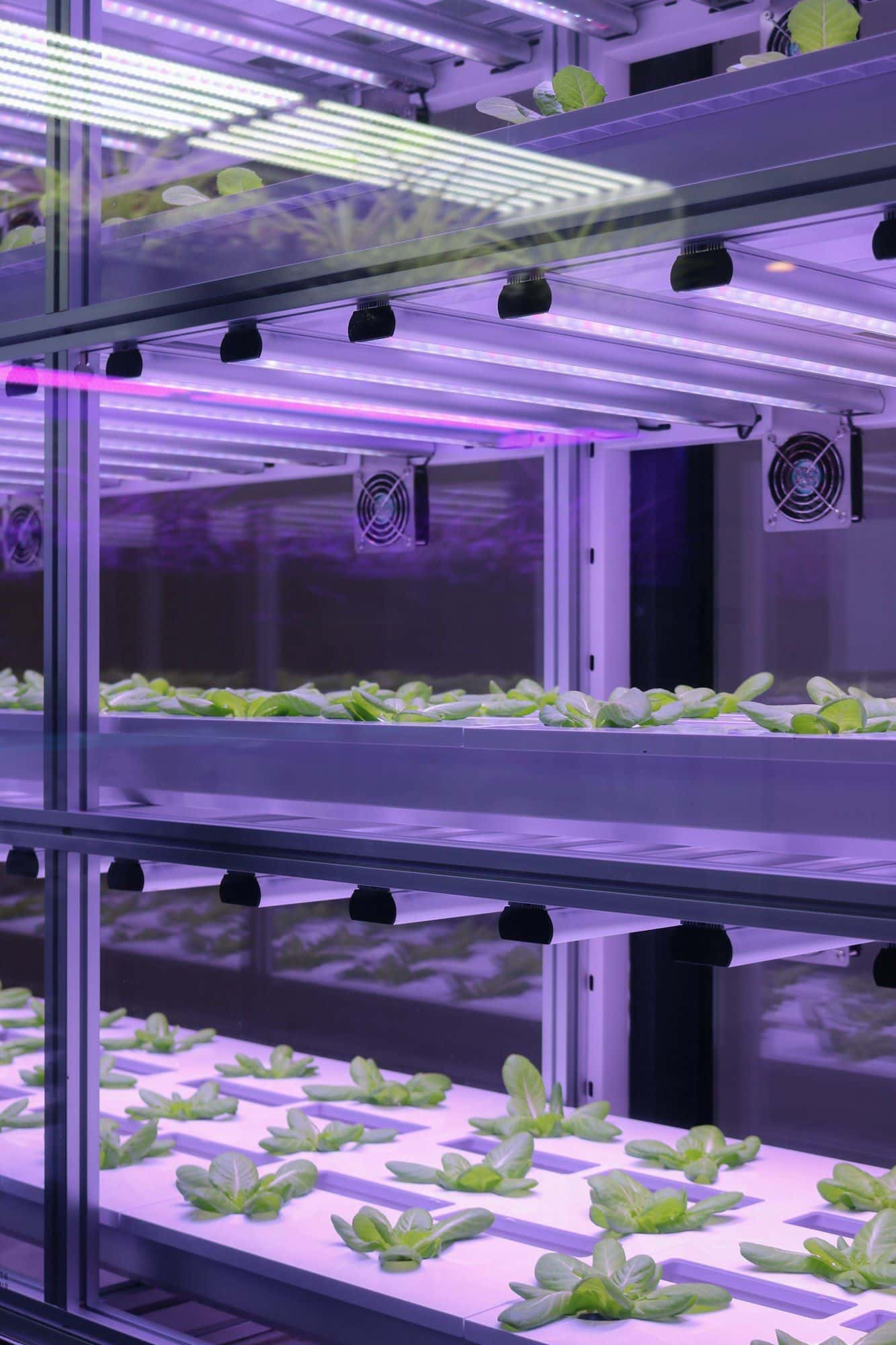
Every plant in a vertical farm grows under electric light, so every gram it produces carries an electricity cost. A 2024 benchmarking study found lettuce takes roughly 10–18 kWh per kilogram, with lighting 65–85% of the energy. A crop earns its place only if its price covers that energy plus rent, labour and equipment. A 2022 review in Agronomy by Van Gerrewey, Boon and Geelen summarises what works: rapid-growing crops, short in height, with a large share of saleable plant parts, meaning leafy greens, microgreens and herbs. The University of Bologna's vertical farm researchers make the same point using harvest index, the edible share of the plant. Lettuce and baby leaves have a high harvest index, so little of the light is spent on roots, stems or leaves nobody buys.
- Short cycle, so many harvests a year from each shelf.
- Compact height, so more tiers fit in the room.
- High edible share, so light is not wasted on stalks and roots.
- Sold fresh, where local and clean production earns a premium.
- Tolerant of dense planting and moderate light.
Crop comparison: cycle days, yield and difficulty
The table brings together cycle lengths and yield notes from published trials and handbooks. Cycle days are from sowing to harvest unless noted. Conditions differ: Cornell's figures come from greenhouse hydroponic ponds with supplementary light, the kale figures from a multi-tier research vertical farm in Italy, and the coriander figures from a greenhouse trial in Brazil. Value and difficulty are Garden & Acre's practical assessments for an indoor farm, not measured quantities.
| Crop | Cycle | Yield note (source) | Value | Difficulty |
|---|---|---|---|---|
| Head or leaf lettuce | About 35 days (11 nursery + 24 grow-out) | 150 g heads; 1,245 heads a day from 660 m² of ponds (Cornell) | Medium | Moderate: tipburn needs airflow |
| Baby spinach | About 16 days (2 germination + 14 grow-out) | Single cut only; Pythium risk in warm water (Cornell) | Medium–high | Hard: needs chilled solution |
| Baby-leaf kale | 21 days | Modelled 54 kg/m²/year over 17 cycles (Zauli et al. 2024) | Medium–high | Easy to moderate |
| Basil | About 39 days in an LED trial | Chilling-sensitive after harvest (Pennisi et al. 2019) | High | Moderate |
| Coriander | About 30–35 days (transplant at 10 days, harvest 20–25 days later) | Solution in shallow channels exceeded 40 °C in heat (da Silva et al. 2020) | Medium in India | Moderate: keep solution cool |
| Microgreens | 6–23 days by species | Radish 6–10, broccoli 8–13, sunflower 9–12 days (Virginia Tech) | High | Easy |
| Strawberry | Months per crop | Plenty kept a Virginia strawberry farm after its 2025 bankruptcy filing (TechCrunch) | High | Hard: flowering and pollination |
| Tomato | Months per crop | Forecast to become viable in future (Pattison et al., cited by Van Gerrewey 2022) | Medium | Hard: tall vines, high EC |
| Wheat | Several cycles a year indoors | Up to about 1,940 t/ha a year in 10 layers under ideal conditions, against 3.2 t/ha in the field (Asseng et al.) | Low | Not economic |
Leafy greens: the backbone of vertical farming
Lettuce is the reference crop for indoor farming. Cornell's handbook describes a system sown in a nursery for 11 days and grown in floating ponds for 24 more, harvesting 150 g heads on day 35. Its example of 1,245 heads a day from 660 m² of ponds works out to 1,245 × 0.15 kg = 186.75 kg a day, or 186.75 ÷ 660 = about 0.28 kg per square metre per day on a single level. Stacking tiers multiplies output per square metre of floor, but each tier also needs its own light.
Baby leaves go faster still. Cornell's baby spinach is harvested 16 days after sowing, and the Bologna vertical farm cut baby kale at 21 days, with a modelled 54 kg of fresh leaves per square metre of growing surface a year across 17 cycles. Short cycles mean more harvests, but also more seed, sowing and harvesting labour per kilogram. Each green has a specific risk. Lettuce gets tipburn if airflow is poor. Spinach roots are attacked by Pythium in warm water, so Cornell chills the solution to 15–20 °C and never takes a second cut. Kale and other brassicas are comparatively forgiving.
Herbs and microgreens: small crops, high value
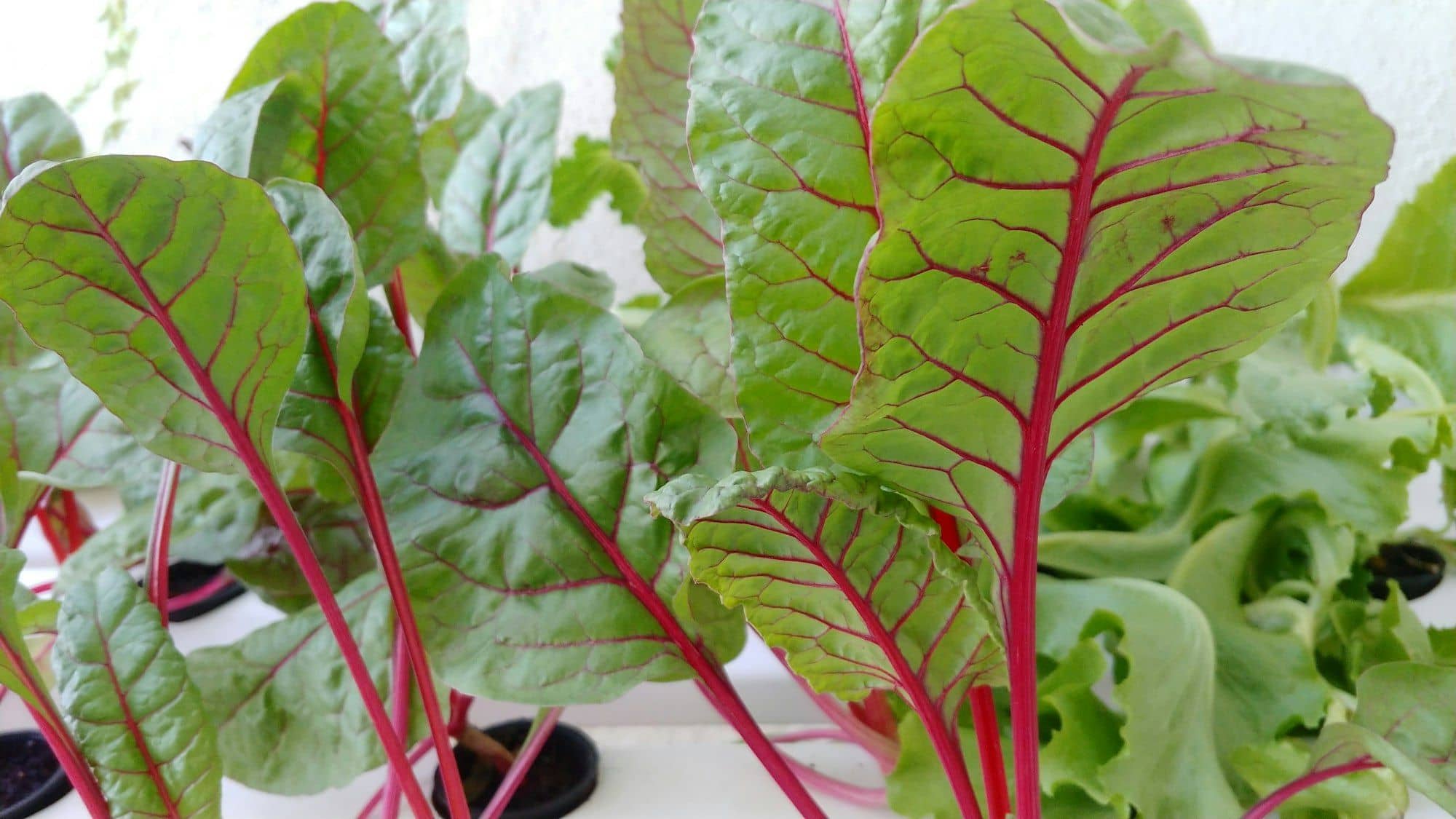
Herbs are sold by the bunch or the gram, so a small weight can carry a good price. Basil in a University of Bologna LED trial was harvested 39 days after sowing. It needs warm storage: UC Davis advises keeping basil above 10 °C, because chilling browns the leaves. Mint is grown from cuttings and cut repeatedly. Coriander was ready about 30–35 days after sowing in a Brazilian hydroponic trial, which also showed how quickly shallow channels overheat in hot weather.
Microgreens are the fastest crop of all. Virginia Tech's extension guide to microgreens in vertical farms lists 6–10 days for radish, 8–14 for kale, 9–12 for sunflower and 12–23 for beet, from sowing to harvest. They need little light and fit shallow trays, which makes them a common first crop for small farms, cafés and schools. The catch is labour and packaging: every tray is sown, grown and cut by hand, and the product has a short shelf life.
Strawberries and tomatoes: possible but harder
Fruiting crops are the next frontier. They take months rather than weeks, need pollination, grow taller, and spend part of their energy on leaves and stems that are not sold. The 2022 Agronomy review cites Pattison and colleagues, who expected tomatoes to become viable in vertical farms in future, while leafy greens and microgreens remain the most cost-effective crops. Oklahoma State University's hydroponic chart shows another difference: tomatoes run at EC 2.0–4.0, well above the 1.2–1.8 listed for lettuce, so they need their own nutrient system.
Strawberries are the fruit that large indoor companies have bet on. When Plenty filed for bankruptcy in March 2025 after raising nearly US$1 billion, TechCrunch reported that it planned to keep operating a strawberry farm in Virginia. That shows the interest in premium indoor berries and also the scale of capital involved. For a first farm, strawberries are a crop to trial on a few racks, not to build a business around. Our separate guide to strawberry vertical farming covers varieties, pollination and pricing in detail.
What does not work: staples and trees
Staple crops grow indoors, sometimes spectacularly, but cannot pay for the light. Researchers led by Senthold Asseng, reported by Phys.org in July 2020, estimated that wheat in a 10-layer indoor farm could yield about 1,940 t per hectare under ideal conditions, against about 3.2 t per hectare for field wheat in good years. They also concluded that energy for lighting makes it uneconomic at current prices.
The same logic applies to rice and potatoes. Pattison and colleagues estimated that even with LEDs at their maximum possible efficiency, the cost of the light would far exceed the value of staple crops such as potatoes, wheat and rice. A kilogram of lettuce already needs 10–18 kWh; a kilogram of grain sells for a small fraction of what salad fetches. Fruit trees fail for more basic reasons. They take years to bear, grow far taller than a rack tier, and most of their biomass is wood, which is never sold. Their harvest index is the opposite of what a vertical farm needs. Orchards belong on land, where the sunlight costs nothing to use.
The exception: aeroponic seed potatoes in India
Potatoes grown for food do not pay indoors, but potato seed is different. The aim is clean, disease-free planting material for field farmers, not cheap food. ICAR's Central Potato Research Institute perfected an aeroponic system for producing seed potato minitubers in 2011. ICAR reports that the technology was commercialised to 14 firms in states including Uttar Pradesh, West Bengal, Punjab and Haryana, each licensed to produce 10 lakh minitubers, and that it cuts the seed crop's time in the field by at least two years. This is controlled-environment farming used where it adds the most value: a clean start for a field crop. Our aeroponic farming guide explains the system in more detail.
What sells in India
Indoor farms in India are best aimed at exotic salad greens and herbs that are hard to source consistently and clean from open fields: lettuces, rocket, kale, basil, pak choi and microgreens. Everyday leaves such as coriander, methi, palak and mint are grown widely in open fields, so an indoor farm competes with mandi supply on price unless it sells on consistency, cleanliness or convenience.
The main channels are hotels, restaurants and caterers (HoReCa), premium retail, and quick commerce. The US Department of Agriculture's 2025 report on Indian e-commerce says quick commerce delivers groceries in 10–30 minutes in urban cities and that Swiggy Instamart, Blinkit and Zepto hold over 85% of that market, while estimating only 5–10% of fresh produce is bought online. Pune-based hydroponic grower Nutrifresh, which reported ₹145.22 crore of revenue in FY25 according to Entrackr, lists Zepto, Swiggy Instamart, Blinkit, McDonald's and Spar among its buyers. It farms in climate-controlled greenhouses rather than stacked indoor farms, but its buyer list shows where hydroponic produce is sold.
Price the energy before choosing a crop. Under the MERC order of 25 March 2026 in Case 75 of 2025, Maharashtra's 2026–27 rate for LT-II(A) non-residential connections up to 20 kW is ₹8.51 energy charge plus ₹1.60 wheeling, or ₹10.11 per kWh. At that rate, 10–18 kWh per kg of lettuce costs 10 × 10.11 = ₹101.10 to 18 × 10.11 = ₹181.98 in electricity alone. MERC's order of 28 March 2025 lists indoor vertical farming under LT IV(C) Agriculture – Others, at ₹5.61 plus ₹1.60, or ₹7.21 per kWh. If your farm qualifies, the range is 10 × 7.21 = ₹72.10 to 18 × 7.21 = ₹129.78 per kg. Fixed charges, electricity duty and fuel adjustment are extra, so get your category confirmed by your DISCOM in writing.
Choosing your first crop
Start with one or two crops you can sell before you build. Talk to buyers first: a chef, a café chain, a quick-commerce category manager or a premium store. Ask what they buy, in what pack size, how often and at what price. Then check the crop against the cycle, energy and labour figures above. Run a pilot on a few racks for several cycles and record yield, energy and labour per kilogram before committing the whole farm to one crop.
- Lowest risk: microgreens and baby leaves, with short cycles and low light needs.
- Core crop for most farms: lettuce and mixed salad leaves, with good airflow.
- Add value: basil and other herbs, stored above 10 °C.
- Trial only: strawberries and cherry tomatoes on a few racks.
- Avoid for profit: staples, root crops and trees.
Planning a crop mix with Garden & Acre
Garden & Acre's Vertical Farm Setup service includes a feasibility stage that tests crops against your site, power tariff and buyers before any racks go in, then design, build and first-crop support. If you already run a farm and want to change your crop mix, our Vertical Farm Consulting service covers crop planning and trials. Both are priced in a written proposal. For homes, cafés and schools, our hydroponic and aeroponic towers start at ₹14,000 per tower installed and suit herbs, lettuce and leafy greens.
Questions
What is the most profitable crop for vertical farming?
Leafy greens, herbs and microgreens are the crops most vertical farms rely on, because they grow fast, stay short and are almost all edible. Which one is most profitable depends on your buyers and power tariff. Microgreens and herbs earn more per gram; lettuce and salad leaves sell in larger volumes.
Can you grow tomatoes in a vertical farm?
Yes, but it is harder and less proven than greens. Tomatoes take months, need pollination, grow tall and spend energy on stems and leaves that are not sold. A 2022 review cites researchers who expect tomatoes to become viable in vertical farms in future, while greens remain the most cost-effective crop today.
Can potatoes be grown in a vertical farm?
They can be grown, but table potatoes cannot pay for the electricity. Researchers estimate that the cost of light exceeds the value of staples such as potatoes, wheat and rice. The exception is seed potatoes: ICAR's CPRI aeroponic system produces disease-free minitubers and has been licensed to 14 firms in India.
Why can't vertical farms grow wheat or rice?
They can grow them, but not profitably. A study led by Senthold Asseng estimated about 1,940 tonnes of wheat per hectare in a 10-layer indoor farm under ideal conditions, against 3.2 t/ha for field wheat, but concluded lighting energy makes it uneconomic. Grain sells for too little to cover the electricity.
How long does lettuce take to grow in a vertical farm?
Cornell's hydroponic system harvests 150 g heads 35 days after sowing: 11 days in the nursery and 24 in the grow-out ponds. Baby leaf crops are faster; Cornell's baby spinach is ready in about 16 days and a Bologna vertical farm harvested baby kale at 21 days.
Which vertical farm crops sell best in India?
Exotic salad greens and herbs such as lettuce, rocket, kale, basil and microgreens, which are hard to source clean and consistent from open fields. Buyers are hotels and restaurants, premium retail and quick-commerce apps. Common leaves such as coriander, methi and palak are cheap in mandis, so they need a clear premium to justify indoor costs.
Can fruit trees be grown in a vertical farm?
Not commercially. Fruit trees take years to bear, grow far taller than a rack tier, and most of their biomass is wood that is never sold. Vertical farms work with crops that are short, fast and mostly edible. Orchards are better on land in sunlight.
Sources
- Van Gerrewey, Boon and Geelen (2022), Vertical Farming: The Only Way Is Up?, Agronomy 12:2
- Cornell University CEA Program, Hydroponic Lettuce Handbook (2013)
- Cornell University CEA Program, Hydroponic Baby Spinach Handbook
- Zauli et al. (2024), Increasing Red and Blue Ratio on Baby-Leaf Kale, Horticulturae 10:1134
- Pennisi et al. (2019), Red:Blue LED Lights and Indoor Grown Sweet Basil, Frontiers in Plant Science 10:305
- da Silva et al. (2020), Growth, production and water consumption of coriander in hydroponic channels, Emirates Journal of Food and Agriculture 32(4)
- Virginia Tech Extension SPES-756, Introduction to Microgreen Production in Indoor Vertical Farms and Greenhouses
- Singh and Dunn (2016), Electrical Conductivity and pH Guide for Hydroponics, Oklahoma State University HLA-6722
- Phys.org (2020), The yield potential of wheat grown in controlled-environment vertical farms
- ICAR: Hi-tech seed production system revolutionizing the seed potato industry in India
- UC Davis Postharvest Research and Extension Center: Herbs (Fresh Culinary)
- TechCrunch (2025), Vertical farming company Plenty files for bankruptcy after raising nearly $1B
- Benchmarking energy efficiency in vertical farming: Status and prospects (ScienceDirect, 2024)
- MERC MYT order, Case No. 217 of 2024 (28 March 2025), MSEDCL tariff schedule
- MERC order, Case No. 75 of 2025 (25 March 2026), MSEDCL tariffs FY 2026-27
- USDA FAS GAIN Report IN2025-0043, India's E-commerce and Quick Commerce Market (2025)
- Entrackr (2025), Agritech startup Nutrifresh books Rs 14 Cr PAT on Rs 145 Cr revenue in FY25