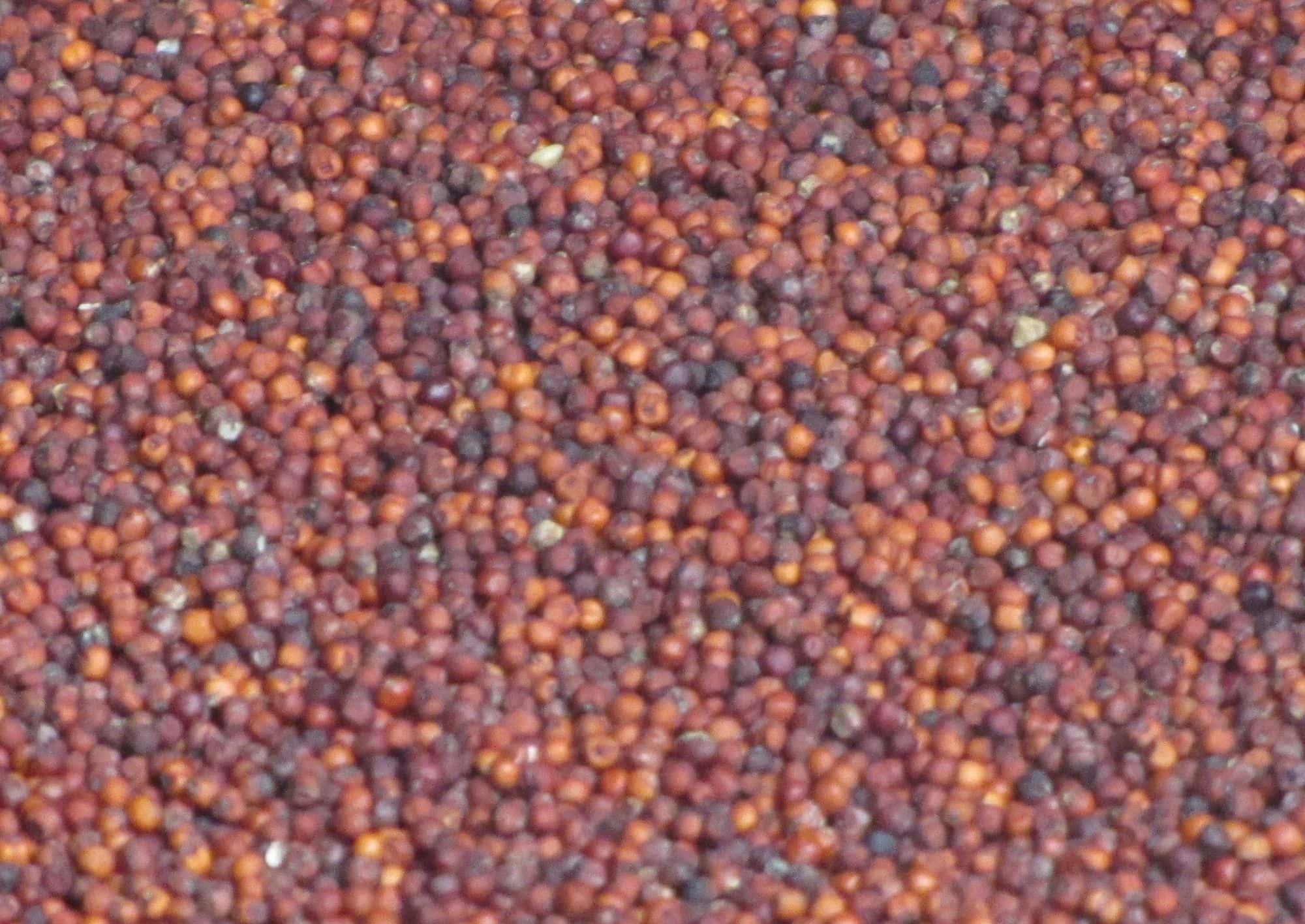
What ragi microgreens are
Ragi, or finger millet, is one of India's oldest grains, eaten as bhakri, dosa, porridge and malt across Karnataka, Maharashtra and the hill states. Grown as a microgreen, its tiny seeds send up fine, grass-like blades rather than broad seed leaves, much as wheat does. They are cut above the medium once the blades are a few centimetres tall. The flavour is mild and grassy, with less bite than mustard or radish and a softer texture than wheatgrass.
Ragi microgreens are still uncommon, even in India. The Seth et al. 2025 review of microgreen research, written with ICAR scientists, groups finger millet with little millet, barnyard millet and pearl millet among newer microgreens that research has begun to test. Most of what is known comes from a handful of research trials rather than from long commercial experience, so the figures on this page are starting points to adjust.
What studies have measured
Measured data for ragi microgreens are limited. Arya, Kutty and Pradeepkumar compared six tropical microgreens in 2023, including ragi, wheat, green gram, horse gram, mustard and amaranth. They measured nutrients such as iron, calcium, beta-carotene, protein and fibre, and found these were higher in microgreens grown under a rain shelter than indoors, while indoor-grown microgreens scored better on taste. Green gram, mustard and horse gram gave the highest yields; ragi was not among the top three.
The grain itself is better documented. A 2026 review of millets, citing the Indian Food Composition Tables, gives finger millet grain 344–350 mg of calcium per 100 g, the highest of the millets. That figure is for the dry grain. It should not be read as the calcium content of ragi microgreens, which, like other fresh greens, are mostly water and have not been measured the same way. We have not found a study giving vitamin or mineral figures specific to ragi microgreens that we could verify.
| Question | What the evidence says |
|---|---|
| Seed rate | About 520 g per m² (Arya et al. 2023, via Seth et al. 2025) |
| Yield compared with seed | Less fresh weight harvested than seed sown (ratio below 1.0) |
| Harvest day for best yield | About 13 days after sowing (Senevirathne et al. 2019, via Seth et al. 2025) |
| Grain calcium | 344–350 mg per 100 g of grain, not of microgreens |
| Microgreen vitamin and mineral data | Not verified; few published figures |
How to grow ragi microgreens
Ragi seed is very small, so it is sown thickly on the surface rather than buried. In the trial cited by the Seth et al. review, ragi was sown at about 520 g per square metre. A 10×20-inch tray covers 0.129 m², so 520 × 0.129 = about 67 g per tray. Arya and colleagues found cocopeat gave the highest fresh and dry yields of the five media they compared, and a Sri Lankan trial used a 1:1 mix of compost and coir dust.
- Rinse the seed in a fine sieve to remove dust and chaff.
- Fill a tray with 3–4 cm of moist cocopeat or compost and coir dust mix.
- Scatter about 67 g of seed per 10×20-inch tray evenly over the surface.
- Mist, then cover for about 3 days while the seed germinates.
- Uncover and give bright light for 12–16 hours a day; water from below.
- Harvest at about 13 days, cutting just above the medium.
Seed rate and tips specific to ragi
Ragi, like wheat, gives a low return on seed. The trial cited by Seth et al. found that wheat and ragi microgreens produced less fresh weight than the weight of seed sown, a biomass-to-seed ratio below 1.0, while green gram, horse gram and mustard gave 1.6 to 2.6 times their seed weight. In practice, that means ragi is best grown for its flavour and novelty rather than for weight per tray. If you are buying seed, use whole, untreated grain meant for sowing or food.
Because the seed is so fine, even spreading matters more than with larger seed. Mix the seed with a spoonful of dry fine sand or cocopeat before scattering, so it falls more evenly. Water gently with a mister until the blades are up, because a strong stream washes small seed into clumps. Arya and colleagues found that microgreens grown indoors had longer seedlings than those grown under a rain shelter, so indoor trays may need more light to stay compact.
Common problems
Dense sowing of a small grass seed creates a tight mat that holds water, so mould and rot are the main risks. Penn State Extension notes that damping-off, which collapses seedlings at the base, is favoured by warm, humid conditions and that watering from below helps keep leaves and stems dry. In Pune's monsoon months a small fan over the trays makes a real difference.
- Clumped, patchy stand: seed not spread evenly; mix with sand before sowing.
- Seed washed to one side: watering too hard before germination; mist instead.
- Grey mould in the mat: too wet and too still; sow thinner and add airflow.
- Thin, pale blades: too little light after uncovering.
Using ragi microgreens in food
Ragi microgreens pair naturally with ragi dishes. Scatter them over ragi dosa or nachni bhakri with a little lime and salt, stir them into a cucumber and tomato koshimbir, or add them to a ragi or rice bowl at the end. Chopped fine, they go into chutneys, sandwiches, rolls and omelettes. Their mild grassy taste suits cold dishes best; long cooking softens them to nothing. Arya and colleagues found microgreens kept longer when stored in zip-lock bags at low temperature, so keep them cold and sealed.
Ragi and other microgreens in Pune
Garden & Acre delivers fresh microgreens in Pune and Pimpri-Chinchwad, as a weekly subscription for homes and as regular supply for restaurants, cafés and hotels. The microgreens come from our own supply chain. Orders are placed on WhatsApp, and prices are given there. Ragi is not a standard microgreen, so ask on WhatsApp whether it is available in a given week, or which other millet or grass microgreens we can supply.
Questions
What are ragi microgreens?
They are young finger millet (Eleusine coracana) seedlings, cut as short green blades about two weeks after sowing. Finger millet is called ragi in Kannada, nachni or nagli in Marathi and mandua in parts of north India. As a grass, it forms narrow blades rather than the round seed leaves of mustard or radish.
How many days do ragi microgreens take to grow?
About 13 days in the Sri Lankan trial cited by a 2025 research review, which found that day gave the maximum yield. Research reviews place finger millet with crops harvested 13 to 15 days after sowing, slower than moong or mustard. Warm weather speeds growth by a day or two.
Are ragi microgreens rich in calcium?
Ragi grain is: a 2026 review gives 344–350 mg of calcium per 100 g of finger millet grain. Microgreens are mostly water, and we have not found a verified measurement of calcium in ragi microgreens. So it is not accurate to claim that the microgreens carry the grain's calcium content.
How much ragi seed do I need per tray?
A trial cited in a 2025 review used about 520 g per square metre. For a 10×20-inch tray of 0.129 m², that is 520 × 0.129 = about 67 g. The harvest weighed less than the seed in that trial, so ragi uses more seed per kilo of greens than pulses do.
Can I grow ragi microgreens from the ragi I buy for cooking?
Often, yes, if it is whole grain rather than flour or flakes, and it has not been roasted. Test a pinch by keeping it moist on a damp cloth for three days. If most seeds show a small white root, it will grow. Avoid seed treated with fungicide.
Sources
- Seth et al. 2025, Microgreens: functional food for nutrition and dietary diversification (Plants)
- Arya, Kutty & Pradeepkumar 2023, Microgreens of tropical edible-seed species, an economical source of phytonutrients (Future Foods)
- Borah et al. 2026, Millets and food security: a sustainable response to growing population needs (Front Plant Sci)
- Penn State Extension: Growing Microgreens