How long microgreens last
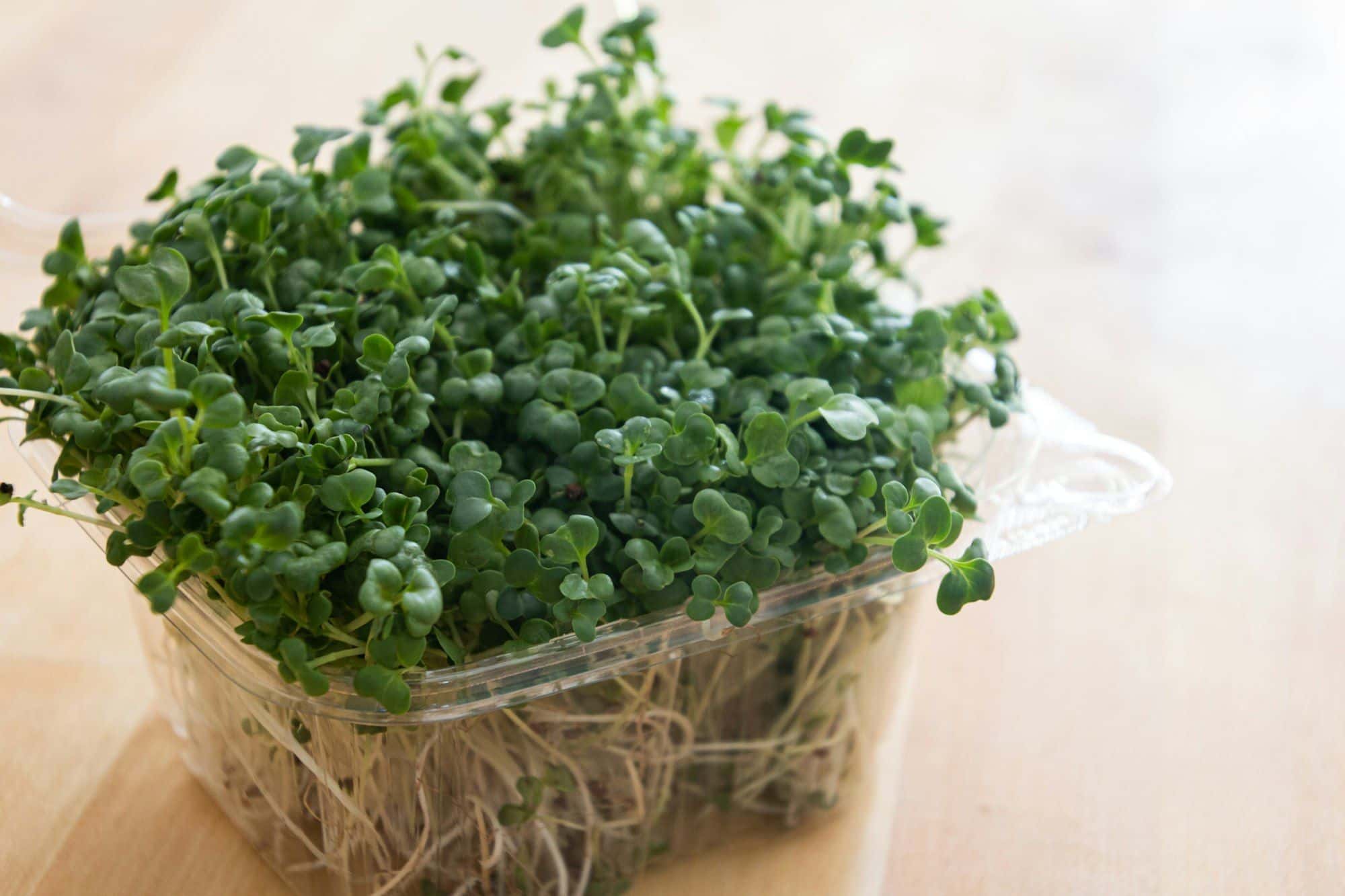
Microgreens are cut seedlings with a high respiration rate, so they spoil much faster than whole vegetables. The MANAGE handbook from Hyderabad cites a shelf life of three to five days at room temperature, and says harvested microgreens must be kept cold; depending on variety and storage, quality can hold for over 14 days. Shelf life varies with the crop, the temperature, the packaging and how the greens were handled at harvest.
The table gathers the figures from the studies and extension guides we checked. They are not directly comparable, because each used different crops, packs and quality scores, but they point the same way: cold storage at about 1–5°C is what makes the difference between one day and two weeks. At home, a fridge set to 4°C or below, a closed box and dry leaves will usually give about a week.
| Crop or scope | Storage | Shelf life | Source |
|---|---|---|---|
| Mustard | 5°C, sealed 150 µm polyethylene bag | 14 days, good to fair | Dayarathna et al. 2023 |
| Mustard | 10°C / 15°C / 20–25°C | 14 days, fair / 7 days / 1 day | Dayarathna et al. 2023 |
| Buckwheat | 5°C, film with the right oxygen transmission rate | More than 14 days acceptable | USDA ARS, 2014 |
| Arugula / radish / red cabbage | 4°C | 14 / 21 / 14 days | Berba and Uchanski 2012, cited by Priti et al. 2022 |
| Arugula / radish / red cabbage | 10°C | 7 / 14 / 7 days | Berba and Uchanski 2012, cited by Priti et al. 2022 |
| Moong and Indian mustard | 4°C, bags | About 4 days | Priti et al. 2022 (ICAR-IARI) |
| Lentil | 4°C, bags | Usable to day 6 | Priti et al. 2022 (ICAR-IARI) |
| Fresh-cut microgreens, average | 5°C | 10 days | Paradiso et al. 2018, cited by Kaya and Yardimci 2025 |
| Microgreens, general | 41°F (5°C), dark | 10–14 days, against 2–4 days without it | Penn State Extension |
| Microgreens, general | Refrigerator | Up to 10 days | University of Maryland Extension |
| Microgreens, general | Room temperature | 3–5 days | MANAGE 2023 |
The right storage temperature
Every source agrees that microgreens belong in the cold. MANAGE summarises the research: store at 5°C or below; varieties that tolerate chilling can be held as low as 1°C; and below 0°C microgreens freeze quickly and are badly damaged. Yan and colleagues (2022) note that earlier work found 5°C best for common buckwheat microgreens and 1°C best for radish. The Dayarathna mustard trial shows how steep the drop is: 14 days at 5°C, 7 days at 15°C and 1 day at 20°C.
For home storage, the US FDA advises keeping perishable fresh produce, including herbs and lettuce, in a clean refrigerator at 40°F (4°C) or below. FSSAI's guidance for fruit and vegetable businesses in India says products needing refrigeration should be transported and stored at 5°C or less, but not frozen. In an Indian summer, keep microgreens on a middle shelf, away from the door, where the temperature swings every time the fridge is opened.
Packaging: what keeps microgreens fresh
The pack matters almost as much as the temperature, because it controls moisture loss and the gases around the leaves. USDA ARS researchers found that the oxygen transmission rate of the film mattered: buckwheat microgreens in film with an oxygen transmission rate of 225 cubic centimetres per square inch per day looked fresher and had better cell-membrane integrity than those in other films. They also noted that raising carbon dioxide and lowering oxygen in the pack slowed spoilage.
Other studies point the same way. Yan and colleagues (2022) tested three films for tartary buckwheat microgreens and got the longest shelf life from low-density polyethylene (LDPE) bags combined with 5°C storage and a sanitising wash. Dayarathna and colleagues recommend sealed 150 µm polythene bags at 5°C for mustard. Renna and Paradiso (2020) summarise work by Ghoora and Srividya, in which perforated PET clamshells kept radish and roselle microgreens better than self-seal LDPE bags. At home, the box the microgreens came in, or a lidded container lined with a dry paper towel, does the job.
Wash before storing, or before eating?
Wash just before eating, not before storing. MANAGE explains the trade-off: washing reduces the starting bacterial load, but leaves the greens wet, and moisture promotes microbial growth; the handling also bruises delicate leaves. Priti and colleagues (2022) note that washed radish and buckwheat microgreens were reported to lose shelf life faster than unwashed ones. In their own trial, a two-minute rinse in distilled water gave some reduction in microbial load, but not a significant one for mustard.
The FDA's home advice is to wash all produce under running water before preparing or eating it, including produce grown at home, and then dry it with a clean cloth or paper towel. It does not recommend washing produce with soap, detergent or commercial produce wash. Commercial washes with chlorine or other sanitisers are a different matter: Yan and colleagues found a chlorine dioxide and citric acid wash, followed by 5°C storage in LDPE bags, gave the longest shelf life for tartary buckwheat. That is a processing-plant method, not a kitchen one.
- Keep microgreens dry and unwashed in the fridge at 4°C or below, in a closed box or bag.
- Store on a middle shelf, not in the door, and away from raw meat and fish.
- Just before eating, rinse under running water in a colander. No soap or produce wash.
- Pat dry with a clean cloth or paper towel, or spin in a salad spinner.
- Cut or use only what you need; put the rest back in the fridge at once.
- Throw out any greens that are slimy, smell off, or show mould.
Are microgreens safe to eat?
Yes, for most people, when they are grown and stored properly. But they are eaten raw, so any germs on them reach the plate. The Kaya and Yardimci (2025) review names Salmonella, E. coli and Listeria monocytogenes as the main bacterial hazards for microgreens. The US FDA enforcement database lists microgreen recalls for possible Salmonella in 2015, 2016, 2017 and 2022, and a 2018 recall of several microgreen products, including sunflower, pea-shoot, broccoli and arugula microgreens, for possible Listeria.
Indian research is reassuring for well-grown crops. The ICAR-IARI study by Priti and colleagues (2022) tested moong, lentil and Indian mustard microgreens grown under partially controlled conditions and did not detect Salmonella or Listeria in any sample; total bacteria, yeasts and moulds, Shigella and E. coli were within limits the authors describe as below those that cause illness. Microbial counts rose during 12 days of storage at 4°C, which is another reason to eat microgreens fresh.
Microgreens and sprouts are not the same risk
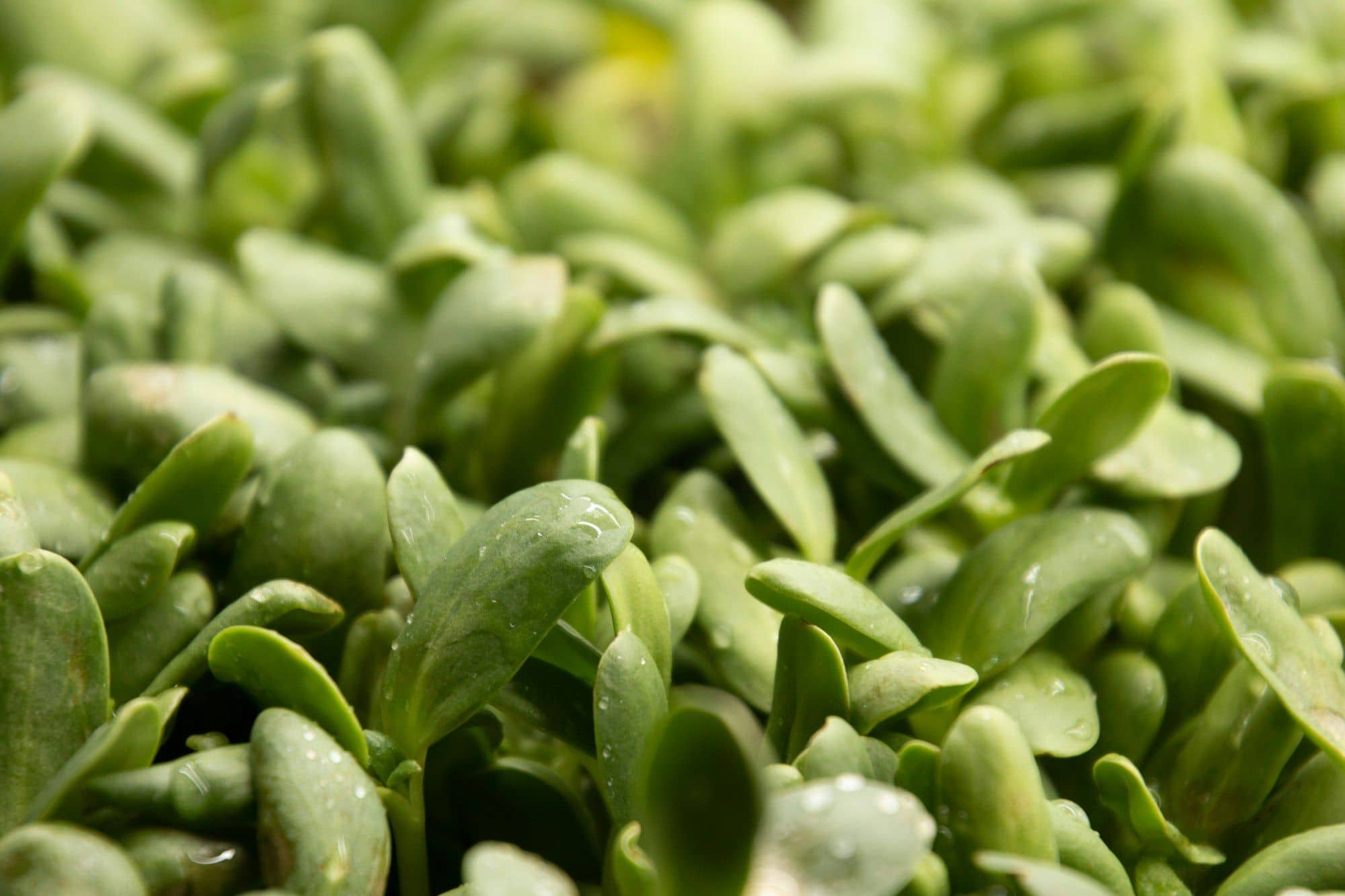
Sprouts are germinated in water and eaten whole, roots and seed included, after a few days. Microgreens are grown in light on a medium for one to three weeks and cut above the roots. That difference matters for safety. The Kaya and Yardimci review cites Xiao and colleagues (2014), who found that bacteria grew in both sprouts and microgreens from contaminated seed, but significantly less in microgreens.
Regulators draw the same line. In the US Produce Safety Rule, the sprout rules in subpart M apply to all sprouts except soil- or substrate-grown sprouts harvested without their roots, which is how microgreens are grown. The FDA advises people at higher risk of food poisoning, including children, older adults, pregnant women and people with weakened immune systems, to avoid raw or lightly cooked sprouts of any kind. That advice names sprouts, not microgreens, but the same groups should take extra care that microgreens are fresh, cold-stored and rinsed.
Where contamination comes from
The review by Kaya and Yardimci lists the routes: soil, irrigation water, seed storage conditions, nutrient solution, workers' health and hygiene, and facilities. Seed is the one most specific to microgreens, because a contaminated seed carries the germ into the plant from the start. Moraru and colleagues (2022) note that contaminated seed led to contamination of whole plants, and that sanitising the harvested product is not likely to be an effective control, so prevention has to start before sowing.
Growing conditions add to the risk. The same review cites Xiao and colleagues (2015), who found E. coli survived and multiplied in both soil-substitute and hydroponic microgreens, with higher levels in the hydroponic system. Dubey and colleagues (2026) found that bacteria, yeasts and moulds on cress, rocket and pea increased as seed density went up. Dense sowing, standing water and warm, humid rooms, common in an Indian monsoon, all raise the load.
- Seed: buy untreated seed from a seller who handles seed for eating; sanitise it if in doubt
- Water: use drinking-quality water for soaking and watering; change hydroponic water often
- Medium: use fresh mix or mats every cycle; keep soil off the harvest
- Density: sow at the recommended rate, not thicker
- Hands and tools: wash hands, scissors and trays before harvest
- Cold chain: chill straight after harvest and keep cold until eaten
Sanitising seed before sowing
Because washing the harvested greens is not a reliable control, cleaning the seed is the most useful step a small grower can take. Ocho Bernal, Lyttle and Jung (2023) tested 102 microgreen seed samples from 26 online vendors and found coliform bacteria on 48% of them, though no E. coli. They then tested treatments on amaranth, borage and carrot seed, the three with the highest counts. The most effective was a 10-minute soak in 3% hydrogen peroxide, followed by dry heat at 60°C for 20 hours.
That combination reduced microbial counts by 1.2–3.4 log, meaning roughly 16 to 2,500 times fewer microbes, and germination was not significantly affected. A home "poor man's" mix of 3% hydrogen peroxide, 5% household vinegar and water in a 1:1:48 ratio was also tested. The authors caution that the right treatment depends on the seed, and that more work is needed on how well these methods remove disease-causing microbes. Test germination on a small batch after any treatment.
- Soak the seed for 10 minutes in 3% hydrogen peroxide.
- Drain, then rinse three times in clean water.
- Spread the seed thinly and dry it in an oven or dryer held at 60°C for 20 hours.
- Let the seed cool, then sow it.
- Run a germination test on a sample the first time you treat a new kind of seed.
Rules in India and abroad
In India, FSSAI's guidance on good manufacturing and hygiene practice for fruit and vegetable processing says produce should be washed as needed to remove soil and other contamination, with water of potable quality; washing may use potable, ozonated or chlorinated water; and products needing refrigeration should be transported and stored at 5°C or less. Anyone selling microgreens needs FSSAI registration or a licence. Under FSSAI's eligibility criteria updated on 1 April 2026, basic registration covers turnover up to ₹1.5 crore a year, and a State licence applies from ₹1.5 crore to ₹50 crore.
In the US, microgreens are covered by the FDA Produce Safety Rule as ordinary produce, outside the stricter sprout rules in subpart M. The FDA says hydroponic operations growing produce other than sprouts are not subject to subpart M, but encourages those whose risks resemble sprouts to adopt its standards voluntarily. MANAGE notes there are no food-code requirements specific to microgreens, and that research points to storage at 5°C or below.
Fresh microgreens in Pune
The shortest route to fresh microgreens is a short time between cutting and eating. Garden & Acre delivers fresh microgreens across Pune and Pimpri-Chinchwad from our own supply chain, as a weekly box for homes or as regular supply for restaurants, cafés and hotels. Keep them in the closed box in the refrigerator and rinse them just before eating. Orders are taken on WhatsApp, where we share the varieties available that week and the prices.
Questions
How long do microgreens last in the fridge?
Usually about a week, and up to two weeks for some crops. UMD says up to 10 days; Penn State says 10–14 days at 5°C in the dark. Mustard kept 14 days at 5°C in one study, radish 21 days at 4°C in another, while moong and mustard in an ICAR-IARI trial kept about 4 days at 4°C.
Should I wash microgreens before storing them?
No. Wash them just before eating. Washing leaves water on the leaves, and moisture speeds up spoilage and microbial growth; studies found washed radish and buckwheat microgreens lost shelf life faster than unwashed ones. Store them dry, then rinse under running water and pat dry when you are ready to eat them.
Are microgreens safe to eat raw?
Yes, for most people, when grown from clean seed and kept cold. They are eaten raw, so hygiene matters. Salmonella, E. coli and Listeria are the main hazards, and the FDA has recorded microgreen recalls for Salmonella and Listeria. An ICAR-IARI study of Indian microgreens found no Salmonella or Listeria in any sample.
Are microgreens safer than sprouts?
Generally, yes. Sprouts grow in water and are eaten with their roots and seed, while microgreens grow in light on a medium and are cut above the roots. A 2014 study by Xiao and colleagues found bacteria from contaminated seed grew significantly less in microgreens than in sprouts. Both still need clean seed and cold storage.
Can you freeze microgreens?
It is not recommended. MANAGE notes that microgreens freeze rapidly if held below 0°C, which causes substantial physical damage to the delicate leaves and stems. Store them in the refrigerator at 1–5°C instead, keep them dry and closed, and eat them within about a week, or sooner for moong and mustard.
How can I tell if microgreens have gone bad?
The MANAGE handbook's storage tips say to throw microgreens away if you notice white spots, a foul smell or a slimy touch. Dark, water-soaked leaves and visible mould are other signs. Discard the whole box if any part is slimy or mouldy, and do not try to wash spoilage off.
What temperature should microgreens be stored at?
At 5°C or below, and above freezing. Studies found 5°C best for buckwheat and mustard and 1°C best for radish; MANAGE says chill-tolerant varieties can be held at 1°C but freeze below 0°C. The FDA advises keeping fresh produce at 4°C or below at home, and FSSAI guidance says 5°C or less.
Sources
- Effect of Storage Temperature on Storage Life and Sensory Attributes of Packaged Mustard Microgreens — Dayarathna et al., Life, 2023
- Effects of Storage Temperature, Packaging Material and Wash Treatment on Quality and Shelf Life of Tartary Buckwheat Microgreens — Yan et al., Foods, 2022
- Microgreens research feature — USDA ARS AgResearch Magazine, January 2014
- Yield optimization, microbial load analysis, and sensory evaluation of mungbean, lentil, and Indian mustard microgreens — Priti et al., PLoS One, 2022 (ICAR-IARI)
- Growing Microgreens — Sanchez and Berghage, Penn State Extension
- Growing Microgreens and Baby Greens Indoors — University of Maryland Extension
- Microgreens for Nutritional Security — Kumari, Junuthula and Mandapaka, MANAGE Hyderabad, 2023
- Microgreens: nutritional properties, health benefits, production techniques, and food safety risks — Kaya and Yardimci, PeerJ, 2025
- Ongoing Research on Microgreens: Nutritional Properties, Shelf-Life, Sustainable Production, Innovative Growing and Processing Approaches — Renna and Paradiso, Foods, 2020
- Trial Protocol for Evaluating Platforms for Growing Microgreens in Hydroponic Conditions — Moraru, Rusu and Mintas, Foods, 2022
- Microbiological quality of microgreen seeds purchased from online vendors and evaluating seed decontamination techniques — Ocho Bernal, Lyttle and Jung, Frontiers in Sustainable Food Systems, 2023
- Microgreens: Optimising Seed Density and Exploring the Influence of White Light and UV-A — Dubey et al., Plants, 2026
- Selecting and Serving Produce Safely — US Food and Drug Administration
- Standards for the Growing, Harvesting, Packing, and Holding of Produce for Human Consumption (final rule), 80 FR 74353 — US FDA, 2015
- Food enforcement reports matching "microgreens" — openFDA, US FDA
- Guidance Document: Food Safety Management System, Processed Fruits and Vegetables — FSSAI, March 2019
- FSSAI FoSCoS, Kind of Business eligibility criteria and fee structure (updated 01.04.2026)