How microgreens are grouped
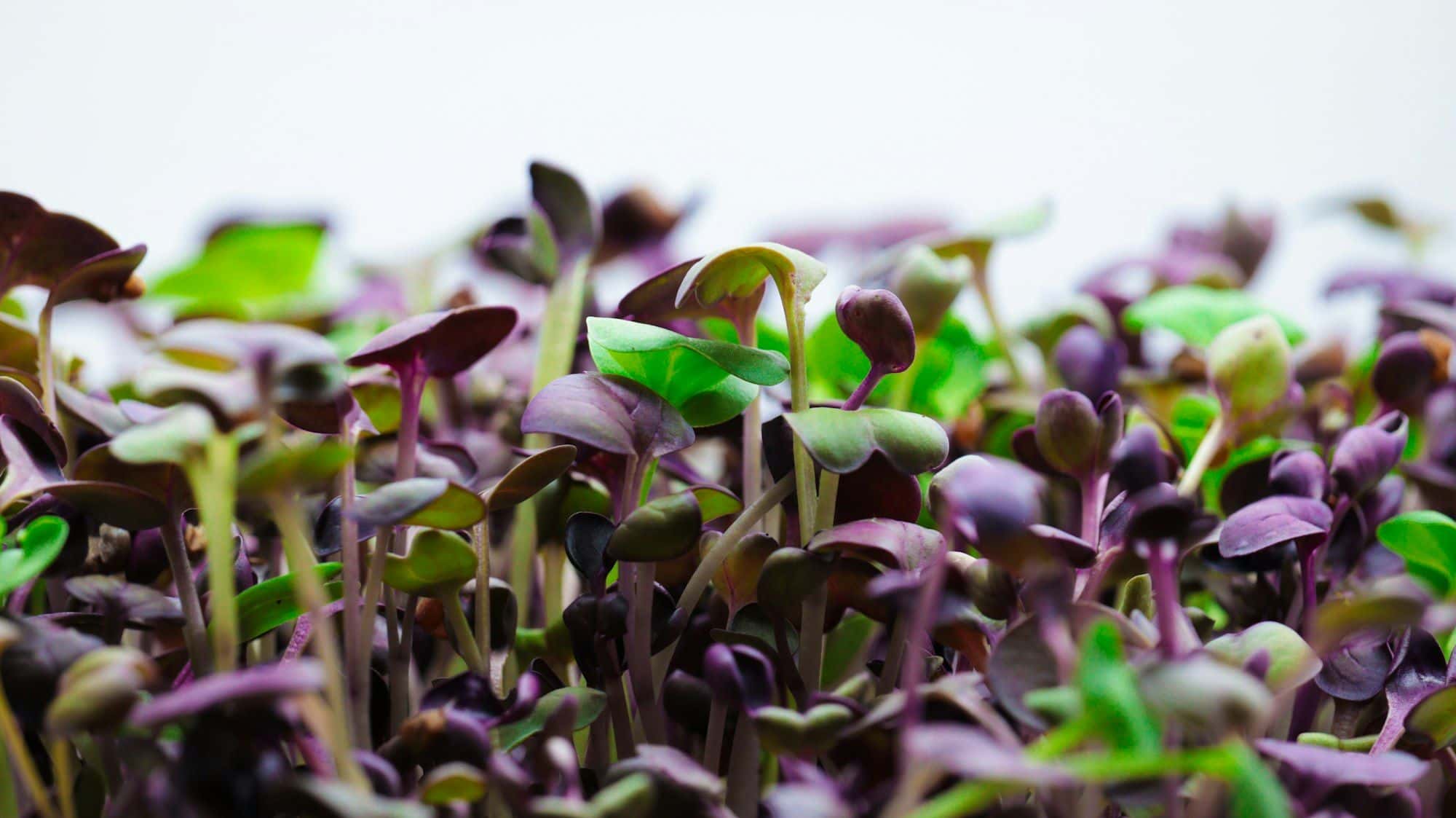
A microgreen is the seedling of a vegetable, herb or grain, cut once the seed leaves have opened and the first true leaves are starting. Almost any edible plant can be grown this way, so the list of types is long. The easiest way to make sense of it is by plant family, because plants in the same family tend to share seed size, speed, flavour and handling. A radish and a mustard behave alike in a tray; a pea and a moong bean behave alike; a beet and a chard behave alike.
The University of Maryland Extension singles out two families as especially suited to microgreens: the cabbage and mustard family (Brassicaceae), which includes kale, cabbage, radish, mustard, arugula and mizuna, and the amaranth family (Amaranthaceae), which includes beet, Swiss chard and leafy amaranth. A 2025 review by ICAR scientists, Seth and colleagues, lists crops from more than a dozen families that have been grown as microgreens in research, including legumes, grasses, millets, the carrot family, the mint family and even gourds.
All types of microgreens at a glance
The table lists 35 microgreens in five groups. Days to harvest come from three kinds of source. Where a single number is shown, it is the average from Johnny's Selected Seeds' 2017 yield trial, which sowed 29 varieties at least three times and cut every one at the first true leaf. Ranges come from Johnny's product pages. The Indian crops moong, lentil and Indian mustard use the ICAR-IARI study by Priti and colleagues (2022), and methi, chia, flax and ragi use the harvest windows collected in the ICAR review by Seth and colleagues (2025).
Taste notes follow Johnny's descriptions where one exists. For moong, lentil, methi, ragi, chia, flax and beet, no source gave a tasting note, so the note is a general description. Difficulty is our own rating, set by two things: speed and handling. Easy means about 14 days or less with no special steps. Medium means 15–21 days, or a step such as soaking, weighting or removing hulls. Hard means more than 21 days. Every figure will shift with temperature, light and seed lot.
| Microgreen | Family | Taste | Days to harvest | Source for days | Difficulty |
|---|---|---|---|---|---|
| Radish | Brassicaceae (brassicas) | Crisp, spicy | 8–9.5 | Johnny's 2017 trial | Easy |
| Mustard (sarson, rai) | Brassicaceae | Mildly spicy | 8 (Indian mustard); 12.5 (Garnet Giant) | Priti et al. 2022; Johnny's trial | Easy |
| Broccoli | Brassicaceae | Mild broccoli flavour | 12.5 | Johnny's trial | Easy |
| Red cabbage | Brassicaceae | Mild, with a touch of heat | 13.5 | Johnny's trial | Easy |
| Kale (Red Russian) | Brassicaceae | Mild kale flavour | 13.5 | Johnny's trial | Easy |
| Arugula (rocket) | Brassicaceae | Spicy, nutty | 14 | Johnny's trial | Easy |
| Mizuna | Brassicaceae | Mild mustard | 12 | Johnny's trial | Easy |
| Pak choi (Red Pac) | Brassicaceae | Mild | 13 | Johnny's trial | Easy |
| Tatsoi | Brassicaceae | Mild | 13.5 | Johnny's trial | Easy |
| Kohlrabi (purple) | Brassicaceae | Mild cabbage | 16 | Johnny's trial | Medium |
| Garden cress | Brassicaceae | Peppery | 13 | Johnny's trial | Easy |
| Pea shoots | Fabaceae (legumes) | Mild pea | 7–14 | Johnny's product page | Medium (soak) |
| Moong (mung bean) | Fabaceae | Mild, fresh (general) | 7 | Priti et al. 2022 | Easy |
| Lentil (masoor) | Fabaceae | Mild (general) | 9 | Priti et al. 2022 | Easy |
| Fenugreek (methi) | Fabaceae | Bitter, like methi leaves (general) | 6–15 across studies | Seth et al. 2025 | Easy |
| Alfalfa | Fabaceae | Nutty, mild, pea-like | 16–25 | Johnny's product page | Medium |
| Wheatgrass | Poaceae (grasses) | Pleasantly bitter, mildly sweet | 7–12 | Johnny's product page | Medium (soak) |
| Corn (popcorn) shoots | Poaceae | Sweet | 7–14 | Johnny's product page | Medium (soak) |
| Ragi (finger millet) | Poaceae | Mild, grassy (general) | 13–15 | Seth et al. 2025 | Easy |
| Buckwheat | Polygonaceae (grown like a grain) | Mild, lettuce-like | 7–12 | Johnny's product page | Medium (soak) |
| Basil (Italian Large Leaf) | Lamiaceae (mint family) | Sweet-spicy | 19 | Johnny's trial | Medium |
| Basil (Red Rubin, Dark Opal) | Lamiaceae | Basil | 25.5 | Johnny's trial | Hard |
| Coriander (dhaniya) | Apiaceae (carrot family) | Bright, citrusy | 20 | Johnny's trial | Medium |
| Dill | Apiaceae | Mild dill | 16–25 | Johnny's product page | Medium |
| Fennel | Apiaceae | Sweet fennel | 16–25 | Johnny's product page | Medium |
| Parsley | Apiaceae | Mild parsley | 26–30 | Johnny's product page | Hard |
| Shiso | Lamiaceae | Liquorice | 16 | Johnny's trial | Medium |
| Chia | Lamiaceae | Mild (general) | 6–9 | Seth et al. 2025 | Easy |
| Sunflower | Asteraceae | Mild, nutty | 7–21 | Johnny's product page | Medium (soak, hulls) |
| Beetroot | Amaranthaceae | Earthy (general) | 17 | Johnny's trial | Medium |
| Swiss chard | Amaranthaceae | Mild, earthy | 16.5 | Johnny's trial | Medium |
| Amaranth (Garnet Red) | Amaranthaceae | Mild, earthy | 17 | Johnny's trial | Medium |
| Flax | Linaceae | Mild (general) | 6–9 | Seth et al. 2025 | Easy |
| Carrot | Apiaceae | Mild carrot | 16–25 | Johnny's product page | Medium |
| Red-veined sorrel | Polygonaceae | Bright lemon, tangy | 24 | Johnny's trial | Hard |
Brassica microgreens: radish, mustard, broccoli, cabbage and kale
Brassicas are the core of most microgreen trays because they are fast, even and forgiving. Radish microgreens are the quickest in Johnny's trial, at 8 days for Red Arrow and Daikon and 9.5 days for Hong Vit, with a crisp, spicy bite. Mustard microgreens follow: ICAR-IARI found the best harvest day for Indian mustard to be the 8th day after sowing, while Johnny's Garnet Giant, a dark purple type, averaged 12.5 days. Broccoli microgreens (12.5 days) are mild and are the variety most often studied for nutrition.
Red cabbage microgreens (13.5 days) give purple stems and a mild brassica taste with a little heat. Kale microgreens (13.5 days for Red Russian) are mild. Arugula microgreens (14 days) are spicy and nutty. Mizuna, pak choi and tatsoi, the Asian greens, sit between 12 and 13.5 days with mild flavours. Garden cress is peppery and ready in about 13 days. Brassica seeds are small and are sown dry; most growers do not soak them.
Legume microgreens: pea shoots, moong, lentil and methi
Legumes have large seeds and grow into thick, crunchy shoots. Pea shoots are the best known. Johnny's gives 7–14 days and recommends soaking the seed for 8 hours; Penn State's home guide reached harvest at 9 days and suggests putting a weight on the seeds while they germinate. Moong microgreens are the fastest crop in this list: the ICAR-IARI study found day 7 to be the best harvest day, and lentil day 9. The same study found an optimum sowing density of 3 seeds per square centimetre for both.
Fenugreek microgreens, known in India as methi, carry the bitter note of methi leaves in a milder form. The harvest days reported for methi in research range from 6 to 15, depending on the study and conditions. Alfalfa is slower, at 16–25 days on Johnny's page, with a nutty, pea-like flavour. The University of Maryland guide recommends a 6–12 hour soak for mung bean and garbanzo, and says peas also benefit from soaking.
Grain and grass microgreens: wheatgrass, corn and ragi
Cereal seeds give tall, grassy shoots. Wheatgrass is the most familiar; Johnny's grows winter wheat for shoots in 7–12 days and describes the juice as pleasantly bitter and mildly sweet, which is why it is mostly juiced rather than eaten whole. Corn shoots, grown from popcorn seed, are ready in 7–14 days. They taste sweet and turn bright yellow if grown in the dark, a style chefs use as a garnish. Both are soaked for about 8 hours before sowing.
Millets are the Indian addition to this group. Ragi microgreens (finger millet) fall in the 13–15 day harvest window in the ICAR review, and pearl millet (bajra) has also been studied as a microgreen. Buckwheat is not a grass, but it is grown and used like a grain. Johnny's gives 7–12 days, a soak of 8 hours and a mild, lettuce-like flavour, with green heart-shaped leaves on pinkish stems.
Herb microgreens: basil, coriander, dill and fennel
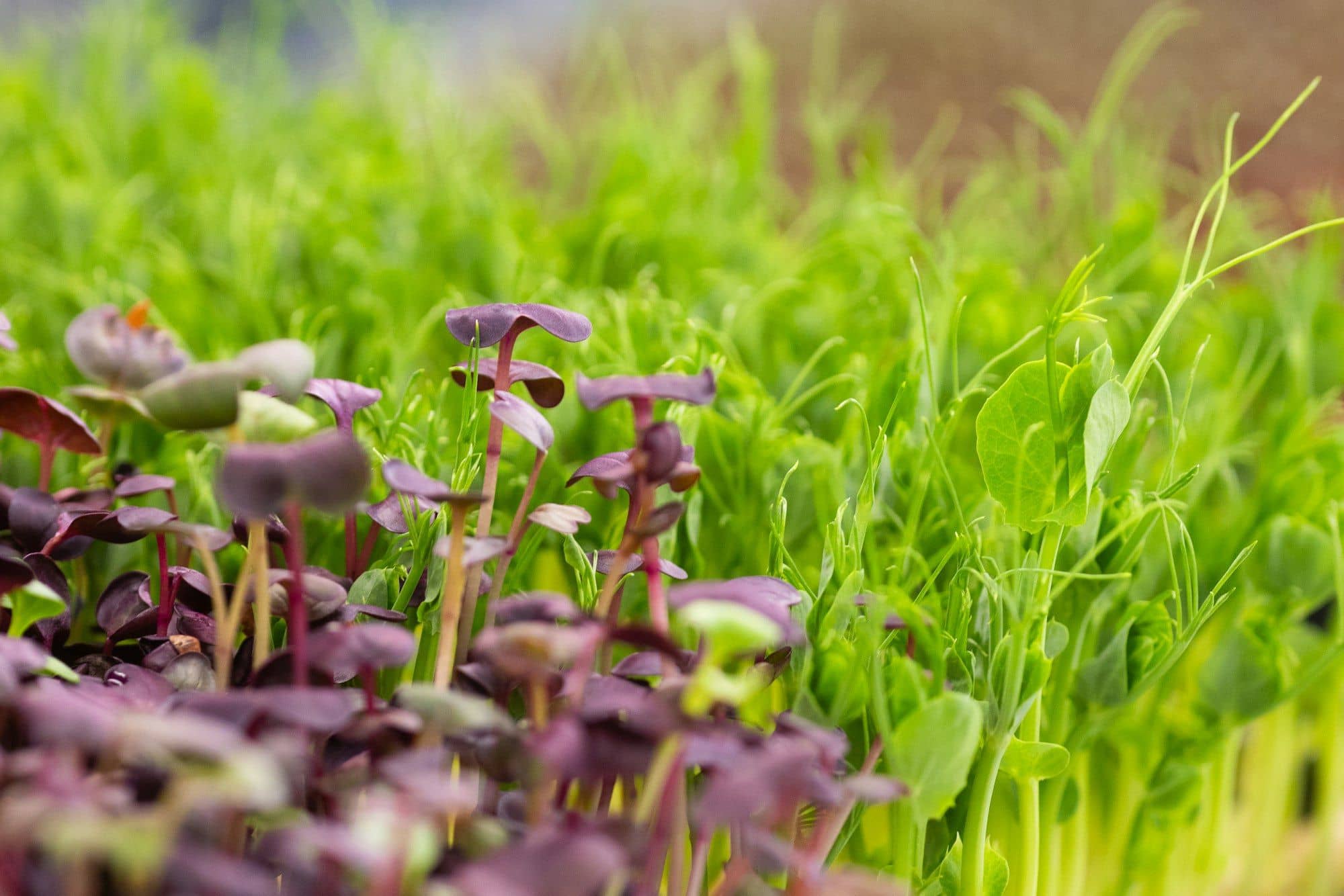
Herb microgreens are slower and lighter than brassicas, but they carry strong flavour in a small amount. Basil microgreens averaged 19 days in Johnny's trial for Italian Large Leaf, with a sweet-spicy taste, while the purple types Red Rubin and Dark Opal took 25.5 days. Coriander microgreens averaged 20 days and taste bright and citrusy, like the fresh leaf. Because the tray stays in the room for close to three weeks, coriander needs steady moisture and good airflow to the end.
Dill, fennel and carrot, all in the carrot family, take 16–25 days on Johnny's pages. Dill is mild; fennel is sweet, and its flavour gets stronger as the plant grows. Parsley is the slowest common herb at 26–30 days. Shiso (perilla), a mint-family herb, averaged 16 days and has a liquorice note. Chia microgreens also belong to the mint family, but they grow fast: the ICAR review places chia in the 6–9 day harvest group.
Other families: sunflower, beet, amaranth and flax
Sunflower microgreens (Asteraceae) are thick, crunchy and nutty, and are harvested before the first true leaves appear. Johnny's gives 7–21 days and an 8-hour soak. The black seed hulls stick to the leaves, so growers brush them off or pick them out, which is why we rate sunflower as medium difficulty. The amaranth family gives colour. Beetroot microgreens (17 days) have deep red stems, Swiss chard (16.5 days) has bright yellow or pink stems, and amaranth microgreens (17 days) are fuchsia, with a mild, earthy taste.
Flax microgreens (Linaceae) fall in the 6–9 day group in the ICAR review. A 2024 study found that chia and flax microgreens carry alpha-linolenic acid, a plant omega-3 fat, at 2.6 and 2.9 g per 100 g of dry weight. Red-veined sorrel (24 days) and nasturtium (14–16 days on Johnny's page) are chefs' specialities, chosen for a sharp lemon taste and a peppery bite respectively.
Indian types of microgreens
Many microgreens sold in India are grown from seeds already in the kitchen: sarson or rai (mustard), mooli (radish), methi (fenugreek), dhaniya (coriander), moong, masoor, chana and ragi. They are cheap, easy to buy and familiar in taste. The ICAR review lists palak, horse gram, pearl millet, little millet, barnyard millet, sesame, bottle gourd and pumpkin among the crops Indian and overseas researchers have grown as microgreens, along with the familiar European types.
ICAR-IARI has also measured Indian types directly. The 2022 study found optimum harvests on the 7th day for mungbean, the 8th day for Indian mustard and the 9th day for lentil, and measured yields per growing cycle of up to 2.65 kg per square metre for mungbean, 1.35 for Indian mustard and 1.41 for lentil. Kitchen seed is not always clean enough to eat raw as a seedling, so seed sold for sprouting or microgreens is the safer choice. Our guide to microgreens in Hindi lists the Hindi and Marathi names for each type.
Choosing a type to start with
For a first tray at home, the brassicas and the small legumes are the safest choice: they germinate quickly, grow evenly and are ready in one to two weeks. Herbs and the beet family reward patience but are easier to lose to damping-off, because the tray stays wet for longer. Johnny's growing notes put fast varieties at 10–15 days and slow ones at 16–25 days, and warn that dense sowing and poor air movement cause damping-off. A small fan and bottom watering help with both.
- Fastest (about 7–9 days): moong, radish, Indian mustard, lentil, chia, flax.
- Mildest taste: broccoli, kale, pak choi, tatsoi, pea shoots, sunflower.
- Spicy or peppery: radish, mustard, arugula, garden cress, nasturtium.
- Most colour: red cabbage, beetroot, amaranth, Swiss chard, purple radish.
- Strongest herb flavour: coriander, basil, dill, fennel, shiso.
- Needs a soak: pea, sunflower, wheat, corn, buckwheat, moong.
Microgreen mixes
Many growers and sellers blend varieties that finish on the same day, so one tray gives a mix of colours and flavours. Johnny's trial included a Mild Micro Mix and a Spicy Micro Mix, each of which averaged 13.5 days. A mix works only when the varieties grow at the same pace; mixing radish (8 days) with basil (19 days) leaves one of them too tall or too short at harvest. When buying a mix, ask what is in it, so you know which flavours to expect.
Buying fresh microgreens in Pune
Garden & Acre delivers fresh microgreens in Pune and Pimpri-Chinchwad from its own supply chain, as a weekly subscription for homes and as regular supply for restaurants, cafés and hotels. You can ask which types are available in a given week. Orders are taken on WhatsApp, and prices are shared there. For growing at scale, our vertical farm consulting and setup services cover microgreen rooms, racks and crop plans.
Questions
How many types of microgreens are there?
There is no fixed number, because almost any edible vegetable, herb or grain can be grown as a microgreen. Seed companies sell several dozen types, and the 2025 ICAR review lists crops from more than a dozen plant families. In practice, most growers work with 10–20 types, mainly brassicas, legumes, a few herbs, sunflower and the beet family.
Which microgreen grows the fastest?
Moong is among the fastest: ICAR-IARI found its best harvest day to be day 7. Radish follows at about 8 days in Johnny's Selected Seeds trial, then Indian mustard at day 8 and lentil at day 9. Chia and flax were placed in the 6–9 day harvest group in the ICAR review. Herbs such as basil and coriander take about 19–20 days.
What are the easiest microgreens for beginners?
Radish, mustard, broccoli and moong are the easiest. The seeds germinate within a day or two, grow evenly and are ready in one to two weeks, which leaves less time for mould. Pea shoots and sunflower are also easy to grow but need an overnight soak, and sunflower hulls need removing. Leave coriander, basil and parsley until you have grown a few trays.
Which microgreens are the most nutritious?
It depends on the nutrient. In the USDA study of 25 microgreens, red cabbage had the most vitamin C, cilantro (coriander) the most carotenoids, garnet amaranth the most vitamin K and green daikon radish the most vitamin E. No single variety led on everything, which is one reason to eat a mix. Our benefits and nutrition guide gives the measured ranges.
Can you grow microgreens from kitchen seeds like methi and moong?
Yes, methi, moong, masoor, sarson and ragi all grow well as microgreens, and ICAR-IARI has studied several of them. The risk is seed hygiene: kitchen seed is packed for cooking, not for eating raw as seedlings. Seed sold for sprouting or microgreens is the safer choice, and trays, water and hands must be clean.
Are microgreens and sprouts the same type of food?
No. Sprouts are germinated seeds grown in water, usually in the dark, and eaten whole with the root and seed. Microgreens grow in a medium under light for one to three weeks and are cut above the roots. The growing method changes the food-safety risk, which our microgreens vs sprouts guide explains.
Sources
- Micro Greens Yield Trial 2017: Comparison Chart for 29 Popular Varieties — Johnny's Selected Seeds
- Microgreen and shoot seed pages (days to maturity, flavour, soaking) — Johnny's Selected Seeds
- Sunflower, Black Oil shoot seed (7–21 days, 8-hour soak) — Johnny's Selected Seeds
- Yield optimization, microbial load analysis, and sensory evaluation of mungbean, lentil, and Indian mustard microgreens — Priti et al., PLoS One, 2022 (ICAR-IARI)
- Microgreens: Functional Food for Nutrition and Dietary Diversification — Seth et al., Plants, 2025 (ICAR)
- Growing Microgreens and Baby Greens Indoors — University of Maryland Extension
- A Step-By-Step Guide for Growing Microgreens at Home — Penn State Extension
- Exploration of the Lipid Profile of Edible Oleaginous Microgreens — Castellaneta et al., J. Agric. Food Chem., 2024