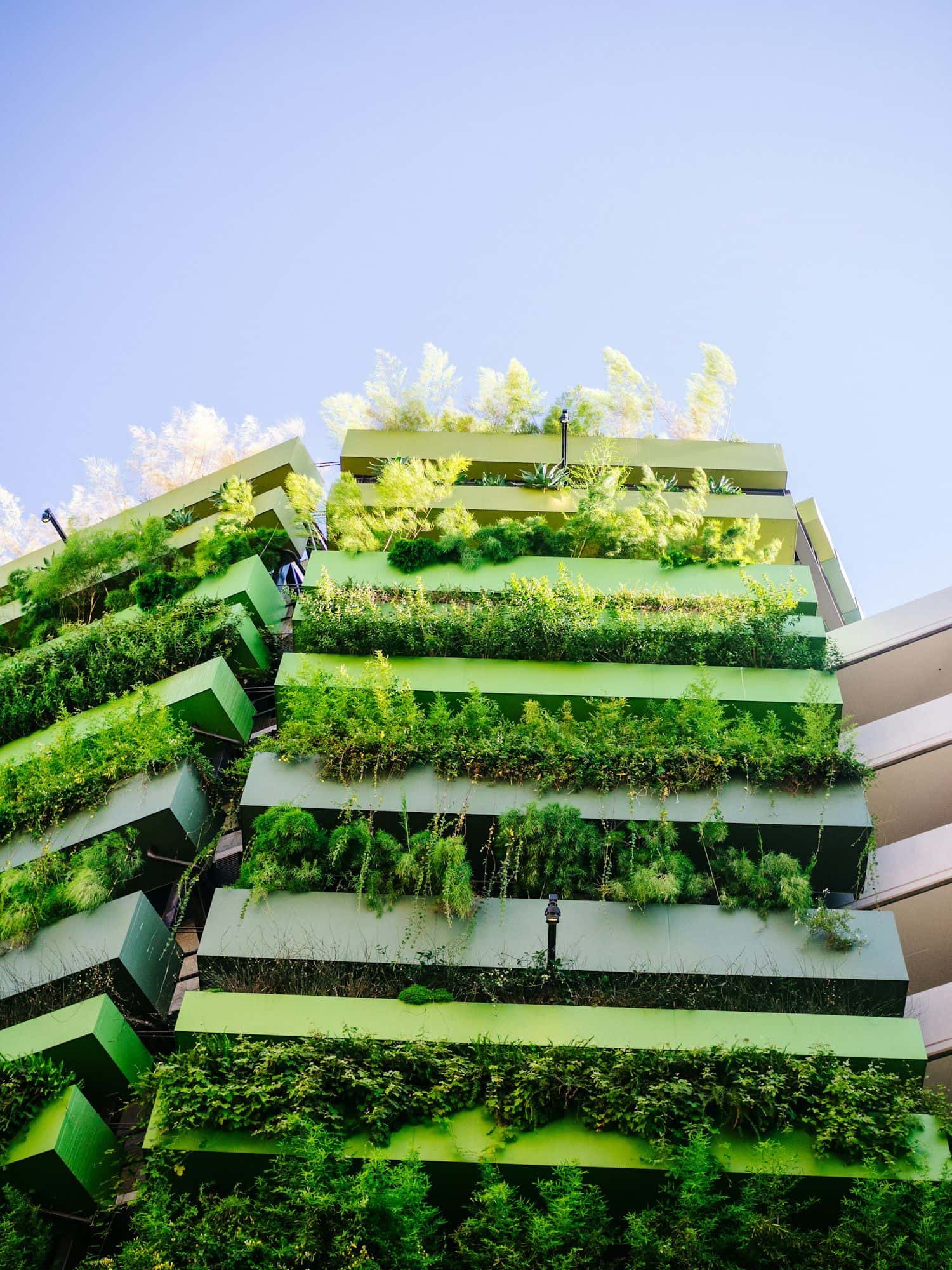
What sky farming means
Sky farming has no single technical definition. It is used in three overlapping ways. The first and most specific is the rotating tower system built by Sky Greens in Singapore, where vegetables grow in troughs on tall aluminium A-frames that turn slowly so each trough gets its share of sunlight. The second is any farm on a roof, whether soil beds or a hydroponic greenhouse. The third is the idea of a farm inside a tall building, the skyscraper farm proposed by Dickson Despommier and others.
What these share is height: using the space above the ground or above a building to grow food where land is scarce. All three sit within the wider field of vertical farming, which covers any system that grows crops in stacked layers or on vertical structures. When someone in India searches for sky farming, they usually mean either the Singapore towers or rooftop farming in a city.
Sky Greens: Singapore's rotating A-frame farm
Sky Greens was founded by Jack Ng, an engineer with more than 30 years in building and construction. According to SINGAPORE Magazine, he built his first prototype in 2009, when rising food prices during the financial crisis made him think about growing vegetables in land-short Singapore, patented the A-Go-Gro tower in 2010, and set up the company in 2011. The commercial farm opened in 2012 and is widely described as the first commercial vertical farm in the world.
Each tower is an aluminium A-frame up to about 9 metres tall. Troughs of vegetables, 38 per tower according to EcoWatch, travel slowly round the frame like a very slow Ferris wheel, so plants move between the top, where the sun is strongest, and the lower part of the frame, where they are shaded. The farm grows tropical leafy vegetables such as bak choy, Chinese cabbage, kai lan, spinach and mustard greens.
How the A-Go-Gro tower works
The system is designed to use sunlight and very little electricity. Instead of motors driving the rotation, it uses a water-driven pulley. The steps below describe the cycle as reported by SINGAPORE Magazine and EcoWatch. The details of the patented mechanism are not public, so this is a description of how the system works in outline, not an engineering specification.
- Seedlings are planted in troughs filled with growing medium and loaded onto the tower.
- A hydraulic, water-driven pulley turns the frame slowly, moving each trough up and down.
- Near the top, troughs receive full sunlight; lower troughs are partly shaded by those above.
- Irrigation is built into the cycle, so the towers need no sprinkler system.
- The water used for rotation and irrigation is collected and recycled through a reservoir.
- When the crop is ready, troughs are taken off at the base, harvested and replanted.
Sky Greens by the numbers
The figures below are those reported by the company through SINGAPORE Magazine (2015) and EcoWatch. They are company figures, not independent measurements, and sources give different tower counts at different dates, so treat them as indicative. They are useful mainly to show how different a sunlit rotating tower is from an LED-lit indoor farm. SINGAPORE Magazine also reported tower prices of S$6,500, S$10,000 and S$15,000 for 3 m, 6 m and 9 m towers, showing that the system was sold to other growers as well as used by Sky Greens.
The electricity figure stands out. SINGAPORE Magazine reports about 40 watt-hours per tower and an electricity cost of about 5 Singapore cents per kilogram of vegetables. Indoor LED farms, by contrast, use about 10 to 18 kWh per kilogram of lettuce, because they must supply all of the light. The two cannot be compared directly, since Sky Greens grows tropical leafy vegetables in Singapore's steady sunshine, but the gap shows why sunlit designs remain attractive wherever the climate allows.
| Item | Reported figure | Source |
|---|---|---|
| Tower height | Up to about 9 m | SINGAPORE Magazine; EcoWatch |
| Troughs per tower | 38 | EcoWatch |
| Footprint per tower | About 5.5 m² | SINGAPORE Magazine |
| Farm size (2015) | 800 towers on 3.65 ha, expandable to 2,000 | SINGAPORE Magazine |
| Power per tower | About 40 watt-hours | SINGAPORE Magazine |
| Water to rotate a 1.7-tonne tower | About 0.5 litre | EcoWatch |
| Water per kg of vegetables | About 12 litres | SINGAPORE Magazine |
| Output per tower | Up to about 1 tonne a year | SINGAPORE Magazine |
| Farm output | About 800 kg of vegetables a day | EcoWatch |
What the Sky Greens figures mean per square metre
The reported figures allow a rough calculation. At about 1 tonne a year from a tower with a footprint of about 5.5 m², output is 1,000 kg ÷ 5.5 m² = about 180 kg per m² of tower footprint a year. The towers do not cover the whole site, though: 800 towers × 5.5 m² = 4,400 m² of footprint on a 3.65-hectare (36,500 m²) site, leaving room for paths, handling and packing.
Across the whole site the yield per square metre is therefore much lower than per tower. This is typical of all vertical farms; yields quoted per square metre of growing area are always higher than yields per square metre of land. The water figure of about 12 litres per kilogram is of the same order as the roughly 20 litres per kilogram that Barbosa and colleagues measured for hydroponic lettuce in 2015, and far below the roughly 250 litres they measured in the field.
Sky farms on rooftops
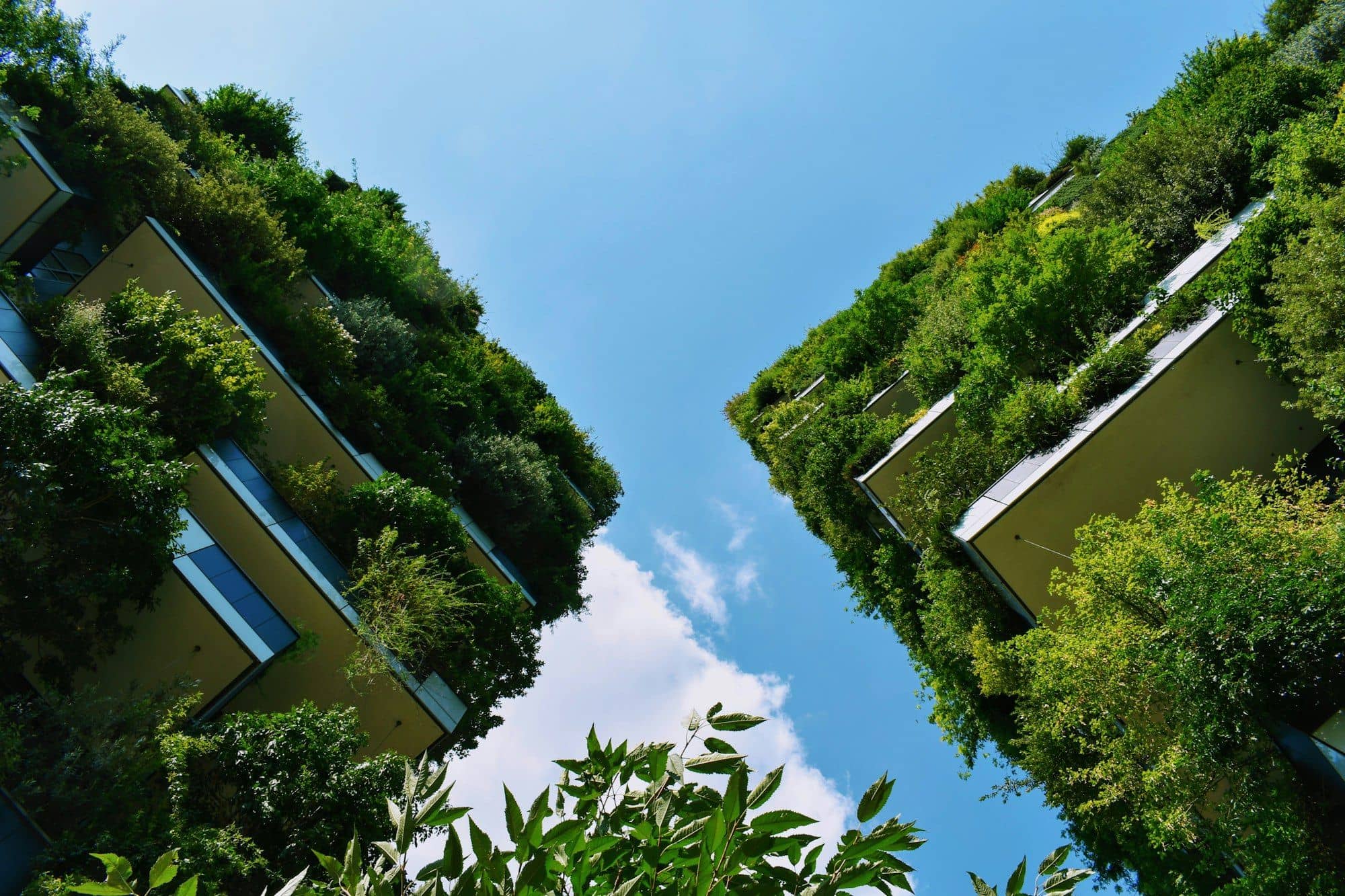
The second common use of the phrase is for farms on roofs. Rooftop farming takes two main forms. Soil-based rooftop farms spread a lightweight growing medium over a waterproofed roof. Brooklyn Grange in New York, founded in April 2010, grows vegetables on about 140,000 square feet of rooftop across three sites, using an engineered lightweight mix rather than natural soil. Rooftop greenhouses enclose a hydroponic system under glass. Gotham Greens opened a 15,000 square-foot rooftop greenhouse in Greenpoint, Brooklyn, in May 2011.
Rooftop farms use sunlight, so their energy costs are low, and they use roof space that is otherwise empty. Their limits are the load the roof can carry, waterproofing, access for people and produce, wind, and in India the intense summer heat on exposed roofs. A structural engineer should check any roof before soil, water tanks or a greenhouse are put on it.
Skyscraper farms: the high-rise idea
The third use of sky farming is the multi-storey farm building. In 1999 Dickson Despommier and his students at Columbia University began designing a skyscraper farm that they estimated could feed 50,000 people. In Toronto, the architecture student Gordon Graff designed Skyfarm around 2007 and 2008: a 59-storey hydroponic tower with about 9.5 million square feet of growing area that he estimated could feed about 40,000 people a year.
Neither building was constructed. Tall buildings are expensive per square metre, and crops on inner floors would need artificial light, which makes the electricity cost the same problem that indoor vertical farms face. The farms that were actually built went into low warehouses, greenhouses, containers and rooftops instead, while the skyscraper farm has remained mainly a design concept. The designs still matter, because they made the public aware of the idea and led architects to think about farms as part of buildings rather than only as land outside the city.
How sky farming relates to vertical farming
Vertical farming is the broad category: any method of growing crops in stacked layers or on vertical structures to get more produce from each square metre of land. Sky farming, in any of its meanings, is one branch of it. The main technical distinction is the light source. Sky Greens towers and rooftop farms use sunlight; most commercial vertical farms, and the inner floors of any skyscraper farm, use LEDs.
That distinction drives cost. Sunlit systems have low power bills but depend on weather and day length, and their layers shade one another, which is why Sky Greens rotates its troughs. LED-lit indoor farms control light precisely and can stack many more layers, but pay for every unit of light. The table below compares the three forms of sky farming with a typical indoor vertical farm.
| System | Light | Layers | Main limit |
|---|---|---|---|
| Rotating A-frame towers (Sky Greens) | Sunlight | Troughs rotating on a 9 m frame | Needs open, sunny land; tropical leafy crops |
| Rooftop soil farm | Sunlight | One | Roof load, waterproofing, heat |
| Rooftop hydroponic greenhouse | Sunlight, sometimes topped up | One or a few | Roof load and structure cost |
| Skyscraper farm (concept) | Sunlight at edges, LEDs inside | Many floors | Building cost and electricity |
| Indoor vertical farm | LEDs | Many racks per room | Electricity cost |
Sky farming in India
Indian cities have large areas of flat concrete roof and strong sunlight for most of the year, which suits rooftop growing. Hydroponic towers and NFT channels on terraces are already common for home herb and salad growing. For commercial scale, the constraints are roof load, water supply on the roof, protection from summer heat and monsoon wind, and getting produce down to the street.
A sunlit rotating tower of the Sky Greens type suits the tropical leafy greens that Indian kitchens use, but needs open, level land with full sun and careful shading in April and May. An indoor LED farm avoids heat and rain but faces the electricity cost of about 10 to 18 kWh per kilogram of lettuce. The right choice depends on the site, the crop and the buyer, and many projects combine a rooftop greenhouse with an indoor room for seedlings.
Planning a rooftop or high-rise farm
Planning a farm on a rooftop, terrace or campus building? Garden & Acre designs and builds commercial and institutional vertical farms, including rooftop, warehouse, campus, hotel, school and café farms. The work covers feasibility, including roof load and power, then design, build, commissioning and support through the first crop, and is priced in a written proposal after an initial call. For a home terrace, café or school, Garden & Acre installs hydroponic and aeroponic towers from ₹14,000 per tower, including the pump, timer, first seedlings, nutrients, training and a refill plan.
Questions
What is sky farming?
Sky farming is an informal term for growing food above ground level. It most often refers to Sky Greens in Singapore, which grows vegetables on rotating 9-metre A-frame towers under sunlight, and is also used for rooftop farms and proposed skyscraper farms. It is a form of vertical farming.
Is sky farming the same as vertical farming?
Sky farming is a type of vertical farming. Vertical farming covers all systems that grow crops in stacked layers or on vertical structures. Sky farming usually means sunlit systems such as Sky Greens' rotating towers or rooftop farms, while most commercial vertical farms are indoor rooms lit by LEDs.
How does Sky Greens work?
Sky Greens grows vegetables in troughs on aluminium A-frame towers up to about 9 metres tall. A water-driven pulley slowly rotates the troughs so each plant spends time near the top in full sun, and irrigation is built into the cycle. The company reports about 40 watt-hours of power per tower.
Who invented sky farming?
The Sky Greens A-Go-Gro rotating tower was developed by Jack Ng in Singapore, who built a prototype in 2009, patented it in 2010 and opened the commercial farm in 2012. The skyscraper farm idea is credited to Dickson Despommier and his Columbia University students, who began work on it in 1999.
Can I start a sky farm on my terrace in India?
Yes, on a small scale. Hydroponic towers or channels on a terrace can grow herbs and salad greens using sunlight. Check the roof's load capacity, waterproofing and water supply first, and plan shade for April and May. Larger rooftop farms need a structural check and a proper design.
What crops does Sky Greens grow?
Sky Greens grows tropical leafy vegetables for the Singapore market, including bak choy, Chinese cabbage, kai lan, spinach and mustard greens. SINGAPORE Magazine reported that it had also trialled cherry tomatoes, cucumbers, strawberries and rice, but leafy greens are its commercial crops.
Sources
- Farming in the Sky — SINGAPORE Magazine (2015)
- World's first hydraulic-driven vertical farm produces 1 ton of vegetables every other day — EcoWatch
- Vertical farming — Wikipedia
- Dickson Despommier — Wikipedia
- Is a 60-storey skyscraper the farm of the future? — This Magazine (2009)
- Brooklyn Grange — Wikipedia
- Gotham Greens — Wikipedia
- Benchmarking energy efficiency in vertical farming — ScienceDirect (2024)
- Comparison of land, water, and energy requirements of lettuce grown using hydroponic vs. conventional agricultural methods — Barbosa et al., IJERPH (2015)