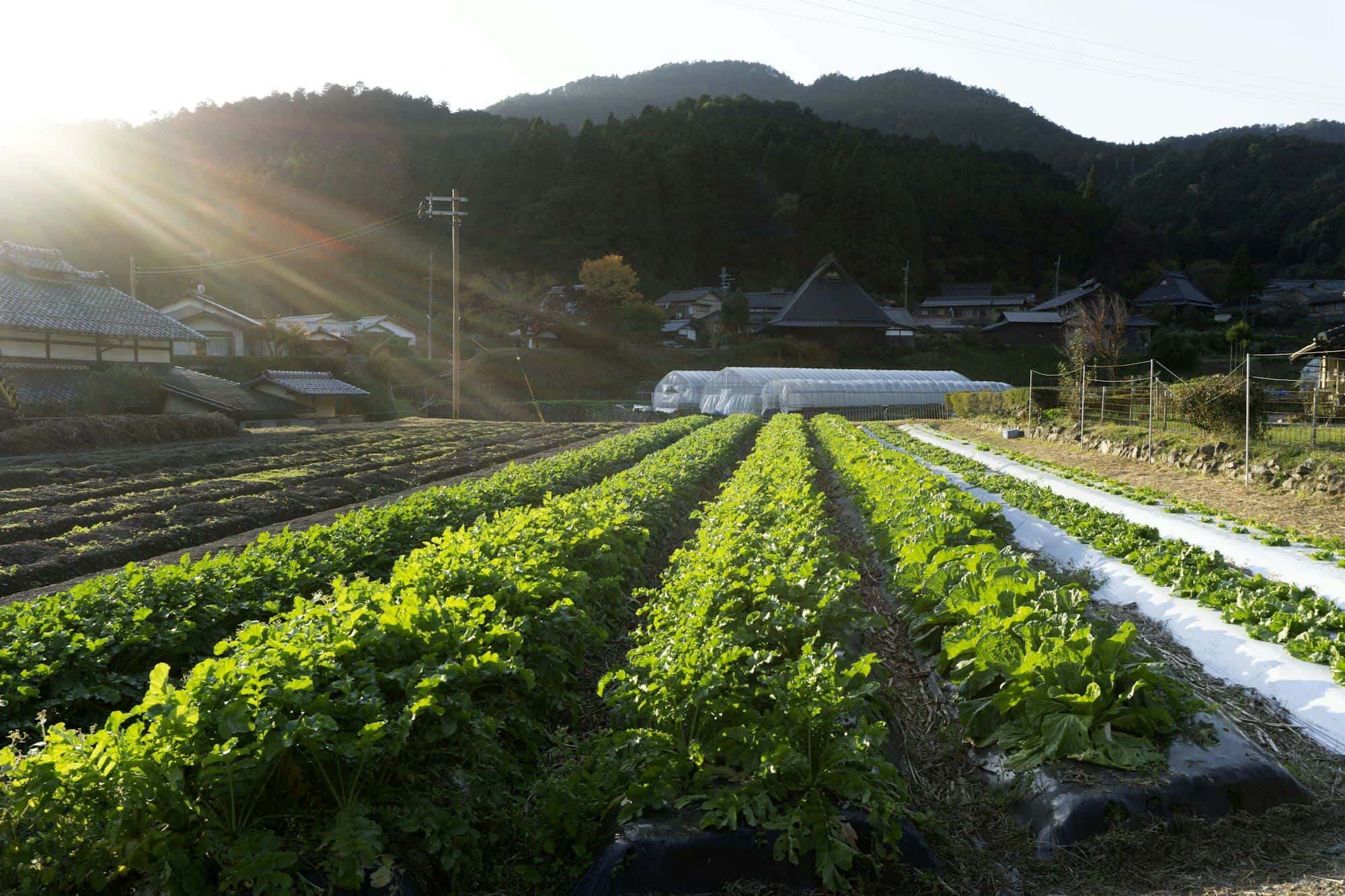
Three ways to grow: open field, polyhouse and vertical farm
Traditional farming here means crops grown in soil in open fields, using rain or irrigation and natural sunlight. A polyhouse or greenhouse is a structure covered in plastic film, glass or net that uses sunlight but shelters the crop from rain, wind, pests and some heat or cold; crops may grow in soil or in soilless systems such as hydroponics. A vertical farm is an insulated indoor room where crops grow in stacked layers under LED lights, usually hydroponically, with temperature, humidity, carbon dioxide and water controlled by equipment.
The key difference is where the light and the climate come from. In a field both are free and uncontrolled. In a polyhouse the light is free and the climate is partly controlled. In a vertical farm both are controlled and both are paid for. Almost every other difference in yield, water, cost and crop choice follows from that. The rest of this article compares the three systems on each of those points, using lettuce as the example because it has the most published data.
Comparison table: yield, water, energy, cost and crops
The table compares the three systems for lettuce, the crop with the most published data. Figures come from different studies in different climates, so read them as orders of magnitude rather than exact values for your site. Energy figures from Barbosa were given in kilojoules and have been converted: 1,100 kJ ÷ 3,600 = about 0.3 kWh, and 90,000 kJ ÷ 3,600 = 25 kWh.
| Measure | Open field | Polyhouse / greenhouse (hydroponic) | Vertical farm |
|---|---|---|---|
| Yield per m² of land a year | 3.3–3.9 kg (Gargaro 2025; Barbosa 2015) | About 41 kg (Barbosa 2015, Arizona) | About 97 kg measured (Gargaro 2025); 78–330 kg per m² net area modelled (Meeuws 2026) |
| Water per kg | About 250 L (Barbosa 2015) | About 20 L (Barbosa 2015) | 28–95% less than greenhouses, by climate (Graamans 2018) |
| Energy per kg | About 0.3 kWh (Barbosa 2015) | Up to about 25 kWh in a hot desert climate (Barbosa 2015) | About 10–18 kWh, 65–85% for lighting (2024 benchmark) |
| Light source | Sun, free | Sun, free, sometimes topped up | LEDs, paid for |
| Structure cost in India | None | ₹844/m² (naturally ventilated) to ₹1,400/m² (fan and pad), NHB norms | Several times a polyhouse per m² of floor |
| Weather risk | High | Medium | Low; power risk instead |
| Pesticide use | Usually needed | Reduced | Usually none |
| Best crops | Grains, pulses, potatoes, onions, most vegetables | Capsicum, cucumber, tomato, leafy greens, cut flowers | Lettuce, herbs, microgreens, some strawberries |
Yield per square metre
Yield per square metre of land is where vertical farming is strongest. Barbosa and colleagues (2015) measured lettuce at about 3.9 kg per m² a year in Arizona fields and about 41 kg in a hydroponic greenhouse, roughly eleven times more. Gargaro and colleagues (2025) measured about 97 kg per m² a year in a commercial vertical farm, against an average of 3.3 kg in the UK and Spanish fields they studied.
A 2026 modelling study in Frontiers in Sustainable Food Systems estimated 78 to 330 kg of lettuce per m² of net growing area a year, depending on light level and how efficiently the crop uses it. The gains come from three things: stacking several layers on one floor, harvesting every few weeks all year, and giving the crop steady light, temperature and carbon dioxide. A field gets two to four lettuce crops a year in most climates; an indoor farm can get many more.
Water use
Field crops lose water to evaporation from soil, runoff and deep drainage. Hydroponic systems in polyhouses and vertical farms recirculate the nutrient solution, so most of the water ends up in the plant or is recovered. Barbosa's study found about 250 litres per kilogram of lettuce in the field against about 20 litres in hydroponics. A polyhouse with drip irrigation and mulch sits between the two, depending on whether it grows in soil or in a recirculating soilless system.
A closed vertical farm goes further, because the water the plants transpire condenses on the air-conditioning coils and can be returned to the tanks. Graamans and colleagues (2018) found plant factories cut water use by 28% to 95% compared with greenhouses, and the 2022 Horticulture Research review reported water use efficiency above 96%. For Indian growers in water-short districts of Maharashtra, Karnataka or Tamil Nadu, soilless systems are a real advantage.
Energy use and electricity cost
Energy reverses the picture. A field uses energy mainly for tractors, pumps and fertiliser, about 0.3 kWh per kg of lettuce in Barbosa's study. A polyhouse uses sunlight for growth but may spend energy on fans, pad cooling or heating. A vertical farm buys all of its light: current benchmarks put lettuce at about 10 to 18 kWh per kg, with 65% to 85% going to LEDs and much of the rest to cooling.
Graamans and colleagues found that plant factories used purchased energy of 247 kWh per kg of lettuce dry weight, against 70 to 211 kWh for greenhouses in the Netherlands, UAE and Sweden. In Maharashtra, MERC's order of 25 March 2026 in Case 75 of 2025 sets FY 2026-27 rates of ₹5.61 energy plus ₹1.60 wheeling, or ₹7.21 per kWh, for LT IV(C) Agriculture – Others, which MERC's 2025 order says covers indoor vertical farming. LT-II(A) non-residential up to 20 kW pays ₹8.51 plus ₹1.60, or ₹10.11. Power per kg of lettuce is 10 × 7.21 = ₹72.10 to 18 × 7.21 = ₹129.78 on the first, and 10 × 10.11 = ₹101.10 to 18 × 10.11 = ₹181.98 on the second. Fixed charges, duty and fuel adjustment are extra; get your category confirmed by your DISCOM in writing.
Capital and running cost
An open field needs land, irrigation and machinery but no building. A polyhouse adds a structure: the National Horticulture Board's cost norms put a naturally ventilated tubular polyhouse at ₹844 per m² and a fan-and-pad greenhouse at ₹1,400 per m² in plain areas. On that basis a 1,000 m² naturally ventilated polyhouse costs 1,000 × ₹844 = ₹8,44,000 for the structure, before irrigation and planting material.
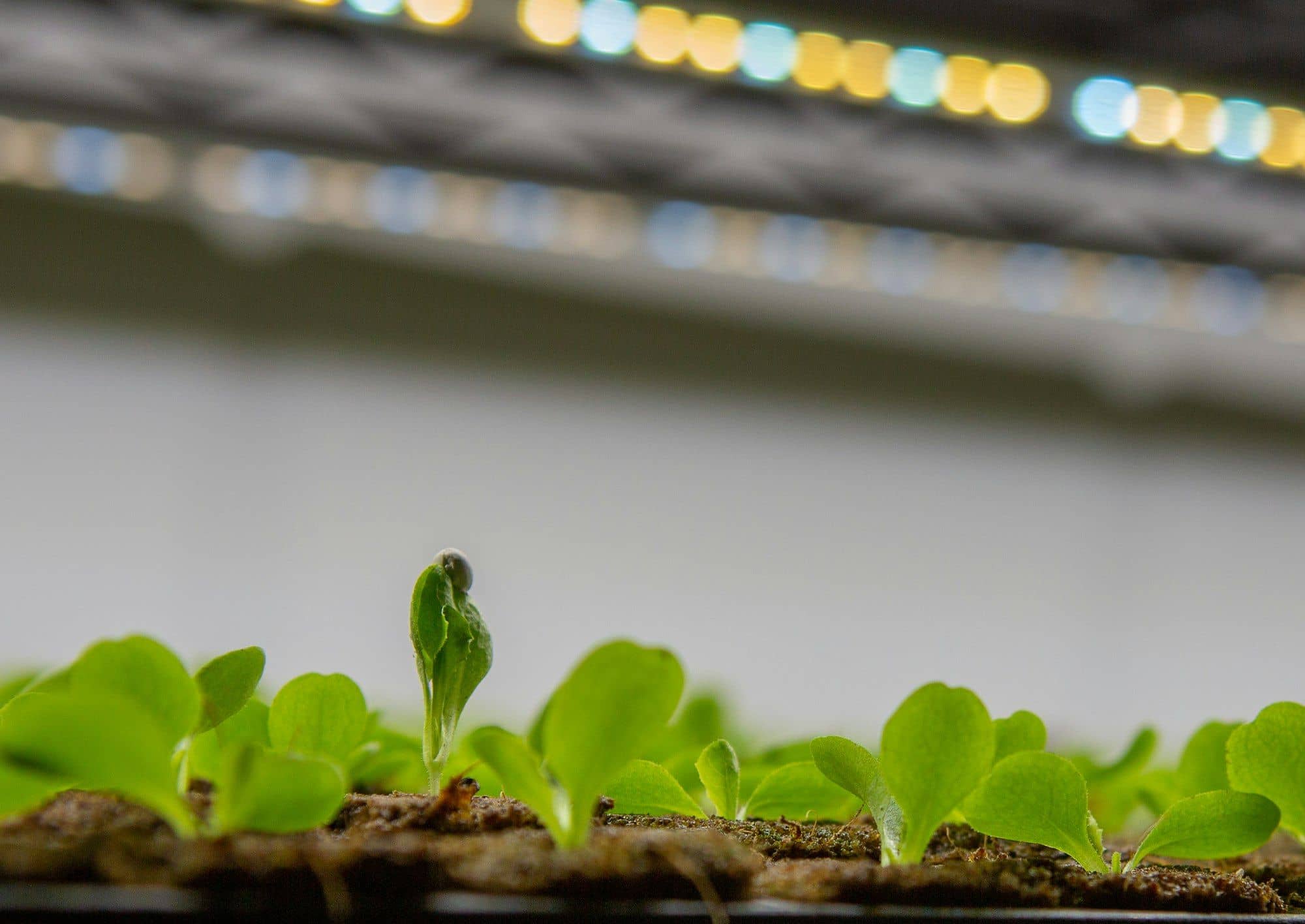
A vertical farm needs an insulated room, racks, LEDs, air-conditioning, dehumidifiers, pumps, sensors, controls and backup power, so its capital cost per square metre of floor is several times that of a polyhouse. Running cost is also higher. The 2026 Frontiers study modelled vertical-farm lettuce at €1.67 to €3.26 per kg against a greenhouse benchmark of €2.35, so a well-run farm can compete on lettuce, while a poorly lit one cannot.
Which crops suit each system
Open fields remain the only practical way to grow staples: wheat, rice, pulses, millets, oilseeds, potatoes and onions. These crops need a lot of light per kilogram of food and sell at low prices, so paying for that light with electricity makes no sense. Most fruit and a large share of vegetables also stay in the field. Field farming also keeps soil, crop rotation and grazing in the system, which a soilless farm does not replace. For India's food supply as a whole, better field farming matters far more than any indoor system.
Polyhouses suit crops that respond well to protection but need strong light: capsicum, English cucumber, tomato, strawberries, and cut flowers such as gerbera, carnation and rose, which appear in NHB's own cost norms. Vertical farms suit crops that are short, fast, high in value and eaten almost whole: lettuce, basil and other herbs, microgreens, spinach, kale and pak choi, with strawberries as a harder, higher-value option.
- Open field: grains, pulses, oilseeds, potatoes, onions, most vegetables and fruit.
- Polyhouse or greenhouse: capsicum, cucumber, tomato, strawberries, leafy greens, cut flowers.
- Vertical farm: lettuce, herbs, microgreens, baby spinach, kale, pak choi, some strawberries.
Risk, labour and reliability
Each system carries a different kind of risk. A field is exposed to drought, heavy rain, hail, heat waves and pests, and yields vary from season to season. A polyhouse reduces those risks but can overheat in Indian summers and can still suffer pest outbreaks inside. A vertical farm removes weather risk almost entirely but replaces it with equipment and power risk: if the air-conditioning or pumps fail for a few hours, a whole room can be lost.
Labour changes too. Field work is seasonal and physical. Polyhouse work needs skills in fertigation and crop training. Vertical farm work is indoor and cleaner, but staff must manage nutrient dosing, pH and EC, lighting schedules, food safety and basic electrical faults. The 2022 Horticulture Research review notes that mechanisation lowers labour cost in plant factories, but the remaining staff need more training.
How to choose between them
Start with the crop and the buyer, not the technology. If you grow staples or sell to a mandi at commodity prices, stay with the field and improve irrigation and soil. If you grow capsicum, cucumber, tomato or flowers for a steady market, a polyhouse is usually the best return on capital in India, and NHB and state missions support it. If you sell salad greens, herbs or microgreens to hotels, restaurants or premium retail in a city, and you can secure reliable power, a vertical farm or an indoor room for part of the crop can make sense.
Many growers combine systems: a hydroponic polyhouse for bulk leafy greens, with a small LED room for seedlings and microgreens. NHB's credit-linked subsidy of 20% of project cost, capped at ₹25 lakh, reported by Krishi Jagran in 2022 for hydroponic and aeroponic projects over 1,000 m², can help with larger projects; confirm current terms with NHB. State horticulture missions run their own schemes for polyhouses and shade net houses, and the rules differ from state to state, so check with the district horticulture office as well.
Getting help choosing and building
Garden & Acre works across these systems. For open farmland, Farm Development covers layout, irrigation and planting. For indoor and rooftop growing, Garden & Acre designs and builds commercial and institutional vertical farms, from feasibility and design to build, commissioning and first-crop support, priced in a written proposal after an initial call. For homes, cafés and schools, hydroponic and aeroponic towers start at ₹14,000 per tower installed, including the pump, timer, first seedlings, nutrients, training and a refill plan.
Questions
Is vertical farming better than traditional farming?
It is better on land and water use and on year-round, pesticide-free output, but worse on energy use and capital cost. For leafy greens and herbs sold fresh in cities it can compete. For staples such as wheat, rice and pulses, traditional field farming remains far cheaper because sunlight is free.
How much more does a vertical farm yield than a field?
For lettuce, a 2025 UK study measured about 97 kg per m² a year in a commercial vertical farm against 3.3 kg in fields, roughly 29 times more per square metre of land. A 2015 Arizona study measured about 41 kg per m² in a hydroponic greenhouse against 3.9 kg in the field.
Is a polyhouse or a vertical farm better in India?
For most Indian growers a polyhouse gives a better return because it uses free sunlight and costs ₹844–₹1,400 per m² under NHB norms. A vertical farm suits leafy greens, herbs and microgreens sold at premium prices in cities where reliable power is available and land near buyers is scarce.
Does vertical farming use less water than traditional farming?
Yes. A 2015 study found hydroponic lettuce used about 20 litres per kg against about 250 litres in the field. Closed vertical farms recover water from the air-conditioning and use 28–95% less than greenhouses in modelled comparisons, with reported water use efficiency above 96%.
Why does vertical farming use more energy than field farming?
Plants need light to grow. In a field or polyhouse the sun provides it free. In a vertical farm all light comes from LEDs, and the heat they produce must be removed by air-conditioning. Lettuce needs about 10–18 kWh per kg indoors against about 0.3 kWh in the field.
What is the difference between a greenhouse and a vertical farm?
A greenhouse or polyhouse uses sunlight through a transparent cover and grows crops on one level. A vertical farm is an insulated, usually windowless room where crops grow on several stacked layers under LED lights, with temperature, humidity and carbon dioxide fully controlled.
Sources
- Comparison of land, water, and energy requirements of lettuce grown using hydroponic vs. conventional agricultural methods — Barbosa et al., IJERPH (2015)
- Plant factories versus greenhouses: comparison of resource use efficiency — Graamans et al., Agricultural Systems (2018)
- Plant factory technology lights up urban horticulture in the post-coronavirus world — Zhang et al., Horticulture Research (2022)
- Can vertical farms really feed the UK sustainably? (Gargaro et al., Food and Energy Security 2025) — Phys.org
- Vertical farming economics: crop performance targets for cost-competitive vertical farming — Frontiers in Sustainable Food Systems (2026)
- Benchmarking energy efficiency in vertical farming — ScienceDirect (2024)
- Cost norms and pattern of assistance — National Horticulture Board
- MERC MYT order, Case No. 217 of 2024 (28 March 2025), MSEDCL tariff schedule
- MERC order, Case No. 75 of 2025 (25 March 2026), MSEDCL tariffs FY 2026-27
- Govt. is providing subsidy for hydroponics & aeroponics farming — Krishi Jagran (2022)