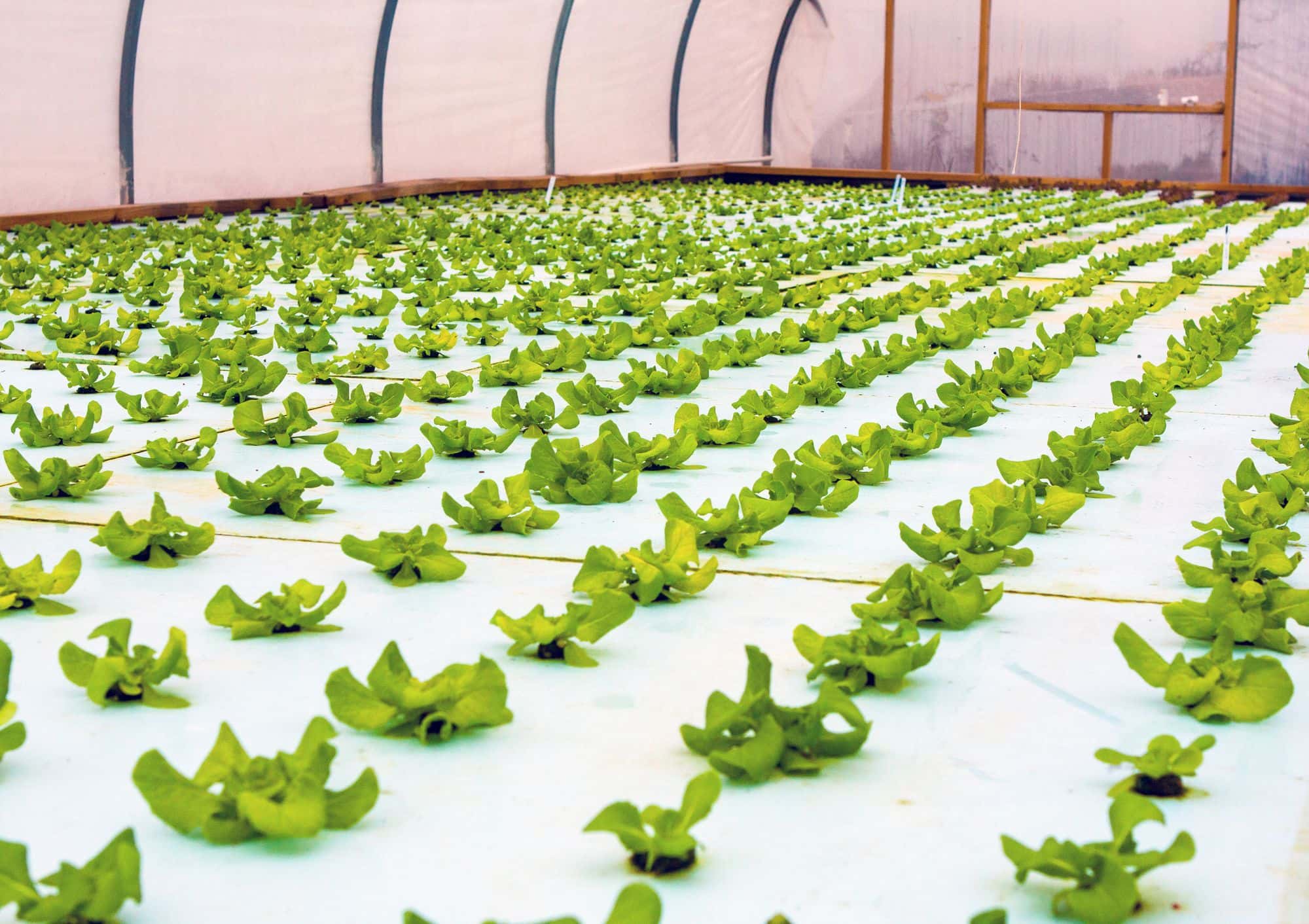
What aquaponics vertical farming is
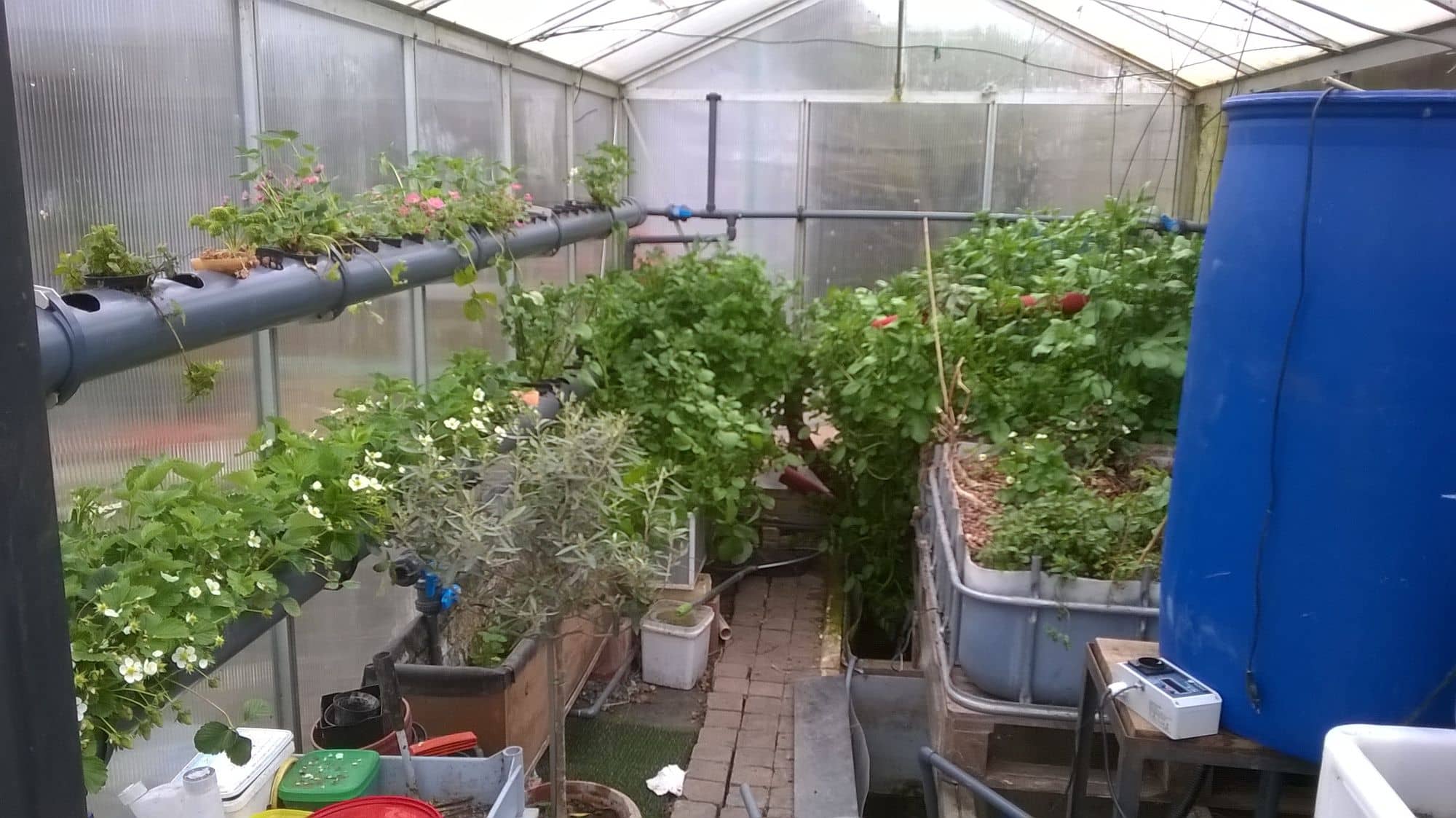
Aquaponics is the joining of recirculating aquaculture and hydroponics. Fish are raised in tanks and fed. Their waste water passes through a filter that removes solids, then through a biofilter where bacteria convert ammonia into nitrate, and then past the plant roots, which take up the nitrate and other nutrients. The cleaned water flows back to the fish tank. FAO's technical guide to small-scale aquaponics describes the system as three groups of organisms, fish, plants and bacteria, living in one shared body of water.
In a vertical aquaponic farm the plant side is stacked. Common layouts are media beds on tiered benches, deep water culture rafts on racks, NFT channels on racks or A-frames, and vertical towers fed from the fish water. Fish tanks are heavy, so they sit on the ground floor or ground level, and a single pump lifts water to the highest plant layer, from where it flows back by gravity. Rakocy's design guidelines recommend exactly this: one pump, from the lowest point to the highest, with gravity doing the rest.
The nitrogen cycle in aquaponics
Fish excrete ammonia, mainly through their gills, and uneaten feed breaks down into more ammonia. Ammonia is toxic to fish. Two groups of nitrifying bacteria fix the problem. Ammonia-oxidising bacteria, most commonly Nitrosomonas, turn ammonia into nitrite. Nitrite-oxidising bacteria, most commonly Nitrobacter, turn nitrite into nitrate. Nitrate is far less toxic to fish and is the main nitrogen source for plants. FAO stresses that the whole system depends on these bacteria: without them, ammonia builds up and kills the fish.
The bacteria live on every wet surface: tank walls, pipes, plant roots and especially grow media or a dedicated biofilter with a large surface area. A new system has to be cycled before it carries a full load of fish, which FAO says normally takes 3 to 5 weeks. During cycling, ammonia is added in small amounts and ammonia, nitrite and nitrate are tested until ammonia and nitrite fall close to zero and nitrate rises. Nitrification also produces acid, so pH drifts down over time and has to be corrected with a base.
- Fish and uneaten feed release ammonia (NH₃/NH₄⁺)
- Nitrosomonas bacteria convert ammonia to nitrite (NO₂⁻)
- Nitrobacter bacteria convert nitrite to nitrate (NO₃⁻)
- Plants take up nitrate and other nutrients
- Cleaned water returns to the fish tank
Water quality: the compromise between fish, plants and bacteria
Each of the three organisms prefers slightly different water. Nitrifying bacteria work best in slightly alkaline water, Rakocy notes nitrification is more efficient at pH 7.5 or higher and practically stops below 6.0, while plants take up nutrients best around pH 6.5 or slightly lower. FAO recommends holding pH at a compromise of 6 to 7; Rakocy recommends pH 7.0. The FAO compromise ranges for the whole system are listed below.
Fish feed supplies most plant nutrients, but not all. Rakocy notes fish feed provides 10 of the 13 nutrients plants need in adequate amounts, and that calcium, potassium and iron are generally too low. In his University of the Virgin Islands (UVI) system, calcium and potassium are added as calcium hydroxide and potassium hydroxide, which also correct the falling pH, and iron is added in chelated form.
| Parameter | Target range |
|---|---|
| Water temperature | 18–30 °C |
| pH | 6–7 |
| Ammonia | Below 1 mg/litre |
| Nitrite | Below 1 mg/litre |
| Nitrate | 5–150 mg/litre |
| Dissolved oxygen | 5 mg/litre or more (Rakocy) |
Sizing an aquaponic system: the feed rate ratio
The standard way to balance fish and plants is the feed rate ratio: grams of fish feed added per day for each square metre of plant growing area. FAO's guide gives 40 to 50 g of feed per m² per day for leafy greens and 50 to 80 g per m² per day for fruiting vegetables, assuming an ordinary 32 percent protein feed. Rakocy's UVI work gives 60 to 100 g per m² per day for raft (deep water) systems, and roughly a quarter of that for NFT, because NFT channels have less surface for bacteria.
FAO also sets a safety limit on fish density: no more than 20 kg of fish per 1,000 litres of tank water for new growers, and fish eating about 1 to 2 percent of their body weight per day. It warns that at high densities a short power cut can kill all the fish within an hour, which is a direct concern in India. Solids matter too: Rakocy notes about 25 percent of feed, by dry weight, comes out as solid waste that must be filtered out before it reaches plant roots.
Worked example: sizing a small vertical aquaponic farm
Take a small rooftop or shed system growing leafy greens on 10 m² of raft or media-bed area, stacked over two tiers of 5 m² each. Using FAO's leafy-green ratio of 40 to 50 g per m² per day, daily feed is 10 m² × 40 g = 400 g at the low end and 10 m² × 50 g = 500 g at the high end.
If the fish eat 1 percent of body weight per day, the fish biomass needed is 400 g ÷ 0.01 = 40 kg to 500 g ÷ 0.01 = 50 kg. At FAO's limit of 20 kg per 1,000 litres, 40 kg of fish needs at least 40 ÷ 20 × 1,000 = 2,000 litres of tank water, and 50 kg needs 2,500 litres. At 2 percent of body weight, the biomass halves to 20 to 25 kg and the minimum tank volume to 1,000 to 1,250 litres. In practice fish grow, so the feed changes week to week; Rakocy's UVI system uses four tanks at staggered stages, harvesting one every 6 weeks, to keep feed input steady.
| Step | Low end | High end |
|---|---|---|
| Feed rate ratio | 40 g/m²/day | 50 g/m²/day |
| Daily feed for 10 m² | 10 × 40 = 400 g | 10 × 50 = 500 g |
| Fish biomass at 1% body weight/day | 400 ÷ 0.01 = 40 kg | 500 ÷ 0.01 = 50 kg |
| Minimum tank water at 20 kg/1,000 L | 40 ÷ 20 × 1,000 = 2,000 L | 50 ÷ 20 × 1,000 = 2,500 L |
| Fish biomass at 2% body weight/day | 400 ÷ 0.02 = 20 kg | 500 ÷ 0.02 = 25 kg |
| Minimum tank water at 20 kg/1,000 L | 1,000 L | 1,250 L |
Fish for aquaponics in India: tilapia rules
Tilapia is the most common aquaponics fish worldwide. FAO describes it as hardy, resistant to many diseases and tolerant of a wide range of water conditions. Tilapia grows best at 27 to 30 °C, stops feeding and growing below 17 °C and dies below 12 °C, and in good conditions grows from a 50 g fingerling to 500 g in about 6 months. Those temperatures suit most of India for most of the year; in north Indian winters the water needs heating or growth slows.
Tilapia farming in India is regulated. The Department of Fisheries' Guidelines for Responsible Farming of Tilapia in India (revised April 2020) allow only Nile tilapia (Oreochromis niloticus) or its improved strains and hybrids, and only monosex male, sterile or YY super-male stock. Farmers must register their farm with the State Fisheries Department, farms must not be in flood-prone areas or near sanctuaries, and seed must come from registered hatcheries. Indoor systems, recirculating aquaculture systems (RAS) and biofloc are allowed, with stocking in these systems of fish at least 30 g and no more than 150 fish per m³. An aquaponic tilapia unit therefore needs registration and certified seed, not fish from a local pond.
Pangasius and other fish options
Pangasius (Pangasianodon hypophthalmus) is widely farmed in India. It was introduced from Bangladesh in the late 1990s, first into West Bengal. Singh and Lakra (2012) describe its fast growth, close to 1 kg in 90 days, and warn that escaped fish have been found in wetlands and rivers in several states and can breed there. They propose that farmers apply to the State Fisheries Department before culturing it. The National Fisheries Development Board issued a manual on pangasius cage culture in 2016. Its fast growth means it quickly outgrows small aquaponic tanks, so it suits larger systems with the right permissions.
FAO also lists common carp, other carps, catfish, trout and several others as aquaponic species. Indian major carps such as rohu and catla are native and widely farmed, which avoids exotic-species rules, though they are less commonly used in tanks than tilapia. FAO describes African catfish as very hardy and air-breathing, but check with the State Fisheries Department before stocking any exotic species in India. Whatever the species, buy healthy seed from a registered source and do not release fish into open water.
| Fish | Temperature notes | Regulatory point in India | Fit for vertical aquaponics |
|---|---|---|---|
| Nile tilapia (monosex) | Best 27–30 °C; stops growing below 17 °C | Registered farm and certified monosex seed required (DoF 2020 guidelines) | Good; the standard choice |
| Pangasius | Warm-water species | Apply to State Fisheries Department; escape risk noted | Larger systems only; grows fast |
| Indian major carps (rohu, catla) | Warm-water | Native species | Possible; less common in tanks |
| Common carp | Wide range | Check state rules | Possible |
| Ornamental koi (a form of common carp) | Wide range | Check state rules | Small display and school units; not grown for food |
Pros and cons of aquaponics for vertical farming
Aquaponics produces two crops from one feed input and needs little or no synthetic fertiliser for nitrogen. UF/IFAS Extension lists the gains as fish protein plus vegetables, a sustainable nutrient loop and no need for synthetic fertiliser, and the drawbacks as a delicate biological balance, a long start-up while bacteria establish, and the need for skill in both fish and plants. Rakocy adds a hard rule: no pesticides and most fish medicines cannot be used, because they harm fish, bacteria or both, so pest control must be biological.
For a vertical farm, the practical difference from hydroponics is flexibility. A hydroponic farm can change its nutrient recipe every crop. An aquaponic farm is tied to its fish: the feed rate sets the nutrient supply, and fish cannot be switched off during a slow sales week. Organic matter also clogs fine pipes and drippers, so small-bore drip lines and fine aeroponic nozzles are a poor match for fish water.
- Pro: two products, fish and vegetables, from one system
- Pro: little or no synthetic nitrogen fertiliser; waste is recycled
- Pro: water is reused, with top-ups for evaporation and plant use
- Con: slow start, with 3 to 5 weeks of cycling before full stocking
- Con: pH compromise means neither fish nor plants get their ideal water
- Con: calcium, potassium and iron usually need supplementing
- Con: no pesticides; power cuts can kill fish within an hour at high density
- Con: fish farming needs registration and licensed seed in India
Planning aquaponics in Indian conditions
Most of India is warm enough for tilapia year-round, which is an advantage over temperate countries. The harder problems are summer heat, which lowers dissolved oxygen in warm water, and power supply. Plan for aeration that runs on backup power, shade over tanks, and a stocking density at or below FAO's 20 kg per 1,000 litres until the system has proven itself. Keep feed input steady by staggering fish batches, and test ammonia, nitrite, nitrate and pH every day in the first months.
Register with the State Fisheries Department before stocking tilapia, and buy monosex seed from a registered hatchery. Choose the plant side to match the fish: leafy greens and herbs on rafts or media beds are the easiest start, with fruiting crops added once the system is stable. Avoid fine drip lines and misting nozzles on the plant side, because the organic load in fish water clogs them, and keep a written log of feed given, fish losses and test results so problems can be traced early.
Aquaponic and hydroponic farm design with Garden & Acre
Garden & Acre designs and builds vertical farms for campuses, schools, hotels, rooftops and warehouses, including hydroponic farms and systems that link to fish tanks. The work covers feasibility, design, build, commissioning and first-crop support, and is priced in a written proposal after an initial call. Fish farm registration and seed sourcing remain the owner's responsibility under state fisheries rules.
Questions
What is the fish to plant ratio in aquaponics?
Aquaponics is sized by the feed rate ratio, not by fish count. FAO recommends 40 to 50 g of fish feed per square metre of plant area per day for leafy greens and 50 to 80 g for fruiting vegetables. Rakocy's raft systems use 60 to 100 g per m² per day. Keep fish density at or below 20 kg per 1,000 litres of tank water.
Which fish is best for aquaponics in India?
Nile tilapia is the most common choice because it is hardy and grows well at Indian temperatures. Only monosex male or sterile Nile tilapia from registered hatcheries may be farmed, on a farm registered with the State Fisheries Department, under the 2020 Department of Fisheries guidelines. Native carps are an option that avoids exotic-species rules.
Is tilapia farming legal in India?
Yes, under conditions. The Department of Fisheries' 2020 guidelines allow Nile tilapia and its improved strains, only as monosex male, sterile or YY super-male stock, on farms registered with the State Fisheries Department and located away from flood-prone areas and sanctuaries. Indoor, RAS and biofloc systems are permitted, with stocking of at most 150 fish per m³.
How long does it take to start an aquaponic system?
A new system has to be cycled so that nitrifying bacteria can grow. FAO says this normally takes 3 to 5 weeks and longer in cool water. During cycling you add a small ammonia source and test ammonia, nitrite and nitrate until ammonia and nitrite fall near zero. Stock fish gradually after that.
What pH should an aquaponic system run at?
FAO recommends a compromise pH of 6 to 7, and Rakocy recommends 7.0. Nitrifying bacteria work best above 7.5 and nearly stop below 6.0, while plants take up nutrients best around 6.5. Because nitrification makes the water more acidic over time, pH must be tested daily and raised with a base such as calcium or potassium hydroxide.
Is aquaponics better than hydroponics for vertical farming?
Aquaponics produces fish as well as plants and uses fish waste instead of most synthetic fertiliser. Hydroponics is easier to control, faster to start, allows pesticides approved for the crop, and lets the grower change the nutrient recipe freely. For a farm focused only on vegetables, hydroponics is the simpler choice; aquaponics suits projects that want fish as a second product.
Sources
- FAO Fisheries and Aquaculture Technical Paper 589: Small-scale aquaponic food production (Somerville et al., 2014)
- Rakocy, J. (2007), Ten Guidelines for Aquaponic Systems, Aquaponics Journal
- Department of Fisheries, Government of India: Guidelines for Responsible Farming of Tilapia in India (April 2020)
- Singh and Lakra (2012), Culture of Pangasianodon hypophthalmus into India: impacts and present scenario, Pakistan Journal of Biological Sciences
- Global Seafood Alliance (2017): Pangasius aquaculture growing in India
- UF/IFAS Extension: Hydroponic Production Methods, Part 1 (2025)