How vertical farming spread
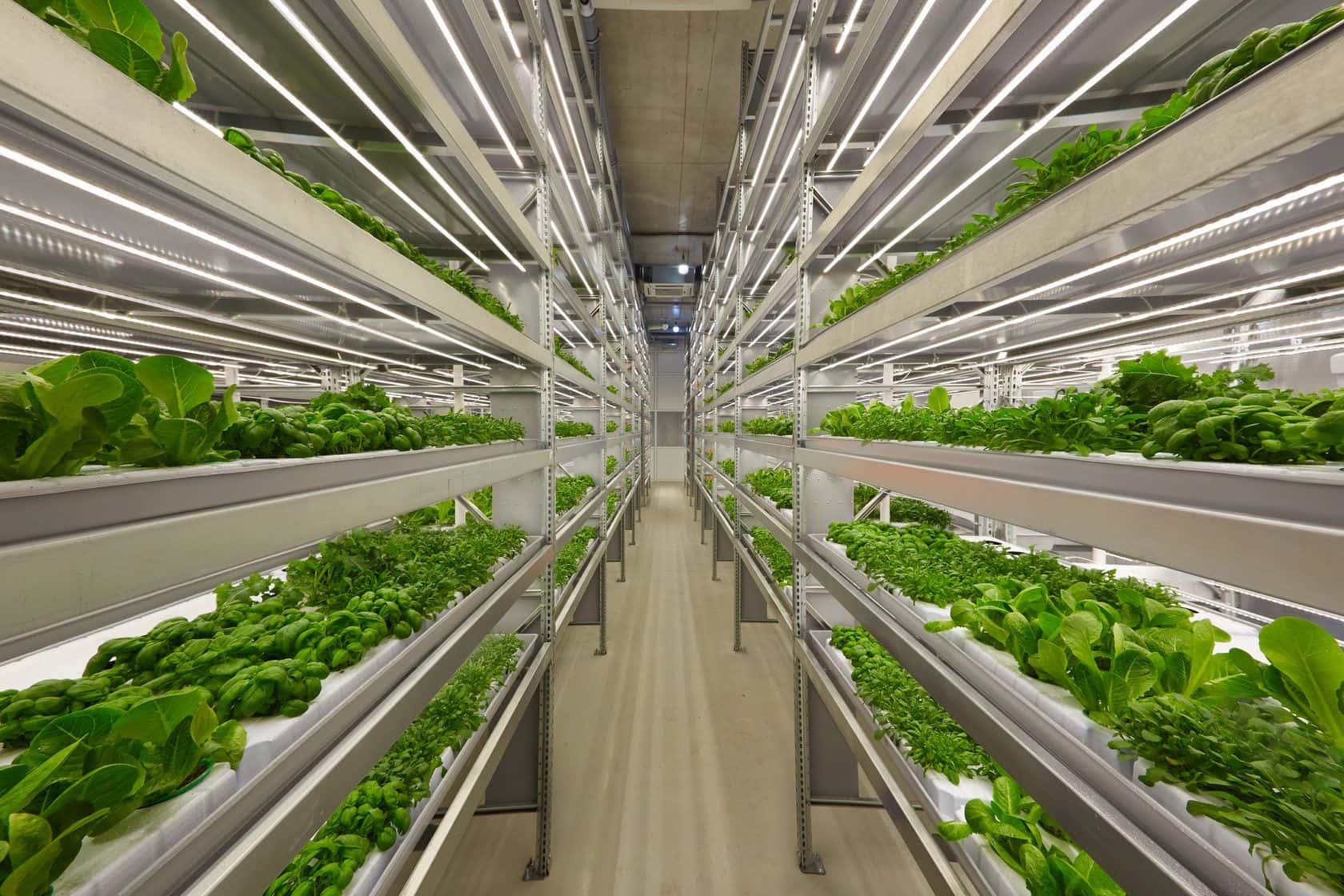
Indoor farming under artificial light grew in two waves. The first was in Japan, where plant factories with artificial lighting (PFALs) for lettuce spread from the 2000s. The second was a venture-capital wave in the United States and Europe in the 2010s and early 2020s, when companies such as AeroFarms, Plenty, Bowery and Infarm raised large sums to build urban farms; Bowery alone raised more than US$700 million. At the same time, food-importing states such as Singapore and the UAE backed indoor farming as a food security measure.
From 2022, higher energy prices, rising interest rates and weak retail prices for leafy greens put pressure on the industry. Several of the best-funded companies closed, filed for bankruptcy or shrank to one farm between 2023 and 2025. The sections below give each country's situation and the status of its main companies as reported by trade and business press. Statuses can change; each is dated to the report it comes from.
Japan: plant factories and Spread
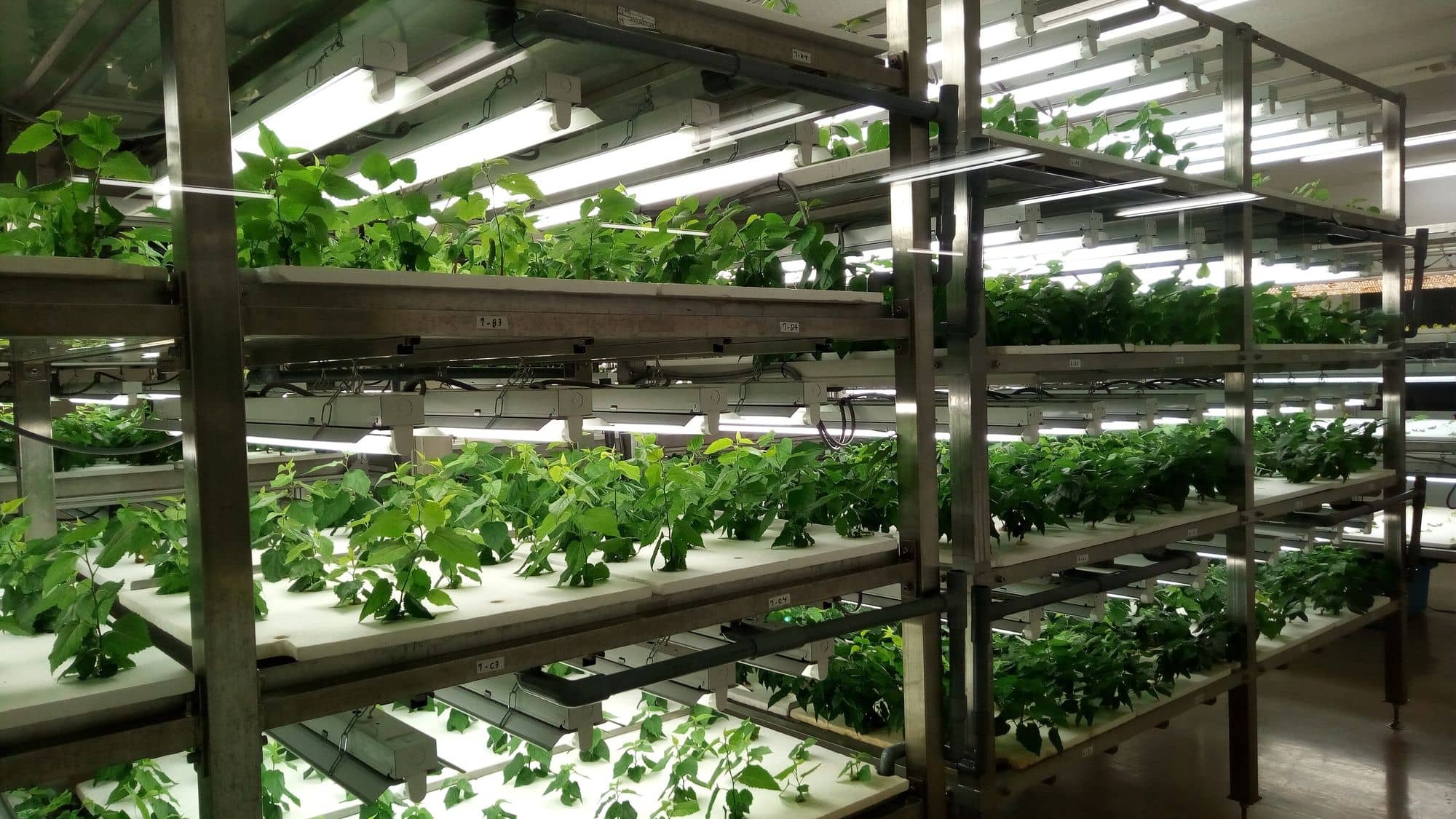
Japan has the longest record of commercial indoor lettuce production. A 2022 study in Frontiers in Plant Science by Zhuang and colleagues, using Japan Greenhouse Horticulture Association surveys, reports that the number of commercially operating PFALs rose from 64 in 2011 to 197 in 2017 and has been flat since. More than 90 percent of them grow leafy vegetables, and more than 90 percent of those grow lettuce. The same study found lettuce PFALs can be commercially viable, with labour the largest cost ahead of electricity, but warned that a 30 percent fall in lettuce prices would make most of them unviable.
Spread Co., based in Kyoto, is Japan's best-known vertical farm company. iGrow News reported that its Kameoka Plant has operated since 2007, produces 21,000 heads of lettuce a day and became profitable by March 2013. Its automated Techno Farm Keihanna in Kizugawa, Kyoto, was built for 30,000 heads a day, with shipping starting in 2018, and targeted a 50 percent cut in labour cost through automation and a 30 percent energy saving through its own LED lighting.
An IIM Bangalore issue brief on Japanese urban farming (September 2025) names Spread, Mirai and PlantX among Japanese companies with automated growing systems, and describes NuFarm Shimizu's underground farm in Tokyo as an example of indoor growing below ground. The same brief notes that Japan produces only about 38 percent of its own food, which is part of why indoor farming there has public and corporate backing.
Singapore: Sky Greens, 30 by 30 and a changing target
Singapore has very little farmland, which made it an early supporter of vertical farming. Sky Greens, founded by engineer Jack Ng, began commercial production in 2012 with A-shaped aluminium towers about 9 metres tall, each with 38 rotating troughs that turn slowly through the sunlight. EcoWatch reported the rotation is driven by a water-pulley system using about 40 W per tower, and that the farm produced about 800 kg of leafy greens such as Chinese cabbage, spinach and kai lan a day.
In 2019 Singapore set the 30 by 30 goal: to produce 30 percent of its nutritional needs locally by 2030. On 4 November 2025, Mothership reported, the government dropped it in favour of narrower targets for 2035: 20 percent of fibre (leafy and fruited vegetables, beansprouts and mushrooms) and 30 percent of protein (eggs and seafood). The goal had been part of the Singapore Food Story strategy conceived in 2019. Minister Grace Fu said the original target did not mean Singapore had to produce every food item, and the new targets focus local production on the categories where it can make the most difference to supply resilience.
Around the same time, HortiDaily reported that Growy Singapore, operator of an 8,000 m² vertical farm near Changi Airport that opened officially in November 2024, entered provisional liquidation on 28 October 2025 because it could not continue due to its debts. Growy had bought the facility from bankrupt US company Kalera in 2023. In January 2026, Mothership reported the opening of Greenphyto's 23.3-metre indoor vertical farm in Jurong West, built at a cost of S$80 million, with capacity for 2,000 tonnes a year and current output of 200 tonnes.
UAE: Bustanica and Emirates Crop One
The UAE has a hot, dry climate and little farmland, so it treats indoor farming as a food security investment. The best-known project is Bustanica, near Al Maktoum International Airport at Dubai World Central. It opened in July 2022 as the first farm of Emirates Crop One, a joint venture between Emirates Flight Catering and indoor farming company Crop One, with an investment of US$40 million. The 330,000 sq ft hydroponic farm was described at opening as the world's largest vertical farm.
Emirates reports that Bustanica produces more than 1 million kg of leafy greens a year, about 3,000 kg a day, using 95 percent less water than field farming, and supplies Emirates flights and UAE retailers. On 28 February 2024, Emirates Flight Catering took full ownership of the business, renamed Emirates Bustanica, making it a fully UAE-owned company. Its products include lettuce, spinach, parsley and kale.
Netherlands: greenhouse country, cautious vertical farming
The Netherlands has one of the most advanced greenhouse horticulture sectors and is home to suppliers of lighting and technology that vertical farms use, such as Signify. Its own vertical farming sector has moved more slowly. At a Fieldlab Vertical Farming event reported by Vertical Farm Daily in May 2026, Wageningen University & Research's Coert Bregman said growing leafy vegetables in Dutch vertical farms is difficult, though not impossible, because of energy costs and competition from highly efficient greenhouses.
Speakers saw hybrid models, where vertical farms complement greenhouses, as the route to scale, and pointed to niches that already pay: climate chambers for propagating ornamental plants, specialty herbs such as basil and oregano, and research on crops such as freesia and indoor grass for fodder. Amsterdam-based Growy was described as operating 48 climate chambers, supplying more than 500 supermarkets and growing 63 crop varieties. The Fieldlab brings together Delphy, Signify, Wageningen University & Research and others.
United States: AeroFarms, Plenty and Bowery
The United States had the most heavily funded vertical farms and the most visible failures. AeroFarms, an aeroponic grower, filed for Chapter 11 bankruptcy in June 2023 and emerged in September 2023, AgFunder News reported, with investors led by Grosvenor Food & AgTech and a plan to focus only on its farm in Danville, Virginia. In December 2025 the company announced the Virginia farm would close after its largest investor changed priorities, then postponed the closure as short-term funding came in (Cardinal News, March 2026). In April 2026 it was acquired by an affiliate of Palm Ventures, a family investment office, and named Gustavo Burger chief executive; the 140,000 sq ft farm grows microgreens such as broccoli and kale (Cardinal News, June 2026).
Plenty Unlimited filed for Chapter 11 on 23 March 2025 in the Southern District of Texas, with US$20.7 million of debtor-in-possession financing, to narrow its business to premium strawberries grown at its farm in Richmond, Virginia (PR Newswire, March 2025). The company announced it completed its restructuring and emerged from Chapter 11 on 29 May 2025. Bowery Farming, which had raised more than US$700 million and was valued at over US$2 billion in 2021, was reported by TechCrunch on 4 November 2024, citing PitchBook, to be shutting down. Container farm maker Freight Farms ceased operations and filed for Chapter 7 liquidation on 30 April 2025, according to the Boston Globe.
China: state-backed plant factories
China's vertical farming is led by research institutes and state-linked companies. In December 2023, the Global Times reported that the Institute of Urban Agriculture of the Chinese Academy of Agricultural Sciences had unveiled an unmanned vertical plant factory in Chengdu, Sichuan, with 20 growing layers, which it described as the most layers of any such facility. The report said the factory can harvest lettuce about every 35 days, more than 10 harvests of green vegetables a year, and produce over 50 tonnes of green vegetables a year, which it put as equal to about 60 mu (4 hectares) of farmland.
Automation is the theme of the Chengdu project: the Global Times described seeding, growing and harvesting run with minimal human work, backed by the institute's own crop varieties and control systems, and year-round production regardless of climate. Published data on the costs and profitability of such factories is limited, so claims about output per unit of land should be read as the operators' own figures. For outside observers, the useful point is the scale of public research investment in automated indoor growing.
Europe: Infarm's exit and a shrinking field
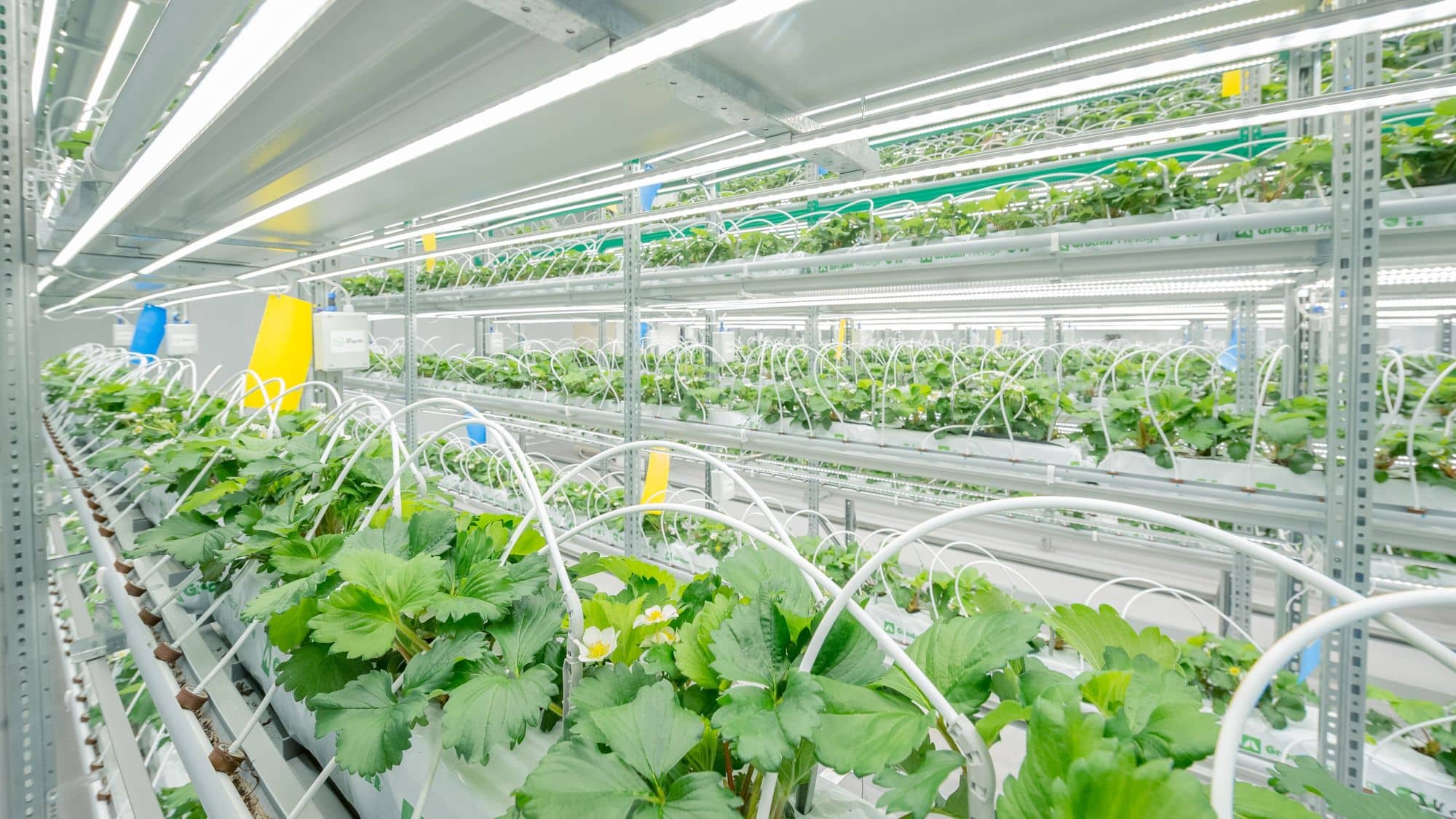
Berlin-based Infarm was once one of Europe's best-known vertical farming companies. On 17 May 2023, Just Food reported that Infarm would leave Europe to focus on regions with lower energy prices and healthier market demand, closing or consolidating operations in the UK, France and the Netherlands and laying off about 500 workers. The company said it would concentrate on North America, with an existing farm in Toronto and a growing centre under development in Baltimore.
Infarm itself named high energy costs and difficult economic conditions as reasons for leaving, and energy is the biggest running cost of any indoor farm. The Dutch Fieldlab discussion in 2026 pointed the same way: vertical growing in Europe pays best where it serves a clear niche, such as propagation, specialty herbs or research, or where it is combined with greenhouse production rather than competing with it. Growy's Amsterdam operation, supplying hundreds of supermarkets, is the example the Dutch sector points to.
Vertical farming by country: summary table
The table summarises each country's position, the main reason it invested in vertical farming, its best-known projects, and the status reported by the press at the date shown. It is a snapshot for comparison, not a full list of companies. Company situations change quickly in this sector, so check the latest reports before relying on any single status for a business decision.
| Country | Main driver | Notable projects | Reported status (source, date) |
|---|---|---|---|
| Japan | Consistent lettuce demand; long experience | Spread (Kameoka, Techno Farm Keihanna); about 197 PFALs | PFAL count flat since 2017 (Zhuang et al., 2022) |
| Singapore | Food import dependence; land scarcity | Sky Greens, Greenphyto, Growy Singapore | 30 by 30 dropped 4 Nov 2025 (Mothership); Growy in provisional liquidation 28 Oct 2025 (HortiDaily); Greenphyto opened Jan 2026 (Mothership) |
| UAE | Food security in a hot, dry climate | Bustanica (Emirates Bustanica) | Fully acquired by Emirates Flight Catering 28 Feb 2024 (Emirates) |
| Netherlands | Greenhouse and technology cluster | Growy (Amsterdam), Fieldlab Vertical Farming | Leafy greens difficult; hybrid and niche models (Vertical Farm Daily, May 2026) |
| United States | Venture capital; urban retail | AeroFarms, Plenty, Bowery, Freight Farms | AeroFarms acquired Apr 2026 (Cardinal News); Plenty emerged from Chapter 11 29 May 2025; Bowery shutting down Nov 2024 (TechCrunch); Freight Farms Chapter 7 30 Apr 2025 (Boston Globe) |
| China | State research and automation | CAAS Institute of Urban Agriculture, Chengdu | 20-layer unmanned plant factory unveiled Dec 2023 (Global Times) |
| Europe (other) | Urban retail; sustainability | Infarm | Left Europe, about 500 layoffs, May 2023 (Just Food) |
| India | Urban premium produce; subsidy support | Rooftop, container and indoor farms | See the India page |
What the global record means for India
The global record points to a few lessons. The farms that have lasted, such as Spread in Japan and Bustanica in the UAE, grew a narrow range of crops at scale for buyers who valued them, and in the UAE's case had an anchor customer in Emirates. The farms that failed often raised large sums, built big facilities quickly, and could not sell produce at prices that covered electricity, labour and debt. Japan's experience shows that even working lettuce factories are sensitive to price falls.
For India, the same maths applies with Indian inputs: electricity tariffs, labour costs, cooling in summer heat, and the prices that hotels, cafés, retailers and consumers will pay for premium greens, herbs and microgreens. Start with a crop and a buyer, size the farm to that demand, and treat energy per kilogram as the number that decides viability. Sunlit rooftop systems and towers, which avoid most lighting and cooling costs, deserve a serious look before a sealed indoor farm.
Planning a vertical farm in India with Garden & Acre
Garden & Acre designs and builds vertical farms in India for rooftops, warehouses, campuses, hotels, schools and cafés. The work starts with feasibility, including crop choice, energy per kilogram and expected buyers, then moves to design, build, commissioning and first-crop support. Projects are priced in a written proposal after an initial call. For homes, cafés and schools that want to start small, hydroponic and aeroponic towers are available from ₹14,000 per tower installed.
Questions
Which country leads in vertical farming?
Japan has the longest record, with about 197 commercial plant factories with artificial lighting since 2017, mostly growing lettuce. The United States had the most investment but also the most high-profile failures. The UAE hosts Bustanica, described at opening in 2022 as the world's largest vertical farm, and China has state-backed automated plant factories.
What is the largest vertical farm in the world?
Bustanica, near Dubai's Al Maktoum International Airport, was described at its opening in July 2022 as the world's largest vertical farm. It covers 330,000 sq ft, cost US$40 million, and Emirates reports it produces more than 1 million kg of leafy greens a year, about 3,000 kg a day. Emirates Flight Catering took full ownership in February 2024.
What happened to AeroFarms?
AeroFarms filed for Chapter 11 in June 2023 and emerged in September 2023, focused on its farm in Danville, Virginia. In December 2025 it announced the farm would close, then postponed the closure while seeking a buyer. Cardinal News reported that an affiliate of Palm Ventures acquired it in April 2026, and the farm continues to grow microgreens.
Why did Bowery Farming and Infarm close?
TechCrunch reported on 4 November 2024, citing PitchBook, that Bowery Farming was shutting down after raising more than US$700 million. Infarm announced in May 2023 that it would leave Europe for regions with lower energy prices, laying off about 500 workers, according to Just Food. High energy costs, weak produce prices and harder fundraising were common pressures across the sector.
Did Singapore give up on vertical farming?
Singapore dropped its 30 by 30 goal in November 2025 and replaced it with targets for 2035: 20 percent of fibre, which includes leafy vegetables, and 30 percent of protein. Some farms closed, such as Growy Singapore in October 2025, but new ones opened, including Greenphyto's 23.3-metre indoor farm in January 2026.
How is vertical farming done in Japan?
Japan uses plant factories with artificial lighting, mostly growing lettuce under LEDs in sealed rooms. Spread Co. is the best-known operator, running its Kameoka Plant since 2007 at 21,000 heads a day and its automated Techno Farm Keihanna, built for 30,000 heads a day. A 2022 study found the number of Japanese plant factories has been flat since 2017.
Sources
- IIM Bangalore MIJSC issue brief (16 September 2025): Vertical Villages, Japanese urban farming technology
- Zhuang et al. (2022), Economies of scale in constructing plant factories with artificial lighting, Frontiers in Plant Science
- iGrow News: Techno Farm Keihanna, world's first and largest automated vertical farm to break ground
- EcoWatch: World's first hydraulic-driven vertical farm (Sky Greens)
- Mothership (Nov 2025): Singapore drops 30-by-30 local food production goal
- HortiDaily (Nov 2025): Growy Singapore enters provisional liquidation
- Mothership (Jan 2026): Singapore opens world's tallest indoor vertical farm
- Agritecture (2022): World's largest vertical farm opens in Dubai
- EastFruit (Feb 2024): Emirates Flight Catering fully acquires Bustanica
- Vertical Farm Daily (May 2026): Vertical farming in the Netherlands, new business cases and hybrid approaches
- AgFunder News (2023): AeroFarms emerges from Chapter 11
- Cardinal News (4 March 2026): With sale possible, AeroFarms pushes back potential closure date
- Cardinal News (11 June 2026): Microgreens grower AeroFarms acquired by investment firm
- PR Newswire (23 March 2025): Plenty undertakes restructuring process to support focus on premium strawberry market
- Plenty (May 2025): Plenty completes restructuring, emerges from chapter 11
- TechCrunch (4 November 2024): Bowery Farming is ceasing operations
- Global Times (3 December 2023): China unveils world's first unmanned 20-storey vertical plants factory
- Just Food (17 May 2023): Infarm abandons Europe for regions better suited for indoor farming
- Boston Globe (12 May 2025): Freight Farms shuts down, files for bankruptcy