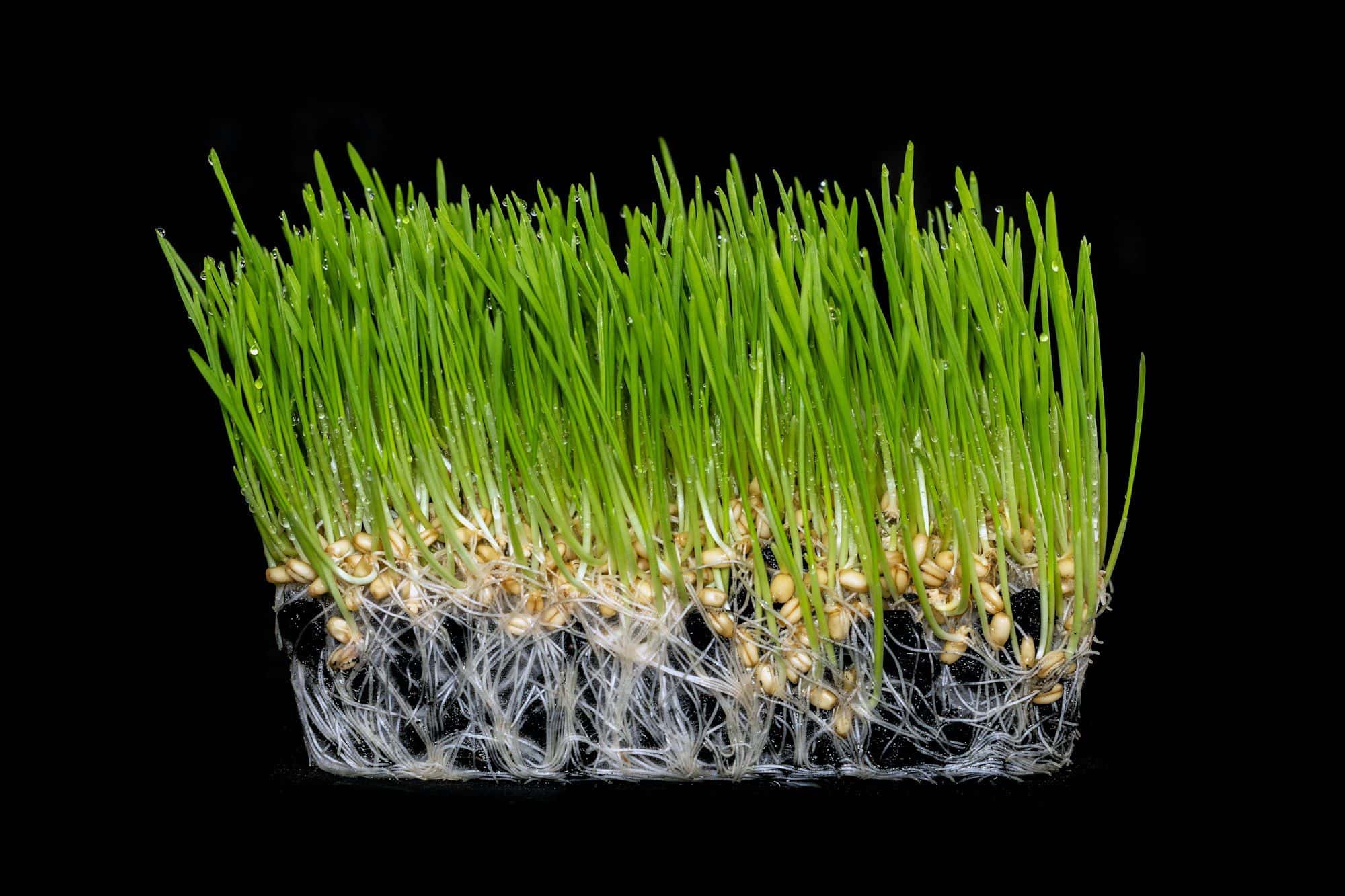
What wheatgrass is
Wheatgrass is not a separate plant. It is ordinary bread wheat grown for a week or so and cut while it is a short, soft blade. Memorial Sloan Kettering (MSK) describes it as wheat seed sprouted in water for 7 to 10 days before the leaves are harvested. Because the blades are fibrous and hard to chew, most people juice them rather than eat them whole.
The taste is strong and grassy, with a faint sweetness when very fresh. MSK notes that some people find the juice hard to swallow for this reason. As a microgreen it is less common than brassicas or pulses, but it can be snipped short and chopped into food. Many Indian homes know wheat seedlings as jaware, the pots of young wheat grown during Navratri.
What studies have measured
MSK lists wheatgrass as a source of vitamins A, C, E and K, B-complex vitamins, iron, calcium, magnesium and selenium, together with chlorophyll, amino acids and flavonoids such as apigenin. These are measured contents. How much of them reaches you depends on how much you eat or drink, and a small glass of juice is a small quantity of food.
Clinical evidence is thin. MSK summarises small human studies: wheatgrass juice was linked with lower neutropenic fever in one breast cancer chemotherapy pilot, results on blood transfusion needs in thalassaemia were mixed, and there is one small trial in ulcerative colitis. A 2024 review of wheatgrass and colorectal cancer concluded that its use as an adjunct therapy has been minimally investigated and the evidence is still limited. None of this makes wheatgrass a treatment.
| Claim | What the evidence shows |
|---|---|
| Detoxifies the body | Not supported by scientific evidence |
| Chlorophyll builds haemoglobin | Not supported by current scientific understanding |
| Treats or prevents cancer | No scientific evidence |
| Treats AIDS or chronic fatigue | No scientific evidence |
| Helps ulcerative colitis | One small trial (23 patients) showed improvement; larger studies needed |
| Reduces chemotherapy side effects | One small pilot study; larger studies needed |
Wheatgrass juice
Wheatgrass juice is made by pressing the cut blades in a slow juicer or grinding them with a little water and straining. The best-known trial, by Ben-Arye and colleagues in 2002, gave 23 patients with active distal ulcerative colitis either 100 ml of wheatgrass juice or a placebo daily for one month. Of the 19 with full data, the juice group showed lower disease activity and less rectal bleeding. It was a single small study, and MSK still calls for larger ones.
Two practical cautions apply. First, MSK reports nausea in some people who drink it. Second, the juice is consumed raw from seedlings grown warm and wet for a week, so MSK flags microbial contamination as a real concern. The US FDA advises that anyone more vulnerable to foodborne illness, including young children, older adults, pregnant women and people with weak immunity, take extra care with raw sprouted produce. Anyone on treatment should ask their doctor before using wheatgrass as a supplement.
How to grow wheatgrass at home
Wheat is one of the easiest seeds to grow indoors. Use whole wheat grain that has not been treated with pesticide; Penn State Extension warns against treated seed for any microgreen. A 2023 trial found that wheat microgreens grown in soil from pre-soaked seed had higher carotenoids, flavonoids, phenolics and vitamin C than those grown from dry seed. The steps below follow general microgreen practice.
- Rinse the grain and soak it in clean water, then drain well.
- Fill a shallow tray with 3–4 cm of moist potting mix or cocopeat.
- Spread the seed in a single, touching layer and press it in lightly.
- Cover the tray, or stack a second tray on top, for about 3 days while roots form.
- Uncover and move to bright indirect light or a grow light for 12–16 hours a day.
- Water from below so the blades stay dry, and cut just above the medium at 7–10 days.
Seed rate and tips specific to wheat
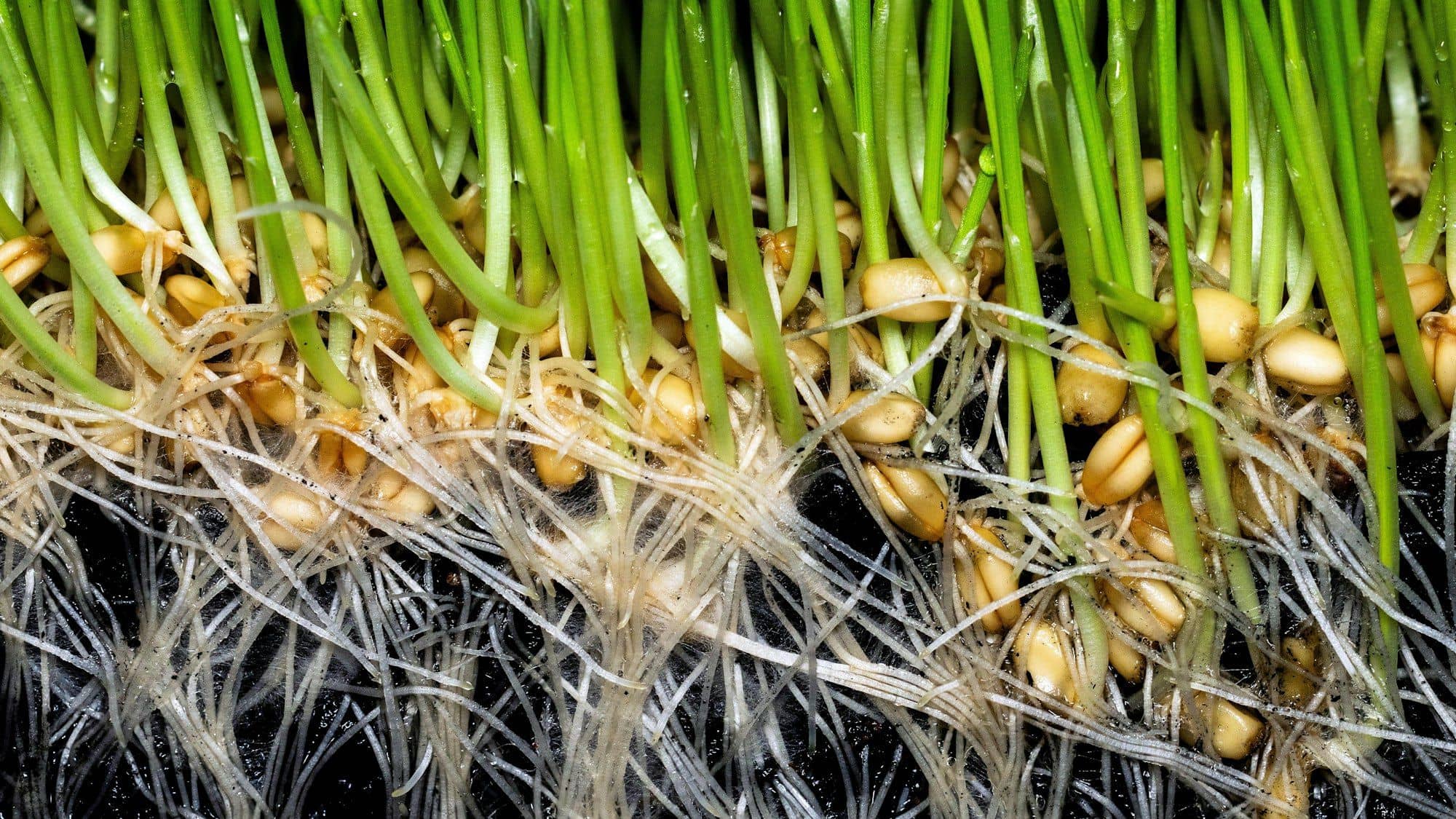
Wheat is sown very densely. The Seth et al. 2025 review cites a trial of tropical microgreen species that used about 705 g of wheat seed per square metre. A standard 10×20-inch tray is 25.4 × 50.8 cm, or 0.129 m², so 705 g × 0.129 m² = about 91 g of seed per tray. The same trial found that wheat and ragi produced less fresh weight than the weight of seed sown, a biomass-to-seed ratio below 1.0. So wheatgrass uses a lot of seed for each kilo harvested, even though the seed itself is cheap.
Temperature matters as much as seed rate. Penn State gives 60–70°F (about 16–21°C) as the ideal air temperature for microgreens in general, and warm, humid air favours rot. In Pune that means growing indoors, away from hot windows, in April and May, and keeping a fan moving air over the trays during the humid monsoon months, when mould is most likely.
Common problems
Most wheatgrass failures come from too much water and too little air. Damping-off, a rot that collapses seedlings at the base, was the only disease Penn State met in years of growing microgreens for its hydroponics course, and it is favoured by warm, humid conditions. Watering from below, keeping air moving and using fresh medium for each tray are the main defences.
- White fuzz at the base: often fine root hairs, which disappear when misted; grey, slimy fuzz with a sour smell is mould, and the tray should be discarded.
- Sour or musty smell: seed left sitting in water, poor drainage or no airflow; soak for a set time and drain fully.
- Yellow, pale blades: too long under cover; uncover once roots have anchored.
- Patchy growth: seed sown in clumps or a medium that dried out on top.
- Tough, bitter blades: harvested too late; cut in the 7–10 day window.
Using wheatgrass in food
Most people drink wheatgrass as a small shot of fresh juice, alone or mixed with amla, lemon, cucumber or coconut water to soften the taste. Because it is fibrous, it is better chopped very fine or blended than added whole to salads. It can go into green chutney with coriander and mint, into a smoothie, or into a chilled buttermilk (chaas). Food researchers have also added wheatgrass and mung bean microgreen powders to gluten-free rice muffins. Press juice just before drinking, and keep fresh blades cold and dry until you use them.
Fresh wheatgrass and microgreens in Pune
Garden & Acre delivers fresh microgreens in Pune and Pimpri-Chinchwad, as a weekly subscription for homes and as regular supply for restaurants, cafés and hotels. The microgreens come from our own supply chain. Orders are placed on WhatsApp, and prices are given there, along with the varieties available that week. If you want wheatgrass for juice, say how many blades or trays you need and how often, and we will tell you what we can supply.
Questions
Is wheatgrass the same as wheat microgreens?
Yes. Both are young bread wheat plants, Triticum aestivum, cut about 7 to 10 days after the seed is started. 'Wheatgrass' usually refers to the blades grown for juice, while 'wheat microgreens' is the term used in research and by growers selling them as a leafy green. The plant and growing method are the same.
Does wheatgrass juice detox the body?
There is no scientific evidence for this. Memorial Sloan Kettering's review states that claims of detoxification, and the idea that chlorophyll in wheatgrass builds haemoglobin, are not supported by current science. Wheatgrass does contain vitamins, minerals and antioxidant compounds, but that is different from removing toxins from the body.
Does wheatgrass cure cancer?
No. Memorial Sloan Kettering states there is no scientific evidence that wheatgrass prevents or treats cancer. A 2024 review on colorectal cancer found that its use alongside treatment has been minimally investigated. One small pilot study linked wheatgrass juice with fewer chemotherapy side effects, but larger studies have not confirmed it. Speak to your oncologist before taking any supplement.
How many days does wheatgrass take to grow?
About 7 to 10 days from starting the seed. Allow a few days under cover while roots form, then several days in light for the blades to green up and lengthen. Cool rooms slow growth by a day or two, and very warm rooms speed it up but raise the risk of mould.
How much seed do I need for one tray of wheatgrass?
A trial cited in a 2025 review used about 705 g of wheat per square metre. A 10×20-inch tray covers 0.129 m², so 705 × 0.129 = about 91 g per tray. Smaller home trays need proportionally less. Sow in one even layer with seeds touching but not piled.
Is wheatgrass safe to drink every day?
Memorial Sloan Kettering reports no serious side effects, but some people get nausea, and because the juice is raw there is a risk of microbial contamination. Grow or buy it clean, drink it fresh, and avoid it if you are more vulnerable to foodborne illness unless your doctor agrees.
What is wheatgrass called in Hindi?
Wheat is gehun in Hindi and gahu in Marathi, so wheatgrass is often called gehun ke jaware or simply jawara. The name comes from the pots of young wheat or barley seedlings grown during Navratri. The plant is the same species sold as wheatgrass.
Sources
- Memorial Sloan Kettering Cancer Center: About Herbs, Wheat grass
- Ben-Arye et al. 2002, Wheat grass juice in the treatment of active distal ulcerative colitis (Scand J Gastroenterol)
- Tamraz et al. 2024, The role of wheatgrass in colorectal cancer: a review of the current evidence (IJMS)
- Seth et al. 2025, Microgreens: functional food for nutrition and dietary diversification (Plants)
- Islam et al. 2023, Effects of seed pre-soaking on bioactive phytochemical levels of wheat and barley microgreens (Ital J Agron)
- Penn State Extension: Growing Microgreens
- US FDA: Selecting and Serving Produce Safely