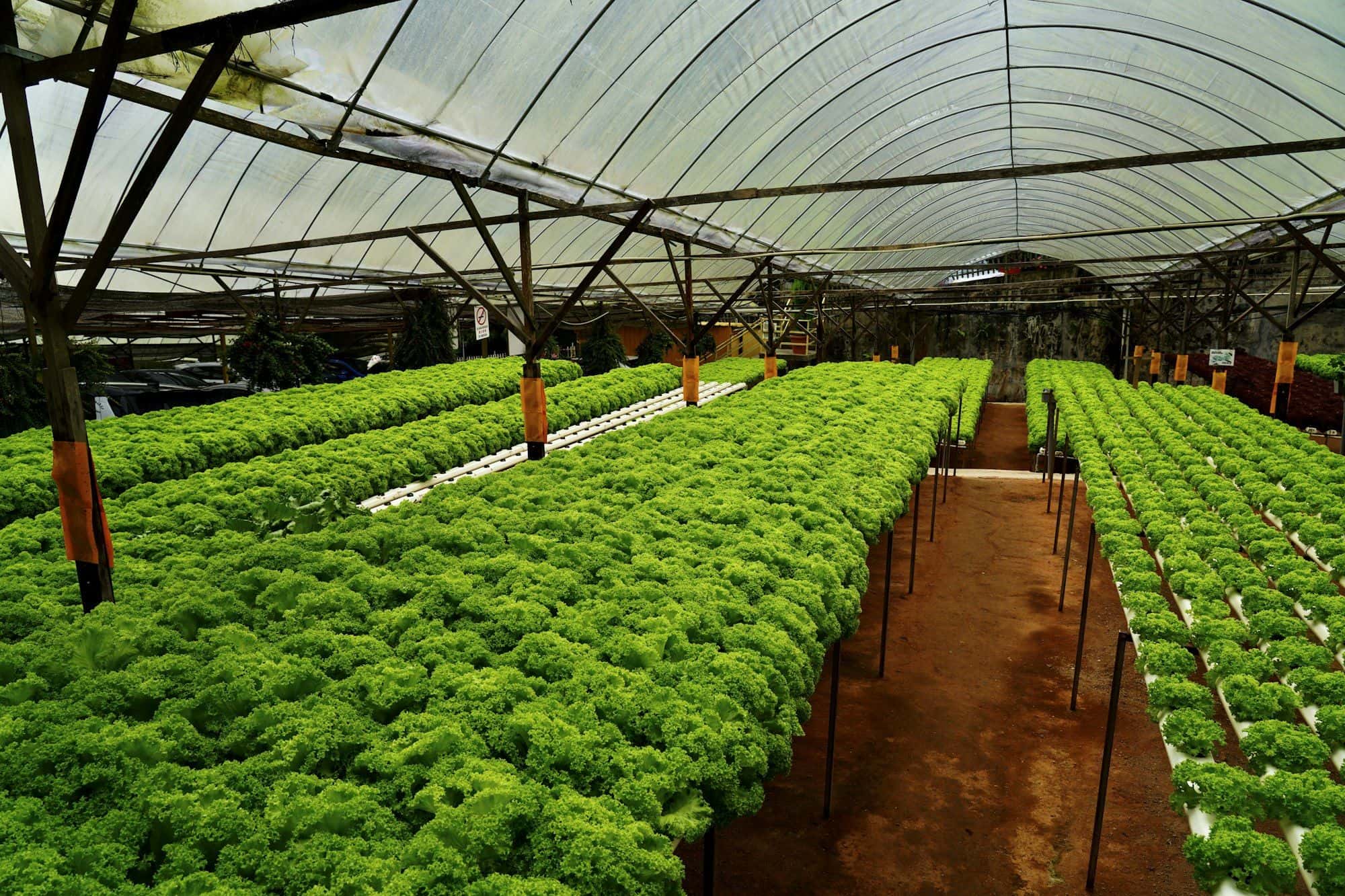
Why leafy greens and herbs suit vertical farms
In a vertical farm every gram of produce is grown with electric light, so the crop has to turn light into saleable weight efficiently. A 2022 review in Agronomy by Van Gerrewey and colleagues concludes that rapid-growing, short crops with a large share of saleable parts, meaning leafy greens, microgreens and herbs, are the ones currently grown to be cost-effective. Researchers at the University of Bologna's vertical farm explain the same idea through harvest index, the edible share of the plant. Lettuce and baby-leaf crops put most of their growth into leaves that are sold, rather than into stems, roots or fruit. They also fit shallow tiers and grow in weeks, so each shelf produces many crops a year.
Lettuce types for vertical farming
Lettuce is the reference crop for indoor farms. The UC Davis Postharvest Center groups the common types into upright romaine or cos, with erect, elongated leaves; butterhead, with soft, cupped leaves; and loose-leaf types such as green leaf and red leaf, which do not form a compact head. Crisphead or iceberg lettuce forms a firm, dense head. Common indoor choices are butterhead, loose-leaf and baby-leaf lettuces, sold as whole heads, living heads with roots, or cut salad mixes. Cornell's hydroponic programme targets a 150 g head; its trials worked with the butterhead cultivar Ostinata, and Cornell researchers documented nutrient deficiencies using the butterhead Flandria. Red-leaf types add colour to mixes.
Cultivar choice matters indoors. Cornell notes that the amount of light lettuce can take before tipburn appears depends on cultivar, spacing and airflow, so trial several cultivars under your own lights before committing. For one cultivar Cornell could only reach 12 mol/m²/day of light without tipburn until it added downward airflow, after which 17 mol/m²/day was possible. Record growth time, head weight and tipburn for each cultivar you trial.
- Butterhead: soft leaves, sold as heads or living lettuce with roots.
- Loose-leaf green and red: harvested as heads or cut for mixes.
- Romaine or cos: upright heads; highly sensitive to ethylene after harvest.
- Baby leaf: dense sowing, harvested young for salad bags.
Lettuce growth cycle and harvest
Cornell's handbook gives a complete schedule for 150 g heads. Seed is sown in a nursery, where seedlings grow for 11 days under 24-hour lighting, starting at 50 µmol/m²/s and rising to 250 µmol/m²/s. Seedlings are then floated on nutrient ponds for 24 days, with one re-spacing on day 21 from 97 to 38 plants per square metre. Harvest is on day 35.
In the ponds, Cornell targets a daily light integral of 17 mol/m²/day, air at 24 °C by day and 19 °C by night, relative humidity between 50% and 70%, and nutrient solution EC about 1.2 mS/cm above the source water at pH 5.8. Downward airflow over the plants is what allows that light level without tipburn. Heads can be sold in clamshells with or without roots, or as bouquets in a bag. Cornell stores packed lettuce at 4 °C. UC Davis recommends near 0 °C and above 95% humidity for romaine and leafy lettuce, with a shelf life of around 21 days at 0 °C for romaine and about 14 days at 5 °C if no ethylene is present.
Spinach in vertical farms
Baby spinach is fast but unforgiving. Cornell's baby spinach handbook germinates seed for 2 days, grows it in ponds for 14 days, and harvests by shearing the whole crop above the media about 16 days after sowing. It is emphatic that growers should not attempt a second cut, because pathogens build up in the solution and can destroy both the current and later crops.
The pathogen is Pythium aphanidermatum, a water mould that rots spinach roots. Cornell writes that if no special precautions are taken, a hydroponic spinach grower will eventually lose an entire crop to it. Its main defence is a chiller that keeps the nutrient solution at 15–20 °C, well below the 25 °C used for lettuce, along with a light level of at least 17 mol/m²/day so the crop finishes quickly. Cornell's spinach set points are otherwise similar to lettuce: EC 1.3 ± 0.1 mS/cm above source water, pH 5.6–6.0 and CO2 at 1,000–1,500 ppm when light is available. Packed spinach is stored at 4 °C.
Kale and other brassica greens
Kale is often grown indoors as baby leaf. In a 2024 study at the University of Bologna's AlmaVFarm, baby kale was sown directly into trays at 1,460 plants per square metre and harvested 21 days after sowing. The farm ran 24 °C by day and 21 °C by night, 65–70% humidity, CO2 at 850 ppm, and LEDs at 215 µmol/m²/s for 16 hours a day. The nutrient solution was kept at EC 2.3 and pH 5.8.
The best light recipe in that trial, a red-to-blue ratio of 5 to 1, gave a modelled yield of 54 kg of fresh leaves per square metre of growing surface a year across 17 cycles, and 57 g of fresh leaves per kWh of lighting energy. At that efficiency, 1 kg of baby kale took about 1,000 ÷ 57 = 17.5 kWh of lighting alone. Other brassica greens such as pak choi, mizuna and rocket are grown in similar ways. Oklahoma State University lists pak choi at EC 1.5–2.0 and pH 7.0 in its general hydroponic chart.
Basil in vertical farms
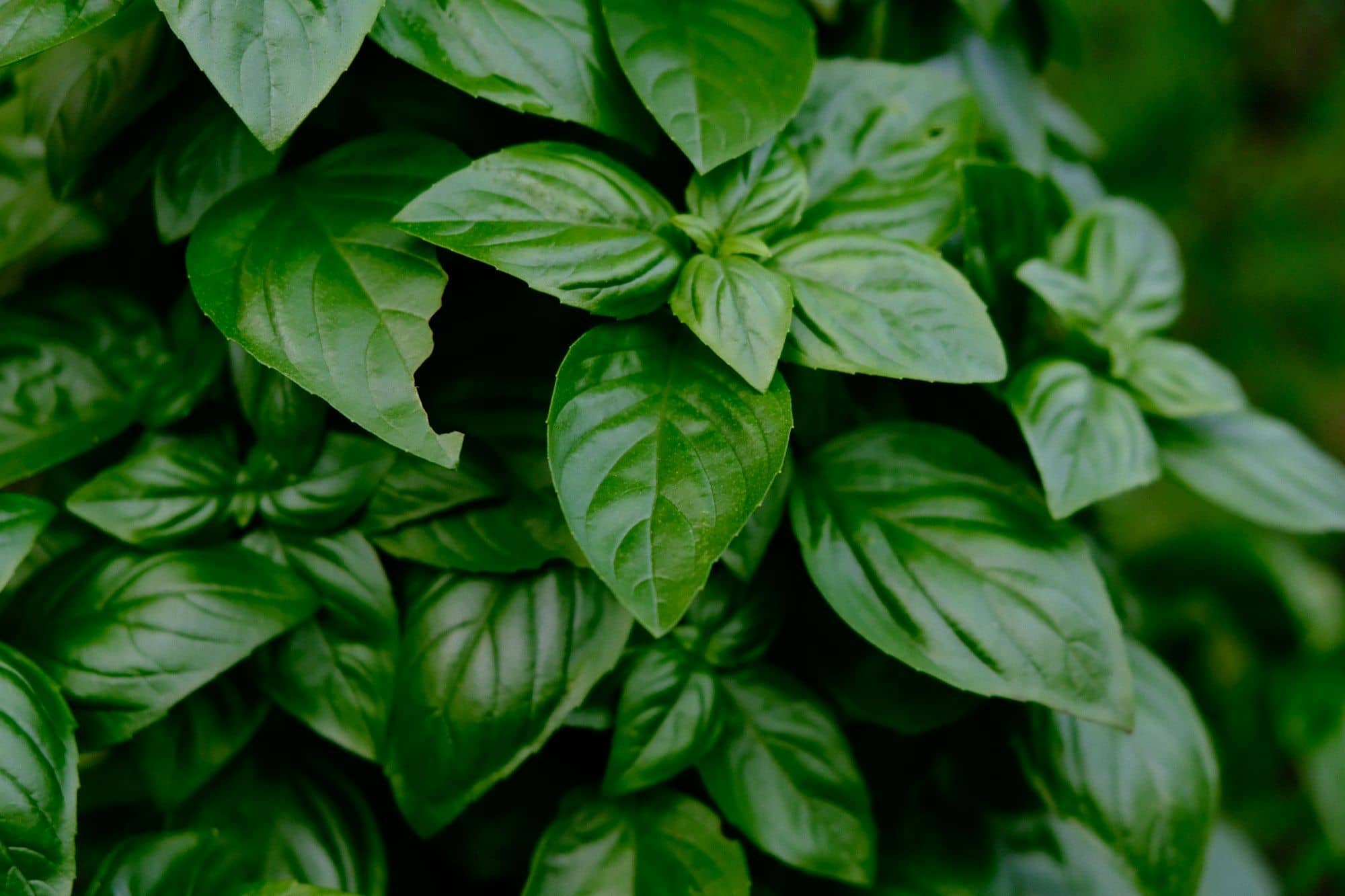
Basil is one of the most widely grown herbs in indoor farms. In a 2019 University of Bologna trial published in Frontiers in Plant Science, sweet basil was grown at 24 °C, 55–70% humidity and 215 µmol/m²/s of LED light for 16 hours a day, with nutrient solution at EC 1.6 and pH 6.5, and harvested 39 days after sowing. Oklahoma State University's chart gives basil EC 1.0–1.6 and pH 5.5–6.0.
The trial found that a red-to-blue light ratio of about 3 to 1 gave the best balance of yield and energy use for basil. UC Davis lists grey mould (Botrytis) as a common disease of basil, and trimming and cool (but not chilling) storage reduce it. Basil breaks the cold-storage rule that suits other greens. UC Davis states that basil is chilling-sensitive and should be stored above 10 °C. Below that, leaves and growing tips brown, veins bronze, and aroma is lost. Expected shelf life is one to two weeks, depending on water loss. Do not put basil in the same 0–4 °C chiller as lettuce.
Mint in vertical farms
Mint is grown from cuttings rather than seed and regrows after cutting, so one planting can be harvested repeatedly. That suits a vertical farm that wants a steady weekly supply from the same trays, but the plants stay in the system for a long time, so check channels and drains for root build-up. Harvest mint as soft stems. UC Davis notes that most fresh herbs keep best at 0 °C, with an expected shelf life of about three weeks at 0 °C and two weeks at 5 °C. Mint is one of the herbs it lists as very sensitive to ethylene gas, which causes yellowing, stem curvature and leaf drop, so keep it away from ripening fruit in storage and transport.
Coriander in vertical farms
Coriander is harvested as whole young plants. In a 2020 hydroponic study from Brazil, published in the Emirates Journal of Food and Agriculture, seedlings were transplanted into channels 10 days after sowing and harvested 20 and 25 days after transplanting, a total of about 30–35 days from seed. The nutrient solution ran at EC about 2.3 mS/cm and pH 5.7–5.8.
The study also shows the risk of heat in warm climates such as much of India. In the shallowest channels, with 2 cm of solution, the solution temperature exceeded 40 °C in the afternoon in one season, while channels with 3 cm of solution stayed at or below 32 °C. Deeper, shaded or chilled solution is important for coriander in warm rooms. After harvest, UC Davis notes that coriander (cilantro) can remain saleable for up to 21 days in good cold storage, but its aroma declines noticeably after about 10 days. Store near 0 °C with high humidity, and sell within the first week or two where flavour matters.
Growth cycles, storage and shelf life compared
The table combines the published cycle lengths and storage guidance above. Cycle figures come from different systems and climates, so use them as starting points and record your own. Shelf life figures assume prompt cooling, high humidity and no ethylene; produce that sits warm after harvest will not last as long. Where a source did not give a figure, the table says so rather than filling the gap with an estimate.
| Crop | Sowing to harvest | Harvest method | Storage | Shelf life |
|---|---|---|---|---|
| Lettuce (150 g head) | About 35 days (Cornell) | Whole head, with or without roots | Near 0 °C, above 95% RH (UC Davis); Cornell uses 4 °C | About 21 days at 0 °C; about 14 at 5 °C (romaine) |
| Baby spinach | About 16 days (Cornell) | Single shear above the media | 4 °C (Cornell) | Not stated in sources used |
| Baby kale | 21 days (Zauli et al. 2024) | Cut at baby-leaf size | Cold, humid storage | Not stated in sources used |
| Basil | About 39 days in an LED trial | Cut stems | Above 10 °C (UC Davis) | 1–2 weeks |
| Mint | Grown from cuttings; repeated cuts | Cut soft stems | 0 °C; keep away from ethylene | About 3 weeks at 0 °C for most herbs |
| Coriander | About 30–35 days (da Silva et al. 2020) | Whole young plants | Near 0 °C | Aroma declines after 10 days; saleable up to 21 |
Harvest and postharvest handling
The quality a farm grows can be lost in an hour after harvest. Cool produce quickly, keep humidity high, and limit handling. UC Davis notes that lettuce, especially romaine, yellows within one or two days at room temperature and that exposure to as little as 1 ppm of ethylene can cause brown spotting on romaine, so keep greens away from ripening fruit and from propane forklifts. Plan cold storage by crop. Most greens and herbs belong near 0 °C with more than 95% humidity. Basil needs a separate space above 10 °C. For Indian deliveries to hotels, restaurants and quick-commerce dark stores, check that the buyer's own storage matches, because basil held in a standard vegetable chiller develops chilling injury.
- Harvest in the cool part of the day and move produce to cold storage within minutes.
- Use lined crates or clamshells to reduce water loss.
- Separate basil from other greens in storage and transport.
- Record harvest date on every pack so buyers can rotate stock.
Growing greens and herbs with Garden & Acre
For homes, cafés and schools that want to grow lettuce, basil, mint and other greens, Garden & Acre's hydroponic and aeroponic towers come installed with the pump, timer, first seedlings, nutrients, training and a refill plan, priced on WhatsApp. The grow light is not included. For commercial or campus farms, our Vertical Farm Setup service plans the crop mix, designs and builds the farm, and supports the first crops, and our Vertical Farm Consulting service helps existing farms with crop planning, troubleshooting and SOPs. Both are priced in a written proposal.
Questions
How long does lettuce take to grow in a vertical farm?
In Cornell's hydroponic system, lettuce spends 11 days in the nursery and 24 days in the grow-out ponds, and 150 g heads are harvested on day 35. Baby-leaf lettuce is cut sooner. Growth speed depends on light, temperature, CO2 and cultivar, so record your own cycle times.
Which lettuce is best for vertical farming?
Butterhead and loose-leaf green and red lettuces are the most common indoor choices, along with baby-leaf mixes. Cornell's research used butterhead cultivars such as Ostinata. Tolerance to tipburn under high light varies by cultivar, so trial a few under your own lights and airflow before choosing one.
Can you grow spinach hydroponically in a vertical farm?
Yes, as baby spinach, but it needs care. Cornell harvests it about 16 days after sowing and takes only one cut. The main risk is Pythium root rot, which thrives in warm water, so Cornell chills the nutrient solution to 15–20 °C. Without such precautions, it warns, a whole crop will eventually be lost.
How do you store basil after harvest?
Above 10 °C. UC Davis classes basil as chilling-sensitive: in cold storage its leaves and tips brown, the veins bronze and the aroma fades. Expect one to two weeks of shelf life depending on water loss. Keep basil separate from lettuce and other greens, which are stored near 0 °C.
How long does coriander take to grow hydroponically?
About 30–35 days from seed in a published Brazilian trial: seedlings were transplanted 10 days after sowing and harvested 20 and 25 days later. Keep the nutrient solution from overheating; in shallow channels it passed 40 °C on hot afternoons. After harvest, coriander aroma declines after about 10 days in storage.
Can mint be grown in a vertical farm?
Yes. Mint is grown from cuttings and regrows after each harvest, so the same plants can be cut repeatedly. Check channels and drains for root build-up. After harvest, store it near 0 °C and away from ethylene sources such as ripening fruit, because UC Davis lists mint as very ethylene-sensitive.
What is the shelf life of vertical farm lettuce?
UC Davis gives about 21 days at 0 °C for romaine and leafy lettuce, and about 14 days at 5 °C if there is no ethylene in the storage room. Real shelf life also depends on how quickly the lettuce is cooled after harvest and how it is packed and transported.
Sources
- Cornell University CEA Program, Hydroponic Lettuce Handbook (2013)
- Cornell University CEA Program, Hydroponic Baby Spinach Handbook
- UC Davis Postharvest Research and Extension Center: Lettuce (Romaine and Loose-Leaf)
- UC Davis Postharvest Research and Extension Center: Herbs (Fresh Culinary)
- Zauli et al. (2024), Increasing Red and Blue Ratio on Baby-Leaf Kale, Horticulturae 10:1134
- Pennisi et al. (2019), Red:Blue LED Lights and Indoor Grown Sweet Basil, Frontiers in Plant Science 10:305
- da Silva et al. (2020), Growth, production and water consumption of coriander in hydroponic channels, Emirates Journal of Food and Agriculture 32(4)
- Singh and Dunn (2016), Electrical Conductivity and pH Guide for Hydroponics, Oklahoma State University HLA-6722
- Mattson and Merrill (2015), Symptoms of Common Nutrient Deficiencies in Hydroponic Lettuce, e-GRO
- Van Gerrewey, Boon and Geelen (2022), Vertical Farming: The Only Way Is Up?, Agronomy 12:2