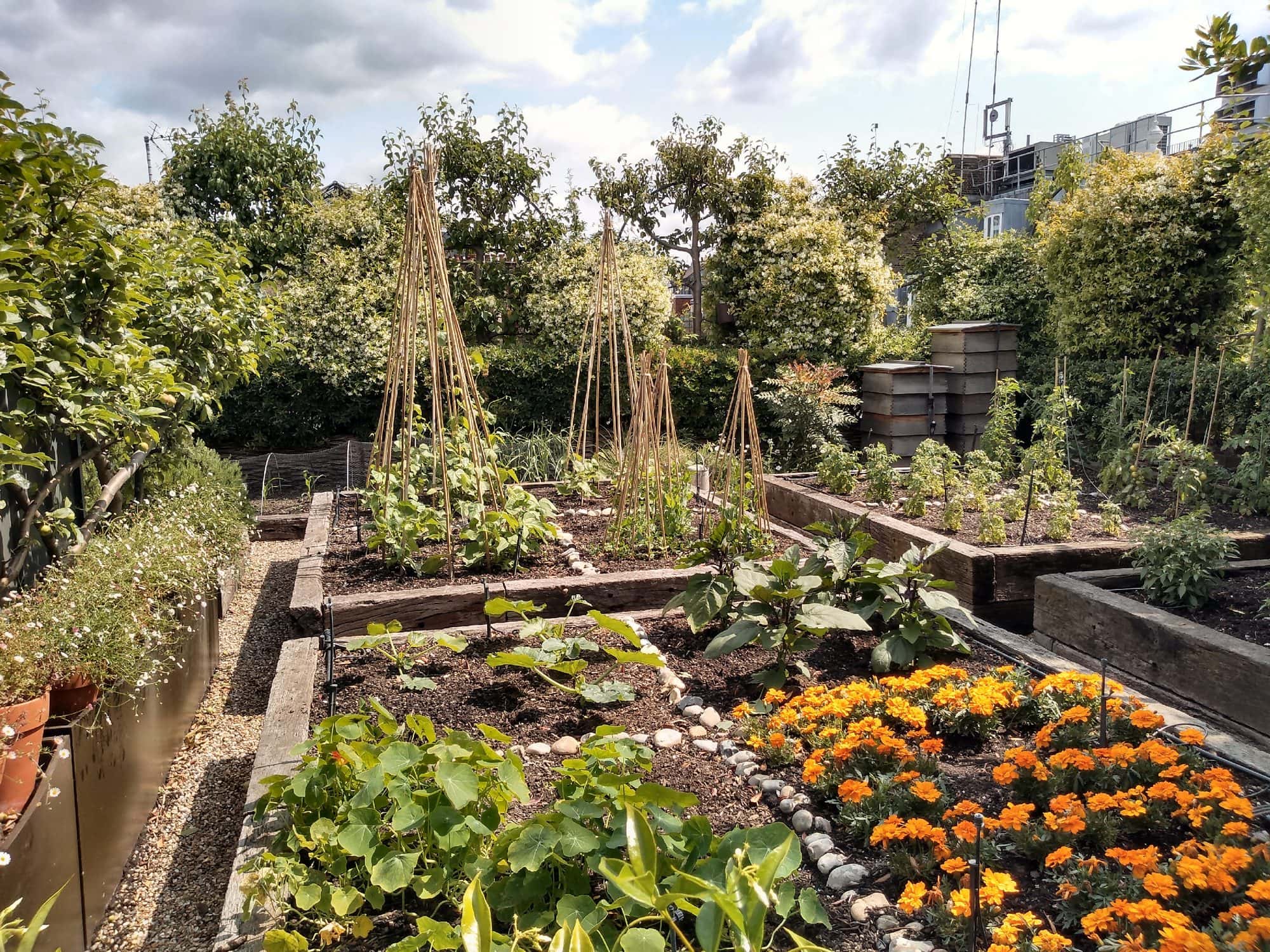
Will a terrace garden or terrace farming cause leakage, cracks or root damage? What actually harms a roof, how much weight it takes, and how to build safely.
Updated 30 September 2026
Part 1
The short answer
Plants do not harm concrete; water and weight do. A roof slab with intact waterproofing, working drains and a sensible load on it can carry a terrace garden for years. Most of the leaks and damp ceilings blamed on terrace gardens come from gardens laid straight on the slab, with soil blocking the drains and water standing for days.
The table shows what goes wrong and what prevents it. The sections below explain each one.
| Risk | What it looks like | How to prevent it |
|---|---|---|
| Water sitting on the slab | Damp patches or leaks on the ceiling below, peeling paint | Raise pots and beds off the floor; keep drain outlets clear; never spread soil directly on the slab |
| Roots reaching the waterproofing | Cracks around planters, roots in drain pipes, plants growing from walls | Root barrier under every bed; no trees in shallow beds; pull out self-sown peepal and banyan seedlings |
| Too much weight in one place | New cracks in the slab or the ceiling below | Light soil mix; heavy planters over beams or along walls; an engineer's check for deep beds, lawns and trees |
| Damaged waterproofing | Leaks that start after setup or after moving planters | Check and repair before building; protect the surface; don't drag heavy planters |
| Overwatering | Water running across the floor every day, algae, mosquitoes | Drip irrigation on a timer; no saucers of standing water |
Part 2
Leakage: the most common problem
Water is the real risk. A roof is waterproofed to shed rain within hours, not to stay wet for months. When soil sits directly on the floor, or beds cover the drain outlets, the slab under them never dries. Water then finds any crack in the waterproofing and shows up as damp patches on the ceiling below.
Keep every container off the floor on stands, bricks or pot feet so water runs to the drain and air reaches the slab. Beds built on the terrace need drainage cells under the soil, a filter sheet to stop soil washing into them, and a clear path from every bed to a drain outlet. Clear leaves and soil from the drains before each monsoon.
- Check the terrace waterproofing before anything goes on it, and repair cracks and old patches first.
- Never spread soil directly on the terrace floor.
- Raise pots and grow bags a few centimetres off the slab.
- Keep every drain outlet and the slope towards it clear.
- Water with drip lines on a timer rather than a hose, so the floor is not flooded daily.
- Empty saucers and trays that hold water; they keep the floor wet and breed mosquitoes.
Part 3
How much weight can a terrace take?
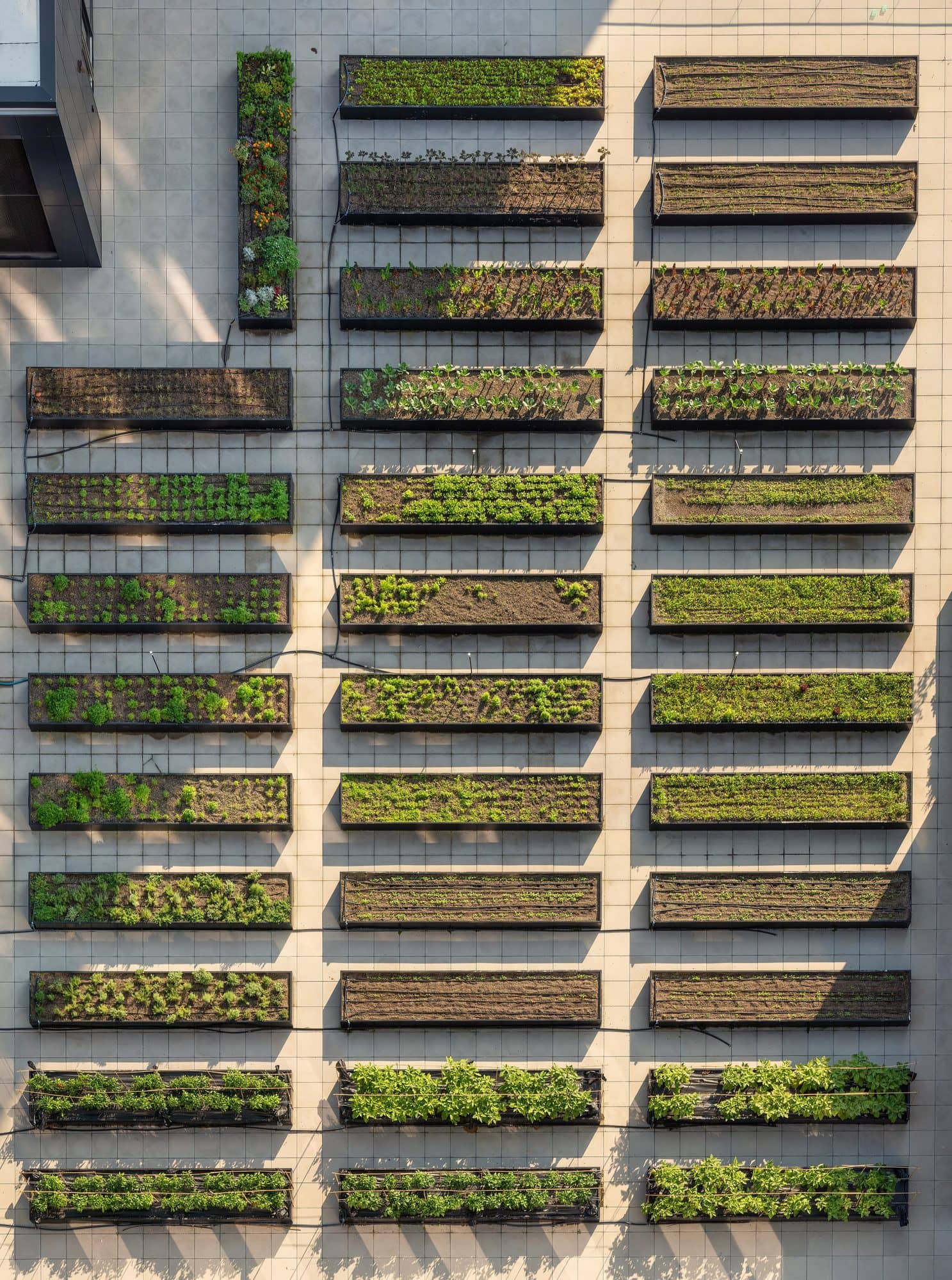
In India, a flat roof with access is normally designed to carry about 150 kg per square metre of imposed load (1.5 kN/m²), on top of its own weight. A roof without access is designed for half that. Your building may have been designed for more or less, so treat 150 kg/m² as a guide, not a guarantee.
Wet soil is heavy. A continuous 15 cm layer of saturated growing medium already weighs more than that design load, and a 30 cm bed weighs two to three times as much. That is why deep beds, lawns and trees across a whole terrace need an engineer's check, while pots and grow bags with walkways between them are usually fine.
Place the heaviest planters over beams and columns or along the parapet walls, not in the middle of the slab, and fill them with a light mix of cocopeat and compost rather than garden soil.
| What sits on the roof | Weight per m² | Compared with 150 kg/m² |
|---|---|---|
| 10 cm of lightweight growing medium | About 125–145 kg | Just under |
| 15 cm of growing medium | About 190–225 kg | Over |
| 30 cm of growing medium | About 380–445 kg | Two to three times over |
| 5 cm of standing water | About 50 kg | A third of it, on top of anything else |
Part 4
Roots: which plants to avoid
Roots follow water. In a container they stay inside; in a bed without a barrier they find the joints and cracks in the waterproofing and widen them. A root barrier sheet under every bed stops them.
The worst offenders on Indian roofs are the ones nobody planted. Peepal and banyan seedlings sprout in cracks, drains and parapet walls from seeds dropped by birds, and their roots can split concrete. Pull them out while they are small. Big trees in planters need deep, reinforced containers and an engineer's check; for most terraces, vegetables, herbs, flowers, small shrubs and fruit plants in large containers are the safe choice.
Part 5
Grow bags, pots or raised beds?
Grow bags are the lightest and safest way to start terrace farming. They stand on the floor with water draining out of the sides and bottom, so put them on a stand, bricks or a raised tray rather than directly on the slab. Pots work the same way. Both can be moved, which lets you check and clean the floor under them.
Raised beds hold more soil, grow bigger crops and look neater, but they are heavier and cover the floor. Build them with drainage cells, a filter sheet and a root barrier, keep them light, and leave walkways and drain paths between them.
| Grow bags | Pots | Raised beds | |
|---|---|---|---|
| Weight on the roof | Low | Low to medium | Highest |
| Risk to waterproofing | Low, if raised off the floor | Low, if raised off the floor | Low only with drainage cells and a root barrier |
| Can you check the floor under them? | Yes, easily moved | Yes | No |
| Best for | Starting out, rented homes, older buildings | Herbs, flowers, fruit plants | Larger vegetable gardens on sound, checked roofs |
Part 6
Before you start: a checklist
Most terrace problems are avoided before the first bag of soil arrives. Go through this list, or have someone who builds terrace gardens do it with you.
- Look at the ceiling below the terrace for damp patches or cracks, and fix them first.
- Check the age and condition of the waterproofing; redo it if it is old or patched.
- Pour a bucket of water on the terrace and watch where it flows and how fast it drains.
- Mark the drain outlets and keep a clear path to each.
- Find the beams, columns and walls; plan heavy planters over them.
- Ask a structural engineer before deep beds, a lawn, a water feature or trees.
- In a flat or housing society, get the society's permission, since the terrace is usually common property.
- Plan drip irrigation from the start instead of a hose.
Part 7
For offices and housing societies
Office terraces and society rooftops follow the same rules at a bigger scale: check the waterproofing and the load, raise and drain every planter, and leave walkways for maintenance. Garden & Acre builds office terrace gardens after a survey, load check and drainage review, with a layout drawing before work starts and a maintenance contract at handover.
Questions
Does terrace farming cause leakage?
Not on its own. Leaks come from water sitting on the slab and finding cracks in the waterproofing. Keep grow bags and pots raised off the floor, keep the drains clear, never spread soil directly on the terrace, and check the waterproofing before you start.
How much weight can my terrace take?
An accessible flat roof in India is usually designed for about 150 kg per square metre of imposed load. A continuous 15 cm layer of wet soil already exceeds that, so deep beds, lawns and trees need an engineer's check, while pots and grow bags with walkways between them are usually fine.
Are grow bags safe on a terrace?
Yes. Grow bags are light and drain freely, which makes them the safest way to start terrace farming. Stand them on bricks, a stand or a raised tray so the floor under them can dry, and keep the drain outlets clear.
Do I need waterproofing before making a terrace garden?
You need sound waterproofing. If the existing layer is intact, it can stay; if it is old, cracked or patched, repair or redo it before building. It is far cheaper to fix before the garden goes on than after.
Will plant roots damage my roof?
Roots in pots and grow bags stay inside them. Roots in beds without a barrier can reach the waterproofing, so every bed needs a root barrier sheet. The real danger is self-sown peepal and banyan seedlings in cracks and drains; pull them out while small.
Can I plant trees on my terrace?
Small fruit trees and shrubs grow well in large containers. Big trees need deep, reinforced planters and carry a lot of weight, so have a structural engineer check the roof first and place them over beams or columns.
Can I put soil directly on the terrace floor?
No. Soil laid straight on the slab keeps it permanently wet and blocks the drains, which is the most common cause of terrace garden leaks. Use containers raised off the floor, or beds built over drainage cells and a root barrier.
Is terrace farming safe on an old building?
It can be, starting small. Check the ceiling below for damp and cracks, repair the waterproofing, and use lightweight grow bags spread out rather than heavy beds. For anything deeper or heavier, ask a structural engineer.