A practical guide to drip irrigation for terraces, gardens, orchards and farms in India — the parts, the cost, the subsidy and the mistakes to avoid.
Part 1
How drip irrigation works
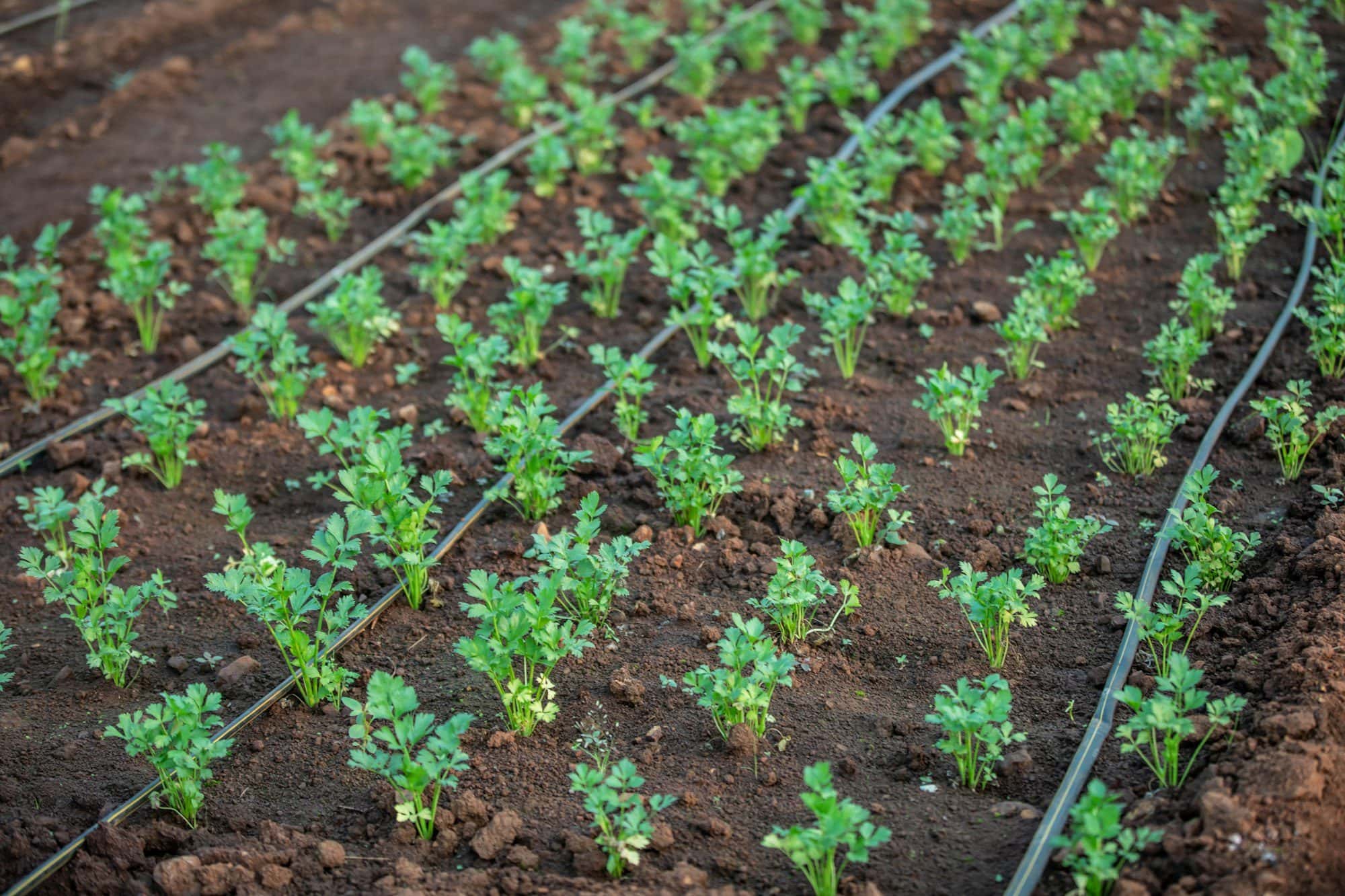
Drip irrigation delivers water slowly, close to the roots, through a network of pipes and emitters. Water goes where the plant can use it instead of running off or evaporating from the surface, which is why drip commonly uses far less water than flood or hose watering for the same crop.
Because the soil around the roots stays evenly moist, plants grow more steadily and weeds between the rows get less water. On terraces and balconies it also means no water standing on the slab.
Part 2
The parts of a system
A basic system has a water source, a filter to stop drippers clogging, a main line, lateral pipes along each row or planter, and drippers or inline emitters at each plant. A pressure regulator protects the pipes when the supply pressure is high.
For farms, a fertiliser injector (venturi or tank) lets you feed through the same lines, which is called fertigation. For homes and offices, a battery or mains timer turns the system on and off automatically, so plants are watered even when nobody is there.
Part 3
What it costs
For a home terrace or balcony, a timer-controlled kit with drippers for each pot starts from about ₹4,500 installed in Pune with us. Larger terraces and lawns with micro-sprinklers cost more, depending on the number of points.
On farmland the cost per acre depends mostly on crop spacing: widely spaced orchards need fewer laterals and emitters than closely planted vegetables. Get a design with a bill of quantities before comparing quotes, because a cheap quote often means thinner pipe or no filter.
Part 4
Government subsidy for farmers
Micro-irrigation on farmland is supported under the Per Drop More Crop component of the Pradhan Mantri Krishi Sinchayee Yojana, administered through the state agriculture or horticulture department. The subsidy share differs for small and marginal farmers and for others, and states add their own top-ups and rules.
Apply before installing, through your state's portal or the local agriculture office, and use a registered supplier, because installations done before sanction usually do not qualify. We can prepare the design and paperwork for the land we develop.
Part 5
Mistakes to avoid
Skipping the filter is the most common reason drippers block. Flush the lines every few weeks and clean the filter. Run the system early in the morning, check that every dripper is working after each season, and replace pipes that have been cut by rodents or tools rather than taping them.