How green-belt conditions appear in consents and environmental clearances, how to plan the belt, and how to keep records for inspection.
Part 1
Where the green-belt condition comes from
Environmental clearances and the consent to establish and operate issued by State Pollution Control Boards often include a condition to develop a green belt. The condition usually sets a share of the plot area and a tree density, and sometimes the width of the belt along the boundary.
A third of the plot area is a figure that appears in many clearances, but it is not universal. The figure that applies to your unit is the one written in your own order, so that document is the starting point.
Part 2
Planning the belt
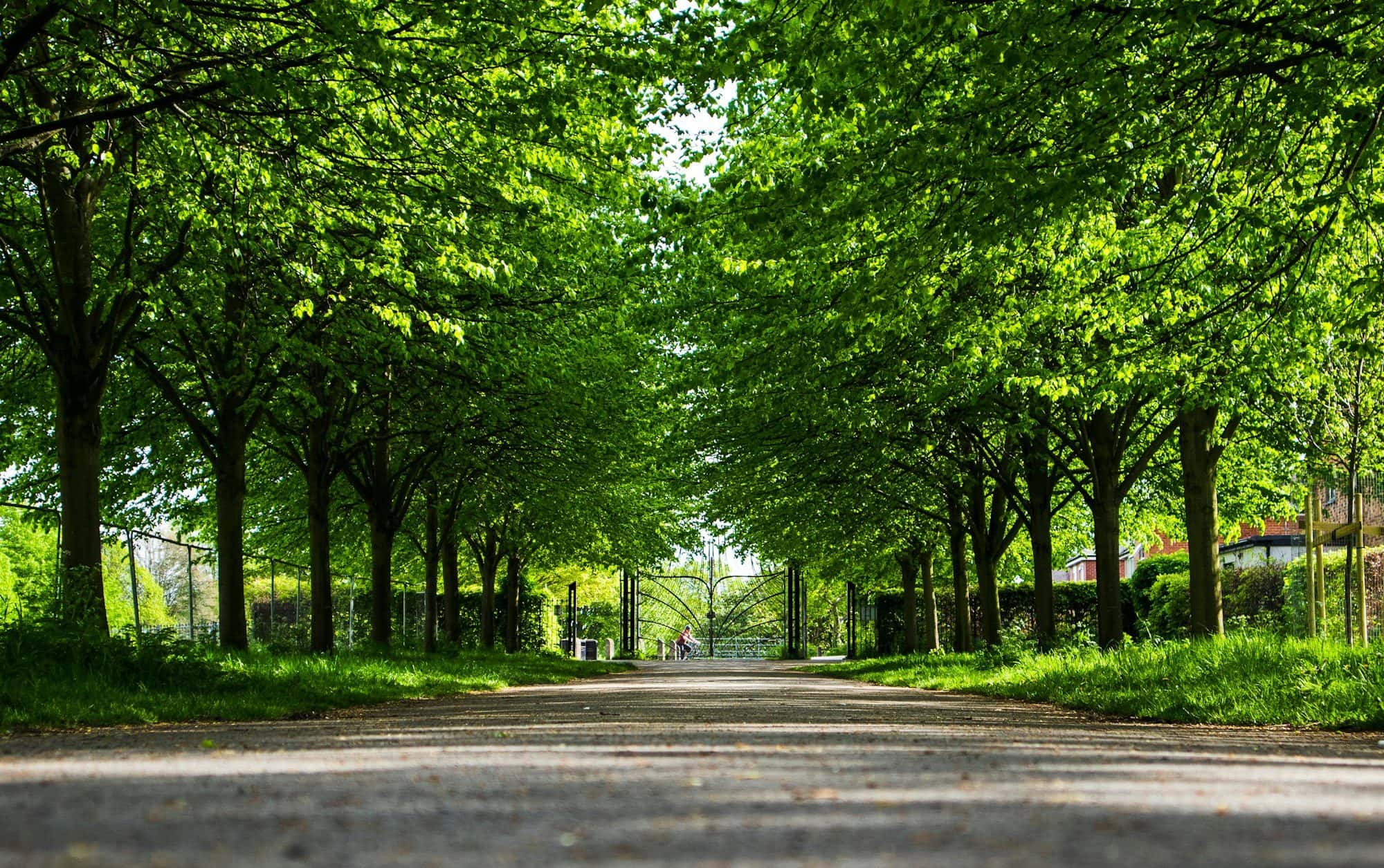
A green belt works best as several rows: tall trees on the outside, medium trees in the middle and shrubs on the inside, so dust and noise are screened at different heights.
Native species with dense canopy and good survival are preferred — for example neem, peepal, arjun, kadamba, jamun and karanj, depending on the region and soil.
Part 3
Survival and records
Inspections look at what is growing, not what was planted. Pits, soil improvement, watering through the first two summers and replacement of dead saplings decide whether the belt meets the condition.
Keep a plantation register with species, numbers, dates and survival counts, and a yearly photo record. We maintain these for every green belt we manage.