Flower library · Pooja
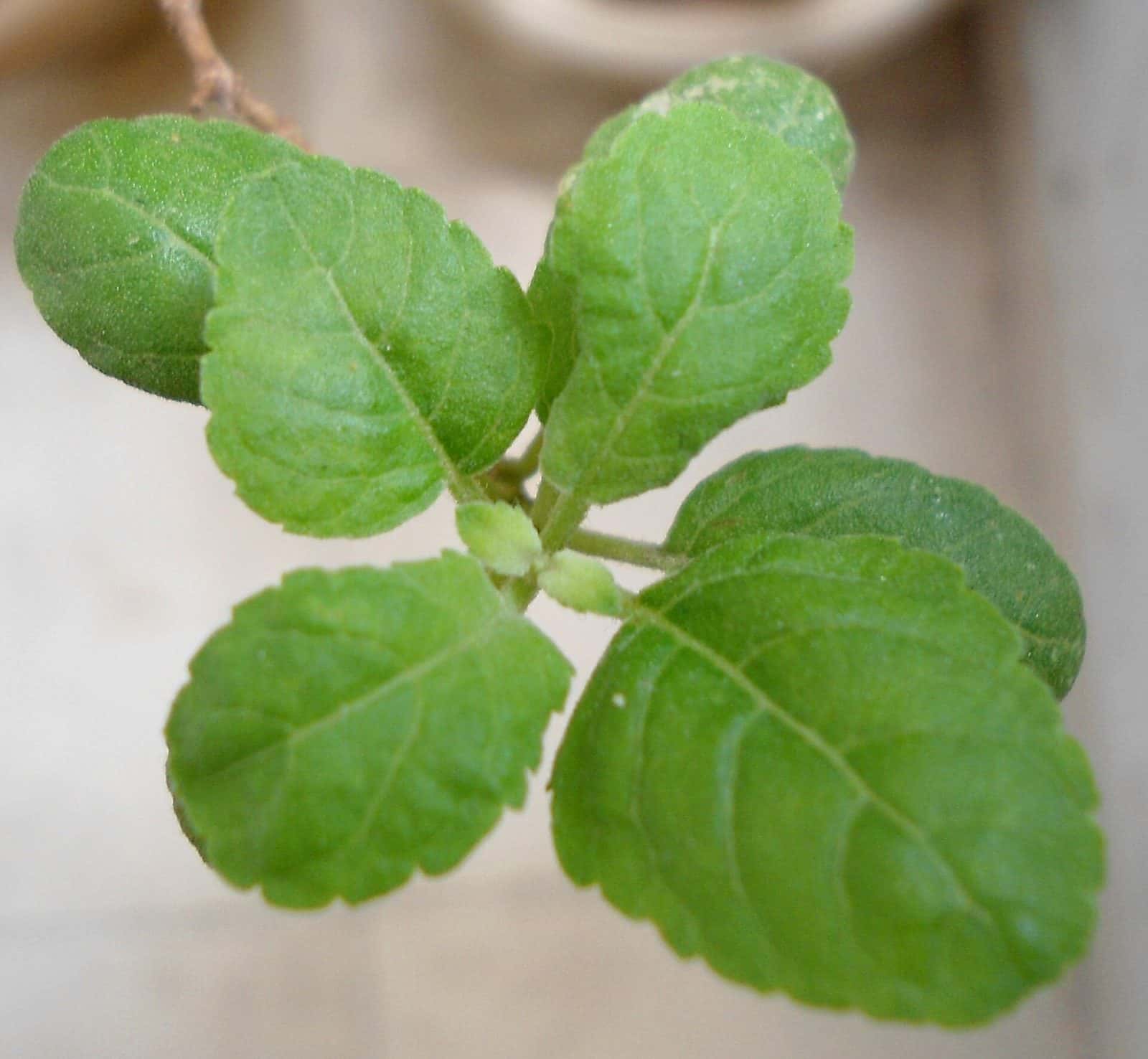
Tulsi leaves
Tulsi, or holy basil, is kept as a plant in the courtyard or balcony of many Hindu homes and worshipped in its own right. Its leaves are offered in the worship of Vishnu and Krishna and placed on food offered as naivedya. Two kinds are common: green-leaved Rama tulsi and purple-tinged Krishna tulsi.
Ocimum tenuiflorum · Tulsi · Tulas · Tulasi · Holy basil
Season
Through the year; leaves are fullest in the monsoon and after, and plants thin out in peak summer and cold northern winters
Keeps
2–3 days wrapped and cool
Colours
Green, Purple-green
Grown in
Grown in homes and gardens across India and on small farms for markets; supply to cities is mostly local
01
How to pick fresh
Family Lamiaceae
- aFresh tulsi leaves are soft, unwrinkled and strongly aromatic when rubbed.
- bRama tulsi is bright green; Krishna (Shyama) tulsi has purple stems and purple-tinged leaves.
- cAvoid leaves with black spots, holes or yellowing, and sprigs that have gone limp.
- dSprigs with a few leaves and the flower spike (manjari) are sold together in some markets and used in some rituals.
02
Tulsi leaves in pooja
Tulsi is traditionally offered in the worship of Vishnu and his avatars, especially Krishna and Rama, and a tulsi leaf is placed on food offered to them. In many homes the tulsi plant itself is watered and a lamp lit before it each morning or evening, and Tulsi Vivah, the ceremonial marriage of tulsi to Vishnu as Shaligram or Krishna, is celebrated after Diwali.
By tradition, tulsi is not offered to Ganesha, and many families also avoid offering it to Shiva. Practice varies, and some regions differ.
Many families follow a custom of not plucking tulsi on certain days, commonly Sundays, Ekadashi, amavasya and after sunset, and pluck leaves a day ahead. Since tradition allows tulsi plucked earlier or even dried to be offered, a supply kept in the fridge is common practice.
Daily pooja flowers in Pune, by 7 am · from ₹1,600 a month →03
Keeping it fresh
- Wrap sprigs in a damp paper towel or cloth and keep them in a box in the fridge.
- Do not store tulsi soaking wet; the leaves turn black.
- A sprig kept with its stem in a small glass of water stays fresh on the altar for a day or two.
- Leaves that have dried can still be used in some homes, as tradition allows dried tulsi to be offered.
04
Where it is used
- Offered in the worship of Vishnu, Krishna and Rama and their forms.
- Placed on naivedya, the food offered before it is served.
- Used as the plant worshipped in Tulsi Vivah, celebrated after Diwali.
- Tulsi-wood beads are used in japa malas.
05
Tulsi leaves in your city
Tulsi grows easily in Pune balconies and is always available in markets; leaves keep two to three days in the fridge.
Delhi's summer heat and winter cold both thin tulsi plants, so market leaves are handy then; keep them wrapped and cool.
Tulsi is common in Indore homes and markets; keep leaves refrigerated in the hot months.
Cold winters in Chandigarh slow tulsi plants, so bought leaves are useful from December to February.
Mumbai's humidity spots stored tulsi quickly, so keep it dry-wrapped rather than wet.
Tulsi does well year round in Bangalore, and leaves keep well in the mild weather.
Tulsi is easy to find in Hyderabad; in April and May keep leaves wrapped in the fridge.
Ahmedabad's dry heat wilts tulsi sprigs fast, so keep them wrapped in a damp cloth.
Tulsi is grown in most Kolkata homes; in the monsoon keep stored leaves dry to prevent black spots.
07
Questions
Why is tulsi not offered to Lord Ganesha?
By tradition, tulsi is not offered to Ganesha, and a Puranic story is usually given as the reason. Durva, red flowers and modak are offered to him instead.
On which days should tulsi leaves not be plucked?
Many families avoid plucking tulsi on Sundays, Ekadashi, amavasya and after sunset. Customs vary by family and region, and leaves are commonly plucked a day ahead.
How to keep tulsi leaves fresh?
Wrap them in a damp paper towel or cloth and keep them in a box in the fridge. They stay fresh for two to three days. Do not store them soaking wet.
What is the difference between Rama tulsi and Krishna tulsi?
Rama tulsi has bright green leaves and stems; Krishna or Shyama tulsi has purple stems and purple-tinged leaves. Both are used in worship.
Begin with a visit
Request a proposal
Tell us about the space, or send photos on WhatsApp. We send a written proposal with a fixed price.
hi@gardenandacre.com