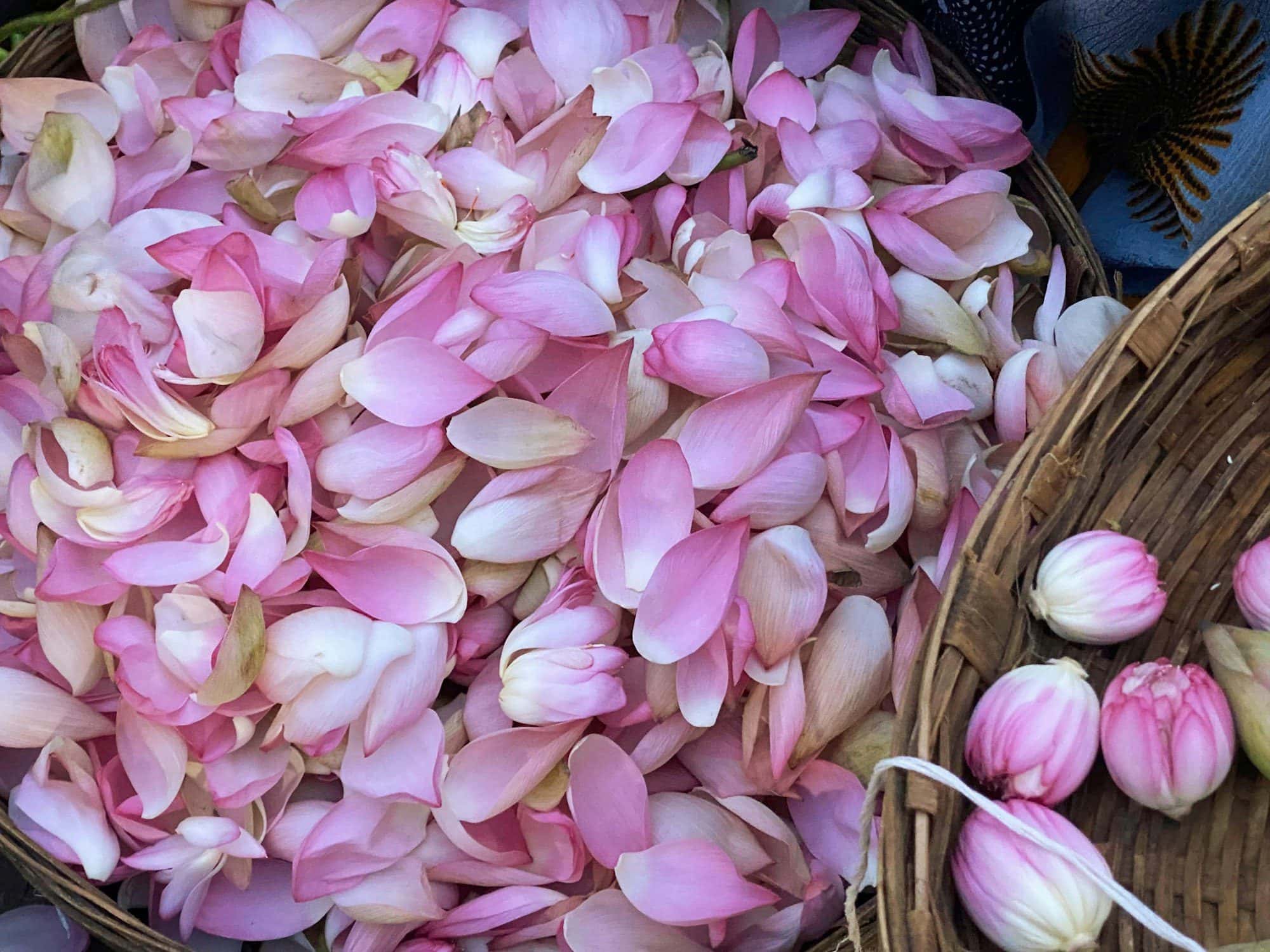
Where Pune's wholesale flower market is, at Market Yard in Gultekdi, when to go, what is sold, how prices move with festivals, and other flower markets in Pune.
Part 1
Where the Pune flower market is
When people in Pune say "the flower market" they usually mean the wholesale flower market (phool bazar) inside Shri Chhatrapati Shivaji Market Yard at Gultekdi, run by the Agricultural Produce Market Committee (APMC), Pune. The Market Yard sits at the southern end of the city near Swargate, in the Gultekdi and Maharshi Nagar area, postcode 411037. It also houses the city's wholesale fruit, vegetable, jaggery and banana markets, so ask for the flower market once you are inside the gates.
The wholesale trade in the old city used to run from the Mandai area in Budhwar Peth and Shukrawar Peth, and flower sellers lined the road between Dagdusheth Halwai Ganpati temple and Mahatma Phule Mandai. The APMC's wholesale markets moved to Gultekdi from the late 1970s, and the APMC lists 1990 as the year its flower market began work at the Market Yard. The flower section has 92 plots, and guides describe an auction hall, cold storage and shops selling ribbons, foam and other florist supplies alongside the traders' stalls.
Swargate is the nearest large bus and metro interchange, and PMPML buses run to Market Yard. By car or two-wheeler, expect heavy goods traffic around the gates in the early morning, and park outside the busiest lanes if you are only buying a few bunches.
Part 2
Timings: when to go
The APMC lists the flower market's working hours as 7 am to 3 pm with no weekly holiday, unlike the fruit, vegetable and jaggery sections, which close one day a week. In practice trade starts earlier. Farmers' vehicles arrive through the night and in the small hours, and traders and city guides describe the market as busy by 6 am, with the bulk buyers (florists, decorators, temple and hotel suppliers) done by about 8 or 9 am.
For a retail buyer, 7 to 8 am is a good window: most stock has arrived, the best lots have not all gone, and the rush of bulk buyers is easing. By late morning the choice thins out and what is left has been sitting in the heat. Timings and holidays can change around festivals, strikes and APMC closures, so check with a trader or the APMC before going on a special date.
Part 3
What is sold
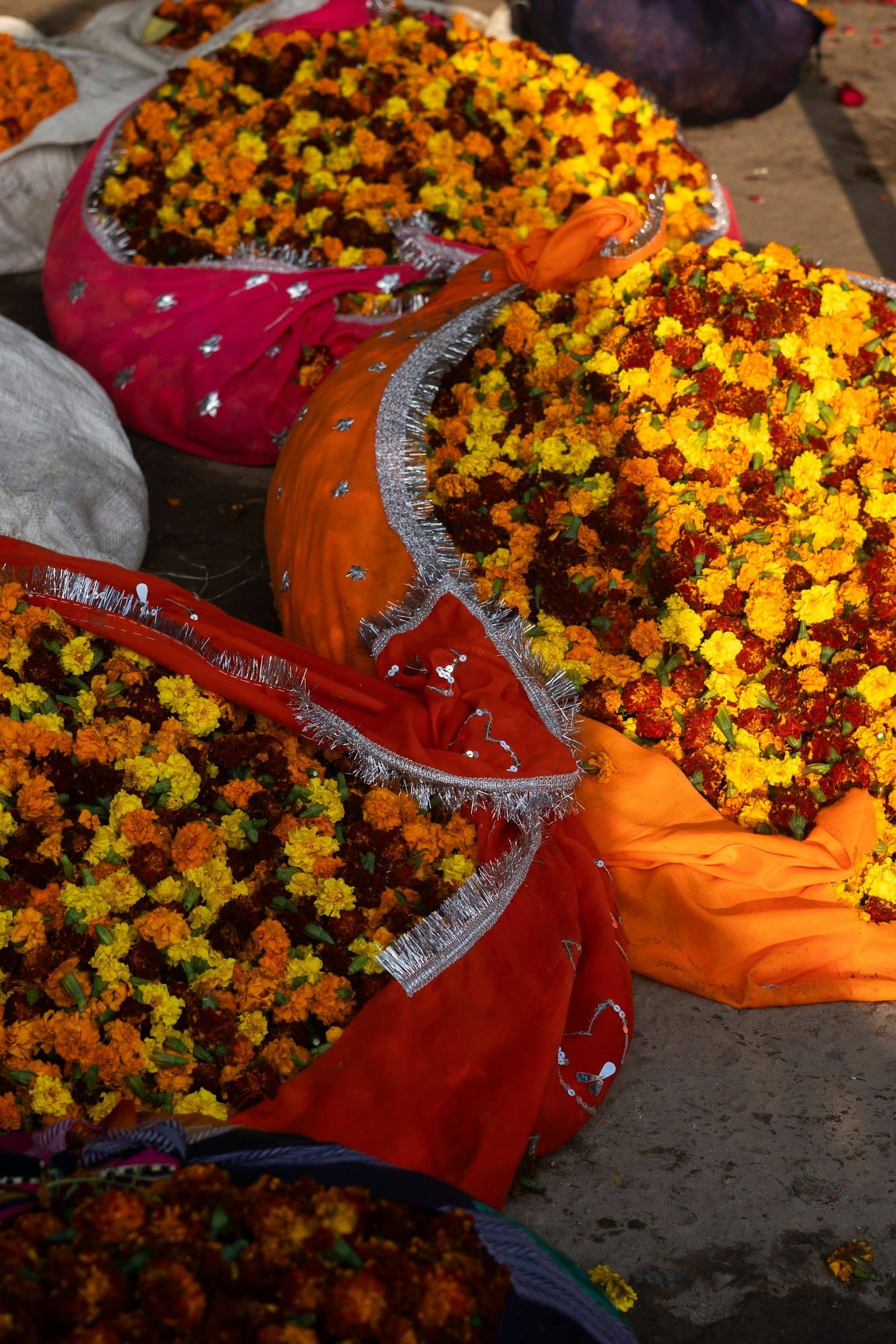
Loose flowers, sold by weight, make up most of the trade: marigold (zendu), white and yellow shevanti (chrysanthemum), aster, gaillardia, tuberose (gulchadi or rajnigandha), mogra and other jasmines, chameli, son chafa and lotus. These go into garlands, torans, rangoli and pooja. During the first five days of Ganeshotsav in September 2026 the APMC recorded arrivals of about 2.6 lakh kg of marigold, 1.23 lakh kg of white shevanti, 97,000 kg of tuberose and 56,000 kg of yellow shevanti, which gives a sense of how much of the market is loose flowers.
Cut flowers are sold by the bunch or by the stem: roses (mostly Dutch roses from polyhouses), gerbera, carnation, gladiolus, lilies, anthurium and orchids. These go to florists, bouquet makers and decorators. Leaves and greens are part of the trade too, including mango leaves for torans, bel, durva, tulsi and, before Dussehra, bundles of apta leaves brought in from villages around Bhor and Velhe.
Most flowers come from Pune district itself (Maval, Loni Kalbhor, Yavat and nearby villages) and from Satara, Sangli and Solapur districts. Maval taluka, around Talegaon and Pawna Nagar, has a large cluster of polyhouses growing Dutch roses.
Part 4
What is in season through the year
June to September (monsoon): marigold, shevanti, aster and tuberose build up through the rains. Demand peaks with Ganeshotsav in August or September, when the market handles its heaviest arrivals of the year. Heavy rain spoils loose flowers in transit, so quality can swing from day to day.
October to December: Navratri, Dussehra and Diwali keep marigold, shevanti and apta leaves in demand, and the wedding season that follows Diwali (Tulsi Vivah onwards) lifts demand for roses, gerbera, carnations, mogra and tuberose for stage and mandap work. Cooler nights suit most cut flowers.
January to February: roses are at their best, and polyhouse growers in Maval send a large share of their crop out of Pune for Valentine's Day, which tightens local supply in the first two weeks of February. Weddings continue.
March to May: summer brings mogra and son chafa, which are prized for fragrance and pooja. Heat shortens the life of most loose flowers, so buying early in the day matters more in these months. Exact timing shifts from year to year with the rains and the festival calendar.
Part 5
How prices move
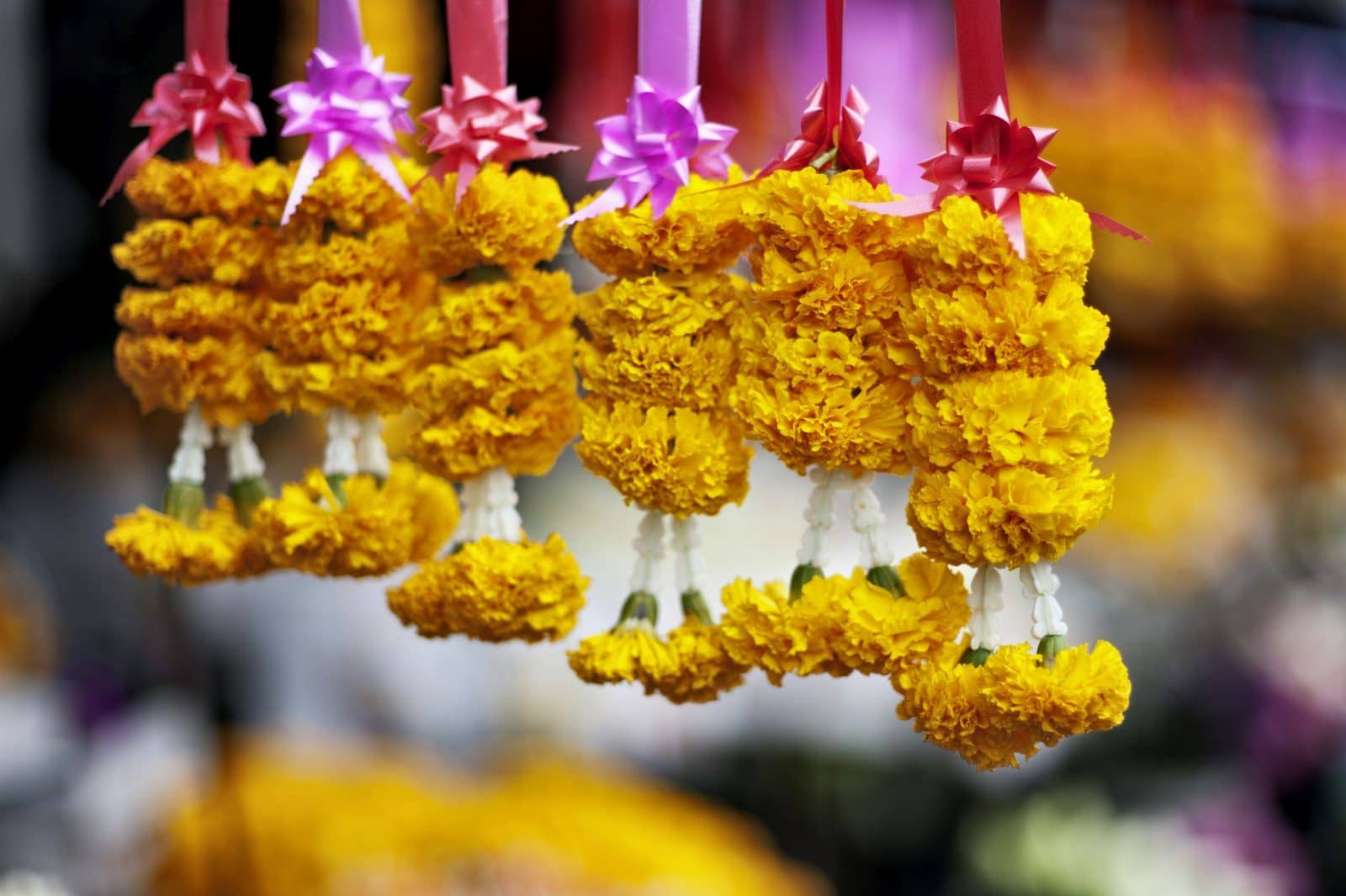
Loose flowers are priced by the kilogram and cut flowers by the bunch or stem, and prices change every day with arrivals. Two things drive them: how much reached the market that morning, and what the next few days hold. Prices rise in the days before Ganeshotsav, Navratri, Dussehra, Diwali, Valentine's Day and big wedding dates, and fall in lean months, after heavy arrivals, or when rain spoils a crop and traders need to clear stock.
The swings can be large. The Bridge Chronicle reported marigold at about ₹30 to ₹35 a kg in the Market Yard on 2 October 2024, and about ₹50 to ₹100 a kg around Dussehra on 10 to 11 October 2024, when jasmine was quoted at ₹1,000 to ₹1,300 a kg and tuberose at ₹400 to ₹500 a kg. In early September 2026, FloralDaily reported marigold and shevanti at ₹10 to ₹20 a kg in the wholesale market after an unusually dry August brought in more flowers than buyers wanted. Treat these as illustrations of how far prices move, and ask on the day.
Retail prices at a neighbourhood stall sit well above the wholesale rate, since the seller carries transport, wastage and the risk of unsold stock.
Part 6
How to buy there
Go early, wear shoes you do not mind getting wet, and carry cloth bags or a crate, a damp cotton cloth or newspaper to wrap loose flowers, and cash along with UPI. Walk the lanes once before buying, since quality and rates vary between stalls on the same morning.
Check freshness before you pay. Loose flowers should be firm and springy with no brown edges, slime or sour smell at the bottom of the heap. For roses, gently squeeze the head: a firm bud is fresh, a soft one is old. Gerbera and carnation petals should be stiff, with clean green stems.
Wholesale traders prefer to sell in their own units (a few kilos, a full bunch) and some will not break a bunch for a small buyer. Bargaining is expected, and it works better when you are buying a reasonable quantity. For a wedding, puja or event, visit a few days ahead, fix quantities and a rough rate with one trader, and agree on a pick-up time, especially close to a festival when stock sells out early.
Part 7
Other flower markets in Pune and Pimpri-Chinchwad
Mandai and Tulshibaug: flower and garland sellers still work around Mahatma Phule Mandai and the lanes towards Tulshibaug in the old city, and temporary stalls come up at Shanipar, Hutatma Babu Genu Chowk and Rameshwar Chowk around Dussehra. This is the place for ready garlands, torans and pooja flowers in small quantities. Tulshibaug shops are generally shut on Mondays.
Pimpri: Pimpri-Chinchwad has its own flower market near Shagun Chowk in Pimpri, where farmers and traders sell flowers and garlands. In 2022 the Pimpri-Chinchwad Municipal Corporation began the process of giving it more space after the traders' association and the APMC asked for it.
Beyond these, most Pune neighbourhoods have phoolwalas near temples and market streets who buy at Market Yard each morning and sell garlands, loose flowers and a few bunches through the day. They cost more than the wholesale market and save the early trip.
Part 8
Keeping market flowers fresh
Get flowers out of the car and into water or shade as soon as you reach home. Recut cut-flower stems at an angle under water, strip leaves below the waterline, use a clean vase, and change the water every day or two. Keep vases away from direct sun, fans and fruit bowls.
For loose flowers, spread them out on a damp cloth in a cool room, sprinkle a little water, and cover lightly. Do not pack them tight in a plastic bag. Mogra and jasmine hold best wrapped in a damp cloth in the refrigerator, away from fruit. Garlands can be misted and kept in a cool corner overnight.
Part 9
If you would rather not go at dawn
Garden & Acre sources flowers through its own supply chain and delivers them in Pune as a weekly flower subscription for homes and offices, and as a daily pooja flower delivery to your door.