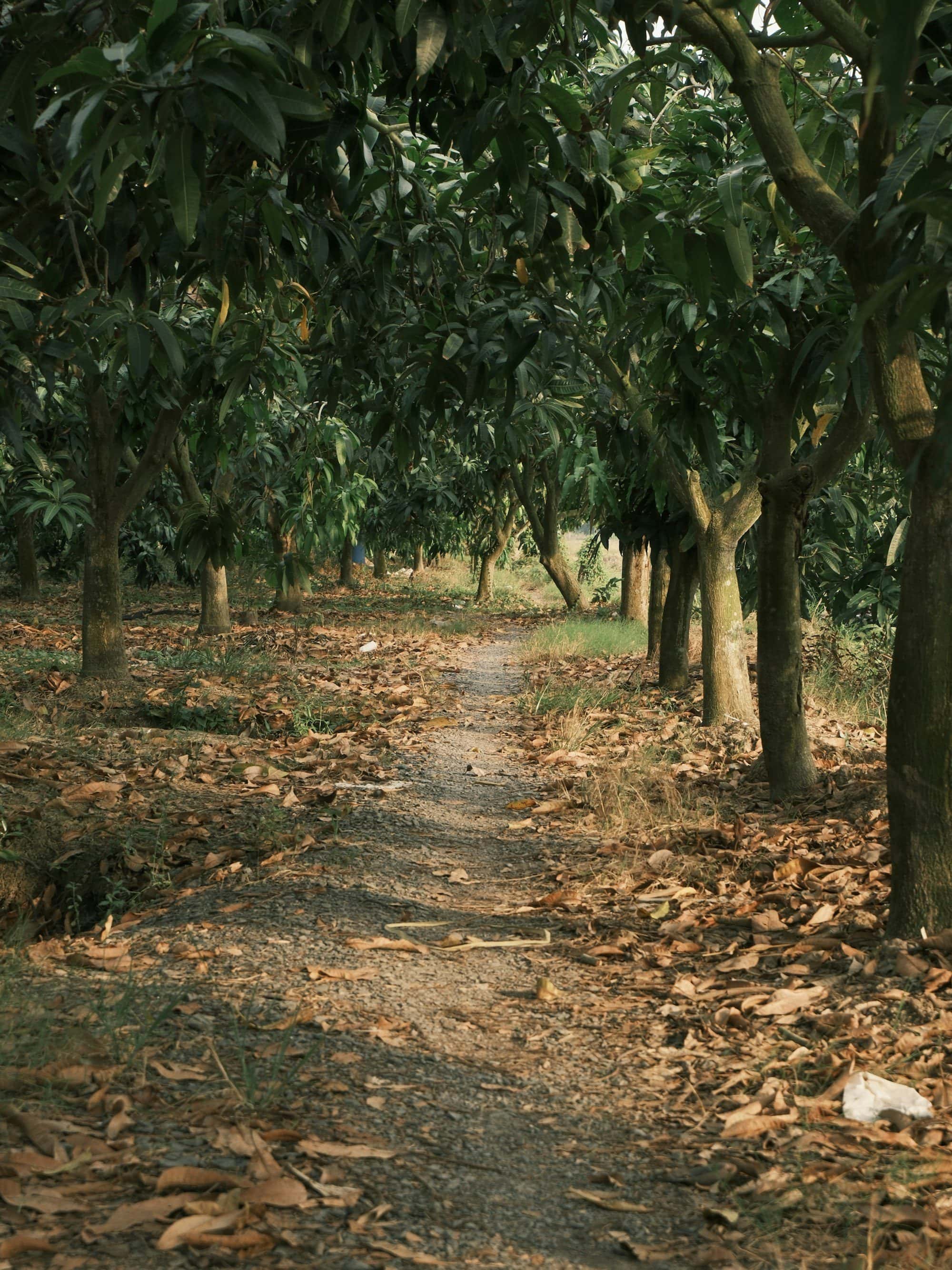
Choosing the fruit, the spacing, the irrigation and the first three years of care for a mango, guava, amla or citrus orchard in India.
Part 1
Start with soil and water
Test the soil for pH, salts and drainage, and the water for salinity, before choosing the crop. Mango and citrus dislike waterlogged and saline soil. Amla, bael and tamarind tolerate poor, dry and mildly alkaline land far better.
A dependable water source for the dry months is essential. Drip irrigation from a borewell or farm pond is the standard for new orchards and cuts water use sharply compared with flood irrigation.
Part 2
Choosing the fruit
Pick what grows well in your climate and sells in your nearest market. Mango suits most of central, western and southern India; guava and amla grow across the north and centre; citrus needs good drainage and does well around Nagpur and in parts of Punjab and Rajasthan.
Buy grafted plants of named varieties from registered nurseries. Seedling trees take longer to bear and give fruit of uneven quality.
Part 3
Spacing
Traditional mango orchards were planted 10 m × 10 m. High-density planting at closer spacing, with regular pruning, gives fruit sooner and more per acre but needs more skilled care. Guava and amla are often planted 5–6 m apart, or closer in high-density systems.
Spacing also decides whether a tractor can pass between rows, which matters for spraying and harvest on a larger farm.
Part 4
The first three years
Young trees need regular water, weeding around the base, protection from livestock, and training pruning to build a strong frame. Most grafted fruit trees start bearing in their third to fifth year.
Intercropping vegetables or pulses between young trees in the first years brings some income and keeps weeds down, as long as the intercrop does not compete for water.
Part 5
Owners who do not live on the farm
Many orchard owners live in the city. A managed-farm contract covers a caretaker, inputs, irrigation, pruning and a monthly report, so the orchard is looked after between visits. We set up orchards from soil test to planting, and can run them afterwards on a monthly plan.