Plant library · Office
Aglaonema (Chinese evergreen)
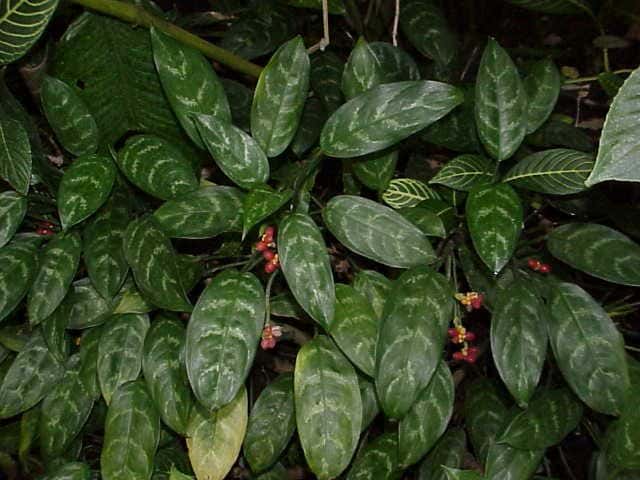
Aglaonema, or Chinese evergreen, is a compact leafy plant from the forest floors of South-East Asia. It is grown for its patterned leaves, which range from silver-green to pink and red in modern hybrids. Green and silver forms are among the best plants for low light, while the red and pink hybrids need brighter spots to keep their colour.
Aglaonema commutatum and hybrids · Chinese evergreen · Aglaonema Red · Aglaonema Lipstick · Aglaonema Silver Bay · Aglaonema Pink
Size
30–70 cm indoors
Growth
Slow
Leaf
Evergreen
Light
Green and silver varieties grow in low to medium light, 2–4 m from a window. Red and pink varieties need medium to bright indirect light, 1–2 m from a window, or their colour fades. Avoid direct sun.
Water
Water when the top 3–4 cm of mix is dry: about every 7–10 days in an AC office and every 2–3 weeks in winter. It dislikes both soggy mix and complete drying out.
Potting mix
Well-drained, airy potting mix with cocopeat, compost and perlite, in a pot with a drainage hole.
01
How to recognise Aglaonema
Family Araceae
- aLeaves are oval to lance-shaped, 10–30 cm long, thick and slightly glossy, marked with silver, cream, pink or red patches and veins depending on the variety.
- bStems are short, thick and upright, with leaves arranged in a clump; older plants develop a short visible stem as lower leaves fall.
- cFlowers are small cream spathes around a spike, half-hidden among the leaves, sometimes followed by red berries.
- dRed and pink hybrids such as 'Lipstick', 'Siam Aurora' and 'Red Valentine' have mostly coloured leaves with green edges or blotches.
- eOften confused with dieffenbachia (dumb cane), which grows taller with a thicker cane-like stem and larger, softer leaves, and with young peace lilies, which have plain dark green leaves.
02
Aglaonema (Chinese evergreen) in your city
Indoor conditions differ from city to city: dry air, long air-conditioning seasons, humidity and dust.
Comfortable indoors all year. Water less during the monsoon, when the mix dries slowly.
It is sensitive to cold, so winter drafts near doors and cold AC air damage the leaves, and dry air browns the edges. Keep it in the warm interior of the office and wipe off dust often.
Does well indoors. Keep it away from direct AC and cold winter drafts.
Below about 15°C leaves develop dark, water-soaked patches, so keep it well away from entrances and cold glass in winter and water sparingly.
Humidity suits it well. The risk is stem and root rot in the monsoon, so water less often and keep pots draining freely.
Mild indoor conditions suit it; red varieties colour well in bright offices.
Handles the indoor heat well; keep it back from hot windows and out of direct AC airflow.
Copes with dry summer air better than thin-leaved plants, but keep it out of AC airflow and wipe leaves often because of dust.
Humidity suits it and misting is unnecessary. Take care with overwatering in the monsoon, when rot and fungal leaf spots are common.
03
Where it fits
- Workstation planters and desk-side pots, where its compact size fits.
- Reception counters and side tables, using red or pink varieties for colour in brighter spots.
- Meeting rooms and cabins with little daylight, using green and silver varieties.
- Mixed planters and troughs with other low-light plants.
04
Care
- Water when the top few centimetres are dry and never leave it standing in water.
- Keep it above about 15°C and away from AC outlets and winter doorways.
- Wipe leaves every two weeks to keep the pattern visible.
- Rotate the pot every few weeks; move red varieties closer to light if their colour fades.
- Feed with a diluted balanced fertiliser every four to six weeks from March to September.
05
Common problems
- Yellow lower leaves — overwatering or poor drainage; let the mix dry further between waterings and remove the yellow leaves.
- Dark, water-soaked patches — cold damage from AC drafts or winter temperatures; move it to a warmer spot and cut off damaged leaves.
- Brown leaf edges — dry AC air or irregular watering; move it out of airflow and keep watering even.
- Mealybug — white cotton at the leaf bases and stems; wipe off with alcohol on a cotton bud and repeat weekly.
06
Questions
Is aglaonema poisonous to pets or children?
Yes, if chewed. Like other plants in the arum family, it contains calcium oxalate crystals and irritating sap that cause mouth pain, drooling, swelling and vomiting. Keep it out of reach of pets and small children, and wash hands after handling cut stems.
Can aglaonema grow in low light?
Green and silver varieties do well in low to medium light and are among the best plants for dim offices. Red and pink varieties need brighter light to keep their colour and should sit within a couple of metres of a window.
How often should I water aglaonema in an office?
About every seven to ten days in most AC offices, when the top few centimetres of mix are dry. In winter and in humid cities, water less often.
Does aglaonema improve office air quality?
In a real office with air-conditioning and ventilation, a few plants make no measurable difference to indoor air. It is chosen for its colourful leaves, its tolerance of office conditions and how people feel working around plants.
Begin with a visit
Request a proposal
Tell us about the space, or send photos on WhatsApp. We send a written proposal with a fixed price.
hi@gardenandacre.com