Plant library · Office
Money plant (Pothos)
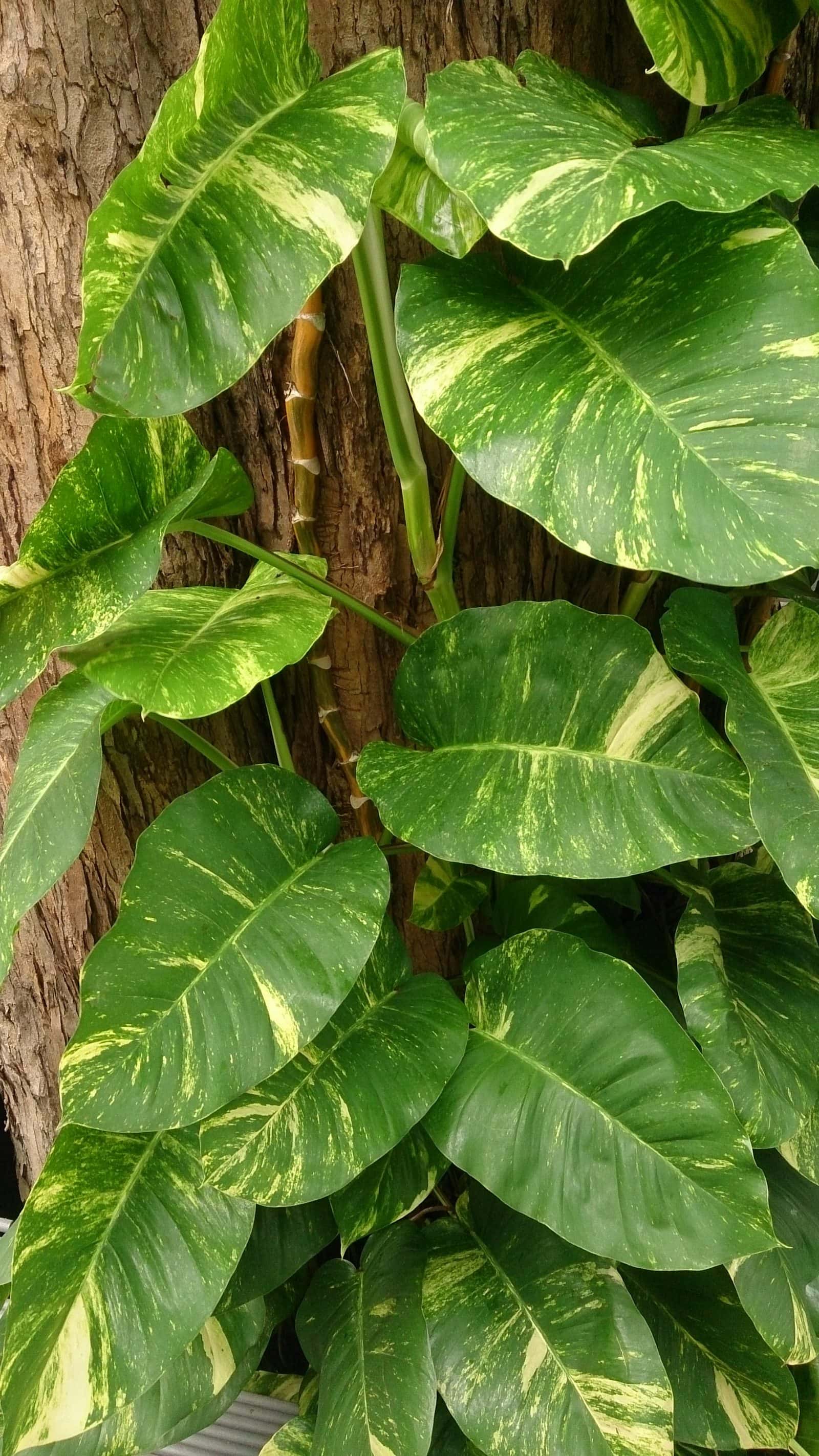
The money plant, known in most of the world as pothos, is a climbing vine from the Pacific islands and the most widely grown indoor plant in India. It grows quickly in pots or in water, trails from shelves and climbs moss poles, and tolerates a wide range of light. Its heart-shaped leaves come in green, golden-marbled and white-marbled forms.
Epipremnum aureum · Money plant · Pothos · Golden pothos · Devil's ivy · Marble queen money plant · Scindapsus
Size
Trailing or climbing vines 1–3 m long indoors; 30–60 cm tall on a moss pole
Growth
Fast
Leaf
Evergreen
Light
Low to bright indirect light. Plain green forms cope with 3–4 m from a window; variegated forms need 1–2 m from a bright window or they turn green and leggy. Keep out of direct afternoon sun.
Water
Water when the top 3–4 cm of mix is dry, roughly every 7–10 days in an AC office and every 2 weeks in winter or the monsoon. Plants grown in water need the water topped up weekly and changed every 1–2 weeks.
Potting mix
Light, well-drained potting mix with cocopeat and compost, in a pot with a drainage hole. It also grows in plain water in glass jars, which is how many offices keep it on desks.
01
How to recognise Money plant
Family Araceae
- aLeaves are heart-shaped, waxy and slightly thick, 5–15 cm long indoors, green splashed with yellow ('Golden'), cream-white ('Marble queen') or plain green ('Jade').
- bStems are green, ridged and trailing or climbing, with a brown aerial root and a node at each leaf joint.
- cNew leaves emerge from a papery sheath that dries and stays on the stem for a while.
- dMature leaves in the wild become large and split, but indoors they stay small and entire.
- eOften confused with heartleaf philodendron (Philodendron hederaceum), whose leaves are thinner, softer and more sharply heart-shaped, with new leaves growing from a sheath that falls off; Scindapsus pictus ('silver money plant') has matte leaves with silver spots.
02
Money plant (Pothos) in your city
Indoor conditions differ from city to city: dry air, long air-conditioning seasons, humidity and dust.
Grows steadily indoors all year. Watering can be reduced by half during the monsoon, when the mix stays damp longer.
Dry summer air and heated winter rooms cause brown leaf edges, so we group plants together and keep them away from heaters and vents. Leaves need wiping every week or two because of dust.
Handles the long AC season well. Dry winter air can brown the leaf tips; keep pots away from direct airflow.
Growth slows in the cold months and the plant needs much less water then. Keep vines off cold window glass in winter.
The humid air suits it and leaves stay glossy. Water less than the schedule suggests to avoid root rot and fungus gnats in soggy mix.
Mild indoor conditions give steady growth. Trim vines every couple of months to keep them tidy.
Handles the dry heat indoors, though leaves can crisp near hot windows. Keep it in bright shade, back from the glass.
Very dry summer air browns leaf edges; group plants together, water a little more often in April–June and keep them away from AC outlets.
Thrives in the humidity. Misting is unnecessary; the main risk is overwatering and fungal leaf spots, so let the top of the mix dry between waterings.
03
Where it fits
- Hanging from shelves, storage units and the tops of partitions, where the vines trail down.
- Desks and reception counters in glass jars of water or small pots.
- Moss poles in cabins and meeting rooms, where it forms a green column.
- Planter boxes in cafeterias and breakout areas, trailing over the edge.
04
Care
- Let the top few centimetres dry before watering; always empty water from saucers and outer pots.
- Pinch or cut vines just above a leaf node to keep them bushy; the cuttings root easily in water.
- Wipe leaves with a damp cloth every two to three weeks, more often in dusty cities.
- Rotate the pot every few weeks so growth stays even, and move variegated plants closer to light if new leaves come out plain green.
- Feed monthly with a diluted balanced fertiliser from March to September.
05
Common problems
- Yellow leaves from overwatering — several leaves turn yellow at once and the mix smells sour; let it dry out, remove yellow leaves and check for mushy roots.
- Brown crispy edges from dry AC air — leaf margins dry out near vents or heaters; move the plant out of the airflow and group it with other plants.
- Long bare vines with small leaves — too little light; move it nearer a window and cut back the leggy stems.
- Mealybug — white cottony tufts at leaf joints; wipe off with alcohol on a cotton bud and repeat weekly for three to four weeks.
06
Questions
Is the money plant poisonous to cats, dogs or children?
Yes, if chewed. The leaves and stems contain calcium oxalate crystals that cause mouth irritation, drooling, swelling and vomiting. It is rarely serious, but trailing vines should be kept out of reach of pets and small children.
Does the money plant clean the air?
Old laboratory studies are often quoted as proof, but in a real office with air-conditioning and ventilation, a few pot plants make no measurable difference to indoor air. The benefit is the look of the space and how people feel working among plants.
Should a money plant be grown in water or soil?
Both work. In water it stays smaller and needs fresh water every week or two. In potting mix it grows larger and faster and needs a little fertiliser. Plants moved from water to soil take a few weeks to adjust.
How do I tell a money plant from a philodendron?
Money plant leaves are thicker, waxier and often streaked yellow or white; heartleaf philodendron leaves are thinner, softer and more pointed. Philodendron stems are thinner and its leaf sheaths drop off, while money plant sheaths dry and cling to the stem for a while.
Begin with a visit
Request a proposal
Tell us about the space, or send photos on WhatsApp. We send a written proposal with a fixed price.
hi@gardenandacre.com