Plant library · Office · Terrace
Areca palm
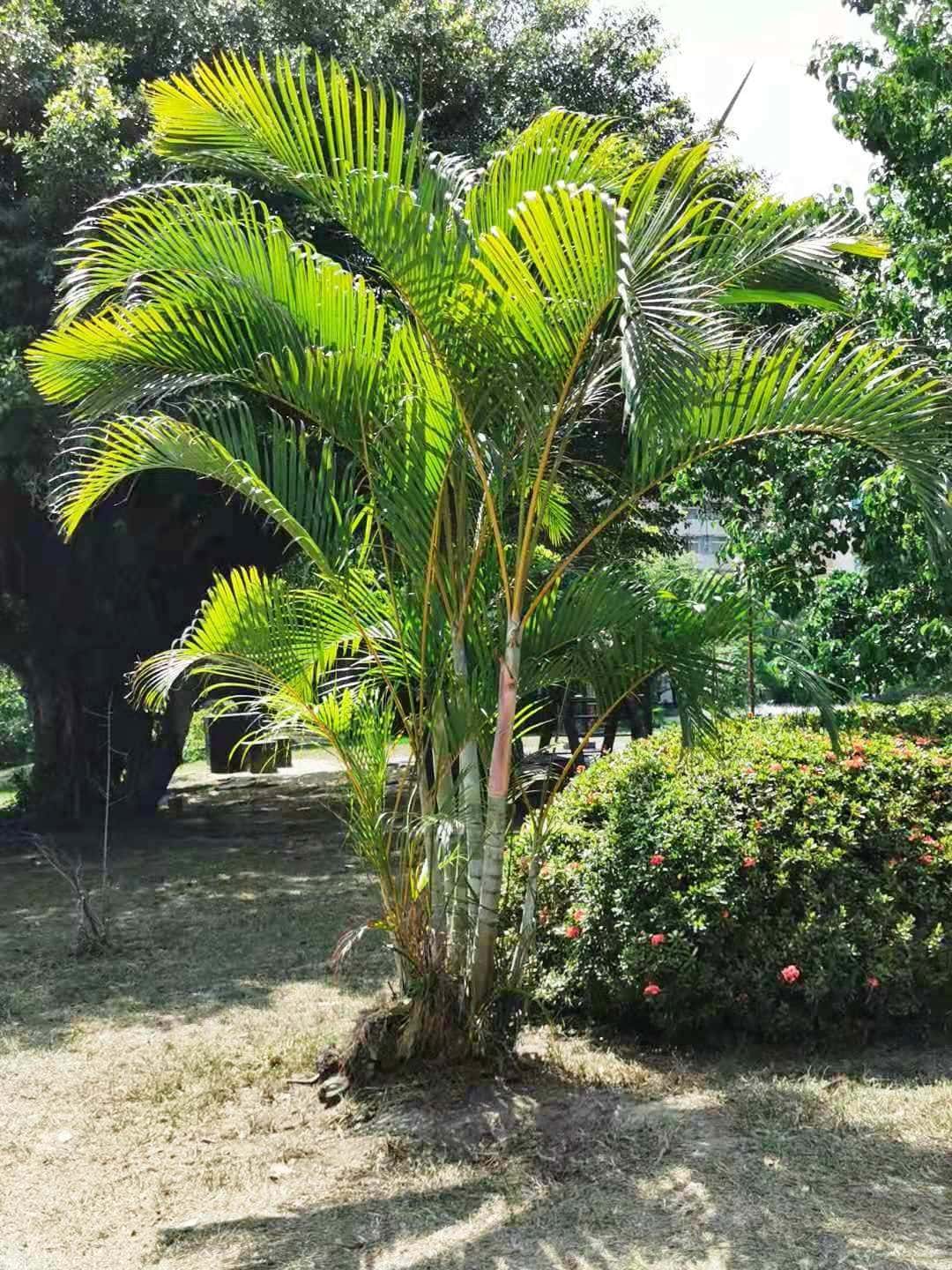
The areca palm is a clumping palm from Madagascar with arching, feathery fronds on slender yellow-green canes. It is the most common tall palm in Indian offices and on shaded balconies, used to soften corners and fill height. It needs brighter light and more regular watering than the hardy low-light plants, and dry air browns its leaf tips quickly.
Dypsis lutescens · Butterfly palm · Golden cane palm · Yellow palm · Bamboo palm · Chrysalidocarpus lutescens
Size
1.2–2.5 m indoors
Growth
Moderate
Leaf
Evergreen
Light
Bright indirect light, ideally within 1–2 m of a large window. It tolerates medium light for a few months but thins out in low light. On balconies it suits bright shade; midday sun yellows and scorches fronds.
Water
Keep the mix lightly moist but never soggy. Water when the top 2–3 cm is dry: about every 5–7 days in an AC office, every 3–4 days on a hot balcony in summer and every 10–14 days in winter. Palms are sensitive to both drying out completely and waterlogging.
Potting mix
Well-drained, slightly acidic potting mix with cocopeat, compost and coarse sand, in a pot with drainage holes. Salty water and heavy fertiliser both cause brown tips, so flush the pot with plenty of water every few months.
01
How to recognise Areca palm
Family Arecaceae
- aLeaves are long feathery fronds, up to 1.5 m indoors, with many narrow leaflets arranged in a V along the midrib, arching outwards like butterfly wings.
- bStems are several thin, smooth canes growing in a clump, yellow-green with faint rings, similar to bamboo.
- cFrond stalks turn golden-yellow, especially in good light, which gives the name golden cane palm.
- dOffice plants usually come as several seedlings grown together in one pot, forming a dense bush.
- eOften confused with the supari or betel nut palm (Areca catechu), a single-trunked tree grown for nuts, and with the lady palm (Rhapis), which has fan-shaped leaves.
02
Areca palm in your city
Indoor conditions differ from city to city: dry air, long air-conditioning seasons, humidity and dust.
Does well indoors and on shaded balconies. Balcony plants need less water during the monsoon but benefit from the humidity.
Very dry summer air and heated winter offices brown the leaf tips, and dust attracts spider mites. We keep palms away from vents and heaters, wipe or spray fronds with water regularly and watch for mites from March to June.
Handles indoor conditions well if kept bright. In dry winter months watch leaf tips and avoid direct airflow from heaters or AC.
Cold winters make balcony plants suffer below about 10°C, so they are best moved indoors from December to February. Heated rooms dry the fronds, so keep them away from heaters.
Humidity suits it and brown tips are less of a problem. The risk is waterlogged mix in the monsoon, so balcony pots must drain freely.
Mild temperatures and moderate humidity suit it indoors and on balconies all year.
Dry summer heat browns fronds and invites spider mites. Balcony plants need shade in April and May and more frequent watering.
Extremely dry summer air is hard on its leaflets. Keep it away from AC outlets, group it with other plants and watch closely for spider mites.
The humid climate suits it well. Water less often than in dry cities, and look out for fungal leaf spots if fronds stay wet.
03
Where it fits
- Reception areas and lobbies with large windows, where its height fills empty corners.
- Beside glass facades and near workstation clusters that get good daylight.
- Cafeterias and breakout areas as a tall screening plant.
- Shaded office terraces and balconies, in bright shade away from midday sun.
04
Care
- Water when the top few centimetres are dry and let excess drain; never let the pot sit in water.
- Wipe or rinse fronds every two weeks to remove dust and discourage spider mites.
- Cut off fully brown fronds at the base; trim brown tips following the leaf shape, leaving a thin brown edge so the cut does not spread.
- Rotate the pot every two to three weeks so it does not grow lopsided towards the window.
- Feed with a balanced palm fertiliser once a month from March to September, and flush the pot with water every few months to clear salts.
05
Common problems
- Brown leaf tips — from dry AC air, drafts, irregular watering or salt build-up; move it out of airflow, water evenly and flush the pot; trimmed tips will not turn green again.
- Yellow fronds — older fronds yellowing one at a time is normal; many yellowing at once points to overwatering or too little light.
- Spider mites — fine webbing and pale speckled leaflets, common in dry offices; rinse fronds with water, isolate the plant and treat with insecticidal soap or neem oil weekly.
- Mealybug and scale — white cotton or brown bumps along leaflet midribs; wipe off and treat with neem oil, repeating weekly.
06
Questions
Is the areca palm safe for pets?
The areca palm is listed as non-toxic to cats and dogs. It is one of the safer choices for offices where people bring pets, though chewed leaves can still cause mild stomach upset.
Does the areca palm improve indoor air?
In a real office with air-conditioning and ventilation, a few palms make no measurable difference to indoor air quality or humidity. Offices use them for their look, for screening and for how people feel around plants.
Why do areca palm leaves turn brown at the tips?
Usually dry air from air-conditioning or heaters, uneven watering or salt build-up from tap water and fertiliser. Keep it away from vents, water evenly and flush the pot with plenty of water every few months.
Can an areca palm grow on a balcony?
Yes, on a balcony or terrace in bright shade. It needs protection from midday summer sun, more frequent watering in the dry months and, in north Indian winters, protection from cold nights.
Begin with a visit
Request a proposal
Tell us about the space, or send photos on WhatsApp. We send a written proposal with a fixed price.
hi@gardenandacre.com