Plant library · Office
ZZ plant
The ZZ plant comes from the dry grasslands and forests of eastern Africa, where it survives long droughts by storing water in potato-like rhizomes under the soil. Indoors this makes it one of the easiest plants for low light and irregular watering. Its glossy leaves also look polished without any leaf shine, which suits formal office spaces.
Zamioculcas zamiifolia · Zamioculcas · Zanzibar gem · ZZ plant Raven · Zuzu plant
Size
45–90 cm indoors
Growth
Slow
Leaf
Evergreen
Light
Low to bright indirect light. It survives 3–5 m from a window or under office lights alone; growth is quicker 1–2 m from a bright window. Direct sun through glass scorches the leaflets.
Water
Water thoroughly only when the mix is completely dry. In AC offices this is roughly every 3–4 weeks, stretching to 5–6 weeks in winter and the monsoon. The rhizomes rot if kept wet.
Potting mix
Loose, fast-draining potting mix with perlite or coarse sand, in a pot with a drainage hole. Avoid heavy garden soil, which stays wet around the rhizomes.
01
How to recognise ZZ plant
Family Araceae
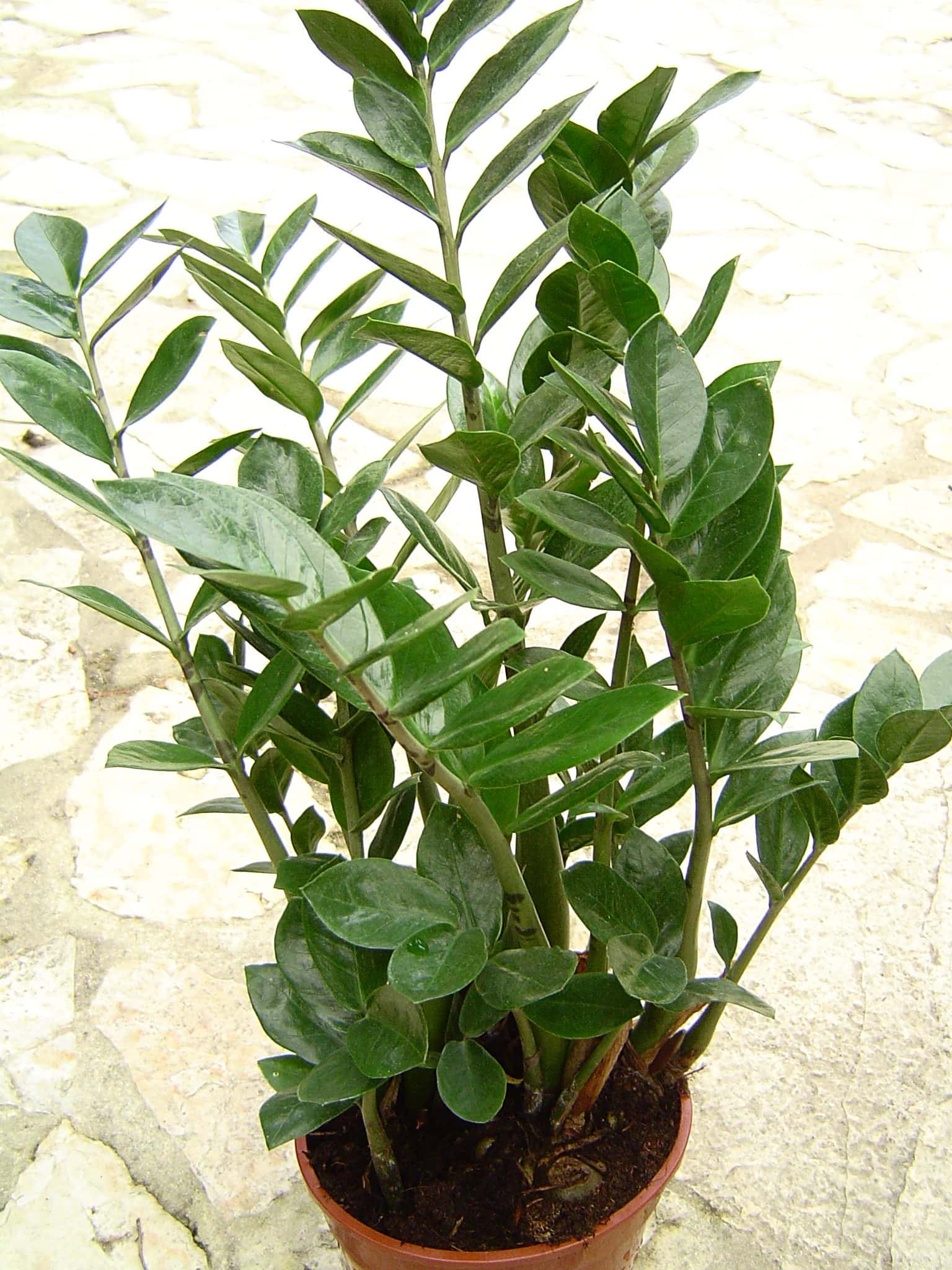
- aLeaves are made of 6–8 pairs of thick, waxy, glossy oval leaflets arranged along an upright stalk, which looks like a single long stem.
- bStalks rise straight out of the potting mix and are swollen at the base, where they join thick underground rhizomes.
- cNew shoots appear light green and rolled up, then darken over a few weeks; the 'Raven' variety turns almost black.
- dFlowers are rare indoors: a small cream spathe and spadix hidden low among the stems.
- eOften confused with plastic plants because of its uniform shine, and occasionally with cycads (Zamia), after which it is named; cycads have woody trunks and stiff, pointed leaflets.
02
ZZ plant in your city
Indoor conditions differ from city to city: dry air, long air-conditioning seasons, humidity and dust.
Comfortable indoors all year. During the monsoon we check the mix before every scheduled watering, because it often does not need one.
Tolerates dry summer air and heated winter rooms well. The glossy leaves show dust quickly in Delhi, so they are wiped every week or two.
Handles long AC seasons and dry winters. Keep it away from direct cold air from vents.
Keep pots away from entrance doors in winter, as cold drafts below about 12°C cause leaflets to yellow. Water very little in December and January.
Humid air keeps the mix wet for weeks, which is the main risk of rhizome rot. Use a gritty mix and water only after checking the bottom of the pot is dry.
Mild indoor temperatures suit it; it stays attractive for long periods with monthly watering.
Indifferent to the dry heat indoors. Keep it off south- or west-facing windowsills where the glass gets hot.
Copes with the very dry summer air better than leafy plants. Wipe leaves often to keep the shine clean.
Humidity slows drying, so water less often than in drier cities and make sure no water collects in the decorative outer pot.
03
Where it fits
- Reception counters and lobbies that get little daylight but need a neat, formal plant.
- Cabins and meeting rooms with only artificial light, rotated to a brighter spot every few weeks.
- Corridors and corners where watering may be missed for a while.
- Workstation planters, where its upright habit keeps leaves off desks.
04
Care
- Water only when the mix is fully dry; when in doubt, wait another week.
- Wipe the leaflets with a damp soft cloth every two to three weeks; the natural shine returns without any leaf-shine spray.
- Turn the pot every few weeks so stems grow evenly instead of leaning towards the light.
- Repot every two to three years when rhizomes press against the pot; plastic nursery pots may bulge or split first.
- Feed with half-strength balanced fertiliser two or three times in the warm months only.
05
Common problems
- Yellow leaflets from overwatering — lower leaflets turn yellow and stems go soft at the base; stop watering, check the rhizomes and repot in dry mix if any are mushy.
- Leaning or stretched stems — the plant is too far from light; move it closer to a window or rotate it to a brighter spot.
- Leaflet drop after a cold draft — leaflets fall when placed under a cold AC vent or near winter doors; move it and the plant usually recovers.
- Mealybug or scale — white cotton or brown bumps on stems; wipe off with alcohol on a cotton bud and repeat weekly.
06
Questions
Is the ZZ plant poisonous?
Yes, if chewed. All parts contain calcium oxalate crystals that irritate the mouth and throat and can cause drooling, swelling and vomiting in pets and children. Touching the plant is harmless, but wash hands after handling cut stems and keep it away from pets that chew leaves.
Can a ZZ plant grow in an office with no windows?
It is one of the few plants that holds its appearance for months under office lighting alone. It will barely grow in that time, so we rotate such plants to brighter spots periodically.
How often should a ZZ plant be watered?
In most AC offices, every three to four weeks, and less in winter or humid weather. Water deeply, let the excess drain away, then wait until the mix is dry all the way down.
Why is my ZZ plant turning yellow?
Almost always too much water. An occasional old leaflet yellowing is normal, but several yellow leaflets with soft stems point to wet mix and rotting rhizomes. Let it dry out and check the roots.
Begin with a visit
Request a proposal
Tell us about the space, or send photos on WhatsApp. We send a written proposal with a fixed price.
hi@gardenandacre.com