Plant library · Office
Ficus benjamina (Weeping fig)
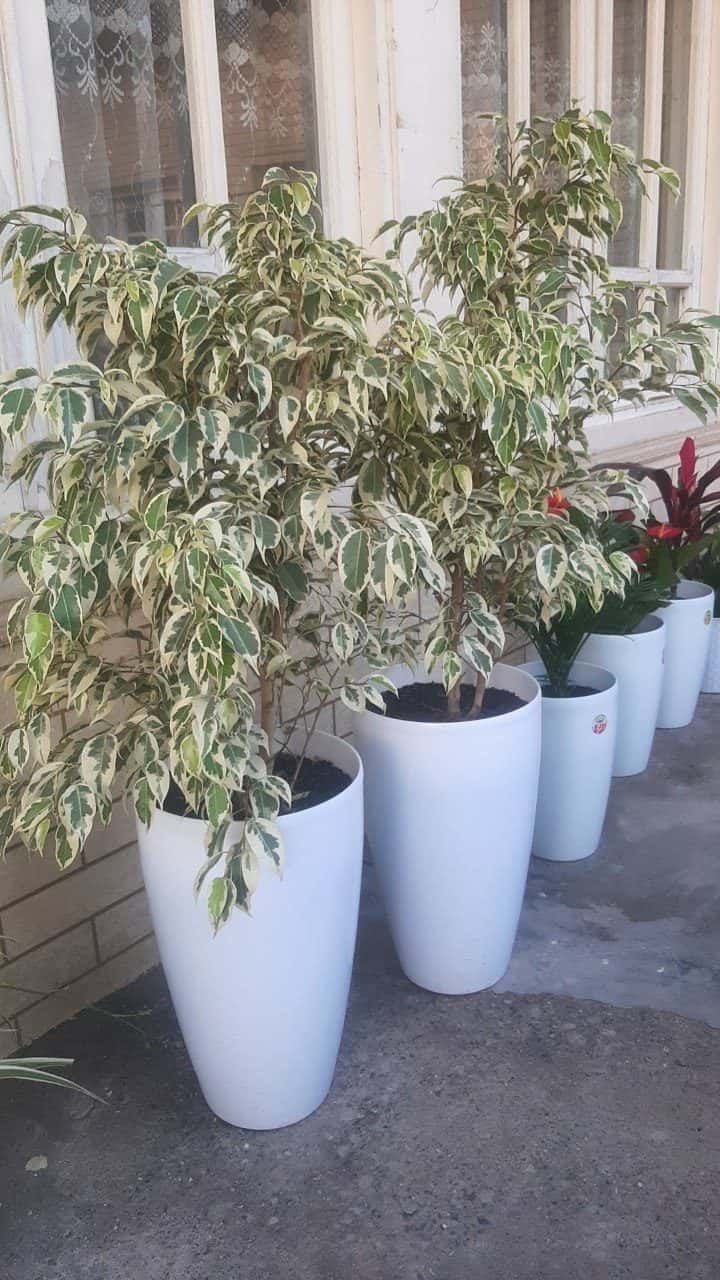
Ficus benjamina, the weeping fig, is a fig tree native to South and South-East Asia, including parts of India, where it grows into a large shade tree. Indoors it is kept as a small tree with a slender or braided trunk and a dense crown of small glossy leaves on drooping branches. It looks elegant in bright spaces but reacts to any change in position, light or temperature by dropping leaves.
Ficus benjamina · Weeping fig · Benjamin fig · Ficus tree · Ficus Starlight
Size
1–2.5 m indoors
Growth
Moderate
Leaf
Evergreen
Light
Bright indirect light, within 1–1.5 m of a large window; a little gentle morning sun is fine. Low light causes steady leaf drop. Choose its position once and keep it there.
Water
Water when the top 3–4 cm of mix is dry: about every 7–10 days in an AC office, less in winter. Keep watering regular, since both drying out and waterlogging cause leaf drop.
Potting mix
Well-drained potting mix with cocopeat, compost and coarse sand, in a pot with a drainage hole. Repot only when roots fill the pot, as root disturbance also triggers leaf drop.
01
How to recognise Ficus benjamina
Family Moraceae
- aLeaves are small, 5–10 cm, glossy, oval with a long pointed tip, held on thin branches that droop at the ends.
- bTrunk is smooth and grey; office plants often have two or three stems braided or twisted together.
- cVariegated forms such as 'Starlight' have leaves edged in cream-white.
- dBroken twigs and leaves leak white milky sap.
- eOften confused with Ficus microcarpa (Chinese banyan or 'Panda' ficus), which has blunter, thicker, rounder leaves without the drooping habit, and with the rubber plant, whose leaves are many times larger.
02
Ficus benjamina (Weeping fig) in your city
Indoor conditions differ from city to city: dry air, long air-conditioning seasons, humidity and dust.
Mild indoor conditions suit it well if it has a bright spot. Expect some leaf drop in the dull monsoon weeks.
Dry summer air, heated winter rooms and cold drafts all trigger leaf drop, and dust collects on the dense crown. Keep it by a bright window away from doors and vents, and shake or rinse the leaves regularly.
Does well in bright offices. Avoid placing it under AC outlets or near doors in winter.
Winter cold near doors and windows causes heavy leaf drop. Keep it in a bright, warm interior spot, away from both heaters and cold glass.
Humidity suits it. Duller light in the monsoon may cause some leaf drop; keep it close to a window and water less often.
Stable, mild indoor conditions make this one of the easier cities for it.
Does well in bright offices. Keep it away from hot glass and direct AC airflow in summer.
Very dry summer air and strong AC airflow cause leaf drop and spider mites. Keep it out of the airflow and check leaf undersides regularly.
Humid air suits it. Water carefully in the monsoon and give it the brightest spot available in the dull months.
03
Where it fits
- Reception areas and lobbies with large windows, as a tall, soft-looking tree.
- Beside glass walls in open-plan offices, placed where it will not need moving.
- Corners of bright cabins and boardrooms.
- Atriums and breakout spaces with plenty of daylight.
04
Care
- Pick a bright spot away from vents and doors and avoid moving it; even turning it can cause some leaf drop, so rotate slowly, a small turn at a time.
- Water regularly when the top few centimetres are dry and never let it sit in water.
- Shake the plant gently or rinse leaves every two weeks to remove dust and dropped leaves.
- Trim in spring to shape the crown and remove thin inner twigs; wear gloves because of the sap.
- Feed monthly with a balanced fertiliser from March to September.
05
Common problems
- Leaf drop after moving — the most common problem, triggered by a new position, a change in light or temperature, or a delivery; keep conditions steady, water normally, and new leaves usually return within four to eight weeks.
- Yellow leaves falling — overwatering, poor drainage or too little light; check the mix and move it closer to the window.
- Spider mites — pale speckled leaves and fine webbing in dry AC offices; rinse the foliage and treat with insecticidal soap or neem oil weekly.
- Scale and mealybug — brown bumps or white cotton on twigs, often with sticky leaves and black sooty mould; wipe off and treat with neem oil weekly.
06
Questions
Why does my ficus benjamina drop so many leaves?
It sheds leaves whenever its conditions change: a move, a darker spot, cold air from a vent or door, overwatering or drying out. A plant just delivered to an office will often lose a fair share of leaves in the first few weeks. Keep it in a bright, steady spot and it usually regrows.
Is ficus benjamina safe for pets and people?
Its milky sap irritates skin and can cause mouth irritation and stomach upset in pets or children if chewed. Its leaves and sap are also a known indoor allergen for some people, particularly those with latex allergy, so it is not a good choice where staff have such allergies.
How much light does a weeping fig need indoors?
Bright indirect light close to a large window. It is not a low-light plant; in dim spots it drops leaves steadily until it looks bare.
Does ficus benjamina clean the air in an office?
In a real office with air-conditioning and ventilation, a few plants make no measurable difference to indoor air quality. Offices choose it for its tree-like look and the general wellbeing of working among plants.
Begin with a visit
Request a proposal
Tell us about the space, or send photos on WhatsApp. We send a written proposal with a fixed price.
hi@gardenandacre.com