Plant library · Avenue & campus · Miyawaki forest
Sita Ashok
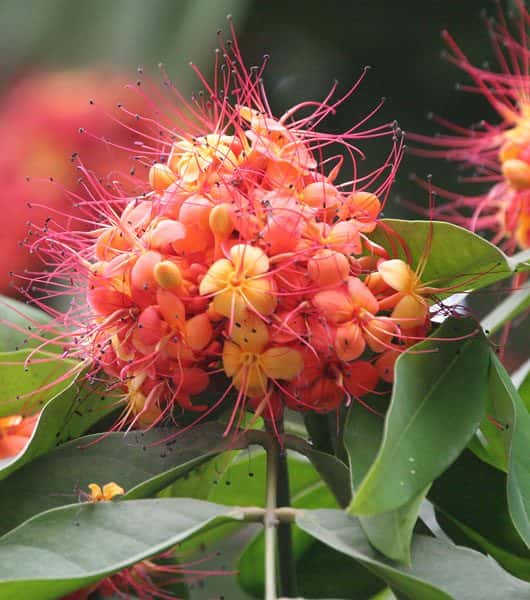
Sita Ashok is a small, native evergreen tree with dense clusters of orange flowers that turn red as they age. It grows naturally in the moist forests of the Western Ghats and the north-east, and it has become scarce in the wild. It is a slow grower that likes shade when young and steady moisture, so it suits sheltered gardens and campuses better than open roadsides. It holds a place in Hindu and Buddhist tradition, and many people plant it for that reason.
Saraca asoca · Sita Ashok · Ashok · Ashoka · Asoka · Asogam · Ashokamu · Ashoka tree
Size
6–9 m tall, 4–6 m spread
Growth
Slow
Leaf
Evergreen
Sun
Partial shade when young; full sun or light shade once established, with protection from hot dry wind.
Water
Keep the soil evenly moist; it needs regular watering in the dry months throughout its life in most Indian cities.
Soil
Deep, fertile, well-drained soil rich in organic matter.
01
How to recognise Sita Ashok
Family Fabaceae
- aLeaves are pinnate with 4–6 pairs of long, narrow, dark green leaflets; new leaves hang in limp coppery-pink or reddish tassels before they firm up.
- bFlowers are orange-yellow turning red, in dense rounded clusters with long protruding stamens, from February to April; they grow on the branches and sometimes on the trunk and are lightly fragrant.
- cFruit is a flat, leathery pod, 10–25 cm long, purple-red turning dark as it ripens.
- dHabit is a small tree with a spreading, dense crown and low branches.
- eOften confused with Mast Ashoka (Polyalthia), the tall, narrow tree with wavy, drooping leaves planted along roads. Mast Ashoka has simple leaves, not divided into leaflets, and never carries orange flower clusters.
02
Sita Ashok in your city
How it grows in each city we work in, and what we do differently there.
It does well in Pune in a sheltered spot with regular watering from February to May. We plant it where taller trees or buildings shade it in the afternoon.
Delhi's dry heat and December–January frost are hard on it. We plant only in sheltered, irrigated gardens, shade young plants in May and June, and cover them on frost nights.
It needs steady watering through Indore's hot, dry summer. On black cotton soil we build a large pit with compost and murum so the roots get moisture without waterlogging.
Frost in December and January can damage it badly. We plant well-grown saplings in a protected courtyard or against a south-facing wall and cover them through the cold spell.
Mumbai's humidity suits it well. We plant on well-drained ground so the monsoon does not leave water around the roots, and keep it back from direct sea spray.
Bangalore's mild, moist climate is close to what it likes, and it flowers well here. It needs watering in the dry months from January to April.
The hot, dry Deccan summer scorches its leaves in exposed spots. We plant it in shaded courtyards and water deeply twice a week in summer.
Ahmedabad's 45°C heat and dry air make it hard to grow in the open. We place it in shaded, irrigated gardens and mulch heavily to keep the roots cool.
Kolkata's humid heat suits it. We raise the planting bed where the ground floods, since roots rot in standing water.
03
Where it fits
- A focal tree in a courtyard, temple garden or entrance court of a campus.
- Shaded walkways inside a campus, where its low crown and slow growth suit a narrow space.
- Office and society gardens with regular irrigation and some afternoon shade.
- Native Miyawaki plantings in humid regions, as an understorey tree below taller species.
04
Care
- Plant in partial shade or with afternoon shade for the first few years, and protect from hot dry wind.
- Water regularly through the dry season and keep a thick mulch over the root zone.
- Feed with compost or well-rotted manure once or twice a year.
- Prune only to remove dead or crossing branches; it naturally forms a compact crown.
- Buy from a reliable nursery and check the leaves: many plants sold as 'Ashoka' are Mast Ashoka.
05
Common problems
- Leaf scorch — brown, dry leaf edges in summer. It is caused by sun and dry wind; add shade, mulch and water more steadily.
- Scale insects and mealybugs — white or brown crusts on stems and leaves, often with black sooty mould. Wipe off small patches and spray neem oil or horticultural oil.
- Leaf-eating caterpillars — chewed new leaves in the monsoon. Hand-pick on small trees; mature trees usually recover.
- Root rot — sudden wilting and yellowing on heavy, wet soil. Improve drainage and avoid overwatering in the monsoon.
06
Questions
What is the difference between Sita Ashok and Mast Ashoka?
Sita Ashok (Saraca asoca) is a small spreading tree with leaves divided into leaflets and orange-red flower clusters. Mast Ashoka (Polyalthia) is a tall, narrow tree with long, wavy, undivided leaves and small green flowers. They are unrelated.
When does Sita Ashok flower?
Mainly from February to April, with some flowers at other times in humid regions. Nursery plants usually take several years to start flowering.
Can Sita Ashok grow in Delhi?
It can, in a sheltered, irrigated garden. It needs shade in the hottest months, regular watering and frost cover in winter. Open, exposed sites do not suit it.
Why is Sita Ashok hard to find in nurseries?
It grows slowly and has become scarce in the wild, so fewer nurseries raise it. Many plants labelled 'Ashoka' are Mast Ashoka, so check the leaves before you buy.
Also used for avenue & campus
Guides that mention Sita Ashok
Begin with a visit
Request a proposal
Tell us about the space, or send photos on WhatsApp. We send a written proposal with a fixed price.
hi@gardenandacre.com