Plant library · Green belt · Avenue & campus · Miyawaki forest
Bakul
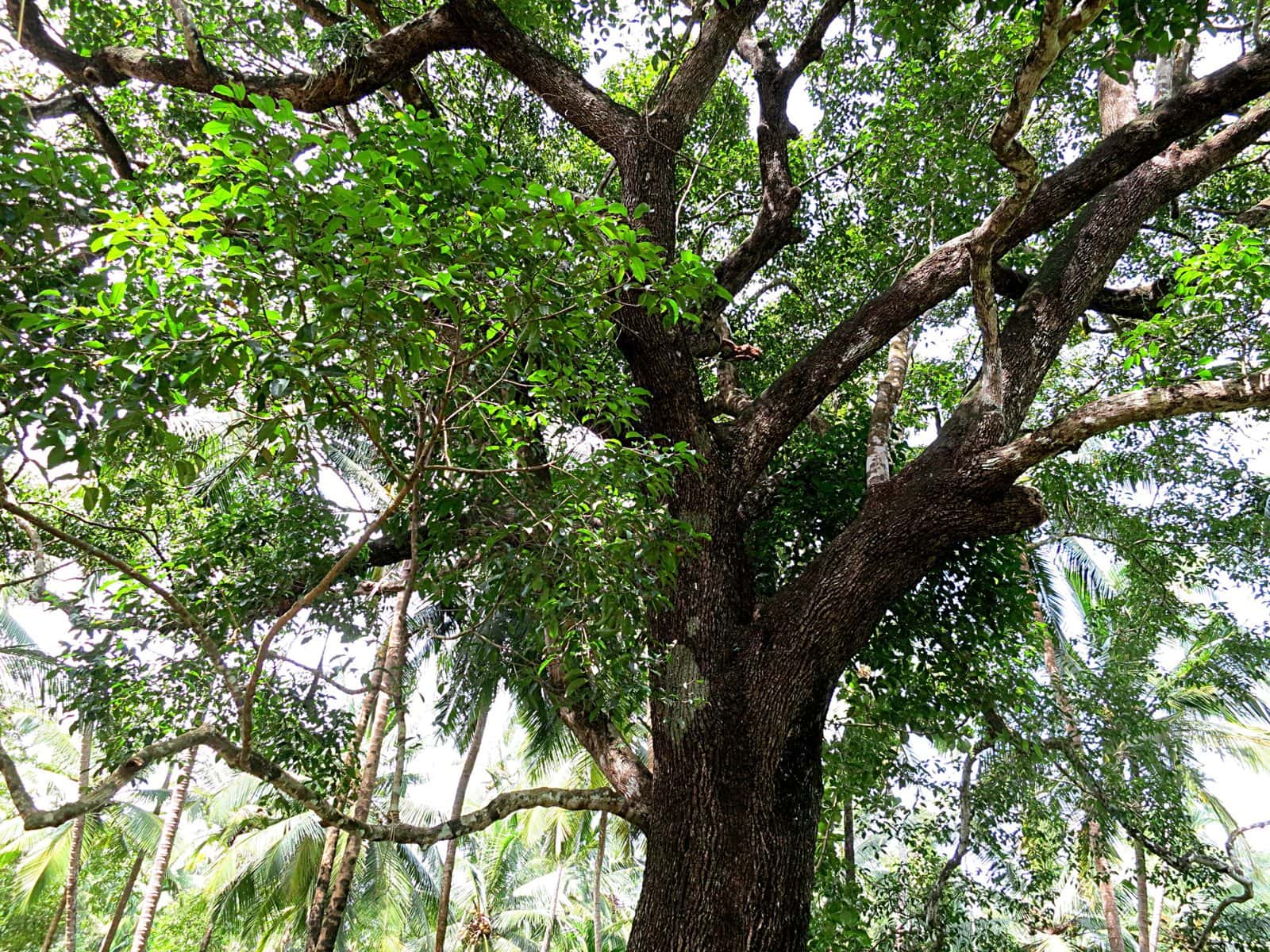
Bakul is a native evergreen tree with a dense, rounded crown of glossy leaves and small, star-shaped flowers whose scent lasts even after they dry. It grows slowly but lives long and keeps its shape with little pruning. It is planted near homes, temples and along avenues across India.
Mimusops elengi · Maulsari · Maulshree · Bakul · Ovali · Magizham · Pogada · Ranjal · Elanji · Borsali · Spanish cherry · Bullet wood
Size
8–15 m tall, 6–10 m spread
Growth
Slow
Leaf
Evergreen
Sun
Full sun to partial shade.
Water
Regular watering for the first three years; established trees tolerate dry spells but look best with some water in summer.
Soil
Well-drained loam or sandy soil; it tolerates coastal soils and some salt.
01
How to recognise Bakul
Family Sapotaceae
- aLeaves are simple, glossy dark green, elliptic, 5–12 cm long, with slightly wavy edges.
- bFlowers are small, creamy white and star-shaped with many narrow petals, strongly fragrant, and keep their scent after they fall and dry; the main flowering is in spring and summer.
- cFruit is a small, oval berry, 2–3 cm long, turning orange-yellow to red when ripe, with usually one hard, shiny seed.
- dBark is dark grey, rough and fissured on older trees.
- eHabit is a compact, dense, dome-shaped crown on a short trunk; it can look like a young Mango or Chiku from a distance, but its leaves are smaller and its flowers are scented stars.
02
Bakul in your city
How it grows in each city we work in, and what we do differently there.
It grows well in Pune's mild climate with watering in the dry months. We use it along campus paths and society avenues for year-round shade.
Young plants can be damaged by frost in December and January and need steady water through the 45°C summer. We plant larger saplings and cover them on cold nights for the first two winters.
It grows in Indore with regular summer watering in the first few years. On black cotton soil we mix murum and compost into the pit for drainage.
Winter frost can scorch young plants. We plant in sheltered spots, protect them through December and January, and use established saplings.
It suits Mumbai's warm, humid climate and handles coastal conditions better than many trees. We plant on well-drained ground so monsoon water does not stand around the roots.
Bangalore's mild climate suits it well and it keeps a neat, dense crown. It needs watering in the dry months while young.
It handles the hot, dry Deccan once established, with deep watering through its first few summers. We mulch the root zone to hold moisture.
Ahmedabad's 45°C heat and dry air stress young trees. We water deeply twice a week in summer for the first years and plant where there is some afternoon shade.
Bakul grows well in Kolkata's humid heat. We raise the planting bed in areas where monsoon water collects.
03
Bakul for industrial green belts
Where it goes in a three-row belt
Boundary side ← → factory side. This plant: middle row.
Bakul is commonly used in green-belt plans because it is native, evergreen and forms a dense crown of leathery leaves that holds dust through the year. It is long-lived and keeps its shape with little pruning, and it tolerates coastal conditions better than many trees.
It grows slowly, so we place it in the middle row behind a faster outer row. As it matures, its dense crown closes the gap between the tall boundary trees and the low inner row.
The species mix, belt width and planting density that apply to your unit are the ones written into its own consent to establish or environmental clearance. Clearances commonly ask for about 2,500 trees per hectare, and we lay out the rows to meet what your document specifies.
04
Where it fits
- The middle row of an industrial green belt, as a dense evergreen species.
- Avenues and footpaths in campuses and housing societies, where its compact crown fits a narrower verge.
- Near entrances, seating areas and temples, where the scent of the flowers is noticed.
- Native Miyawaki plantings as a sub-canopy evergreen.
05
Care
- Plant during the monsoon and water regularly for the first three years, deeply and less often.
- Prune only to remove low or crossing branches; the tree forms a neat crown on its own.
- Mulch the root zone and add compost once a year while the tree is young.
- Protect young plants from frost in north India and from hot dry wind in summer.
- Sweep fallen flowers and fruit from paving regularly, as the fruit can stain.
06
Common problems
- Leaf spot — brown or black spots on the leaves in humid weather. Remove fallen leaves; spray a copper fungicide only on badly affected young trees.
- Scale insects and mealybugs — white or brown crusts on shoots with sooty mould on leaves. Spray neem oil or horticultural oil.
- Leaf-eating caterpillars — chewed new leaves in the monsoon. Hand-pick on small trees; mature trees recover.
- Frost scorch — brown, dry leaves after cold nights in north India. Cover young trees and trim damaged tips in spring.
07
Questions
When does Bakul flower?
The main flowering is in spring and summer, roughly March to July, though timing varies by city. The flowers open in the evening and are most fragrant then.
How fast does Bakul grow?
Slowly. A nursery sapling usually takes several years to become a small shade tree, but it lives a long time and needs little pruning.
Is Bakul good for avenues?
Yes. Its compact, dense crown and deep green leaves make it a good avenue tree for campus roads and footpaths, where it gives year-round shade.
Can Bakul grow near the sea?
It tolerates coastal conditions better than many trees and is planted in coastal cities like Mumbai. Keep it back from direct salt spray while young.
Also used for green belt
Guides that mention Bakul
Begin with a visit
Request a proposal
Tell us about the space, or send photos on WhatsApp. We send a written proposal with a fixed price.
hi@gardenandacre.com