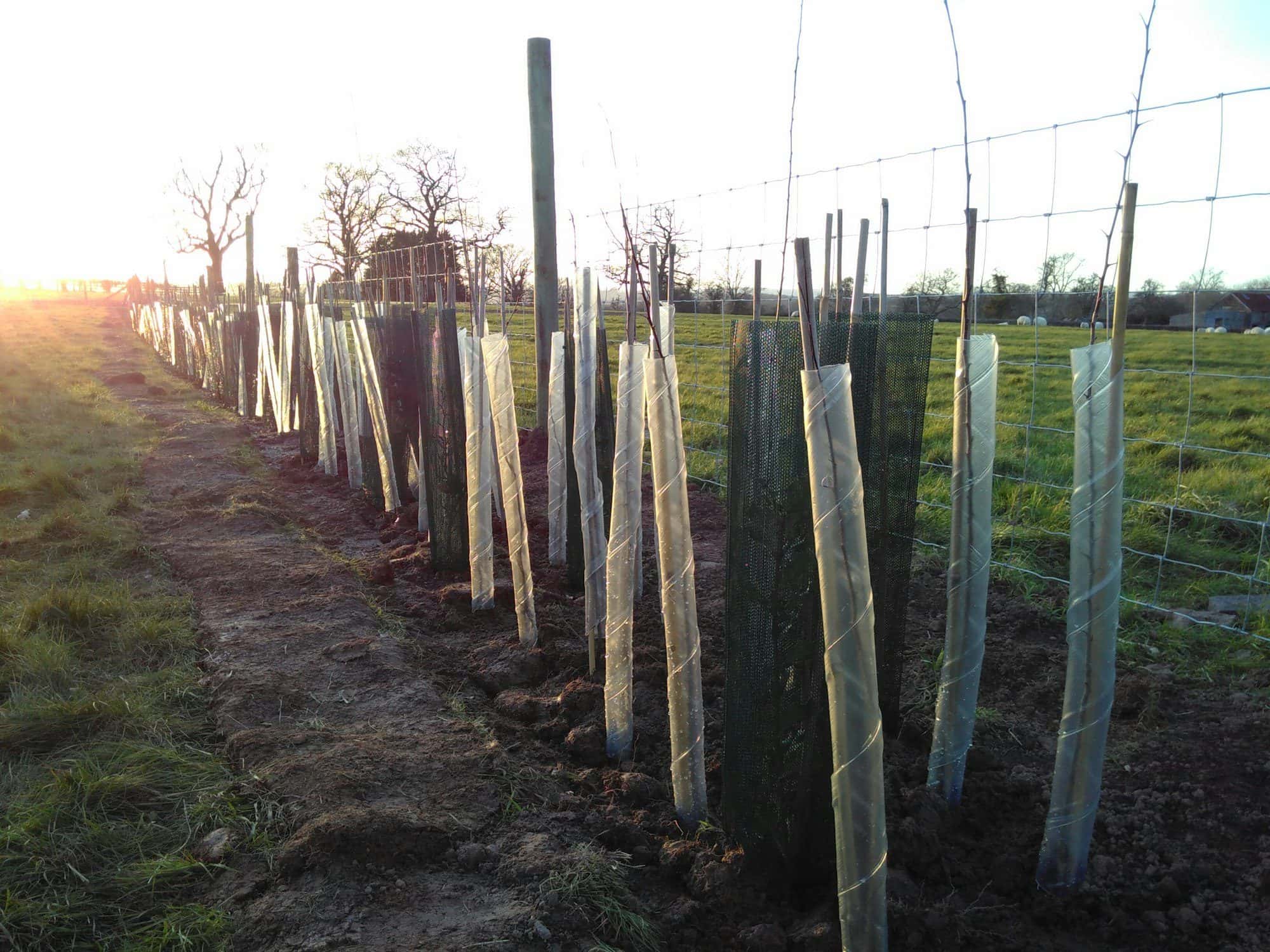
The native trees commonly used in industrial green belts in India, how to choose them for your region and soil, and which species to avoid.
Part 1
What the boards actually ask for
A consent to establish or operate, or an environmental clearance, usually states the green belt as an area or width and a tree density. Many clearances ask for about a third of the plot and about 2,500 trees per hectare, but the figures that apply to your unit are the ones in your own order.
Most orders do not name species. They ask for native, locally suited trees with good canopy, and the guidelines published by the Central Pollution Control Board describe the same principles: tall evergreen trees, several rows, and species that tolerate dust and the pollutants of the industry concerned. Inspectors look at whether the belt is dense, alive and growing.
Part 2
Trees commonly used in green-belt plans
For the outer, tallest row along the boundary: neem, peepal, banyan (where there is room), arjun, kadamb, shisham and mast ashoka. These are tall, long-lived and, apart from shisham and kadamb in cold spells, keep most of their leaves through the year.
For the middle row: jamun, pongamia (karanj), siris, amaltas, tamarind, bakul, kachnar, amla and bael. These are medium trees that fill the gap below the tall canopy.
For the inner, low row near roads and buildings: shrubs such as clerodendrum, hamelia and bougainvillea, which trap dust at eye level and need little care once established.
Part 3
Choosing for your region
A species list that works in Pune does not always work in Chandigarh. Frost in Delhi, Chandigarh and parts of Madhya Pradesh from December to January damages kadamb, mahogany and young saplings of several tropical trees. Heavy monsoon and clay in Mumbai and Kolkata waterlog neem and shisham unless they are planted on mounds. Hot, dry summers in Ahmedabad and Hyderabad favour neem, pongamia, siris and tamarind.
Soil matters as much as climate. Black cotton soil around Indore and Pithampur swells when wet and cracks when dry; pits need to be wider and filled with a lighter mix. Sandy, alkaline soil in Gujarat suits neem and pongamia better than jamun.
Part 4
Species to avoid or use sparingly
Eucalyptus and subabul grow fast and are cheap, but they are not native, use a lot of groundwater, and are discouraged in many green-belt guidelines. Single-species rows of any tree are vulnerable to one pest or disease wiping out a stretch of the belt.
Gulmohar and other brittle, shallow-rooted trees fall in storms and are better kept to avenues and lawns. Trees with poisonous parts, such as duranta berries, are best kept away from canteens and areas where workers' children may be present.
Part 5
How we prepare a species list
We read the green-belt condition in your order, check the site's soil, water and the pollutants from your process, and propose a species mix for each row with numbers per hectare. The list goes into the written proposal with a fixed price and becomes the plantation register we keep for your inspection file.