Plant library · Terrace · Hedges
Hibiscus (Gudhal)
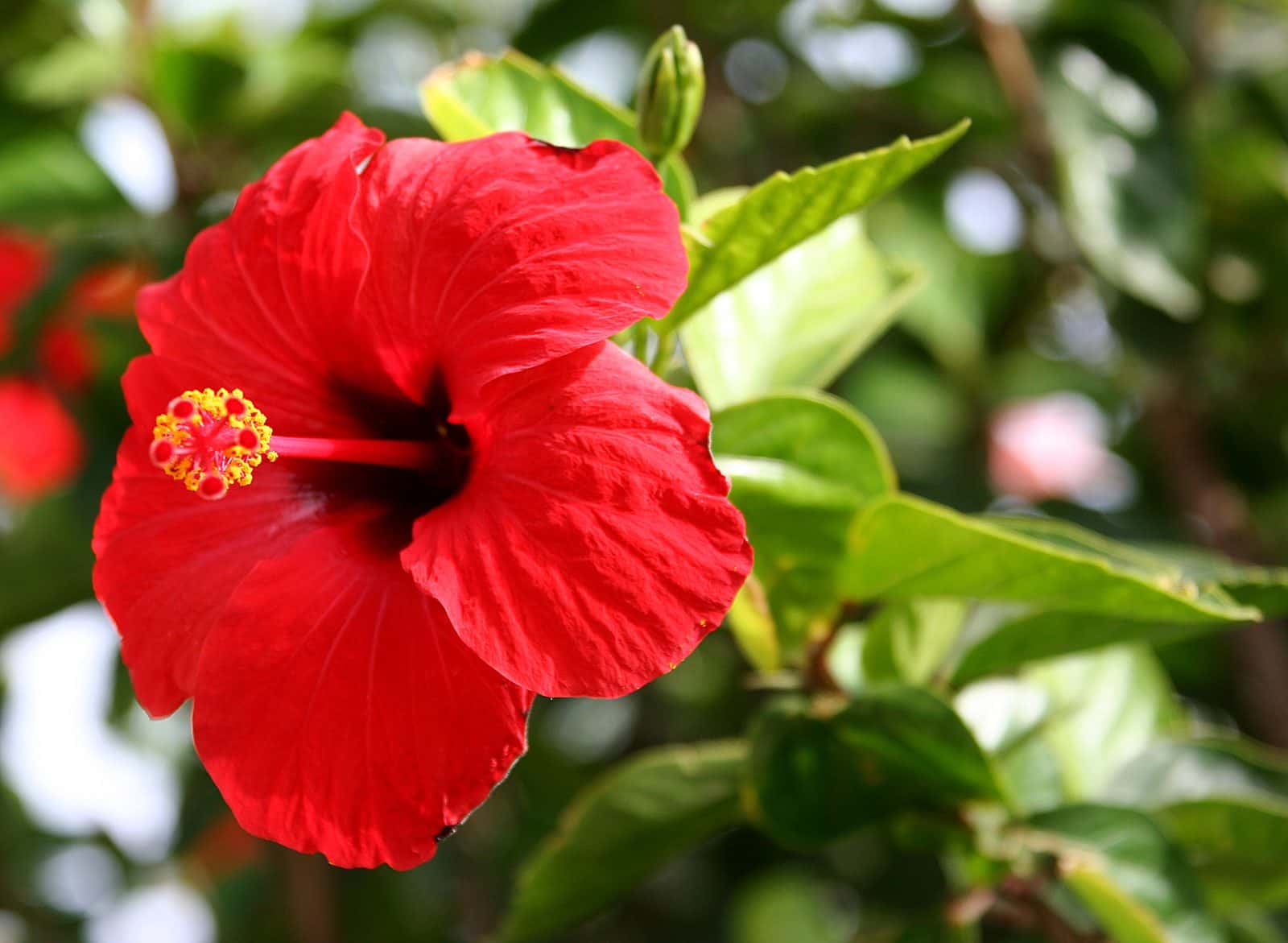
Hibiscus rosa-sinensis, known as Gudhal in Hindi, Jaswand in Marathi and Joba in Bengali, is one of the most widely grown flowering shrubs in India. Its large flowers are offered in worship and used in garlands, and each bloom lasts about a day. Old single red types are tough and grow almost anywhere warm; the large-flowered hybrids need more care.
Hibiscus rosa-sinensis · Gudhal · Jaswand · Joba · Sembaruthi · Mandaram · Dasavala
Size
1–2.5 m as a garden shrub; 60–150 cm in pots
Growth
Fast
Leaf
Evergreen
Sun
Full sun to part shade; at least five to six hours of direct sun for good flowering
Water
Regular. Keep the soil evenly moist; in pots in summer this often means daily watering, and bud drop follows if the plant dries out.
Soil
Fertile, well-drained loam rich in organic matter, near neutral
01
How to recognise Hibiscus
Family Malvaceae
- aLeaves are alternate, glossy, oval with toothed edges, 7–12 cm long.
- bFlowers are large and funnel-shaped, 8–15 cm across, single or double, with a long central column carrying the stamens and a five-lobed stigma.
- cColours range from the traditional red to pink, orange, yellow, white and multi-coloured hybrid forms.
- dEach flower opens in the morning and usually wilts by evening or the next day.
- eHabit is an upright, many-branched shrub that can become a small tree if not pruned.
- fOften confused with Hibiscus mutabilis (Changing rose), which has large, lobed, soft leaves and flowers that change colour through the day.
02
Hibiscus (Gudhal) in your city
How it grows in each city we work in, and what we do differently there.
Flowers through most of the year. Prune in February–March and after the monsoon to keep it compact.
Frost in December and January damages leaves and can kill potted hybrids; move pots to a sheltered spot. Water daily through the May–June heat.
Grows well with regular watering. In black cotton soil, add compost and sand to the planting pit to avoid waterlogging.
Frost in December and January can cut plants back. Grow near walls or in pots that can be moved under cover.
Grows fast in the humid warmth. Watch for mealybug after the monsoon and keep pots draining well.
The mild climate gives flowers for most of the year, and hybrids do especially well here.
Needs regular watering and mulch through the hot, dry summer; afternoon shade helps pots on terraces.
Summer heat near 45°C causes bud drop, especially on terraces. Give afternoon shade, mulch the pots and water daily or twice daily in peak summer.
Very common and grows well in the humid climate. Improve drainage for the monsoon and check for mealybug and whitefly.
03
Where it fits
- Pots on balconies and terraces, one of the most requested flowering plants for homes.
- An informal flowering hedge along boundaries, particularly with the hardy single red type.
- Temple and puja gardens where flowers are picked daily.
- Mixed shrub borders in societies and campuses.
04
Care
- Pruning: cut back by a third in late winter or early spring, and lightly after the monsoon. Flowers form on new growth, so pruning increases flowering.
- Feeding: feed every three to four weeks in the growing season with compost plus a fertiliser that has more potash than nitrogen. Hybrids respond well to regular feeding.
- Watering in pots: use a pot at least 30–35 cm wide and deep for a single plant, with drainage holes. Water when the top 2 cm is dry; do not let the root ball dry out in summer.
- Terrace exposure: hot, dry wind scorches leaves and causes bud drop. Place pots where a parapet or larger plants give some shelter, and move them into partial shade in May and June in north and west India.
- Repotting: repot every one to two years into fresh mix, trimming the outer roots lightly if the plant is pot-bound.
05
Common problems
- Mealybug — white cottony masses on stems, buds and under leaves, with curled leaves and stunted shoots. Cut off heavily infested shoots, then spray neem oil or insecticidal soap weekly until it clears. Check new plants before bringing them near others.
- Bud drop — buds turn yellow and fall before opening. Usually caused by uneven watering, sudden heat or cold, or moving the pot. Keep watering steady and the plant in one place.
- Whitefly and aphids — small insects under leaves or on new shoots, with sticky leaves. Wash off with water and spray neem oil.
- Yellow leaves — a few old yellow leaves are normal; many yellow leaves point to overwatering, poor drainage or lack of nutrients. Check drainage first, then feed.
06
Questions
How do I get rid of mealybug on hibiscus?
Prune out the worst shoots, wipe or wash off what you can, then spray neem oil or insecticidal soap every week until no new colonies appear. Ants spread mealybug, so control ants on the plant as well.
Why are my hibiscus buds falling off?
Bud drop usually follows uneven watering, sudden heat, cold or moving the pot. Keep the soil evenly moist, give some afternoon shade in extreme heat and avoid shifting the plant.
Why is my hibiscus not flowering?
Too little sun, too much nitrogen or no pruning. Give five to six hours of sun, use a potash-rich feed and prune in spring to encourage new flowering shoots.
What pot size is best for hibiscus?
At least 30–35 cm wide and deep for a single plant. Larger pots hold more water and reduce bud drop in summer.
Begin with a visit
Request a proposal
Tell us about the space, or send photos on WhatsApp. We send a written proposal with a fixed price.
hi@gardenandacre.com