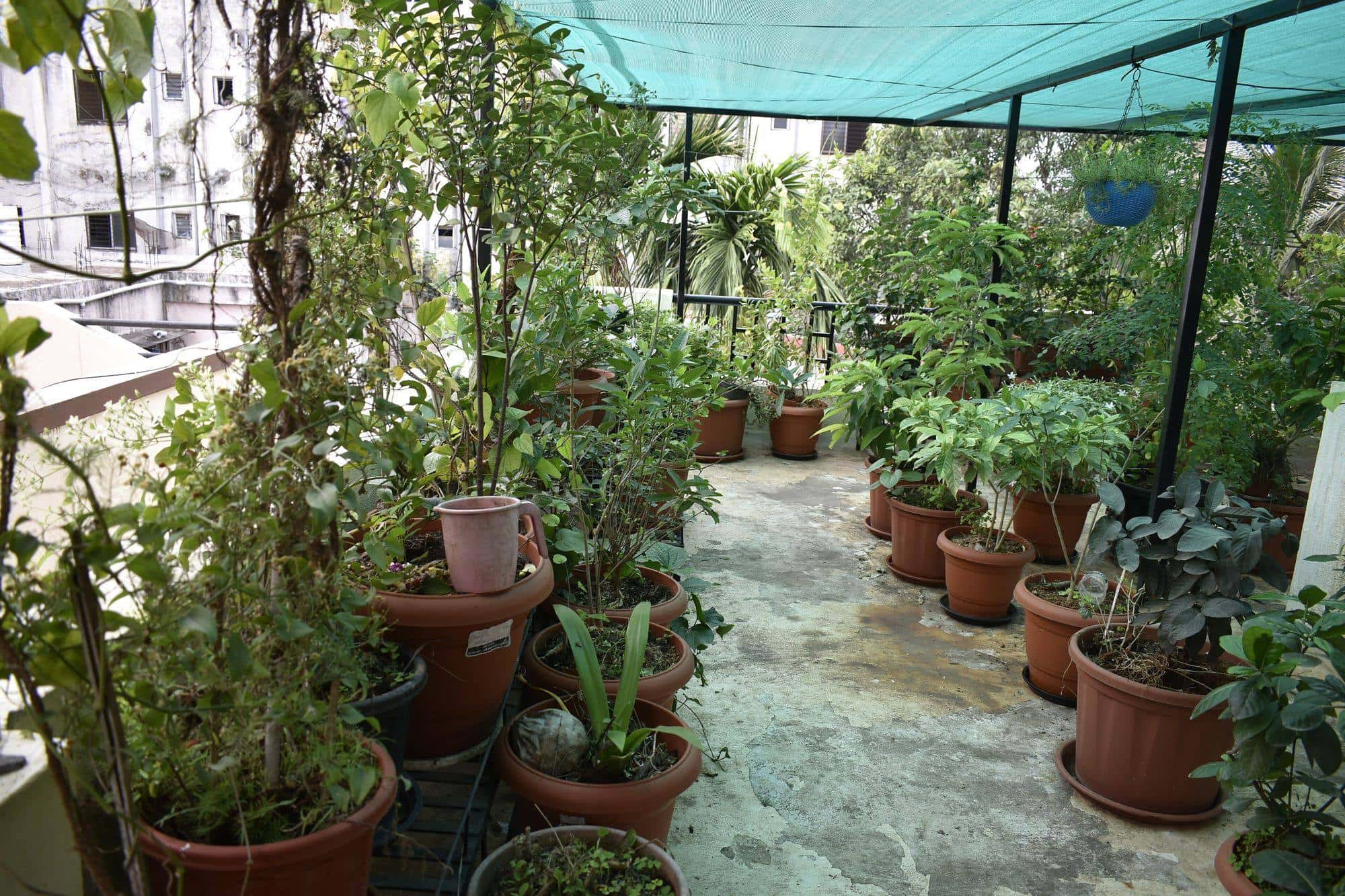
How to start a terrace garden in India: check the roof, plan sun and water, choose pots, grow bags or beds, the soil mix, what to grow each season and how to care for it.
Updated 21 October 2026
Part 1
What a terrace garden is, and what it can be
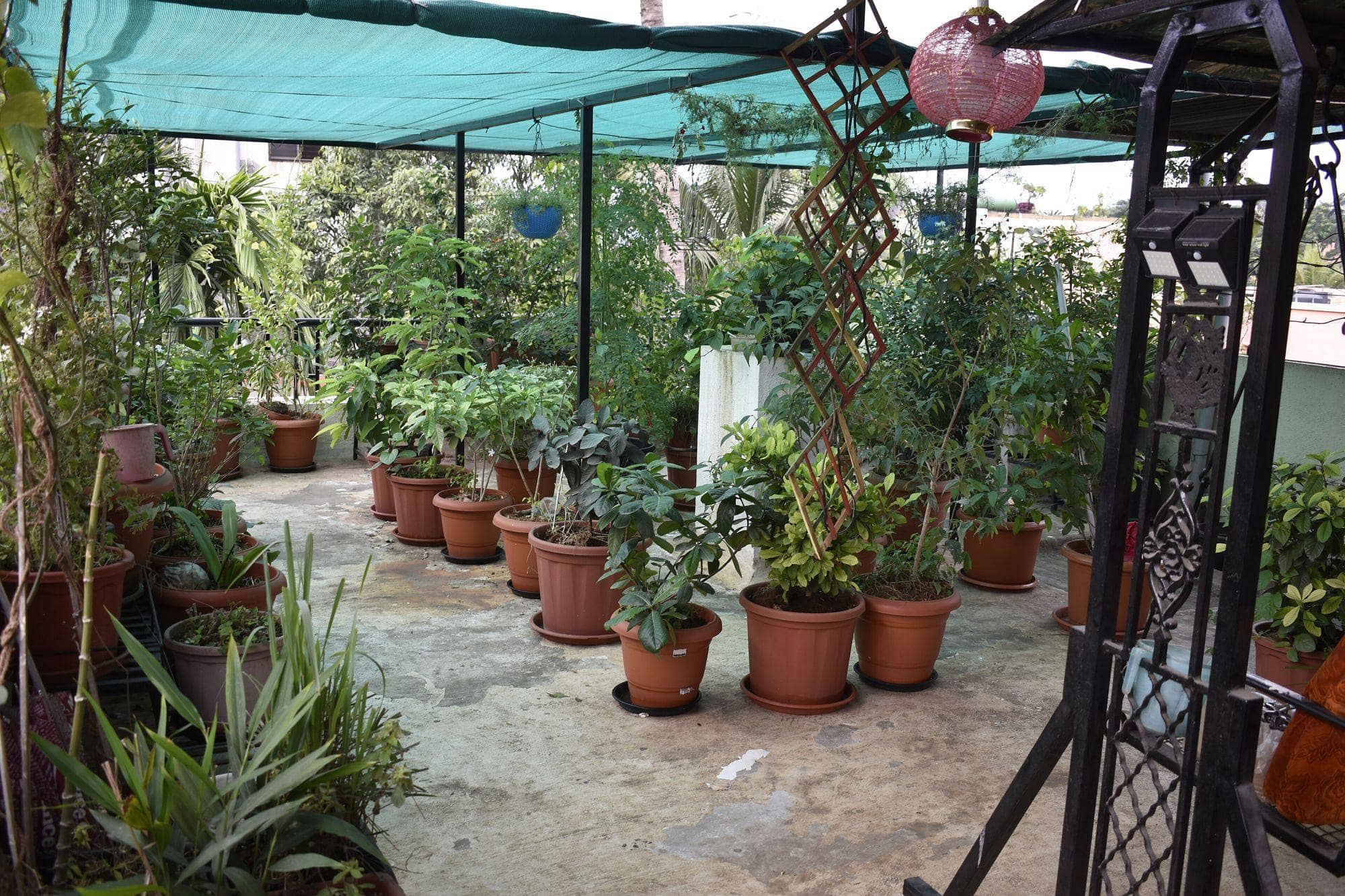
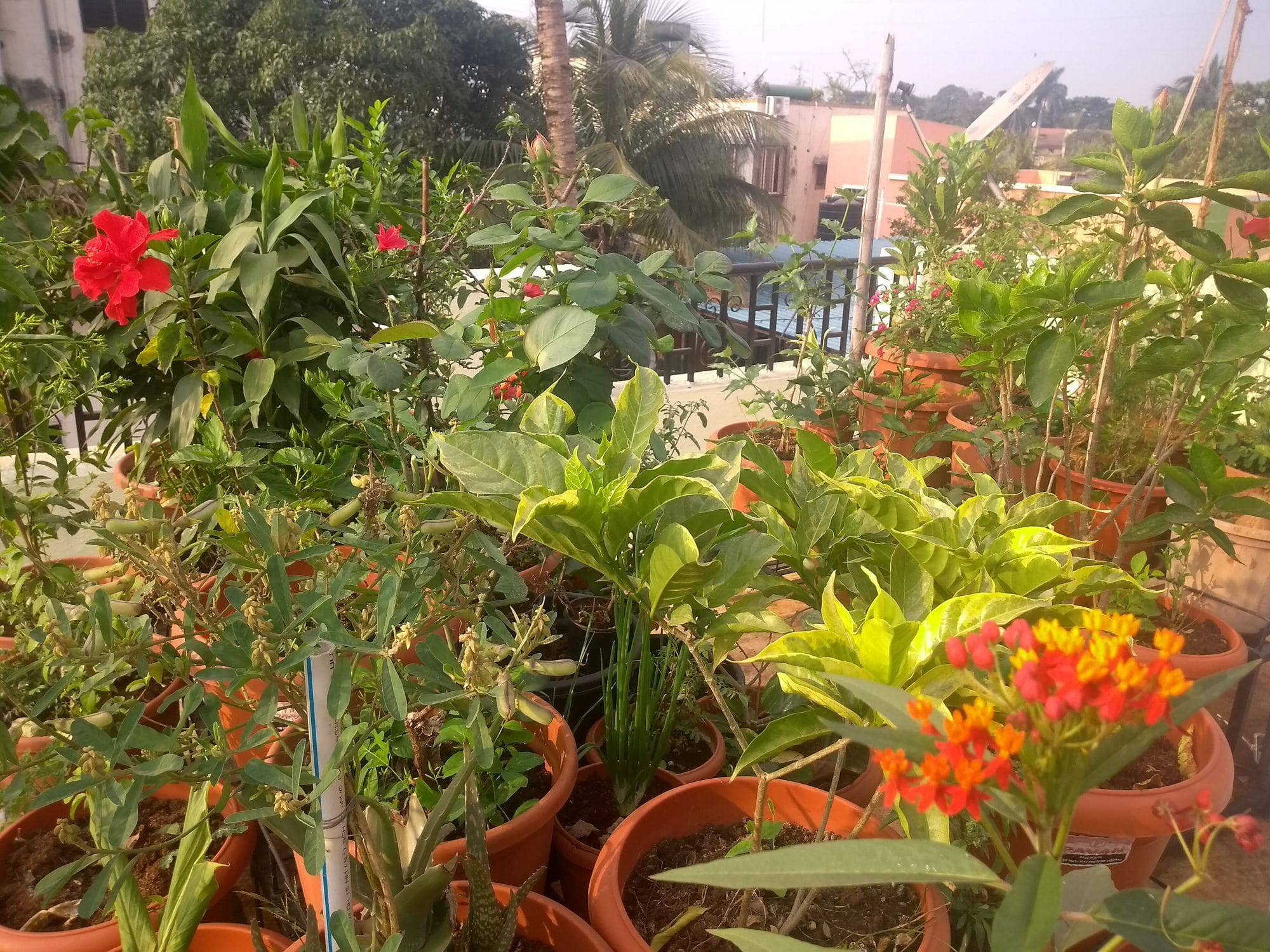
On an Indian terrace, "garden" can mean very different things: ten pots of tulsi, gudhal and mogra by the door; a kitchen garden of grow bags that feeds a family through the winter; a full rooftop with a lawn patch, a pergola and seating; or an office or society terrace that staff and residents actually use.
All of them work the same way. Plants grow in containers that sit on a waterproofed roof, the water drains away to the roof outlets, and the weight stays within what the slab was built to carry. Get those three things right and the rest is ordinary gardening.
This guide covers the whole job in order. Where we have a detailed guide on one part, such as cost, design, grow bags or watering, it is named in the section so you can go deeper.
Part 2
Check the roof first: waterproofing, drainage and load
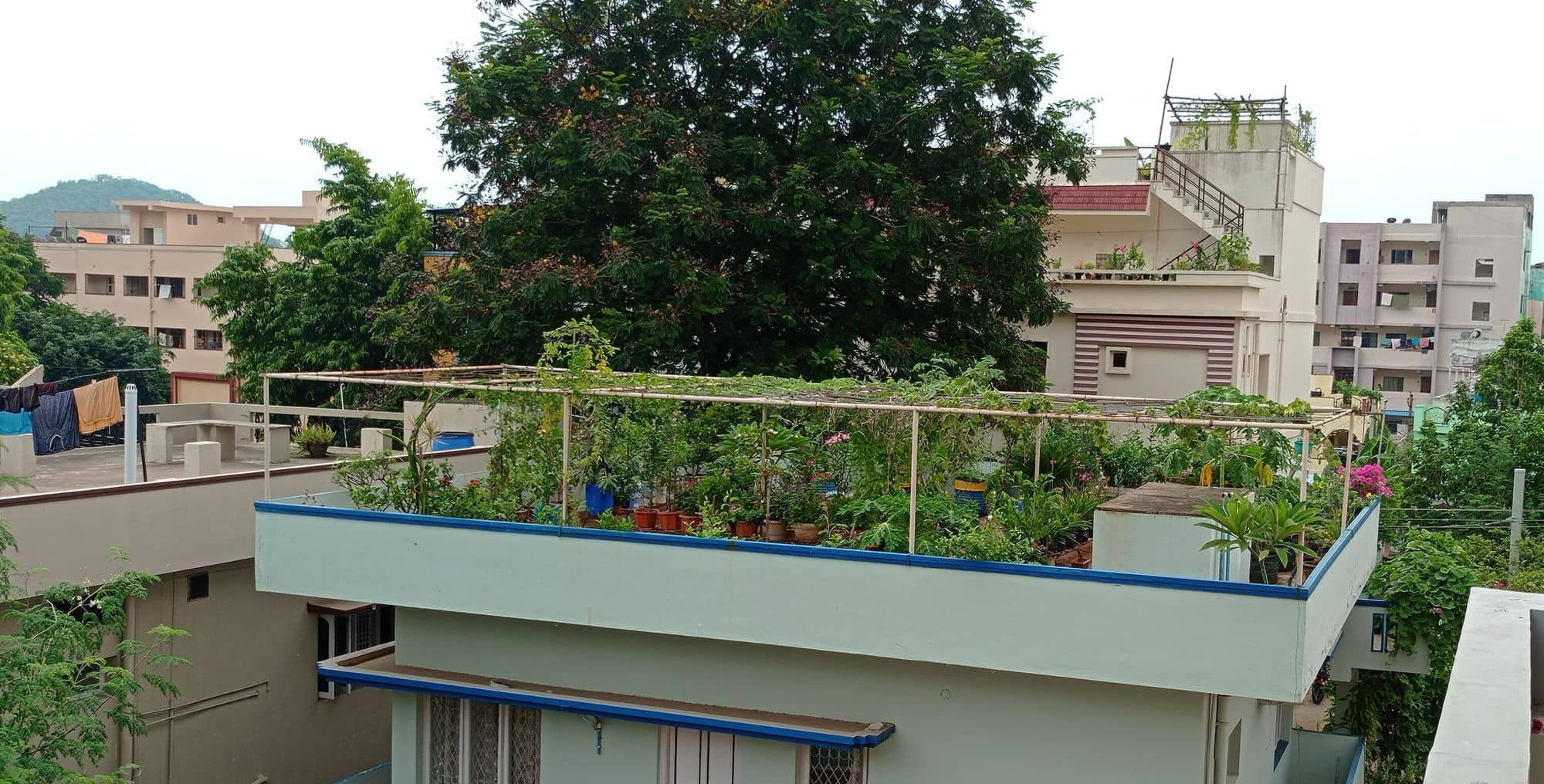
Most terrace gardens that go wrong go wrong at the roof, not the plants. Before you buy a single pot, spend an afternoon on these checks.
Leaks and waterproofing. Look at the ceiling of the floor below for damp patches, peeling paint or old stains. If there are any, repair the waterproofing before you plant: once planters are in place it is much harder to reach. A good garden sits on a protected layer over the waterproofing; it never replaces it.
Drainage. Pour a few buckets of water and watch where they go. A roof should slope gently, about 1 in 100, towards its outlets. Water that stands for hours means the fall is wrong or an outlet is blocked. Nothing you place on the terrace should sit across that path.
Load. An accessible flat roof in India is usually designed for about 150 kg per square metre of imposed load on top of its own weight. Pots and grow bags with walkways between them are well within that. A continuous 15 cm bed of wet soil already weighs more, so deep beds, lawns and trees need a structural engineer's check. Our guide "Does a terrace garden damage the roof?" explains leakage, load and roots in detail.
- Damp or stains on the ceiling below: repair waterproofing first
- Water standing after a bucket test: clear the outlets or correct the slope
- Cracks in the slab or parapet: get them checked before adding weight
- Deep beds, lawn or trees planned: ask a structural engineer
- Flat or society: check what the society allows on a common terrace
Part 3
Plan for sun, wind and water
Sun. Count the hours of direct sun in different parts of the terrace. Fruiting vegetables such as tamatar, mirchi, baingan and bhindi need at least six; leafy greens and herbs such as palak, methi and dhaniya manage with four or five; foliage plants are happy with less. Most open Indian terraces have too much sun in summer rather than too little.
Wind. Upper floors and open roofs are windy. Tall plants in light pots topple, and leaves dry out fast. Put tall plants against the parapet, use heavier or wider pots for them, and keep climbers tied in.
Water. Note where the nearest tap is. Carrying water up stairs every day is the main reason terrace gardens are abandoned in May. A tap on the terrace, or a line from the overhead tank, makes a drip system easy.
Use. Decide what the terrace is for: vegetables, flowers, sitting out, children, entertaining, or a green view from inside. On a larger terrace, keep heavy planters along the walls and leave the centre free. Our "Terrace garden design ideas" guide has twelve layouts for Indian terraces.
Part 4
Pots, grow bags or raised beds
There are three ways to plant a terrace, and most good terrace gardens use more than one.
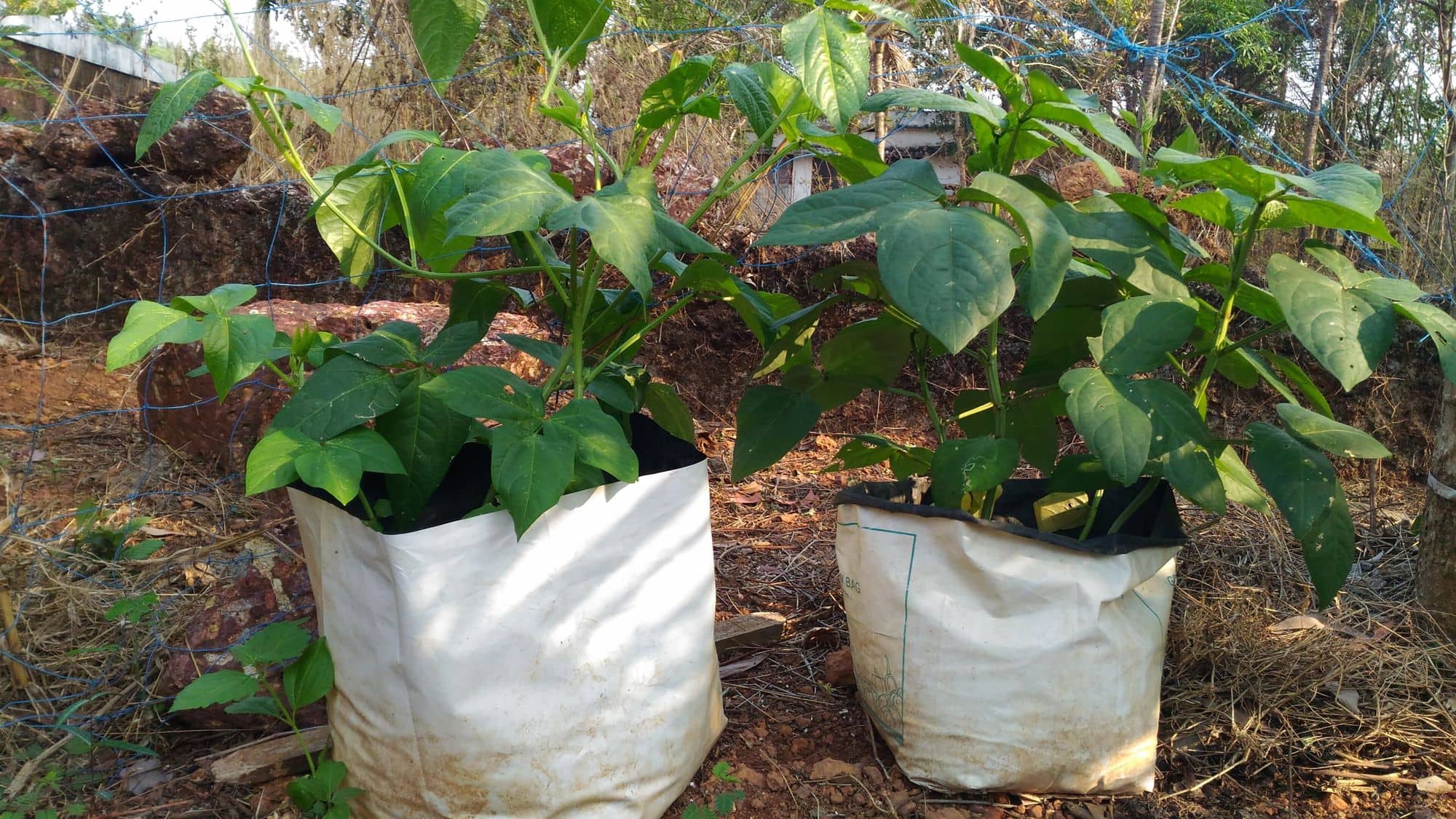
Grow bags are the cheapest and lightest. They suit vegetables, last two to four seasons in Indian sun and can be moved when you clean or repair the roof. Our "Grow bags for terrace garden" guide lists the right size for every crop.
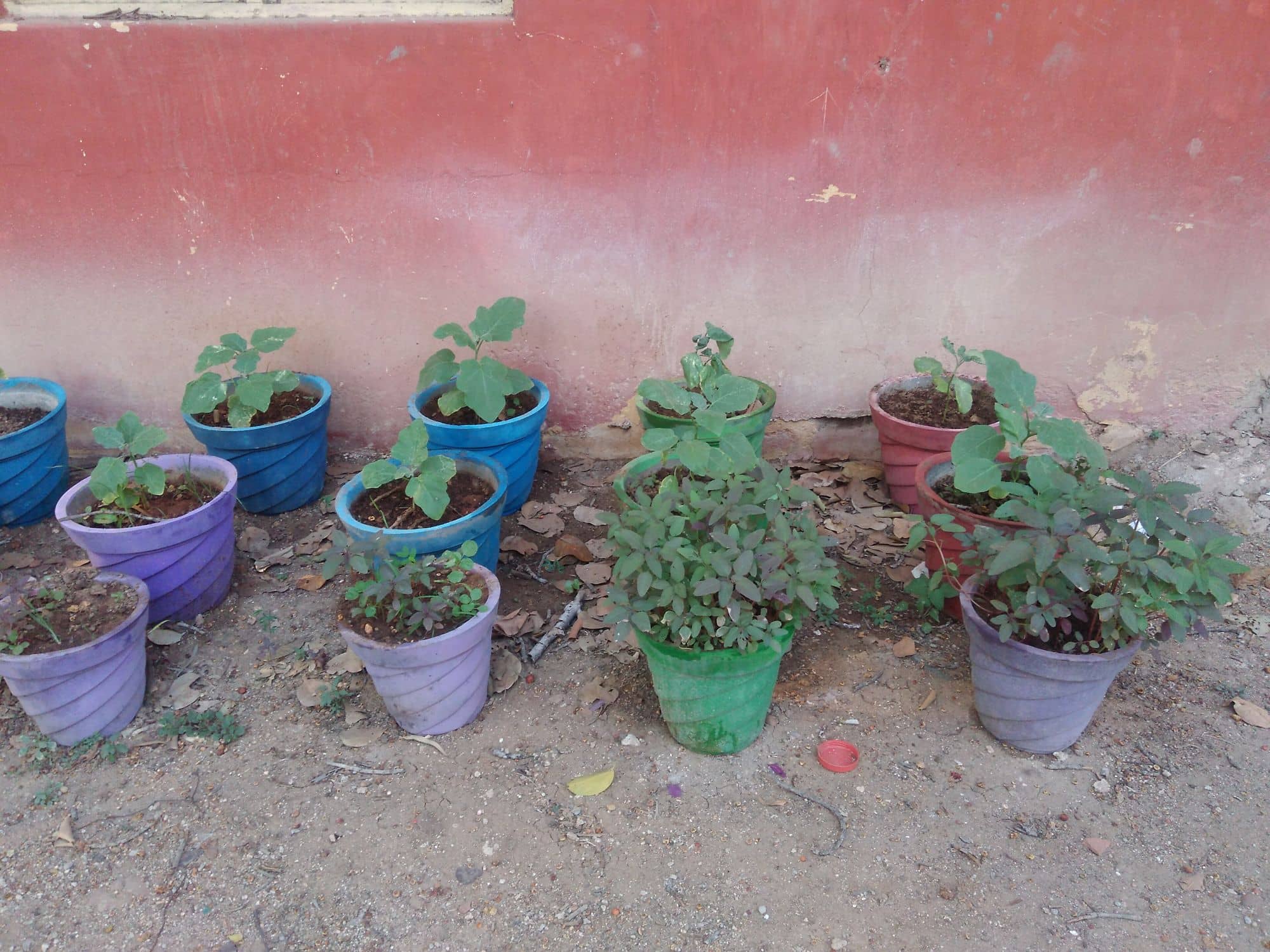
Pots, in plastic, clay, fibreglass or cement, suit flowering shrubs, herbs and small fruit plants. Clay looks good and keeps roots cool but is heavy and dries fast; plastic and fibreglass are lighter.
Raised beds and built-in planters look the most finished and hold the most soil, so they suit a kitchen garden or a permanent planted edge. They are also the heaviest, so they belong along walls and over beams, on legs or a drainage layer so water can run underneath.
| Container | Best for | Weight | Watch out for |
|---|---|---|---|
| Grow bags | Vegetables and greens, first-year gardens | Lightest | Fade and tear after a few seasons in full sun |
| Plastic or fibreglass pots | Herbs, flowers, small shrubs | Light | Cheap plastic turns brittle in the sun |
| Clay or cement pots | Flowering shrubs, tulsi, fruit plants | Heavy | Dry out fast; heavy to move |
| Drums (cut plastic drums) | Fruit plants such as amrood, nimbu, anar | Heavy when filled | Place over a beam or by a wall |
| Raised beds or built planters | Kitchen gardens, a permanent planted edge | Heaviest | Need a drainage layer and a load check |
Part 5
The soil mix: keep it light
Never fill terrace containers with garden soil alone. It is heavy, it packs down into a brick in the sun, and it drains poorly, which drowns roots in the monsoon.
A mix that works across India is roughly equal parts of soaked cocopeat, compost or vermicompost, and red soil or garden soil, with a handful of neem cake in each container. Cocopeat keeps the mix light and holds water; compost feeds the plant; soil gives the roots something to grip.
Leave an inch at the top of each container for watering. Top up with compost at the start of each season, and change the mix every two or three seasons, or sooner if a crop had disease.
Part 6
What to grow on a terrace in each season
Most of India has three growing seasons, and a terrace garden can be productive in all of them. Dates shift a little by region; in the hills and the far north, winter crops start earlier and summer is the main season. Our "Kitchen garden at home" guide goes through vegetables season by season.
- All year: tulsi, curry patta, lemongrass, pudina, and flowering shrubs such as gudhal, mogra, bougainvillea and champa
- Fruit in drums or large pots: nimbu, amrood, anar, chikoo, papaya and dwarf mango, over a beam or by a wall
- Easiest first crops: palak, methi, dhaniya and chaulai from seed; tamatar, mirchi and baingan from seedlings
| Season | Vegetables | Herbs and greens | Flowers |
|---|---|---|---|
| Monsoon (June–September) | Bhindi, beans, lobia, kheera, lauki, turai, karela, kaddu | Chaulai (amaranth), pudina, ajwain, curry patta | Gudhal, champa, ixora, balsam, sadabahar |
| Winter (October–February) | Tamatar, baingan, mirchi, shimla mirch, matar, gobhi, patta gobhi, mooli, gajar, chukandar | Palak, methi, dhaniya, lettuce, sarson, soya | Genda, guldaudi, petunia, calendula, rose |
| Summer (March–May) | Bhindi, lauki, turai, kheera, gawar, chaulai | Pudina, tulsi; greens only under shade net | Mogra, sadabahar, portulaca, bougainvillea, zinnia |
Part 7
Watering a terrace garden
Terrace containers dry out much faster than garden beds: the sun hits them from above, the roof heats them from below and the wind dries the leaves. In April and May most pots need water every day, and small ones sometimes twice.
Water early in the morning, slowly, until a little runs out of the bottom. Push a finger into the mix before watering in winter and the monsoon; if it is still damp an inch down, skip that day. Saucers help indoors, but on a terrace they hold water against the roof and breed mosquitoes, so use pot feet or stands instead.
A drip line on a timer takes the work away: each pot gets a measured amount at a set time, even when you travel. It works from a tap, from the overhead tank, or with a small pump from a drum. Our "Automatic plant watering system" guide compares the kits and costs.
Part 8
Summer and monsoon care
Summer. Open terraces in most Indian cities get very hot from March to June. Mulch the top of every container with dry leaves, coco chips or straw, water at dawn, and group pots together so they shade each other. A UV-stabilised shade net of about 35% suits tomato, brinjal and capsicum; leafy greens in April and May do better under 50%. Darker nets, such as 75%, are too dark for food crops.
Monsoon. Too much water is now the problem. Check that every outlet is clear before the first rains, raise pots off the floor, and drain any saucers. Tie climbers and tall plants to stakes before the first storms, and take down shade nets and loose screens that act like sails in strong wind. Fungal spots and root rot are the common monsoon diseases; remove affected leaves and let the mix dry between waterings.
Winter. The easiest season. Most vegetables and flowers grow fast; just watch for aphids on new growth and frost on the coldest nights in the north, when a cloth over young seedlings is enough.
Part 9
Pests on a terrace garden
Terrace gardens have fewer pests than ground gardens, but the common ones still find them: aphids and whitefly on new leaves, mealybugs on gudhal and other shrubs, fruit borers in baingan and bhindi, and caterpillars on gobhi and patta gobhi. Pigeons and squirrels dig up seedlings and peck fruit.
Check the undersides of leaves twice a week and act early. Wash small infestations off with a jet of water, spray neem oil every week or two as a routine, pick off caterpillars by hand, and remove fruit with borer holes. A light net over seedlings keeps birds away until the plants are established.
Part 10
Small terrace garden ideas
A small terrace or the roof of a row house can still hold a productive garden. The trick is to use the walls and the height, not the floor.
- Railing planters and wall-hung pots for herbs, greens and trailing flowers
- Tiered stands or step shelves along one wall, with the tallest plants at the back
- A trellis or a few strings on the parapet for climbers such as lauki, turai, karela or madhumalti
- Six to ten grow bags of different sizes for a small kitchen garden in one sunny corner
- One good shrub in a large pot, such as mogra, raat ki rani or kamini, for scent in the evening
- Light, foldable seating so the space stays usable
Part 11
Terrace gardens for offices, societies and schools
Office terraces are often the most underused space in a building. Planted with shade, seating and greenery, they become a place for lunch, informal meetings and breaks, and the greenery cools the floor below. For a company, the same checks apply at a larger scale: an engineer's load check, the building owner's approval, waterproofing records, drainage, safety railings and a maintenance plan so the garden does not fade after the first summer.
Housing societies use a common terrace for a kitchen garden run by residents, a seating area or a green roof that cools the top-floor flats. It needs the committee's approval, a clear rule on who waters and pays, and planting that survives weeks of neglect. Schools use terrace beds for gardening classes, which work best with grow bags that children can manage.
For all three, the cost depends on the area, the planting and what is built. Our "Terrace garden cost in India" guide breaks the price down.
Part 12
Start a terrace garden in a weekend
If you want to begin small and grow from there, this is a plan you can do in two days.
- Saturday morning: do the roof checks above. Bucket test, look at the ceiling below, note where the sun falls and where the tap is.
- Saturday afternoon: buy six to ten grow bags (9, 12 and 15 inch), cocopeat blocks, vermicompost, red soil, neem cake and a few pot stands.
- Saturday evening: soak the cocopeat, then mix it with equal parts compost and soil.
- Sunday morning: place the bags in your sunniest spot along a wall, fill them, and water until the mix is evenly damp.
- Sunday: sow palak, methi and dhaniya, and plant two or three seedlings of tamatar, mirchi or baingan for the season. Add a tulsi and one flowering plant.
- Next week: mulch the tops, water every morning, and check for pests twice a week. Add more bags once the first ones are thriving.
Questions
How do I start a terrace garden?
Check the roof for leaks, drainage and load first. Then choose a sunny spot along a wall, start with six to ten grow bags or pots filled with equal parts cocopeat, compost and soil, and grow easy crops such as palak, methi, dhaniya, tamatar and mirchi. Add drip watering once it grows.
Is a terrace garden safe for my roof?
Yes, if the waterproofing is sound, nothing blocks the drains and heavy containers sit over beams or along walls. Pots and grow bags are usually well within what an accessible roof is designed to carry. Deep soil beds, lawns and trees need a structural engineer's check.
How much weight can a terrace take?
An accessible flat roof in India is usually designed for about 150 kg per square metre of imposed load. A continuous 15 cm layer of wet soil already weighs more than that, so spread the weight in containers with walkways between them and keep heavy planters along the walls.
Which soil is best for a terrace garden?
A light mix of roughly equal parts cocopeat, compost or vermicompost, and red or garden soil, with a handful of neem cake. Garden soil alone is too heavy and packs down in the sun.
Which vegetables grow best on a terrace in India?
In winter: tamatar, baingan, mirchi, palak, methi, dhaniya, mooli and matar. In the monsoon and summer: bhindi, lauki, turai, karela, kheera, beans and chaulai. Leafy greens are the easiest to start with.
Which flowers grow well on a terrace?
Plants that take full sun: gudhal (hibiscus), mogra, bougainvillea, champa (frangipani), ixora, sadabahar and portulaca all year, with genda, guldaudi and petunia in winter.
How often should I water a terrace garden?
Every morning in April and May, sometimes twice for small pots. In winter every two or three days, and in the monsoon only when the mix is dry an inch down. A drip system on a timer handles it for you.
How do I protect terrace plants from the summer heat?
Mulch every container, water at dawn, group pots together and put a UV-stabilised shade net of about 35% over vegetables, or 50% over leafy greens in April and May.
Can I make a terrace garden on a small terrace?
Yes. Use railing planters, wall-hung pots, tiered stands and a trellis for climbers, and keep a small corner of grow bags for vegetables. Even six to ten containers give a steady supply of greens and herbs.
How much does a terrace garden cost in India?
A few grow bags and pots you set up yourself cost a few thousand rupees. A designed terrace garden with planters, drip irrigation and planting from Garden & Acre starts at about ₹250 per sq ft in Pune; a ten-bag grow-bag kit, installed, from about ₹6,500.
Can an office or housing society have a terrace garden?
Yes. Offices use terraces for shaded seating and breaks, and societies for kitchen gardens or green roofs that cool top-floor flats. Both need the owner's or committee's approval, a load and waterproofing check, safety railings and a maintenance plan.
Who can set up a terrace garden near me?
Garden & Acre designs and builds terrace gardens and terrace vegetable farms, and maintains them afterwards, in Pune, Mumbai, Bangalore, Hyderabad, New Delhi, Kolkata, Ahmedabad, Indore and Chandigarh. Message us on WhatsApp with a photo of your terrace.