Plant library · Hedges · Terrace
Ixora (Rugmini)
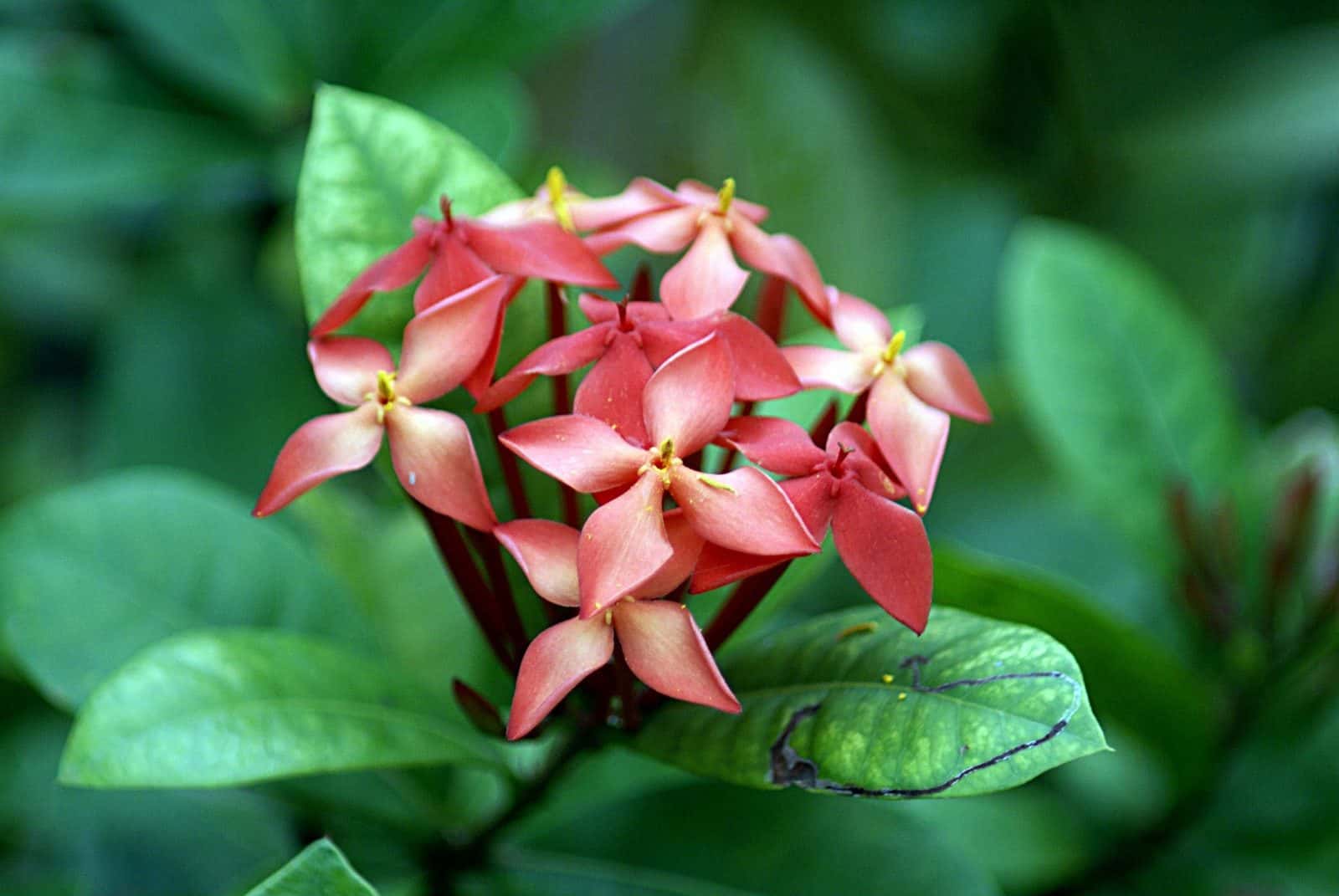
Ixora coccinea, known as Rugmini or Rangan in Hindi and Thechi or Vetchi in the south, is a compact evergreen shrub with dense, rounded heads of small star-shaped flowers. Red is the traditional colour; nurseries also sell orange, pink, yellow and white types, and dwarf forms with small leaves. It prefers slightly acidic soil and warm, humid conditions, and it does best in the south and on the west coast.
Ixora coccinea · Rugmini · Rangan · Vetchi · Thechi · Kepala
Size
1–2 m for standard forms; 40–90 cm for dwarf varieties
Growth
Moderate
Leaf
Evergreen
Sun
Full sun to part shade; at least four to five hours of sun for good flowering
Water
Regular. Keep the soil evenly moist but not waterlogged; in pots, water when the top 2–3 cm is dry.
Soil
Slightly acidic, well-drained soil rich in organic matter; turns yellow in alkaline soil or with hard water
01
How to recognise Ixora
Family Rubiaceae
- aLeaves are opposite, oblong, 5–10 cm long, stiff and glossy, and sit almost stalkless on the stem.
- bFlowers are small tubes that open into four spreading petals, packed into dense rounded clusters 5–12 cm across at the shoot tips.
- cColours are most often red, but orange, pink, yellow and white varieties are common in nurseries.
- dFruit is a small round berry that turns dark purple or black; it is seldom seen on clipped plants.
- eHabit is a dense, rounded shrub; dwarf varieties stay under a metre with much smaller leaves.
- fOften confused with Hamelia and Pentas; Ixora flowers have four flat petals in a tight ball, while Hamelia has loose clusters of long tubes.
02
Ixora (Rugmini) in your city
How it grows in each city we work in, and what we do differently there.
Grows well with compost-rich soil. Where borewell water is hard, add an iron and sulphur feed a few times a year to keep leaves green.
Delhi's alkaline soil and hard water often cause yellow leaves, and frost in December and January damages it. Grow it in pots with an acidic mix and move them to shelter in winter.
Black cotton soil is alkaline and holds water, both of which Ixora dislikes. Grow in raised beds or pots with a well-drained, slightly acidic mix.
Frost in December and January can kill young plants. Keep it in pots near a warm wall or under a covered verandah in winter.
Suits the warm, humid climate and flowers for much of the year. Ensure drainage in the monsoon; plants directly facing the sea may show leaf scorch from salt.
The red soils and mild climate suit it well. It flowers for most of the year with regular feeding.
Needs afternoon shade and regular watering in the hot, dry summer, and an iron feed if leaves turn pale.
Summer heat near 45°C and alkaline water stress it. Grow in pots with some afternoon shade, water daily in summer and feed with chelated iron.
Thrives in the humid climate. Make sure pots and beds drain through the heavy monsoon.
03
Where it fits
- A low flowering hedge or border along driveways and paths.
- Pots and planters on balconies and terraces, especially the dwarf varieties.
- Mass planting in beds at building entrances in warm, humid cities.
- Foundation planting in front of walls where a compact shrub is needed.
04
Care
- Pruning: trim lightly after each flush of flowers to keep the shape; flowers form at the shoot tips, so heavy clipping reduces flowering for a while.
- Feeding: compost or vermicompost every two to three months, plus a fertiliser for acid-loving plants or chelated iron and a little sulphur where soil or water is alkaline.
- Watering in pots: use a pot at least 30 cm wide and deep for a standard plant, with a mix of garden soil, compost and cocopeat. Do not let the mix dry out completely or stay soggy.
- Terrace exposure: hot winds and reflected heat scorch the leaf edges, so place pots where they get morning sun and some afternoon shade, and group them to keep humidity up.
- Water quality: where tap or borewell water is hard, collected rainwater or an occasional acidic feed helps prevent yellowing.
05
Common problems
- Iron chlorosis — young leaves turn yellow while the veins stay green. Caused by alkaline soil or hard water; apply chelated iron and add organic matter or a little sulphur to lower the pH.
- Aphids — clusters of small insects on new shoots and flower buds. Wash them off with water and spray neem oil if they return.
- Scale and sooty mould — small brown bumps on stems and a black film on leaves. Wipe off small infestations and spray horticultural oil.
- Root rot — wilting and leaf drop in waterlogged soil. Improve drainage and let the mix dry slightly between waterings.
06
Questions
Why are my Ixora leaves turning yellow?
Most often because the soil or water is alkaline and the plant cannot take up iron. Feed with chelated iron, add compost and, if possible, water with rainwater or softer water.
Why is my Ixora not flowering?
Usually too little sun, heavy clipping that removes the shoot tips, or poor feeding. Give it at least four to five hours of sun and trim only lightly after flowering.
What size pot does Ixora need?
A pot at least 30 cm wide and deep for standard varieties; dwarf varieties manage in 20–25 cm pots. Repot every two years into fresh mix.
Can Ixora grow in Delhi?
It can, but with effort. Grow it in pots with an acidic mix, feed iron regularly and move the pots to a sheltered spot during the December–January frost.
Begin with a visit
Request a proposal
Tell us about the space, or send photos on WhatsApp. We send a written proposal with a fixed price.
hi@gardenandacre.com