Plant library · Green belt · Avenue & campus · Miyawaki forest
Shisham
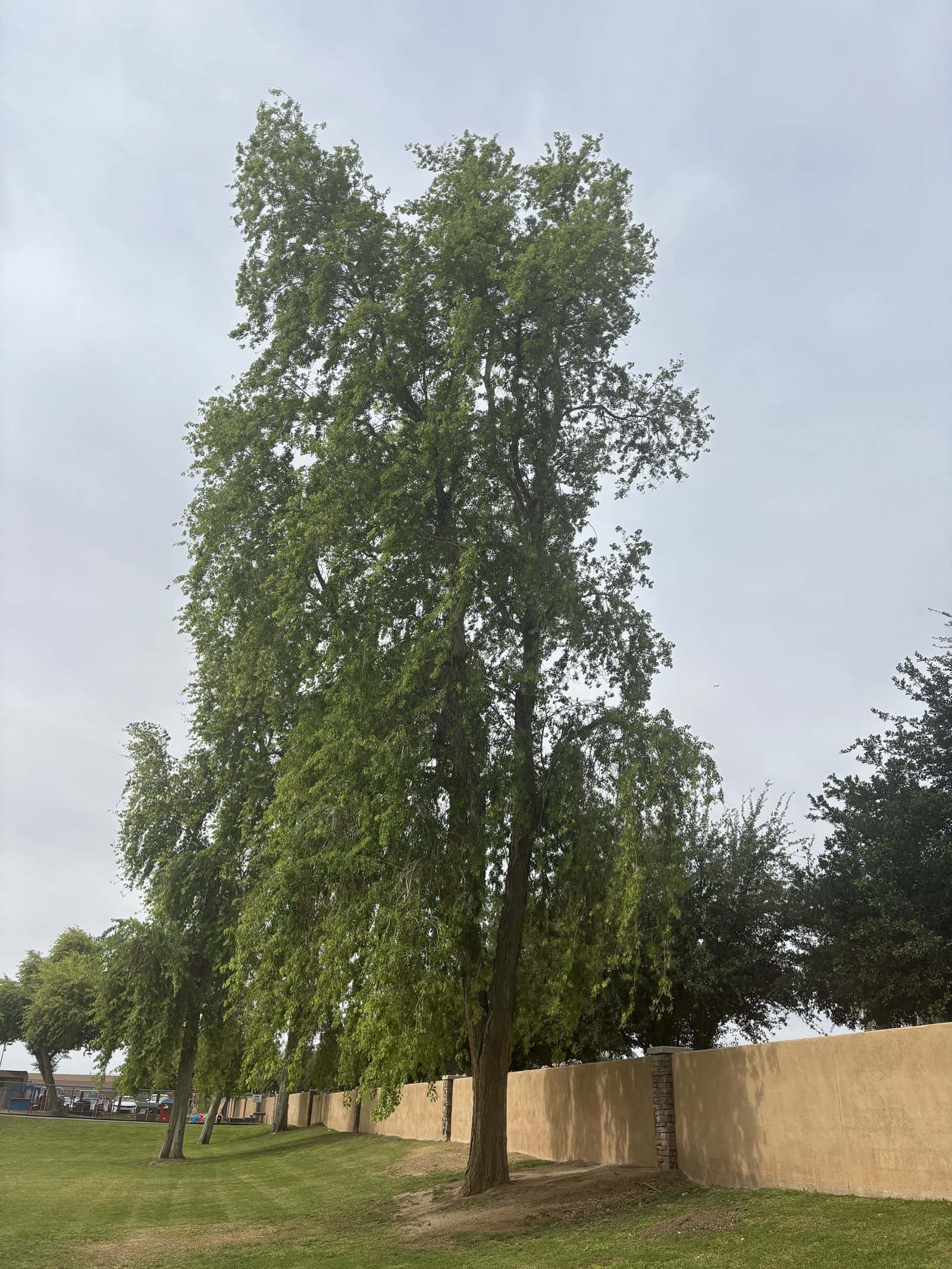
Shisham is a fast-growing native tree of the sub-Himalayan plains, long planted along roads, canals and field edges in north India for shade and timber. It fixes nitrogen, grows on poor soils and handles both summer heat and winter cold. Its main weakness is waterlogging, which makes it prone to wilt and dieback.
Dalbergia sissoo · Shisham · Sheesham · Tahli · Shisav · Sisam · Sissoo · Indian rosewood
Size
15–25 m tall, 8–12 m spread
Growth
Fast
Leaf
Deciduous
Sun
Full sun.
Water
Water young trees through the first two dry seasons; established trees need little irrigation. Avoid standing water.
Soil
Sandy loam and alluvial soils, including poor and stony ground; it does badly on heavy clay that stays wet.
01
How to recognise Shisham
Family Fabaceae
- aLeaves are pinnate with 3–5 broad, rounded leaflets that end in a short point, set alternately on a slightly zigzag stalk.
- bFlowers are small, pale yellowish-white and fragrant, in short clusters in March and April.
- cFruit is a thin, flat, strap-shaped pod, 4–10 cm long, pale brown when dry, with one to four seeds.
- dBark is grey-brown and rough, with long shallow vertical furrows on older trees.
- eOften confused with young Neem from a distance, but Neem has many narrow toothed leaflets while Shisham has only a few broad, rounded ones.
02
Shisham in your city
How it grows in each city we work in, and what we do differently there.
It grows well on Pune's well-drained murum soils. We plant it on boundaries and field edges and water only through the first two summers.
Shisham is a native of the north Indian plains and takes Delhi's 45°C summers and winter frost. We avoid low spots where rainwater collects, as wet roots lead to wilt.
It handles Indore's heat, but black cotton soil stays wet in the monsoon and invites root disease. We plant it on murum or raised ground and add drainage material to the pit.
Tahli is a traditional tree of Punjab and grows well around Chandigarh, including through the winter frost. We check older trees for dieback and plant only on well-drained land.
Heavy monsoon rain and waterlogged ground in Mumbai raise the risk of wilt and root rot. We use it only on raised, well-drained sites and prefer other species for low-lying plots.
It grows well in Bangalore's mild climate on red soils. We use it for fast shade on large campuses and boundaries.
The hot, dry Deccan and Hyderabad's red soils suit it well. Once established it needs little water.
It takes Ahmedabad's 45°C summers and dry winters. We water saplings weekly in the first two summers and plant them on sandy or loamy ground.
Kolkata's heavy monsoon and high water table can leave its roots wet for weeks. We plant only on raised, well-drained ground and prefer other trees in low areas.
03
Shisham for industrial green belts
Where it goes in a three-row belt
Boundary side ← → factory side. This plant: outer tall row.
Shisham is commonly used in green-belt plans in north and central India because it is native, grows fast, tolerates heat, frost and poor soil, and reaches a good height within a few years. It fixes nitrogen, which helps other species in the belt on thin soils.
We place it in the outer tall row along the boundary, mixed with evergreen species so the belt keeps cover in the weeks Shisham sheds its leaves. We avoid it on low, waterlogged parts of a site, where it is prone to wilt, and use other species there.
The species mix, belt width and planting density that apply to your unit are the ones written into its own consent to establish or environmental clearance. Clearances commonly ask for about 2,500 trees per hectare, and we plan the rows to match what your document says.
04
Where it fits
- The outer tall row of an industrial green belt in north and central India.
- Farm boundaries, windbreaks and field edges, where it also adds nitrogen to the soil.
- Avenues along internal roads on dry, well-drained sites.
- Fast early canopy in mixed native plantations.
05
Care
- Plant only on well-drained ground; never in low spots where monsoon water collects.
- Water young trees weekly in the dry season for the first two years, then stop regular irrigation.
- Prune low side branches on avenue trees to lift the crown and form a clean trunk.
- Remove root suckers that come up around the tree if you want to keep the area clear.
- Inspect older trees each year for dieback, thinning crowns and bark cracks.
06
Common problems
- Wilt and dieback — leaves yellow and branches die from the top down, often on wet or compacted soil. Remove badly affected trees, improve drainage and do not replant Shisham in the same waterlogged spot.
- Leaf-eating caterpillars — trees defoliated in the monsoon. Established trees recover; on young plantations we use a Bt spray if needed.
- Termites — mud tunnels on the stems of young trees on dry sites. Clear the tunnels and treat the soil around the base.
- Root rot — sudden wilting on heavy clay after long rain. Improve drainage and plant future trees on raised ground.
07
Questions
How fast does Shisham grow?
On good, well-drained soil young trees can grow 1–2 m a year. Growth slows on poor or dry ground.
Why are Shisham trees drying up?
The usual cause is wilt and dieback disease, which is worse on waterlogged or compacted soils. Improving drainage helps; badly affected trees rarely recover and are best removed.
Is Shisham good for a farm boundary?
Yes, on well-drained land. It grows fast, gives timber, fixes nitrogen and acts as a windbreak. Keep it off low, wet parts of the field.
Does Shisham lose its leaves?
Yes, for a short period in the dry season, usually late winter in north India. New leaves come quickly in spring.
Also used for green belt
Guides that mention Shisham
Begin with a visit
Request a proposal
Tell us about the space, or send photos on WhatsApp. We send a written proposal with a fixed price.
hi@gardenandacre.com